Side-by-Side Cognitive Profiles
Despite their shared terrier classification, the Scottish Terrier and Parson Russell Terrier exhibit their cognitive strengths in distinctly characteristic ways. Our Pet IQ Lab assessment scores them identically across five key dimensions, yet their breed histories and inherent temperaments color how these scores manifest in daily life. Understanding these nuances is crucial for appreciating their unique mental makeups.
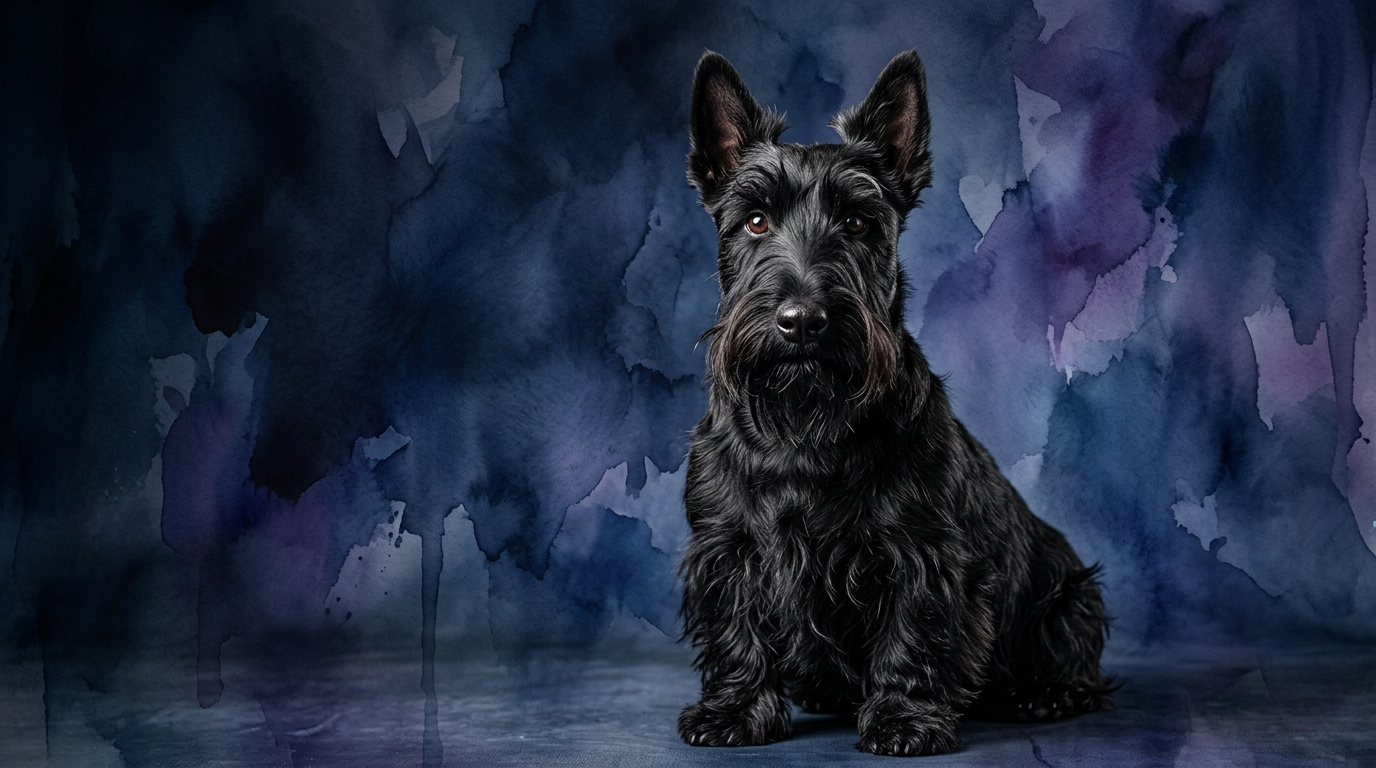
The Scottish Terrier, notably ranked #65 in Stanley Coren's intelligence scale for working and obedience, demonstrates a deliberate, thoughtful intelligence. This ranking suggests they require between 40 to 80 repetitions to learn a new command and obey the first command around 30% of the time, reflecting their independent nature.
**Scottish Terrier IQ Breakdown (3/5 across all dimensions):**
**Problem Solving (3/5):** Scotties approach challenges with a methodical determination. Their historical role of hunting vermin in rugged terrain demanded persistence and a strategic, rather than hasty, approach to outsmarting prey. They tend to stick with a solution once it works, showing a preference for proven methods.
**Training Speed (3/5):** While capable of learning, the Scottish Terrier's strong will means training often requires patience, consistency, and a clear understanding of their motivations. They learn commands effectively but choose when to apply them based on their assessment of the situation and their independent spirit, making obedience a negotiation.
**Social Intelligence (3/5):** Reserved with strangers and deeply devoted to their immediate family, Scotties are astute observers of their human pack's dynamics. They pick up on subtle cues within their trusted circle but are not typically eager to please outsiders, preferring a dignified distance until trust is established.
**Instinctive Drive (3/5):** Their inherent terrier drives—prey pursuit, digging, and territorial vigilance—are potent and central to their identity. This strong instinct for the hunt and guarding their space is not easily suppressed and requires appropriate outlets to be managed constructively.
**Memory (3/5):** Scottish Terriers possess a solid memory for commands, routines, and past experiences, both positive and negative. This contributes to their consistent behavior and their ability to recall learned boundaries, influencing their interactions and training responses over time.
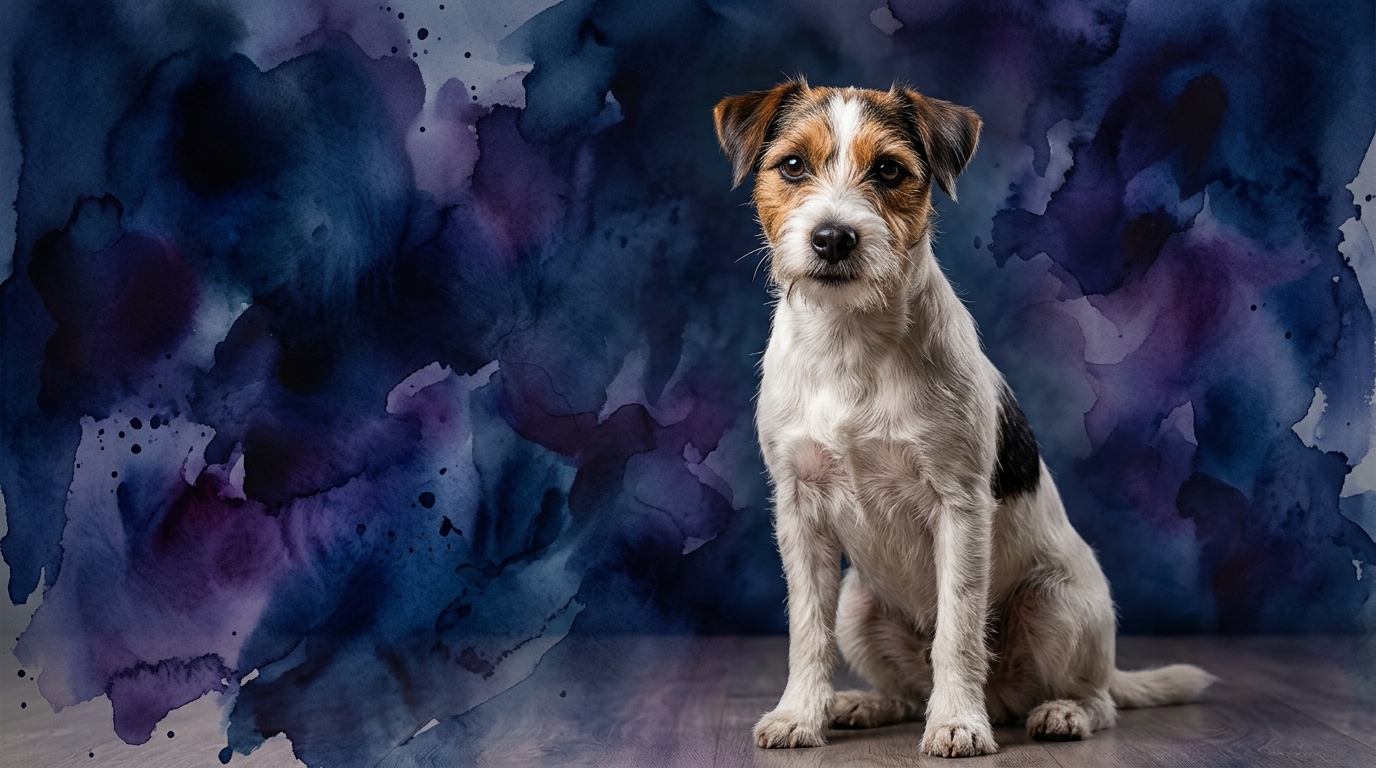
The Parson Russell Terrier, while not specifically ranked by Coren, embodies a spirited and adaptable intelligence. Their history as swift, tireless fox hunters required quick thinking, agility, and a relentless drive to pursue and 'bolt' game, showcasing a different expression of terrier wit.
**Parson Russell Terrier IQ Breakdown (3/5 across all dimensions):**
**Problem Solving (3/5):** Parson Russells tackle problems with enthusiastic energy and resourcefulness. Their solutions are often dynamic and involve physical prowess, such as finding a clever way to scale an obstacle or outmaneuver a toy. They are less ponderous and more experimental in their approach.
**Training Speed (3/5):** These terriers are often eager to learn when engaged, but their high energy and potential for distraction mean training must be varied and stimulating. They respond well to tasks that challenge them physically and mentally, quickly picking up new skills when properly motivated and kept from boredom.
**Social Intelligence (3/5):** Generally more outgoing and adaptable than the Scottish Terrier, Parson Russells engage with their environment and human companions with boundless enthusiasm. They tend to be more overtly friendly and curious about new people and situations, though still possessing a terrier's discerning nature.
**Instinctive Drive (3/5):** The Parson Russell's instinctive drives are intense and often expressed with high physical energy. Their prey drive, digging tendencies, and desire to explore are powerful forces that demand consistent channeling through activities like earthdog trials or extensive outdoor adventures.
**Memory (3/5):** Parson Russells exhibit good retention, particularly for tasks that involve their natural instincts or provide an outlet for their abundant energy. They quickly remember sequences and associations, especially when training is made into an exciting game or involves rewarding behaviors.
Where the Scottish Terrier Excels Cognitively
The Scottish Terrier's cognitive strengths lie in their deliberate analysis and independent decision-making. Their Coren ranking, while not as high as some breeds, reflects a consistent understanding of commands, even if obedience is selectively applied. A Scottie can excel in tasks demanding sustained focus on a single objective, such as intricate scent work or methodically solving a puzzle toy through patient trial and error, rather than frantic attempts. Their discerning judgment allows them to process situations with a calm, focused intensity, making them adept at navigating complex social situations within their established family unit and acting as reliable, watchful companions.
Where the Parson Russell Terrier Excels Cognitively
The Parson Russell Terrier's cognitive advantages are rooted in their quick adaptability, agile problem-solving, and boundless enthusiasm. They thrive in environments that reward rapid decision-making and physical expression, such as agility courses, flyball, or complex obedience routines where speed and precise execution are paramount. Their outgoing social intelligence allows them to adapt more readily to new people or environments, making them versatile companions for varied experiences. Their problem-solving often involves creative, physical solutions, demonstrating an ability to quickly assess and react to changing circumstances with characteristic terrier ingenuity and zest.
Training Dynamics: Which is Easier and Why?
When it comes to ease of training, both breeds score 3/5 in Training Speed, indicating that 'easier' is largely dependent on the owner's approach and commitment. For the Scottish Terrier, training requires significant patience, unwavering consistency, and a deep understanding of their independent streak. They learn, but compliance is often a negotiation based on their assessment of the command's value and their mood. Scotties respond best to clear, firm, yet fair guidance, thriving on established routines and building trust over time. Their memory for past interactions means trust, once broken, is difficult to rebuild.
The Parson Russell Terrier, on the other hand, can appear to learn new, engaging tasks faster due to their enthusiasm, but their distractibility and potential for boredom demand constant variety and high-energy engagement. Training sessions must be dynamic and fun, tapping into their physical prowess and prey drive to maintain focus. Positive reinforcement and turning training into a game are essential for a Parson Russell, whose social intelligence often makes them more eager to please in a lively, interactive environment. However, their boundless energy requires consistent effort to channel constructively, preventing unwanted behaviors born of boredom.
Matching Lifestyles: Active vs. Relaxed Owners
For owners with an active lifestyle, the Parson Russell Terrier is an ideal match. Their high energy levels, insatiable need for mental stimulation, and love for outdoor activities make them perfect companions for hiking, running, or participation in dog sports like agility or flyball. They require significant daily engagement, both physical and mental, and thrive in homes where their zest for life is celebrated and channeled into productive endeavors. Owners who can commit to extensive daily exercise and varied activities will find a loyal, tireless partner in a Parson Russell.
Conversely, the Scottish Terrier may be a better fit for more relaxed owners who appreciate a structured routine and a calmer home environment. While they certainly require regular walks and mental engagement to prevent boredom, their overall energy levels are generally more moderate than a Parson Russell's. After their exercise needs are met, Scotties are often content to relax by their owner's side, appreciating quiet companionship. Their independent nature also means they can entertain themselves to a degree, making them suitable for owners who might not be constantly on the go but still provide consistent interaction and a stimulating environment.
The Verdict
Choose a Scottish Terrier if you seek a discerning, independent companion who appreciates routine, offers devoted loyalty, and thrives in a structured home with thoughtful, consistent engagement.
Opt for a Parson Russell Terrier if you desire an energetic, agile partner for adventures, dog sports, and a lively home environment, and can commit to consistent, engaging training and ample physical activity.
🧠 Find Your Pet's IQ Score
Our Pet IQ Lab assessment covers 25+ tests across 5 cognitive dimensions — personalized to your breed.
Take the Full IQ Test →Frequently Asked Questions
Do Scottish Terriers or Parson Russell Terriers bark more?
Both breeds possess a strong terrier instinct to bark, often as an alarm or when expressing excitement or frustration. While individual dogs vary, the Parson Russell Terrier's higher energy and more vocal nature might lead to more frequent or intense barking episodes if not properly managed. The Scottish Terrier's barks are often more deliberate alerts.
Are these breeds good with children?
Both breeds can be good with respectful, older children, especially if raised together and properly socialized. The Parson Russell Terrier's boisterous play style might be too much for very young children, while the Scottish Terrier's reserved nature means they prefer calm interactions over constant roughhousing. Supervision is always crucial with any dog and child.
What are the key differences in their temperament beyond IQ?
Beyond cognitive nuances, Scottish Terriers are typically more dignified, independent, and reserved, often forming deep bonds with a select few and displaying a watchful nature. Parson Russell Terriers are generally more exuberant, outgoing, and require more physical and mental stimulation, expressing a boundless enthusiasm for life and activity with their entire being.