
Side-by-Side Cognitive Profiles: The Pet IQ Lab Breakdown
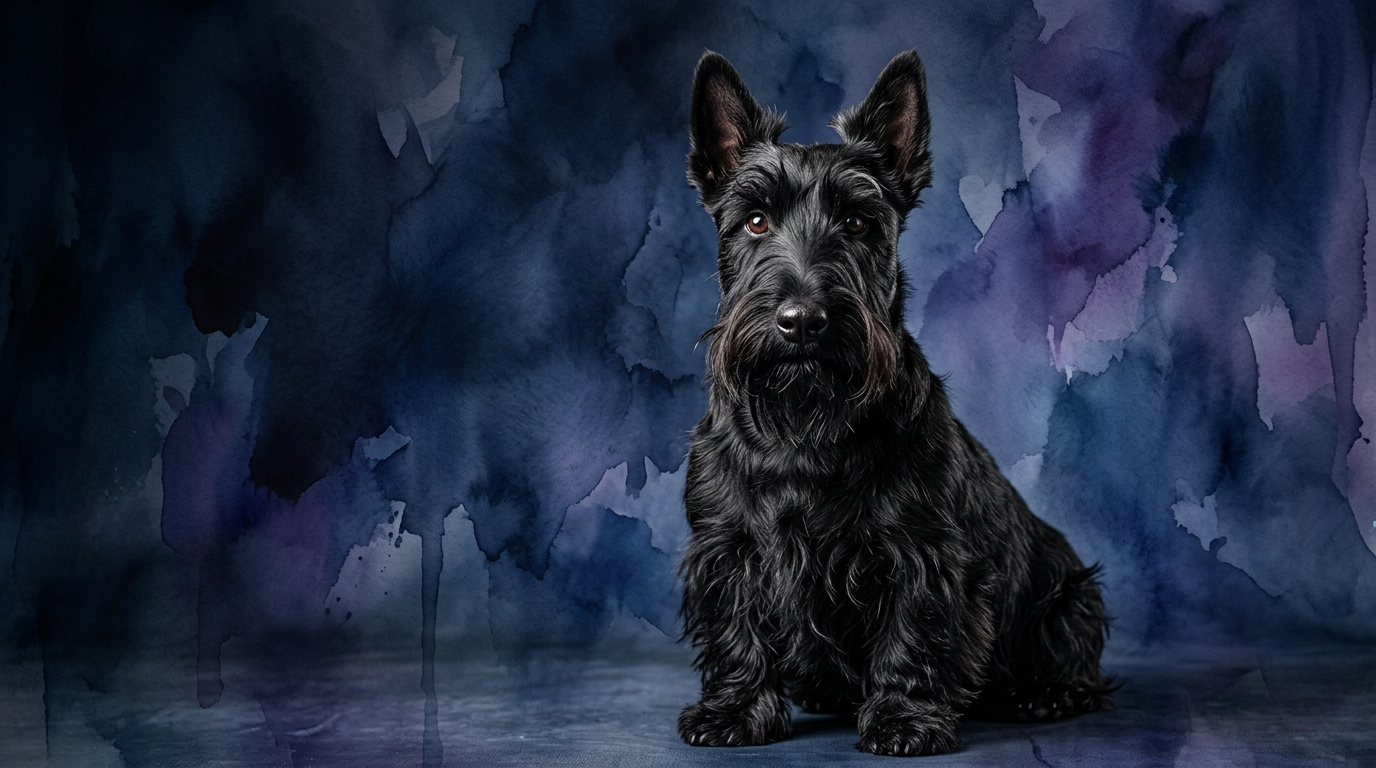
The Scottish Terrier, Coren-ranked at 65, demonstrates a Problem Solving score of 3/5. This reflects their independent nature, where they excel at figuring out practical challenges like how to access a desired treat or navigate a complex scent trail, often through persistent, focused effort rather than quick adaptation. Their Training Speed, also 3/5, indicates they are capable learners but require consistent, engaging methods that appeal to their strong will, often choosing to comply when it aligns with their perceived interest.
Social Intelligence at 3/5 means they are astute observers of their human companions, forming deep, discerning bonds with their inner circle, yet often reserved with strangers. Their Instinctive Drive, a 3/5, is powerfully geared towards digging and pursuing quarry with unwavering determination, embodying their terrier heritage. Finally, Memory at 3/5 allows them to retain routines, learned behaviors, and social cues with impressive longevity, contributing to their consistent character and sometimes their selective obedience.
The Rat Terrier, while not Coren-ranked, shares identical scores across our Pet IQ Lab metrics, starting with Problem Solving at 3/5. Their approach is characterized by quick, agile thinking, excelling at dynamic challenges like outmaneuvering small prey or navigating obstacle courses with speed and precision. Their Training Speed of 3/5 reflects a generally eager-to-please temperament that can pick up new commands readily, though their high energy and occasional distractibility necessitate structured, positive reinforcement.
Social Intelligence at 3/5 highlights their adaptable and generally more outgoing nature compared to many terriers, making them adept at reading human intentions and engaging cheerfully in family life. Their Instinctive Drive, a robust 3/5, manifests as an intense desire to chase and dispatch small vermin, showcasing remarkable speed and focus in pursuit. Memory at 3/5 ensures they reliably recall learned tasks, spatial layouts, and the locations of favored items, making them highly effective in their historical roles and as adaptable companions.
Where the Scottish Terrier's Mind Shines
The Scottish Terrier’s cognitive strength lies in its profound independence and discerning nature. While both breeds show a 3/5 in problem-solving, the Scottie’s approach is often more deliberate and self-directed. They are adept at strategic planning within their own scope, such as patiently working to unearth a perceived burrow or figuring out how to bypass a gate, demonstrating a persistence born from their strong internal motivation rather than a desire to please. This manifests as a thoughtful, often stubborn, pursuit of their objectives.
Furthermore, their specific social intelligence, rated 3/5, involves a deeper, more selective bond formation. A Scottish Terrier remembers the nuances of their primary human's moods and routines with remarkable accuracy, using this information to navigate their social world. This isn't about broad sociability, but about an intense, almost intuitive understanding of their chosen few, making them exceptionally loyal and attuned to subtle shifts in their owner's demeanor, a quality that fosters profound companionship for those who earn their trust.
The Rat Terrier's Cognitive Edge
The Rat Terrier truly excels in its dynamic adaptability and responsive intelligence. While sharing a 3/5 in problem-solving, their cognitive processes are geared towards rapid assessment and quick, physical solutions. This means they are particularly adept at tasks requiring agility and split-second decisions, such as navigating complex environments or excelling in dog sports like agility and flyball. Their solutions are often immediate and efficient, driven by a keen observational skill and an inherent desire for action.
Their 3/5 in training speed, coupled with their generally more biddable nature, gives them an edge in learning diverse and complex commands quickly. Unlike the Scottie, whose compliance often hinges on internal motivation, the Rat Terrier frequently finds motivation in interaction and activity with their owner. This makes them highly responsive to positive reinforcement and capable of acquiring a wide repertoire of behaviors, from basic obedience to advanced tricks, with a notable enthusiasm and less inherent resistance.
Training Dynamics: Biddability vs. Independent Thought
When considering ease of training, the Rat Terrier generally presents a smoother path for the average owner. Their social intelligence and eagerness to engage contribute to a faster initial learning curve for commands and house rules. They are typically more receptive to feedback and find joy in the process of working collaboratively with their human, which makes repetition and skill acquisition more straightforward. Their high energy needs to be channeled, but once engaged, they are keen participants.
The Scottish Terrier, conversely, requires a more nuanced approach. Their independent thought processes and strong will mean that while they are certainly capable of learning, they often need to be convinced of the value of a command. Training a Scottie is less about speed and more about building a relationship of mutual respect and understanding, where consistency, positive reinforcement, and making training feel like a game are paramount. Their 3/5 training speed is accurate, but it's the method required that differentiates them; rote drills rarely succeed with a Scottie.
Lifestyle Compatibility: Active Engagement vs. Discerning Companionship
For active owners seeking a constant companion for adventures, the Rat Terrier is an excellent fit. Their boundless energy and cognitive drive for engagement mean they thrive on regular, vigorous exercise, mental challenges, and participation in family activities. They are the kind of dog that will happily accompany you on hikes, runs, or dog sports, always ready for the next exciting endeavor, making them ideal for individuals or families with a dynamic lifestyle.
The Scottish Terrier, while not a sedentary breed, suits owners who appreciate a more discerning and less overtly demanding companion. They enjoy their walks and playtime but are equally content to observe from a comfortable spot, requiring mental stimulation through puzzle toys or short, engaging training sessions rather than constant high-intensity physical output. They are perfect for those who value a dog's independent spirit and prefer a companion that offers deep, quiet loyalty and a strong individual personality within a more relaxed home environment.
The Verdict
Choose a Scottish Terrier if you appreciate a dog with a robust, independent personality that offers deep, selective loyalty and thrives on thoughtful engagement rather than constant high-energy interaction. They are ideal for owners who enjoy the challenge of patient, respectful training and value a discerning companion.
Opt for a Rat Terrier if you seek an energetic, adaptable, and highly responsive companion eager to participate in a wide range of activities and training. They are best suited for active owners who can provide consistent mental and physical stimulation and enjoy a dog that forms broad, enthusiastic social bonds.
🧠 Find Your Pet's IQ Score
Our Pet IQ Lab assessment covers 25+ tests across 5 cognitive dimensions — personalized to your breed.
Take the Full IQ Test →Frequently Asked Questions
Do Scottish Terriers or Rat Terriers excel at trick training?
While both breeds have a 3/5 training speed, Rat Terriers generally excel more readily at trick training due to their higher biddability and eagerness to please, often finding joy in the collaborative process. Scottish Terriers can learn tricks, but their independent nature means they often need more motivation and a clear 'what's in it for me' incentive.
How do their instinctive drives manifest differently in a home environment?
The Scottish Terrier's instinctive drive often manifests as a strong urge to dig, making secure fencing and designated digging areas important. The Rat Terrier's drive is more about chasing and 'dispatching' small, fast-moving objects, which means they might be more prone to chasing squirrels or small pets if not properly trained and managed.
Is one breed more prone to separation anxiety based on their social intelligence?
Neither breed is inherently more prone to separation anxiety based solely on their 3/5 social intelligence scores, but their manifestation differs. Scottish Terriers form very deep, selective bonds, so separation can be distressing if their primary human is absent. Rat Terriers, being more generally social and active, might express anxiety through destructive behaviors or excessive vocalization if their need for engagement and stimulation isn't met.