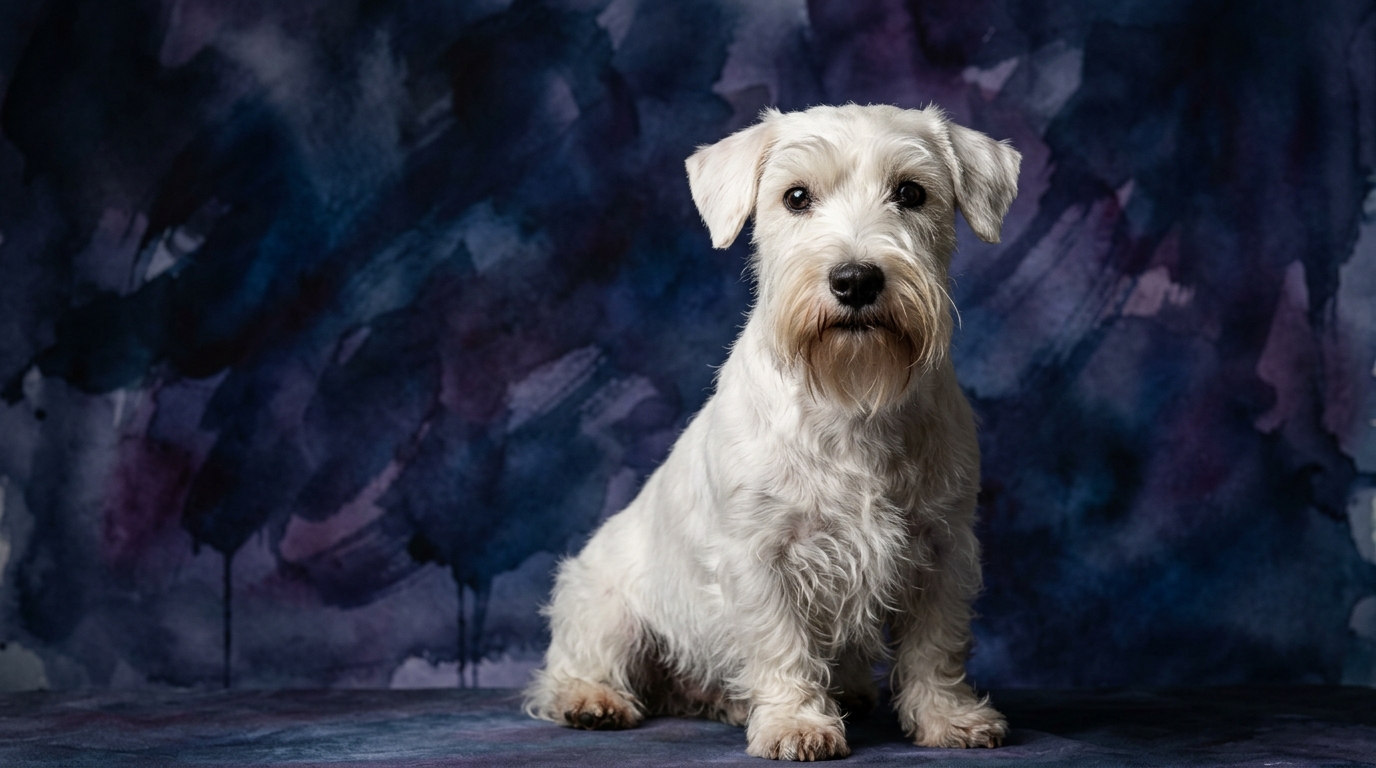
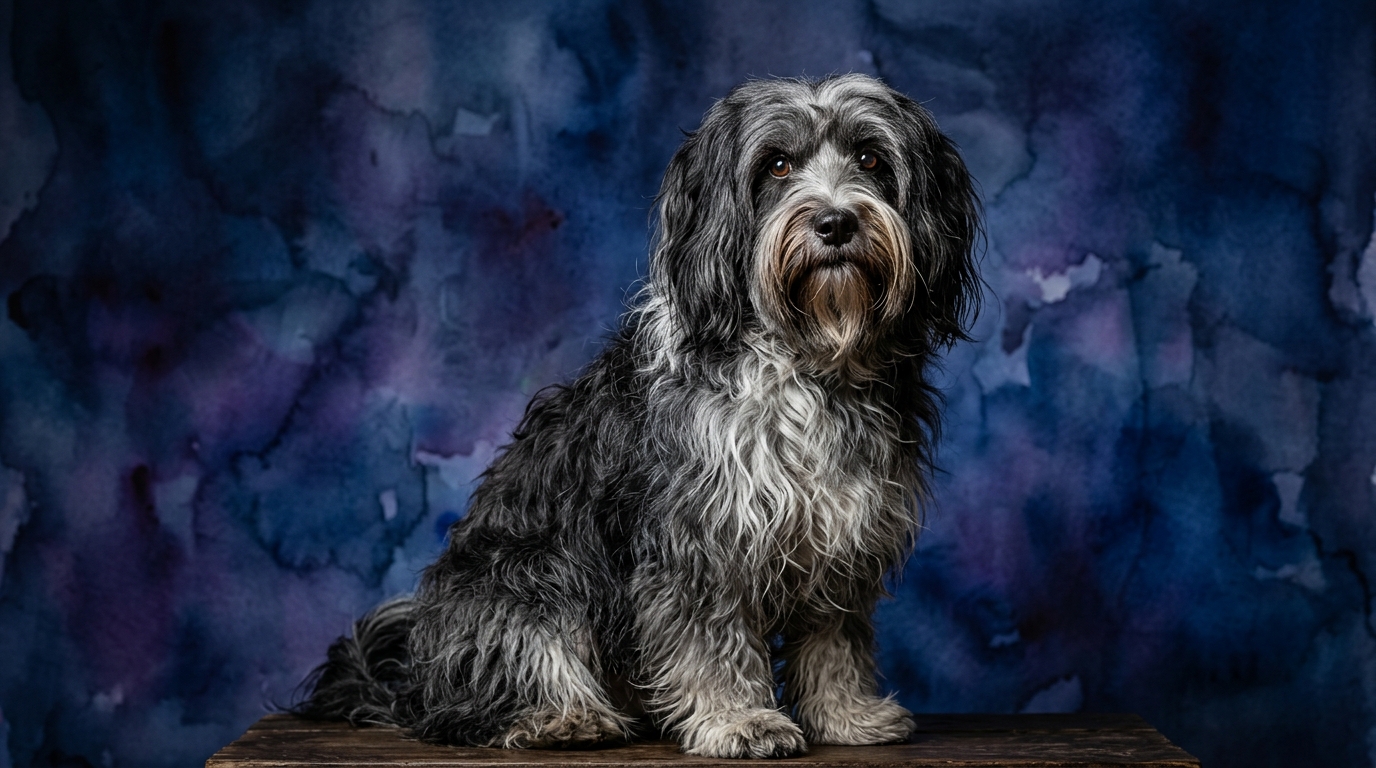
Side-by-Side Pet IQ Lab Profile
The Cosmic Pet Pet IQ Lab assesses five key cognitive dimensions, providing a granular look at a breed's intellectual landscape. For both the Sealyham Terrier and the Tibetan Terrier, every dimension registers a 3 out of 5, indicating a moderate capacity. However, understanding their historical roles illuminates how these identical scores translate into distinct behavioral patterns and cognitive strengths.
**Sealyham Terrier (Terrier Group):** This breed, originally developed in Wales to hunt small, tenacious quarry like badgers and otters, embodies a spirited independence. Their scores reflect a balanced, yet characteristically terrier, approach to the world.
* **Problem Solving (3/5):** This moderate score signifies a capacity for independent thought and resourceful navigation of novel situations. For a Sealyham, this translates into a persistent, often self-directed approach to overcoming obstacles, whether it's figuring out how to access a forbidden area or meticulously investigating a new scent. Their historical role demanded a cleverness in confined spaces, manifesting as a thoughtful, sometimes stubborn, method of achieving their goals.
* **Training Speed (3/5):** A moderate training speed indicates they learn new commands at a reasonable pace. However, the Sealyham's inherent terrier independence means that while they grasp concepts quickly, their consistent compliance can be variable. They are perfectly capable of understanding expectations but often weigh them against their own immediate interests before executing.
* **Social Intelligence (3/5):** This score reflects a moderate ability to interpret and respond to social cues from humans and other animals. Sealyhams are devoted to their families and form strong bonds, demonstrating awareness of their owners' moods. Yet, their territorial instincts and sometimes reserved nature with strangers mean their social understanding is often channeled towards their immediate 'pack' and guarding their domain rather than broad social adaptability.
* **Instinctive Drive (3/5):** A moderate instinctive drive for the Sealyham points to their ingrained terrier behaviors. This includes a propensity for digging, a strong prey drive towards small animals, and a watchful nature over their territory. While not as relentlessly driven as some other terriers, these instincts are a fundamental part of their being, requiring appropriate outlets and management.
* **Memory (3/5):** With a moderate memory score, Sealyhams retain learned commands, routines, and experiences effectively. They will remember past training sessions, positive and negative interactions, and the layout of their environment. This means consistency in training is crucial, as they will also remember if rules are occasionally relaxed.
**Tibetan Terrier (Non-Sporting Group):** Hailing from the 'Roof of the World,' these dogs were revered companions, watchdogs, and good luck charms in monasteries and homes. Their cognitive profile, though numerically identical to the Sealyham's, is shaped by a very different heritage of social living and adaptability.
* **Problem Solving (3/5):** The Tibetan Terrier also exhibits a moderate aptitude for problem-solving. Unlike the Sealyham's independent, hunting-driven approach, the Tibetan Terrier's problem-solving often stems from their historical role as companions and guardians in challenging mountain environments. They are clever at navigating complex home layouts, figuring out how to get attention, or manipulating situations to their advantage, often in a more socially nuanced way.
* **Training Speed (3/5):** A moderate training speed for the Tibetan Terrier means they learn new tasks and commands at a steady pace. Their Coren ranking at #63 suggests a good capacity for obedience in a structured environment. They are generally eager to please their family members, which can make training more straightforward than with breeds known for extreme independence, provided the methods are positive and engaging.
* **Social Intelligence (3/5):** This score indicates a moderate ability to understand social dynamics. Tibetan Terriers are known for their sensitivity and perceptiveness, often reading human emotions and intentions with remarkable accuracy. They integrate well into family life, adapting their behavior based on cues from different family members. Their social intelligence is geared towards harmonious coexistence and communication within their human pack.
* **Instinctive Drive (3/5):** The moderate instinctive drive in Tibetan Terriers manifests differently from the Sealyham. Their instincts lean towards companionship, being watchful guardians of their home, and a certain herding propensity to keep their family together. They possess a natural curiosity and desire to be involved in family activities, rather than a strong prey drive or digging compulsion.
* **Memory (3/5):** Like the Sealyham, Tibetan Terriers have a moderate memory, allowing them to recall training, past experiences, and routines reliably. They remember cues, commands, and the people they've met. This memory aids in building consistent behavior patterns and strengthening their bond with their owners over time.
Where Sealyham Terrier Wins Cognitively
Despite identical numerical scores, the Sealyham Terrier's cognitive strengths shine particularly in situations demanding independent initiative and tenacity. Their 3/5 Problem Solving manifests with an admirable, self-directed persistence when faced with a challenge that aligns with their historical purpose. For instance, a Sealyham might exhibit superior focus and ingenuity in a scent-work puzzle, meticulously working to uncover a hidden treat with a singular determination that could outlast a Tibetan Terrier’s interest.
Their terrier drive, even at a 3/5, provides a powerful internal motivator for tasks requiring sustained, independent effort, such as navigating a complex agility course designed to mimic hunting scenarios or meticulously “rearranging” garden landscaping. This individualistic problem-solving, fueled by their instinctive drive, means they excel when allowed to figure things out on their own terms, often with a cleverness born of self-reliance.
Where Tibetan Terrier Wins Cognitively
The Tibetan Terrier, while sharing the same 3/5 cognitive scores, demonstrates distinct advantages in areas requiring social attunement and adaptability within a complex human environment. Their 3/5 Social Intelligence often translates into a more nuanced understanding of household dynamics and human emotional states. A Tibetan Terrier might more readily adjust its behavior based on a subtle shift in its owner's mood or a change in the family's daily routine, demonstrating a perceptive adaptability.
Their problem-solving, at 3/5, often manifests as cleverness in navigating social situations, perhaps figuring out how to solicit attention from a busy owner or mediating a minor household dispute by strategically placing themselves. This acute social observation, combined with their capacity for learning, makes them particularly adept at integrating seamlessly into varied family lifestyles and anticipating human needs or desires, often appearing more “tuned in” to their human companions.
Which is Easier to Train and Why
When considering ease of training, the Tibetan Terrier generally presents a more straightforward experience for the average owner, despite both breeds having a 3/5 Training Speed. The Tibetan Terrier's Coren ranking at #63, while not top-tier, places them within a group of dogs capable of learning new commands with reasonable repetition and demonstrating a solid understanding of obedience. Their historical role as companions and watchdogs fostered a cooperative spirit; they tend to be more inherently motivated by pleasing their family and thrive on positive reinforcement and consistent guidance. Their social intelligence at 3/5 means they are often more receptive to human communication and eager to understand expectations.
The Sealyham Terrier, conversely, with its strong terrier independence and 3/5 Training Speed, can be more challenging to train. While equally capable of learning, their ingrained self-reliance means they often question the necessity of a command or prefer to follow their own agenda. Their problem-solving prowess, as discussed, is often directed towards independent pursuits, which can manifest as stubbornness in a training context. Owners often need greater patience, creativity, and consistency to keep a Sealyham engaged and compliant.
Real behavioral differences include the Sealyham's pronounced prey drive, which can make off-leash training more complex and demand more intensive recall work, whereas the Tibetan Terrier's instincts are less about chasing and more about staying close to their human “flock,” making them generally more reliable in varied environments.
Which Suits Active Owners vs. Relaxed Owners
For owners seeking an active, engaging companion who thrives on purpose-driven activities, the Sealyham Terrier is an excellent fit. While not requiring marathon runs, they possess a robust energy level and a keen mind that demands consistent mental stimulation. Owners who enjoy structured training, earthdog trials, or agility courses will find the Sealyham's tenacious spirit and problem-solving drive (3/5) well-suited. They need daily opportunities to explore, dig, and engage their senses, making them ideal for individuals who are prepared to be active participants in their dog's daily mental and physical exercise.
The Tibetan Terrier, on the other hand, offers greater versatility for both moderately active and more relaxed owners, provided they are committed to consistent companionship. Their 3/5 Instinctive Drive leans towards being a watchful companion rather than a relentless hunter, and their social intelligence makes them content with being an integral part of family life. While they enjoy regular walks, playtime, and mental games, they are generally less demanding in terms of high-intensity physical output. They are well-suited for owners who appreciate a perceptive, affectionate companion who thrives on interaction, enjoys cuddle time, and is happy to adapt to a family's varied pace, from a brisk walk to a quiet evening at home.
The Verdict
Choose the Sealyham Terrier if you appreciate a tenacious, independent thinker who thrives on engaging challenges and a partner for active, purpose-driven pursuits, understanding their training requires patience and consistency.
Choose the Tibetan Terrier if you desire a perceptive, socially intelligent companion who adapts well to various family dynamics and offers a balanced blend of companionship, watchfulness, and moderate activity.
🧠 Find Your Pet's IQ Score
Our Pet IQ Lab assessment covers 25+ tests across 5 cognitive dimensions — personalized to your breed.
Take the Full IQ Test →Frequently Asked Questions
Do these identical IQ scores mean Sealyham Terriers and Tibetan Terriers behave exactly alike?
No, identical IQ scores indicate similar cognitive potential, but their manifestation differs greatly due to breed history and temperament. A Sealyham's problem-solving might be applied to hunting-related tasks, while a Tibetan Terrier's might be to social navigation within a family, even if both score 3/5.
How does the Tibetan Terrier's Coren rank of #63 relate to its 3/5 Training Speed score?
The Coren rank primarily assesses a dog's ability to learn and obey commands in a structured environment, reflecting a willingness to comply. A 3/5 Training Speed indicates they learn at a moderate pace, and their #63 rank suggests they generally apply this learning cooperatively, making them relatively trainable compared to many other breeds.
If both breeds have a 3/5 Instinctive Drive, why are their drives described differently?
The 3/5 score signifies a moderate level of innate behaviors, but the *type* of instinct varies by breed. For the Sealyham, it's typically digging and prey drive; for the Tibetan Terrier, it's more about companionship, watchfulness, and a subtle herding tendency. The score is about the intensity, not the specific manifestation of the drive.