Side-by-Side IQ Profile: Sealyham Terrier vs. Toy Poodle
At The Cosmic Pet Pet IQ Lab, we evaluate canine cognition across five key dimensions, providing a granular view of each breed's mental makeup. Understanding these profiles helps prospective owners align their expectations with a dog's inherent capabilities.
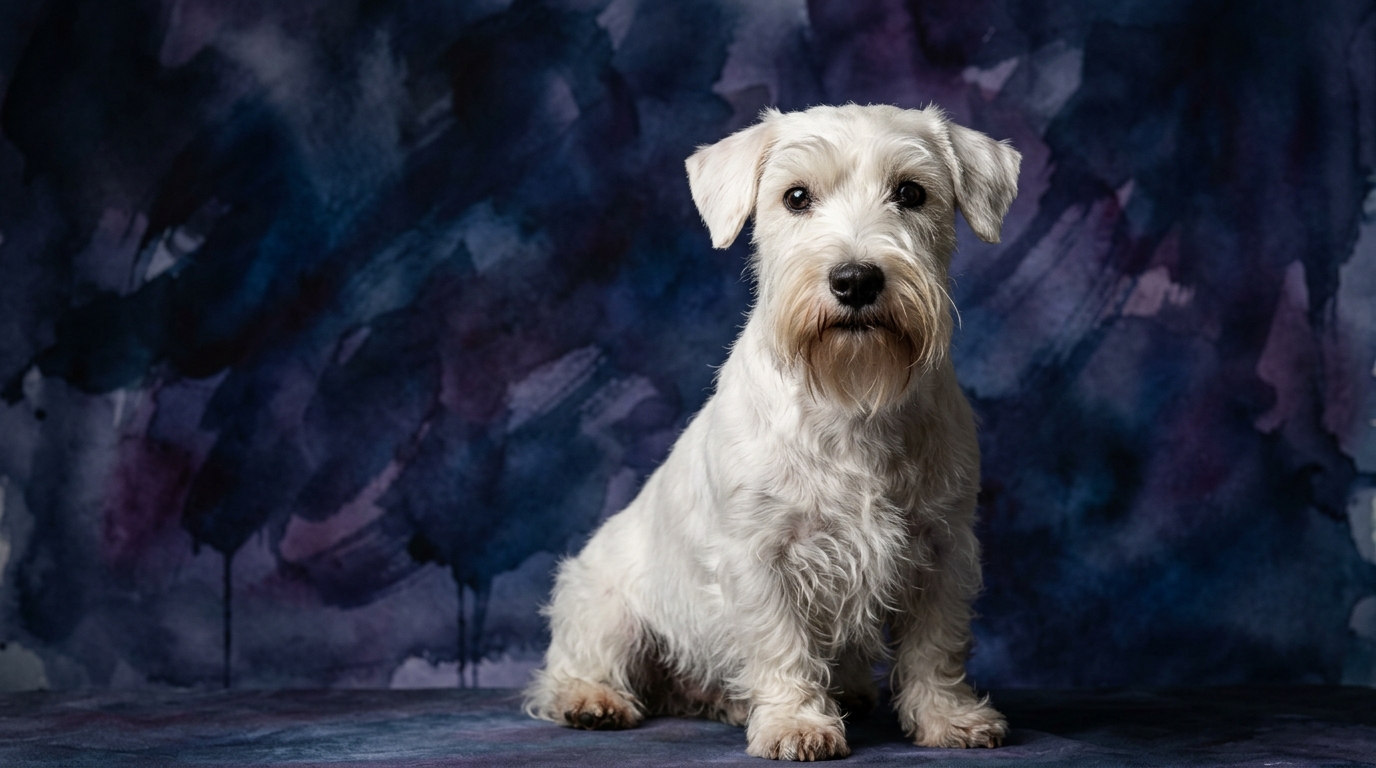
The Sealyham Terrier's profile paints a picture of a capable but self-reliant thinker. Its Problem Solving score of 3/5 indicates an average capacity for navigating novel challenges, often relying on established patterns or persistent trial-and-error rather than swift, innovative leaps. Training Speed also registers at 3/5, suggesting that new commands may require consistent, patient methods and a moderate number of repetitions to solidify. Social Intelligence, at 3/5, means the Sealyham possesses an average understanding of human cues and social dynamics within its immediate family, but may not always prioritize human directives over its own interests, especially when its focus is elsewhere. Its Instinctive Drive, also 3/5, reflects a moderate expression of inherent terrier behaviors like digging or chasing, which can be channeled with appropriate outlets. Finally, Memory at 3/5 shows an average retention rate for information and learned behaviors, benefiting from regular reinforcement to maintain skills.
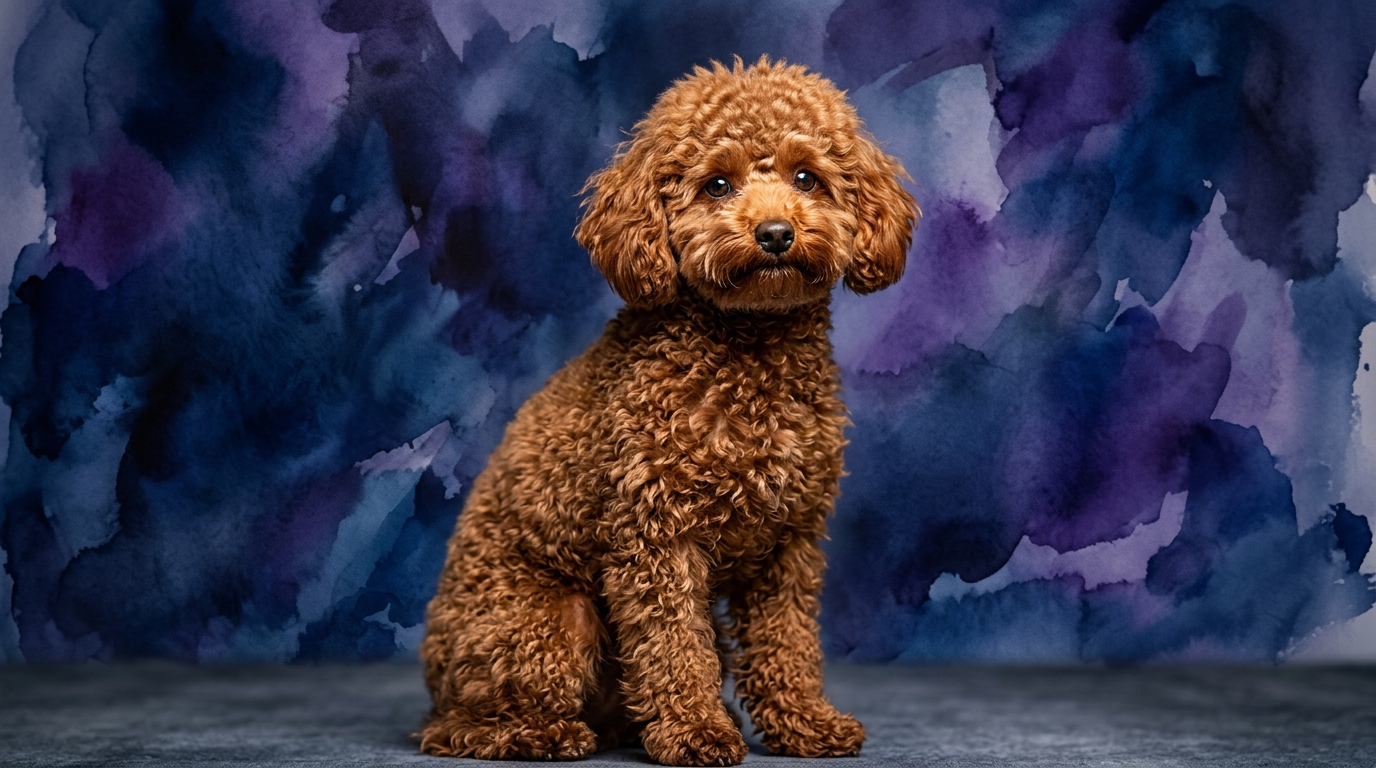
In contrast, the Toy Poodle's profile reveals a remarkably agile and receptive mind. With a Problem Solving score of 5/5, this breed demonstrates exceptional ability to analyze and overcome complex situations, often finding creative and efficient solutions to obstacles. Its Training Speed is also a perfect 5/5, signifying a dog that absorbs new commands and routines with astonishing rapidity, frequently grasping concepts after very few repetitions. Like the Sealyham, the Toy Poodle has a Social Intelligence score of 3/5, indicating an average understanding of human emotional states and social structures, often seeking to cooperate and engage with its companions. Its Instinctive Drive is also 3/5, reflecting a moderate expression of inherent breed behaviors, though typically less focused on prey drive and more on interactive engagement. Crucially, its Memory score of 5/5 highlights superior recall for commands, routines, and experiences, making the retention of learned behaviors long-lasting and reliable.
Where the Sealyham Terrier Wins Cognitively
The Sealyham Terrier's cognitive strengths are deeply rooted in its heritage as a tenacious, independent working terrier. While its problem-solving scores are moderate, this often translates into a dog that is less reliant on constant human direction for certain tasks. For instance, when faced with a puzzle that requires sheer persistence rather than immediate insight, a Sealyham may patiently work through it, driven by its inherent determination to achieve its goal. This breed's combination of moderate social intelligence and a solid instinctive drive means it can be self-sufficient in exploring its environment or pursuing a scent, a characteristic highly valued by terrier enthusiasts. They may not instantly grasp every human instruction, but once a task aligns with their own perceived objective, they can apply a focused, independent effort that is distinct from a more cooperative breed.
Where the Toy Poodle Wins Cognitively
The Toy Poodle excels in areas demanding rapid learning, complex problem-solving, and superior memory, reflecting its history as a versatile working and companion dog. Their 5/5 scores in problem-solving and training speed indicate a remarkable capacity for cognitive flexibility and adaptation. A Toy Poodle can quickly assess a novel situation, such as navigating a new obstacle course or deciphering a complex multi-step command, and formulate an effective strategy. Their exceptional memory ensures that once a solution or command is learned, it is retained for extended periods, significantly reducing the need for constant re-training. This mental agility makes them exceptionally adept at activities like advanced obedience, agility, and even learning intricate tricks, where quick understanding, precise execution, and consistent recall are paramount.
Which is Easier to Train and Why
Based on our IQ metrics, the Toy Poodle is significantly easier to train than the Sealyham Terrier. The Toy Poodle's 5/5 training speed means they absorb new commands and routines almost instantaneously, often understanding a concept in just a few repetitions. Their strong memory (5/5) ensures these lessons stick, making training sessions remarkably efficient and rewarding. This ease of training is a direct result of their historical development; Poodles were bred for complex tasks requiring close cooperation with humans, fostering a strong desire to engage and a quick grasp of instruction.
Conversely, the Sealyham Terrier's 3/5 training speed suggests a more deliberate learning curve, requiring more patience and repetition to solidify commands. This difference is rooted in their breed history as independent hunters, where they needed to think for themselves and often prioritize their own instincts over human directives. For example, a Toy Poodle might learn to reliably 'stay' in minutes, while a Sealyham might need several days of consistent practice to perform the same command under various distractions. The Sealyham's inherent independence means that while they are capable of learning, their motivation often needs to be carefully aligned with their own interests, making them more challenging in traditional obedience settings.
Which Suits Active Owners vs. Relaxed Owners
Both breeds can thrive with engaged owners, but their activity needs and cognitive engagement styles differ. The Toy Poodle, with its high problem-solving and training speed, benefits immensely from owners who enjoy providing consistent mental stimulation. This includes activities like advanced obedience, agility, puzzle toys, and learning new tricks, which satisfy their profound need for cognitive work. While they enjoy physical exercise, their mental needs are equally paramount, making them suitable for active owners who prioritize consistent training and intellectual engagement. A relaxed owner might find a Toy Poodle becomes bored and potentially develops undesirable behaviors if their sharp mind isn't regularly challenged.
The Sealyham Terrier, while also requiring regular exercise to manage its terrier energy, can suit owners who appreciate a more independent companion. Their moderate IQ scores suggest they might not demand constant, complex mental tasks in the same way a Poodle does. They are content with exploring their environment, engaging in moderate physical activity, and perhaps a good digging session. Relaxed owners who enjoy consistent but not necessarily intensive training, and who appreciate a dog with a robust, self-assured personality, might find a Sealyham a good fit, provided their physical exercise needs are met and their independent nature is understood and respected.
The Verdict
Choose a Sealyham Terrier if you appreciate a tenacious, independent canine companion with a strong will and moderate training requirements, suitable for owners who value a dog's self-assured nature.
Opt for a Toy Poodle if you seek a highly trainable, cognitively agile companion eager to learn and excel in complex tasks, perfect for owners who enjoy consistent mental stimulation and rapid progress in training.
🧠 Find Your Pet's IQ Score
Our Pet IQ Lab assessment covers 25+ tests across 5 cognitive dimensions — personalized to your breed.
Take the Full IQ Test →Frequently Asked Questions
Do Sealyham Terriers need a lot of mental stimulation?
While not requiring the same intensity of complex mental challenges as a Toy Poodle, Sealyham Terriers still benefit from mental engagement. They enjoy activities that allow them to use their natural terrier instincts, such as scent work or problem-solving toys that require persistence, rather than constant obedience drills.
Are Toy Poodles good for first-time dog owners?
Yes, Toy Poodles can be excellent for first-time dog owners due to their high trainability and eagerness to please. Their quick learning makes the training process smoother, though owners must be prepared to provide consistent mental engagement to prevent boredom and ensure a well-adjusted companion.
How do the social intelligence scores impact interaction with owners?
Both breeds have a 3/5 social intelligence score, meaning they possess an average understanding of human cues. This suggests they will interact well with their family but might not always prioritize human directives over their own interests, particularly for the more independent Sealyham. Consistent, positive reinforcement training helps build a strong cooperative bond with both breeds.