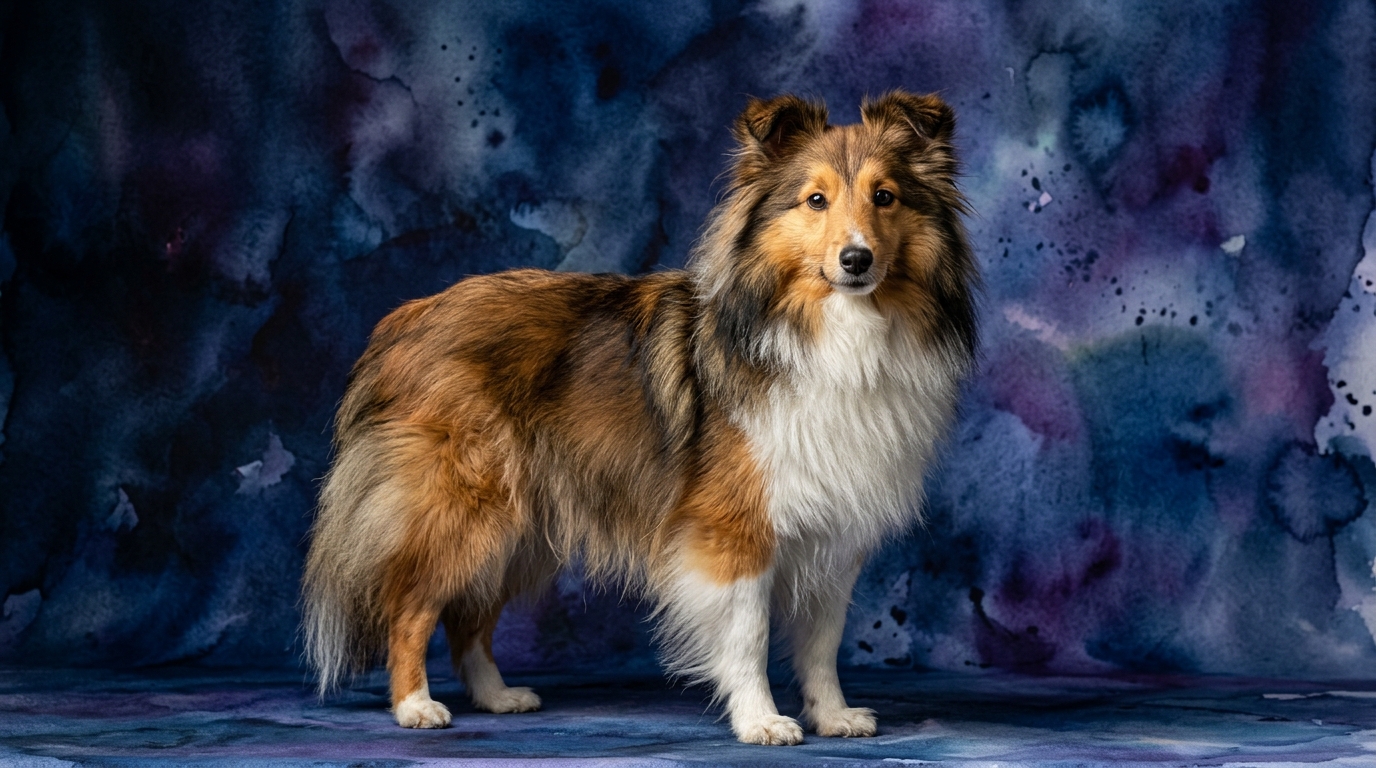

Side-by-Side IQ Profile: Shetland Sheepdog vs. Briard
The Cosmic Pet Pet IQ Lab assesses canine intelligence across five key dimensions, providing a granular view of each breed's cognitive strengths. For the Shetland Sheepdog, recognized with a Coren rank of #6, their profile paints a picture of quick-witted biddability. They score 4/5 in Problem Solving, indicating resourcefulness in navigating challenges, and an exceptional 5/5 in Training Speed, reflecting their rapid acquisition of new commands. Their Social Intelligence is a robust 4/5, enabling them to form deep, responsive bonds, while their Instinctive Drive is a perfect 5/5, showcasing a profound desire for purposeful work. Finally, their Memory is also a stellar 5/5, ensuring excellent retention of learned behaviors and experiences.
In contrast, the Briard, with a Coren rank of #30, presents a different yet equally capable cognitive landscape. Their Problem Solving also scores 4/5, suggesting a similar capacity for analytical thought, though often expressed with more independence. Training Speed is a solid 4/5, indicating good learning aptitude, albeit requiring a slightly different approach than the Sheltie. Their Social Intelligence is 3/5, pointing to a more discerning and family-centric bond. Instinctive Drive stands at 3/5, channeled primarily into guarding and protection rather than constant herding. Their Memory is rated 4/5, a strong capacity for recall relevant to their duties and routine.
Where the Shetland Sheepdog Shines Cognitively
The Shetland Sheepdog's cognitive profile showcases several standout strengths. Their remarkable Training Speed, rated 5/5, is unparalleled; these dogs grasp new commands and complex sequences with minimal repetition, making them a joy for advanced obedience or dog sports. This rapid learning is fueled by an eager-to-please temperament and an intense focus on their handler.
Furthermore, their Instinctive Drive, a perfect 5/5, manifests as a strong desire for purposeful engagement. This isn't just about physical activity; it's a drive to participate in tasks, solve puzzles, and work collaboratively, making them exceptional candidates for agility, herding trials, and intricate trick training. Paired with a 5/5 Memory, Shelties retain these complex learned behaviors and intricate routines with impressive longevity, building upon their repertoire effortlessly. Their 4/5 Social Intelligence also means they are profoundly attuned to human emotions and social cues, often anticipating needs and reacting sensitively, fostering a highly communicative and responsive partnership.
Unique Cognitive Strengths of the Briard
While the Briard's numerical scores may appear slightly lower in some categories compared to the Sheltie, their intelligence manifests in distinct and valuable ways, particularly suited to their historical roles. Their Problem Solving acumen, also rated 4/5, often leans towards independent assessment and decision-making. Unlike the Sheltie's collaborative approach, a Briard frequently evaluates situations and devises solutions without constant handler input, a crucial trait for a guardian tasked with independent judgment.
The Briard's Instinctive Drive, rated 3/5, is specifically channeled into vigilance and protection. This drive compels them to be watchful guardians, requiring constant environmental survey and independent judgments about potential threats, a different cognitive demand than constant herding activity. Their Social Intelligence, at 3/5, is characterized by a deep, discerning loyalty to their immediate family. They form intense, protective bonds with their chosen people, exhibiting a more reserved demeanor towards strangers, a functional strength for a guardian breed that values discernment over indiscriminate friendliness. Their 4/5 Memory is particularly strong for people, places, and routines relevant to their protective duties, allowing them to remember who belongs and who doesn't, reinforcing their role as a watchful family member.
Ease of Training: Sheltie's Biddability vs. Briard's Thoughtful Independence
When it comes to ease of training, the Shetland Sheepdog generally holds an edge due to their 5/5 Training Speed and high biddability. Shelties possess an innate eagerness to please and a focused attention span, allowing them to pick up new commands and cues with remarkable swiftness. They thrive on positive reinforcement and repetition, quickly generalizing learned behaviors to new environments. Their desire for engagement and a strong working ethic make them highly responsive to consistent, engaging training methods, often excelling in competitive obedience with minimal effort.
The Briard, with a 4/5 Training Speed, is still a capable learner but approaches training with a more thoughtful, sometimes independent, disposition. While they are intelligent and capable of learning complex tasks, they might require more patience, consistency, and a deeper understanding of their motivations. Briards often need to understand the 'why' behind a command and may process information internally before responding. This can sometimes be perceived as stubbornness, but it's often a manifestation of their self-reliant nature. Training a Briard requires a confident, consistent handler who can build trust and respect, fostering a partnership where the dog willingly participates rather than simply obeying.
Matching Breeds to Lifestyles: Active Engagement vs. Calm Guardianship
For owners seeking a companion for highly active engagement and intricate dog sports, the Shetland Sheepdog is an exceptional choice. Their 5/5 Instinctive Drive means they thrive on constant mental and physical stimulation, excelling in activities like agility, flyball, herding, and advanced obedience. A Sheltie needs an owner who can commit to daily exercise, training, and puzzle-solving to keep their sharp mind occupied. They are not suited for a sedentary lifestyle, as their unfulfilled drives can lead to undesirable behaviors.
The Briard, while also requiring an active owner, offers a different kind of engagement. Their 3/5 Instinctive Drive is geared more towards purposeful guardianship and focused activity rather than constant high-energy bursts. They need regular, moderate exercise to maintain physical health and mental stability, but also thrive on tasks that engage their protective instincts, such as patrolling the yard or accompanying their owner on hikes. Briards benefit from a calm, consistent owner who can provide clear leadership and channel their independent problem-solving skills into appropriate outlets. While they can be relaxed indoors, they still require significant outdoor exertion and a sense of purpose to be truly content.
The Verdict
Choose the Shetland Sheepdog if you seek a highly biddable, quick-to-learn companion for intricate dog sports, advanced obedience, and a demonstrative, sensitive bond that thrives on collaborative engagement.
Opt for the Briard if you desire a thoughtful, independent guardian with a deep, discerning loyalty, willing to invest in patient, consistent training that respects their self-reliant nature and protective instincts.
🧠 Find Your Pet's IQ Score
Our Pet IQ Lab assessment covers 25+ tests across 5 cognitive dimensions — personalized to your breed.
Take the Full IQ Test →Frequently Asked Questions
Are Shetland Sheepdogs good with children?
Shetland Sheepdogs generally form strong bonds with children within their family, often becoming protective and playful companions. However, their herding instincts might lead them to 'nip' at heels, so supervision and early training are essential to ensure positive interactions.
Do Briards require a lot of grooming?
Yes, Briards possess a long, shaggy double coat that requires significant grooming. Regular brushing, at least 2-3 times a week, is necessary to prevent matting and tangles, along with occasional professional grooming to maintain coat health.
Which breed is better for first-time dog owners?
The Shetland Sheepdog, with its higher biddability and eagerness to please, is often a more forgiving choice for first-time dog owners. The Briard's independent nature and specific guardian instincts may require a more experienced handler who understands how to channel their unique cognitive strengths effectively.