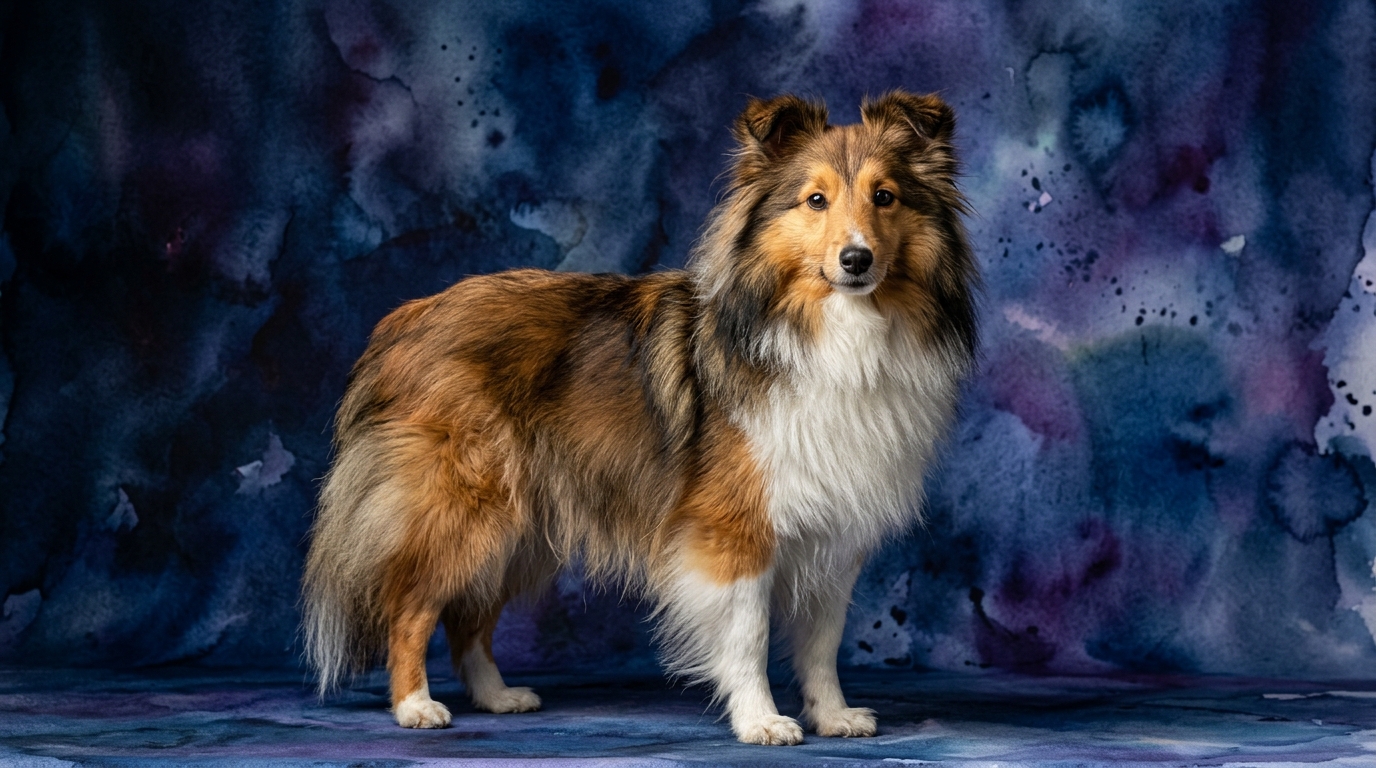
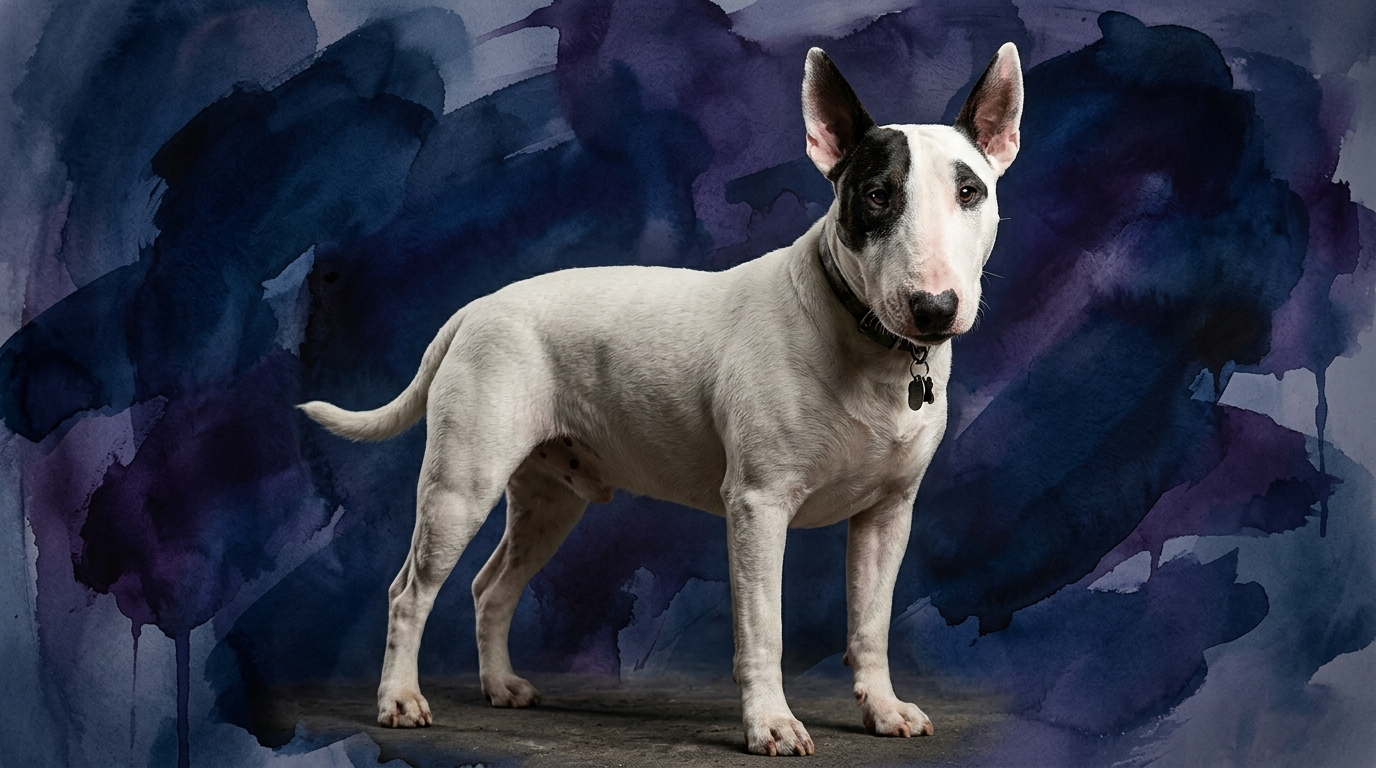
Side-by-Side IQ Profile: Sheltie vs. Bull Terrier
The Cosmic Pet Pet IQ Lab's assessment provides a granular look at the cognitive landscape of these two distinct breeds. The Shetland Sheepdog, a member of the Herding group, boasts an impressive Coren rank of #6, placing it among breeds that demonstrate exceptional working and obedience intelligence. Its IQ scores reflect this: Problem Solving 4/5, Training Speed 5/5, Social Intelligence 4/5, Instinctive Drive 5/5, and Memory 5/5.
A Sheltie's 4/5 in Problem Solving means it can adeptly navigate complex environments and devise solutions to new challenges, often demonstrating foresight. A perfect 5/5 in Training Speed indicates an ability to grasp new commands and concepts with remarkable swiftness, often requiring only a handful of repetitions. Their 4/5 Social Intelligence allows them to keenly interpret human emotions and cues, fostering a deep connection, while a 5/5 Instinctive Drive speaks to their strong inherent desire to work and manage, particularly evident in their herding heritage. Finally, a 5/5 Memory ensures they retain learned behaviors and experiences over extended periods, contributing to their reliability.
In stark contrast, the Bull Terrier, from the Terrier group, holds a Coren rank of #66, positioning it within the average working intelligence category. Its IQ profile shows consistent scores across all dimensions: Problem Solving 3/5, Training Speed 3/5, Social Intelligence 3/5, Instinctive Drive 3/5, and Memory 3/5.
A Bull Terrier's 3/5 in Problem Solving suggests they can handle straightforward tasks but may require more guidance or trial-and-error for novel or abstract challenges. Their 3/5 Training Speed indicates an average learning curve, necessitating more patience and consistent repetition to solidify new behaviors. While they possess 3/5 Social Intelligence, they might be less attuned to subtle human nuances, often preferring more direct interactions. A 3/5 Instinctive Drive points to a moderate inherent motivation, less focused on a specific job but still present in their tenacious terrier spirit. Their 3/5 Memory means they retain information adequately, though perhaps not with the same precision or recall speed as a Sheltie.
Where the Shetland Sheepdog Excels Cognitively
The Shetland Sheepdog's cognitive strengths are deeply rooted in its herding lineage, demanding a sophisticated blend of intellect and responsiveness. Their 5/5 Training Speed and 5/5 Memory are a formidable combination, allowing them to master intricate command sequences and complex routines with remarkable efficiency. This translates into an exceptional capacity for advanced obedience, agility, and even service work, where rapid learning and faultless recall are paramount.
Their Problem Solving score of 4/5, coupled with a 4/5 Social Intelligence, means Shelties are not just capable of following instructions, but also of understanding the intent behind them. They can anticipate human needs and adapt their behavior accordingly, often making proactive decisions. For instance, a Sheltie might intuitively guide a wandering child back towards an owner, demonstrating a practical application of their problem-solving and instinctive drive in a domestic setting, rather than just on a farm.
The Sheltie's high Instinctive Drive (5/5) means they possess an innate eagerness to engage in mentally stimulating activities. This isn't merely about physical exertion; it's a cognitive drive to 'work' and be useful, making them receptive to learning new tricks, puzzles, and interactive games that challenge their intellect. Their cognitive profile makes them highly adaptable to diverse learning environments and complex tasks.
Where the Bull Terrier's Cognition Shines Uniquely
While the Bull Terrier's IQ scores may not reach the Sheltie's peaks, their cognitive profile offers a unique set of strengths, particularly suited to their terrier heritage and robust personality. Their 3/5 in Problem Solving, while not elite, reflects a distinct form of tenacious intelligence. Bull Terriers are known for their strong will and independent thinking; they might not solve problems quickly, but they will persist, often trying various approaches until they find a solution that works for them, even if it's not the one an owner intended.
The Bull Terrier's moderate Instinctive Drive (3/5) can be a cognitive advantage in a non-working companion role. Unlike breeds with intense drives that require constant channeling, a Bull Terrier's drive is more manageable, translating into a dog that enjoys activity but is also content with periods of relaxation. This allows them to integrate more seamlessly into family life without the perpetual need for a 'job,' provided their mental and physical needs are met through consistent engagement.
Their 3/5 Social Intelligence and Memory, though not as high as a Sheltie's, contribute to a straightforward and robust social interaction style. Bull Terriers tend to be less prone to anxiety from complex social cues or overthinking situations. They appreciate clear, direct communication and build strong, loyal bonds through consistent, positive interactions. Their cognitive make-up fosters a resilient, self-assured temperament, allowing them to handle various situations with a level-headedness that belies their sometimes boisterous appearance.
Training Dynamics: Which is Easier and Why?
When it comes to ease of training, the Shetland Sheepdog is the clear frontrunner. Their 5/5 Training Speed, combined with a 5/5 Memory and 4/5 Social Intelligence, creates an almost ideal student. Shelties are eager to please, keenly observe human cues, and quickly associate commands with actions. They thrive on positive reinforcement, often requiring minimal repetitions to solidify a new behavior. Their instinctive drive to work and their capacity for complex problem-solving mean they not only learn commands but also understand the context and purpose, making them highly responsive and reliable.
The Bull Terrier, on the other hand, presents a more significant training challenge due to its consistent 3/5 scores across all cognitive dimensions. Their independent terrier spirit means they can be more strong-willed and less inclined to blindly follow commands. Training a Bull Terrier demands patience, consistency, and a creative approach to keep them engaged, as they can get bored with repetitive drills. Owners need to make training fun and rewarding to overcome their tendency to 'think for themselves' rather than immediately comply. While they are capable of learning, the process will require more time and effort, and less direct responsiveness compared to a Sheltie.
Matching Breeds to Lifestyles: Active vs. Relaxed Owners
For active owners seeking a dynamic and engaged canine partner, the Shetland Sheepdog is an exceptional match. Their 5/5 Instinctive Drive and 4/5 Problem Solving capacity mean they thrive on mental and physical stimulation. Shelties excel in dog sports like agility, obedience, and rally, and require extensive daily exercise, including brisk walks, runs, and interactive play. An owner who enjoys outdoor adventures, structured training, and wants a dog to participate in various activities will find a Sheltie to be an enthusiastic and capable companion. They require a lifestyle that consistently challenges their sharp minds and high energy levels.
The Bull Terrier can suit a range of owners, but perhaps leans more towards those who appreciate a robust companion without the intense 'job' orientation of a Sheltie. Their 3/5 Instinctive Drive means they enjoy regular exercise and playtime but are not typically driven by a relentless need for a specific task. They are often content with daily walks, playtime in the yard, and ample family interaction. While they require consistent training and mental engagement to prevent boredom, their energy output is generally more manageable than a Sheltie's. A 'relaxed' owner in this context would be someone who values companionship, consistent but not necessarily intense activity, and is prepared for a dog with a strong, independent personality.
The Verdict
Choose the Shetland Sheepdog if you desire a highly trainable, responsive companion eager for complex mental and physical challenges, and you're prepared to provide consistent, engaging activities.
Opt for the Bull Terrier if you appreciate an independent, tenacious companion with a unique personality, and you are ready for patient, consistent training with a firm but fair approach.
🧠 Find Your Pet's IQ Score
Our Pet IQ Lab assessment covers 25+ tests across 5 cognitive dimensions — personalized to your breed.
Take the Full IQ Test →Frequently Asked Questions
Are Shetland Sheepdogs prone to barking?
Yes, Shetland Sheepdogs are known to be vocal, using barks to alert their owners, express excitement, or when they are bored; consistent training can help manage this tendency.
Do Bull Terriers get along with other pets?
Bull Terriers can coexist with other pets, especially if raised with them from a young age, but their strong prey drive and dominant tendencies necessitate careful, early socialization and supervision, particularly with smaller animals.
Which breed is better for apartment living?
While both breeds can adapt to apartment living with sufficient exercise, a Bull Terrier might be slightly more suitable due to their less intense exercise needs compared to a Sheltie's high drive for constant activity and mental work.