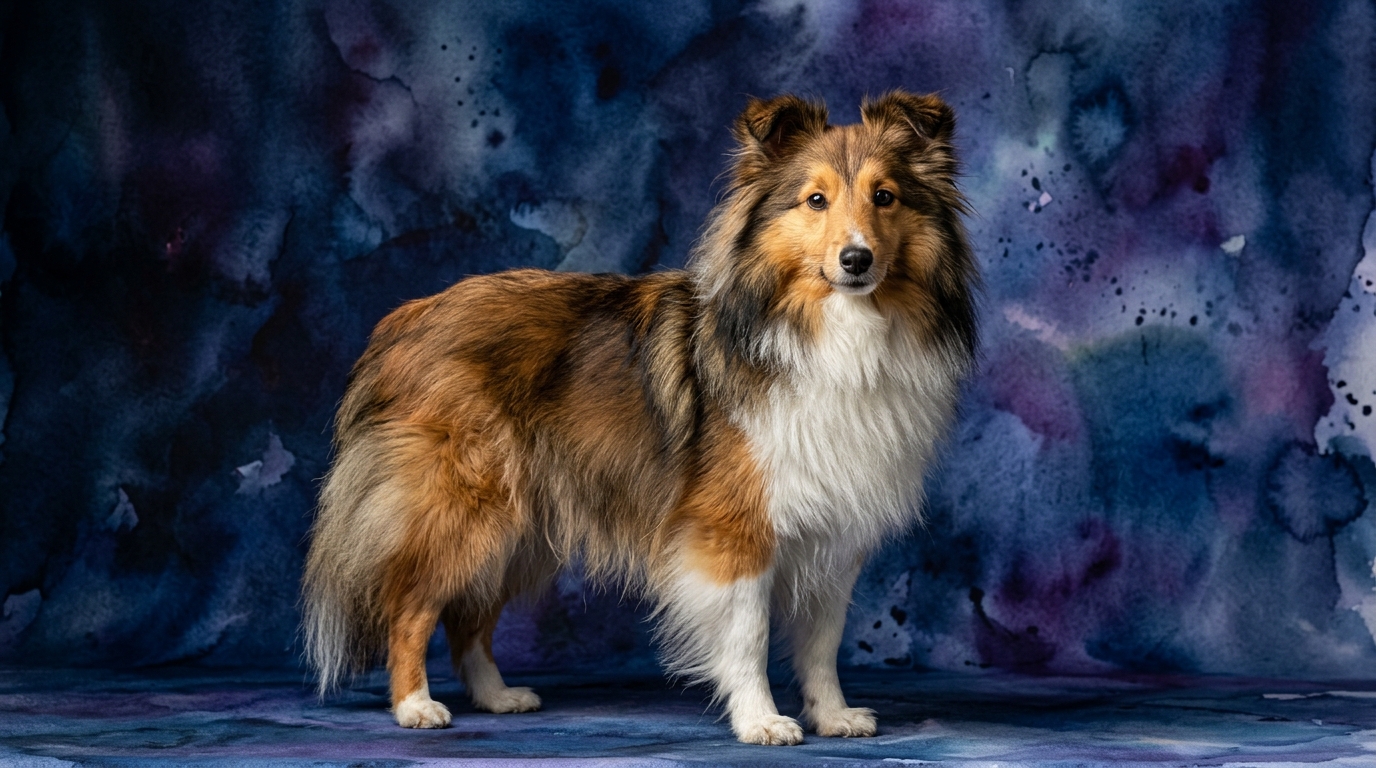

Side-by-Side Cognitive Profiles: Shetland Sheepdog vs. Chinook
At The Cosmic Pet Pet IQ Lab, we evaluate canine intelligence across five key dimensions to provide a nuanced understanding of each breed's cognitive strengths. For the Shetland Sheepdog, a breed renowned for its herding prowess, we observe a distinct profile that reflects its historical role. Their Problem Solving capability is rated at 4/5, indicating an aptitude for navigating complex situations and making independent decisions, a trait honed by managing livestock. Training Speed is exceptional at 5/5, showcasing a remarkable ability to grasp new commands with minimal repetition. Social Intelligence stands at 4/5, highlighting their attunement to human cues and social dynamics, fostering strong bonds. An Instinctive Drive of 5/5 speaks to their powerful, well-defined herding impulse, an innate desire to organize and control. Finally, their Memory is rated 5/5, signifying an excellent capacity for retaining learned behaviors and routines over extended periods.
The Chinook, a breed developed for its endurance and companionship in sledding, presents a different yet equally valuable cognitive blueprint. Their Problem Solving ability is rated 3/5, suggesting a steady, practical approach to challenges, often favoring persistence over rapid, complex strategizing. Training Speed is 3/5, indicating they learn reliably with consistent reinforcement, building a solid understanding over time. Social Intelligence is also 3/5, reflecting a deep loyalty to their family unit and a reserved but observant nature with those outside their inner circle. An Instinctive Drive of 3/5 points to a strong desire for purposeful activity and partnership, rooted in their working heritage, rather than the intricate control seen in herding breeds. Their Memory, at 3/5, demonstrates a solid recall for established commands and routines, contributing to their dependability as companions.
Where the Shetland Sheepdog Shines Cognitively
The Shetland Sheepdog's cognitive architecture is particularly well-suited for tasks demanding rapid learning and intricate decision-making. Their 5/5 Training Speed is a standout feature, enabling them to assimilate complex sequences of commands with remarkable efficiency, often requiring fewer repetitions than many other breeds. This quick uptake is not merely about speed; it reflects an advanced capacity to forge strong associations between actions and desired outcomes, making them exceptional candidates for advanced obedience, agility, or trick training. This cognitive agility is further supported by their 5/5 Memory, which ensures these learned behaviors and solutions are retained with remarkable fidelity, contributing to their consistent performance across diverse tasks. Their 4/5 Problem Solving capability, fueled by a powerful 5/5 Instinctive Drive for herding, allows them to devise creative solutions to novel challenges, adapting quickly to changing circumstances. This combination of rapid learning, robust memory, and agile problem-solving provides the Shetland Sheepdog with a distinct edge in environments that reward intellectual versatility and responsiveness to subtle cues.
Chinook's Unique Cognitive Strengths
While the Chinook's IQ scores may appear more moderate compared to the Sheltie’s, their cognitive strengths are uniquely adapted to their original purpose and contribute to a distinct form of working reliability and companionship. Their 3/5 Problem Solving, for example, is characterized by a steady, methodical approach to overcoming physical obstacles or completing sustained tasks, rather than a frantic burst of complex maneuvers. They excel in situations requiring endurance and consistent effort, often demonstrating a resilient mindset when faced with challenges. The Chinook's 3/5 Instinctive Drive, deeply rooted in their sled-pulling origins, translates into a profound desire for purposeful work alongside their human companions, fostering a steadfast willingness to cooperate on long-duration activities. This drive underpins a robust, dependable work ethic. Their 3/5 Social Intelligence, while not overtly expressive, contributes to a calm, unwavering loyalty to their family, positioning them as dependable emotional anchors. They bring a quiet, steady presence, and their 3/5 Memory ensures they reliably recall routines and expectations, providing a predictable and comforting companionship. The Chinook's cognitive profile emphasizes resilience, steadfastness, and a deep-seated desire for partnership, rather than lightning-fast intellectual agility.
Training Dynamics: Sheltie's Eagerness vs. Chinook's Steadfastness
When considering ease of training, the Shetland Sheepdog generally offers a more fluid and rapid experience due to their exceptional Training Speed (5/5) and high Memory (5/5). They absorb new commands and routines with remarkable efficiency, often requiring minimal repetition before a behavior is solidified. This rapid learning is synergized with a strong desire to please and a keen attentiveness to their handler's cues, making them highly responsive to positive reinforcement. For instance, teaching a Sheltie a multi-step agility course or a complex sequence of tricks often progresses quickly because they form associations between actions and rewards almost instantly and retain them firmly. Their inherent Instinctive Drive (5/5) to herd also provides a natural framework for understanding direction and control, which can be skillfully channeled into obedience work, making them seem almost intuitive to train.
In contrast, the Chinook, with a Training Speed of 3/5 and Memory of 3/5, requires more patience and unwavering consistency. They learn at a steady pace but are not as quick to grasp novel concepts or as eager to offer new behaviors without clear, repetitive guidance. A Chinook might need more structured, shorter practice sessions and a longer period to solidify a command, but once learned, their actions are typically reliable and enduring. Their training benefits from a calm, consistent approach that builds on their natural desire for partnership and sustained effort, rather than relying on rapid intellectual leaps. While a Sheltie might pick up a new trick in a few sessions, a Chinook will reliably perform a learned command for years once it's thoroughly ingrained, showcasing a different kind of training success rooted in consistency and loyalty.
Matching Canine Minds to Lifestyles: Active vs. Steady Companionship
The Shetland Sheepdog is an ideal match for active owners who relish engaging deeply with their dog's sharp intellect and abundant energy. Their 5/5 Instinctive Drive and 4/5 Problem Solving mean they require consistent mental stimulation and ample physical outlets to prevent boredom and channel their inherent herding tendencies constructively. Owners who enjoy dog sports like agility, advanced obedience, rally, or even dabbling in herding activities will find a Sheltie to be an eager, capable, and highly rewarding partner, thriving on the challenge and interactive engagement. They are not content with mere backyard lounging; they need a purposeful activity or a 'job,' even if that job is learning new tricks, solving complex puzzle toys, or participating in regular, engaging walks or runs. Their cognitive prowess demands an owner who can provide an outlet for their intellectual curiosity.
Conversely, while all dogs require engagement, the Chinook aligns better with owners seeking a steadfast companion for consistent, moderate activity rather than intense, high-octane competitive engagement. Their 3/5 Instinctive Drive is geared towards sustained effort and companionship, making them excellent partners for hiking, long walks, or perhaps recreational sledding, without the same frantic need for constant novelty or intricate mental puzzles. They appreciate a predictable routine and the comforting presence of their family, often preferring to be a reliable, quiet presence during family activities rather than demanding the constant intellectual stimulation that a Sheltie often craves. They are content with being a loyal, enduring presence, and while they absolutely need regular exercise, it doesn't always have to be a competitive sport or a mentally exhausting puzzle, making them suitable for owners who value a steady, calm, and devoted companion.
The Verdict
For owners seeking a highly trainable, quick-witted canine partner eager for complex mental challenges and dog sports, the Shetland Sheepdog offers unparalleled responsiveness and intellectual engagement.
Opt for a Chinook if you desire a loyal, steady companion for consistent outdoor activities and a calm, reliable presence in the home, valuing endurance and steadfast partnership over rapid cognitive agility.
🧠 Find Your Pet's IQ Score
Our Pet IQ Lab assessment covers 25+ tests across 5 cognitive dimensions — personalized to your breed.
Take the Full IQ Test →Frequently Asked Questions
Which breed is better for first-time dog owners?
The Shetland Sheepdog's eagerness to learn and strong desire to please can make them rewarding for first-time owners willing to invest in consistent training and mental enrichment. However, their high energy and vocal tendencies require a committed approach, whereas the Chinook's more moderate drive might be less overwhelming, though they still benefit from experienced guidance.
Do Shetland Sheepdogs bark more than Chinooks?
Yes, Shetland Sheepdogs generally have a reputation for being more vocal, often using their barks to communicate or express their herding instincts, which can be managed with training. Chinooks tend to be quieter, though they will alert bark, their vocalizations are typically less frequent and intense than a Sheltie's.
Which breed is more adaptable to apartment living?
While both breeds require exercise, a well-exercised Shetland Sheepdog can adapt to apartment living due to their smaller size and trainability, provided their mental and physical needs are met daily. The larger Chinook, though calm indoors, generally benefits from more space and a yard to stretch out, and their working heritage often means they prefer more expansive outdoor access.