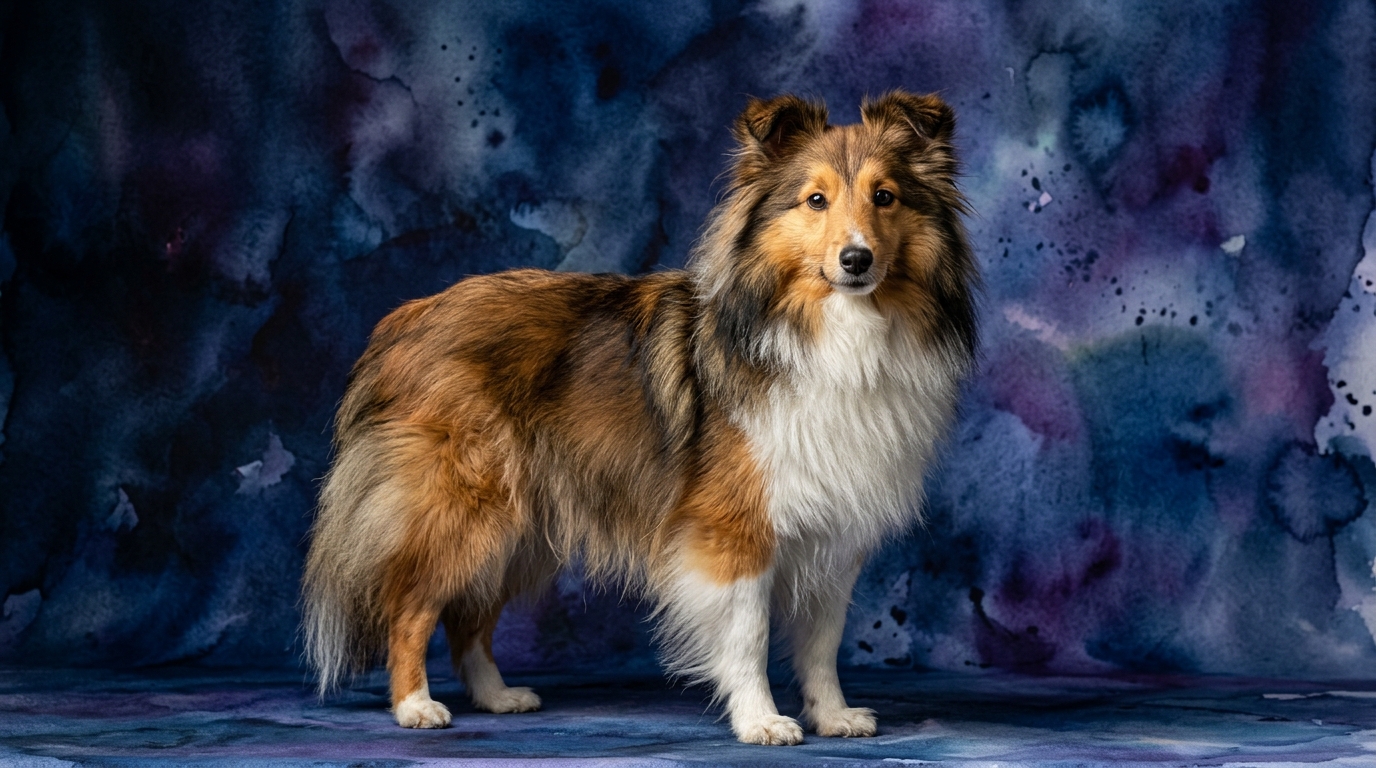
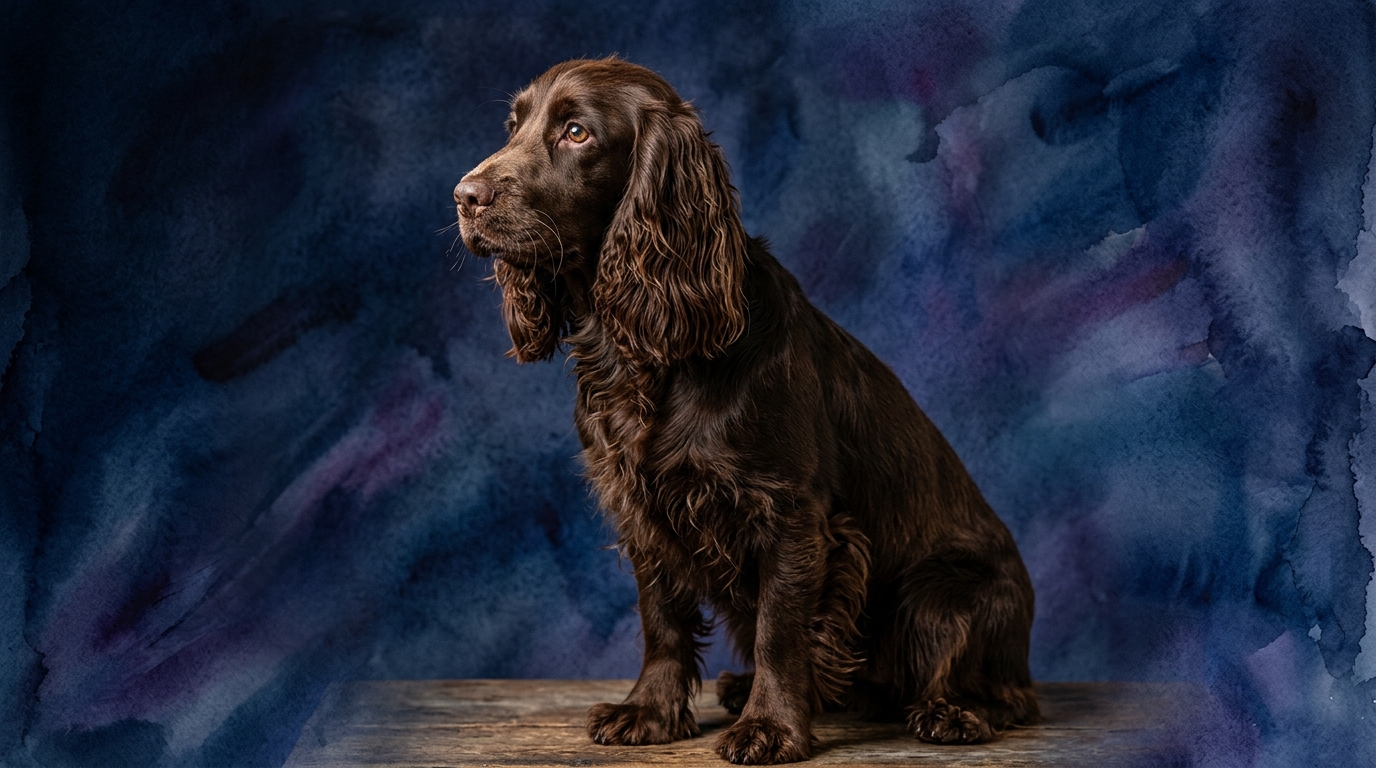
Side-by-Side Cognitive Profiles: Sheltie vs. Field Spaniel
The Shetland Sheepdog, a member of the Herding Group, consistently demonstrates a profound cognitive capacity, reflected in its Coren ranking of #6, placing it among breeds that grasp new commands with exceptional speed and understand complex tasks readily. Its problem-solving ability scores a robust 4/5, indicating a dog capable of navigating novel situations with strategic thought, whether it's figuring out a puzzle toy or devising a way to 'herd' family members. Training speed for the Sheltie is rated at a perfect 5/5, suggesting an almost instantaneous assimilation of new cues and behaviors, a trait essential for working closely with a shepherd. Social intelligence, at 4/5, points to a keen awareness of human emotions and intentions, allowing for nuanced communication and partnership. The instinctive drive, also 5/5, speaks to a powerful, inherent motivation to work and interact with their environment, particularly through herding behaviors. Finally, their memory, a 5/5, ensures that learned behaviors and established routines are retained with impressive longevity.
In contrast, the Field Spaniel, a Sporting Group member, presents a cognitive profile that, while not Coren-ranked, is well-suited to its historical role. Its problem-solving score of 3/5 indicates a capable dog that can learn and adapt, though perhaps with less spontaneous innovation than a Sheltie. This translates to an ability to understand household rules and navigate familiar environments effectively without constantly seeking complex intellectual challenges. Training speed is rated at 3/5, suggesting that the Field Spaniel learns new commands at a steady, moderate pace. Owners will find that consistency and positive reinforcement yield good results, but patience is a virtue. Social intelligence also scores 3/5, meaning these dogs are generally amiable and responsive to human interaction, forming strong bonds, but perhaps less prone to the subtle emotional mirroring seen in some more intensely 'people-focused' breeds. The instinctive drive, at 3/5, reflects their sporting heritage – a drive to flush and retrieve, but typically without the incessant intensity of a herding breed. Their memory, likewise 3/5, ensures they recall learned behaviors and routines, though perhaps not with the encyclopedic recall of a Sheltie. These scores paint a picture of a balanced, adaptable companion whose cognitive strengths align with companionship and moderate activity rather than constant, high-level mental work.
Where the Shetland Sheepdog Excels Cognitively
The Shetland Sheepdog's cognitive advantages are pronounced, particularly in areas demanding rapid processing and intricate understanding. Its 4/5 problem-solving score, combined with a 5/5 training speed, means a Sheltie can often anticipate human intentions and learn multi-step commands in very few repetitions. This is not just about obedience; it's about a dog that can quickly assess environmental changes, such as a gate left ajar, and understand the implications, potentially even attempting to 'fix' the situation. Their herding instinct, rated 5/5, is a powerful cognitive tool that translates into an innate ability to organize and direct, not just sheep, but also family members, other pets, or even toys, demonstrating a sophisticated spatial and social awareness.
The Sheltie's 5/5 memory is another significant cognitive win. This means that once a Sheltie learns a command, a routine, or even a specific route during a walk, it is deeply ingrained. This superb recall not only makes training highly efficient but also builds a reliable companion who remembers house rules, boundaries, and past interactions. Their 4/5 social intelligence means they are exceptionally attuned to human cues, often picking up on subtle shifts in tone or body language, allowing for a highly responsive and empathetic partnership. This combination of attributes positions the Sheltie as a canine whose mind is constantly engaged, processing information, and seeking opportunities to learn and interact meaningfully with its environment and its human companions.
Cognitive Strengths of the Field Spaniel
While the Field Spaniel's cognitive scores are generally more moderate than the Sheltie's, these ratings represent a distinct set of strengths perfectly suited to their temperament and purpose. Their 3/5 problem-solving ability ensures they are capable of learning and adapting to daily life, understanding household routines, and navigating their environment without requiring constant, complex mental challenges. This cognitive profile can be a boon for owners seeking a companion that is intelligent enough to be a well-mannered family member, but not so intensely driven that they constantly seek out 'work' or create their own, potentially mischievous, problems to solve.
The Field Spaniel's 3/5 instinctive drive, rooted in its sporting heritage, provides a focused energy for activities like scent work, retrieving, and exploring, but often without the persistent intensity or neurotic tendencies that can sometimes accompany higher-drive breeds. This means their cognitive engagement is typically satisfied with regular walks, playtime, and perhaps some casual training sessions, rather than requiring the continuous mental stimulation of a working dog. Their 3/5 social intelligence translates to an agreeable and affectionate nature, capable of forming deep bonds without being overly sensitive or prone to anxiety from subtle human mood shifts. This balanced cognitive makeup contributes to a generally stable and easy-going temperament, making them adaptable companions who are content to participate in family life without needing to be the constant center of intellectual command.
Ease of Training: Sheltie's Rapid Acquisition vs. Field Spaniel's Steady Learning
When it comes to ease of training, the Shetland Sheepdog holds a clear advantage with its 5/5 training speed and 5/5 memory. These dogs are often described as 'eager to please' and absorb new commands with remarkable rapidity, sometimes in as few as one or two repetitions. Their inherent desire to work and their strong instinctive drive (5/5) means they are highly motivated by tasks and challenges, channeling their energy into learning. This manifests in behaviors like quickly mastering complex agility courses, understanding intricate trick routines, or responding to hand signals from a distance. Their social intelligence (4/5) also plays a role, as they are exceptionally attuned to their handler's cues, making communication during training fluid and efficient. Behavioral differences are evident; a Sheltie often actively seeks out training opportunities, thriving on the mental engagement and structure it provides, and will retain those lessons for years.
The Field Spaniel, with its 3/5 training speed and 3/5 memory, requires a more patient and consistent approach. While certainly trainable, these dogs learn at a more moderate pace, meaning owners should be prepared for more repetitions and a longer learning curve for new commands. Their instinctive drive (3/5) is geared towards scent and retrieve, which can be harnessed for motivation in training, but they may not possess the same inherent 'job' focus as a herding breed. Real behavioral differences include a Field Spaniel's potential for being easily distracted by interesting scents during outdoor training, or a tendency to be more independent in their learning process. While they form strong bonds, their social intelligence (3/5) might mean they are less intensely focused on every subtle human cue during training, requiring more explicit and consistent instruction. Owners will find that short, positive, and engaging training sessions are most effective, building on successes gradually rather than expecting instant mastery.
Matching Cognitive Profiles to Owner Lifestyles
The distinct cognitive profiles of the Shetland Sheepdog and the Field Spaniel naturally align with different owner lifestyles. The Sheltie, with its 4/5 problem-solving, 5/5 training speed, 5/5 instinctive drive, and 5/5 memory, thrives with active, engaged owners who relish mental stimulation and structured activities. These are dogs that genuinely enjoy learning new tasks, participating in dog sports like agility, obedience, or herding trials, and solving complex puzzle toys. An owner who enjoys daily training sessions, provides varied enrichment, and can channel the Sheltie's intense herding instincts into productive outlets will find an incredibly responsive and fulfilling companion. Without sufficient mental engagement, a Sheltie might invent its own 'work,' which can manifest as excessive barking, 'herding' children or other pets, or developing anxious behaviors, making them less suitable for relaxed owners seeking a purely decorative companion.
Conversely, the Field Spaniel's balanced cognitive profile (3/5 across the board) makes it an excellent fit for owners who appreciate a capable, trainable dog but don't necessarily seek a constant intellectual challenge. These are dogs that enjoy regular physical activity – long walks, hikes, or retrieving games – and benefit from consistent, positive training, but do not typically demand the same intensity of mental 'work' as a Sheltie. Their moderate instinctive drive means they are often content to relax after exercise, making them adaptable to a more relaxed home environment. An owner who enjoys outdoor adventures but also values quiet evenings, and who can provide consistent, patient training without the expectation of instantaneous results, will find the Field Spaniel to be a devoted and amiable companion. They are less likely to become restless or destructive if not constantly challenged mentally, making them a good choice for those seeking a charming and affectionate family dog with a manageable cognitive energy level.
The Verdict: When to Choose Each Breed
The Verdict
Choose the Shetland Sheepdog if you are an active owner who thrives on daily mental engagement, enjoys advanced training, and can channel a dog's profound herding instincts and rapid learning into productive activities like dog sports or complex tasks.
Opt for the Field Spaniel if you desire a devoted, amiable companion who enjoys regular outdoor activity and consistent, patient training, but does not require constant, high-level intellectual stimulation, fitting well into a more relaxed yet active family life.
🧠 Find Your Pet's IQ Score
Our Pet IQ Lab assessment covers 25+ tests across 5 cognitive dimensions — personalized to your breed.
Take the Full IQ Test →Frequently Asked Questions
Is the Shetland Sheepdog prone to anxiety due to its high social intelligence?
The Shetland Sheepdog's 4/5 social intelligence means they are highly attuned to human emotions and environmental changes, which can sometimes manifest as sensitivity or anxiety if not properly socialized or if their environment is unstable. Consistent routine and positive reinforcement help channel their awareness positively.
Do Field Spaniels need less exercise than Shetland Sheepdogs because of their moderate drive?
While Field Spaniels have a 3/5 instinctive drive compared to the Sheltie's 5/5, they are still sporting dogs that require regular, vigorous exercise to satisfy their natural inclinations for scenting and retrieving. Their exercise needs might be less about constant mental 'work' and more about physical exertion, such as long walks, hikes, or games of fetch.
Can a Field Spaniel be trained for complex tasks like a Shetland Sheepdog?
A Field Spaniel can certainly be trained for complex tasks, but its 3/5 problem-solving and training speed mean it will likely require more patience, consistency, and repetitions than a Shetland Sheepdog. While they may not achieve the same speed or intricate understanding as a Sheltie, they are capable of learning a wide range of commands and tricks with dedicated effort.