
Side-by-Side Cognitive Profile
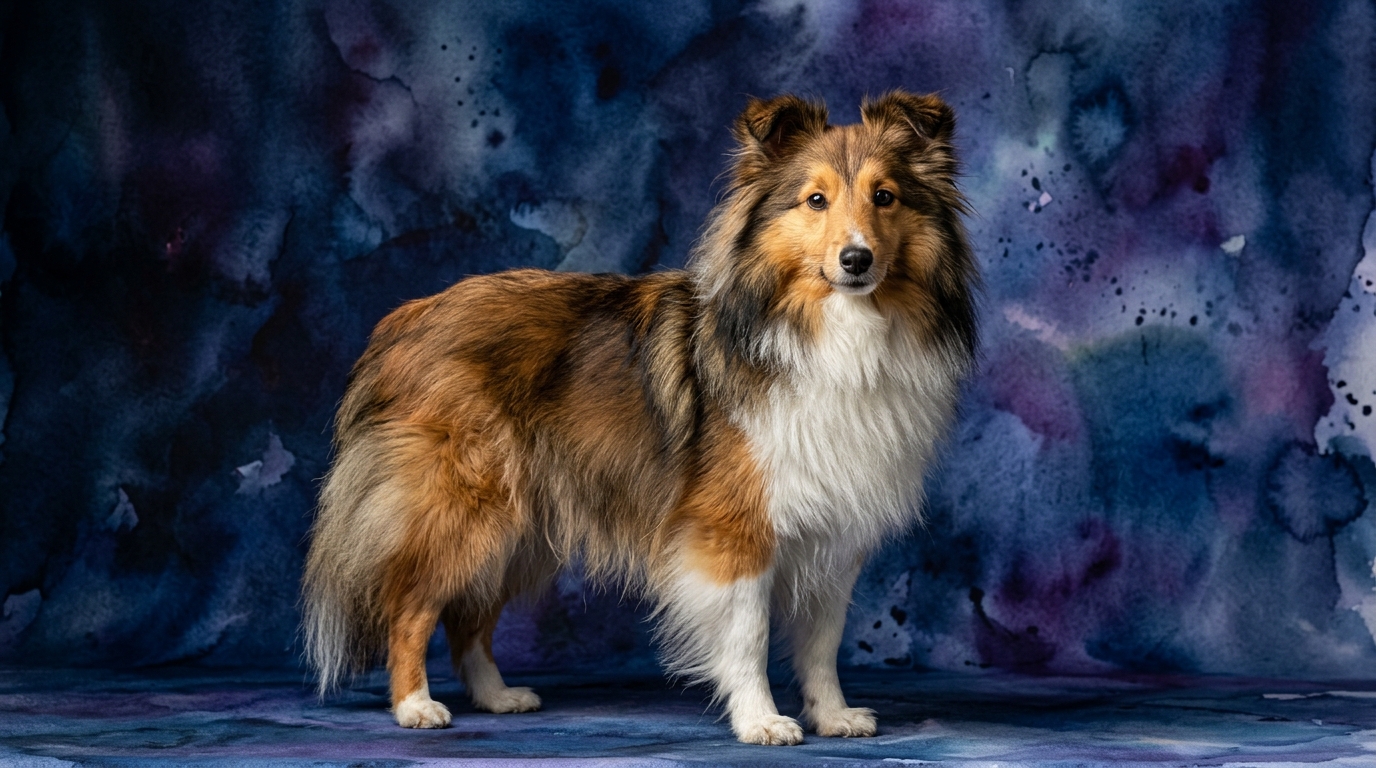
The Cosmic Pet Pet IQ Lab assesses canine intelligence across five key dimensions, revealing distinct cognitive landscapes for each breed. For the Shetland Sheepdog, a Coren rank of #6 underscores a foundation of exceptional working intelligence. Their Problem Solving is rated 4/5, indicating a strong capacity to analyze new situations and devise effective solutions, often involving sophisticated spatial reasoning or understanding cause-and-effect relationships. Training Speed is a perfect 5/5, reflecting their eagerness to please and rapid comprehension, allowing them to grasp new commands and complex sequences in very few repetitions. Social Intelligence, at 4/5, highlights their adeptness at reading human cues and adapting behavior within their family unit, showcasing a keen awareness of social dynamics. Their Instinctive Drive, a perfect 5/5, translates their deep-rooted herding heritage into a powerful impulse to organize, gather, and respond to environmental stimuli, manifesting as a strong work ethic. Finally, their Memory, also 5/5, signifies excellent recall for commands, routines, and experiences, retaining learned behaviors and spatial information over long periods.
In contrast, the Manchester Terrier, without a formal Coren ranking, presents a different cognitive blueprint. Their Problem Solving stands at 3/5, indicating they approach challenges with a directness characteristic of their breed, often preferring to solve issues through persistent physical action rather than intricate planning. Training Speed is 3/5; while capable of learning, their independent spirit means they may require more consistent repetition and motivational variety to internalize new commands compared to more biddable breeds. Social Intelligence is also 3/5; they are affectionate with their families but can be more reserved with strangers, interpreting social situations with a degree of self-reliance typical of terriers. Their Instinctive Drive, rated 3/5, is primarily focused on prey drive and territoriality, manifesting as a keen interest in small critters and a readiness to alert their owners to perceived threats. Lastly, their Memory, at 3/5, allows them to remember routines and specific training cues, but they may not exhibit the same depth of recall for complex sequences or nuanced environmental details as breeds with higher scores.
Where the Shetland Sheepdog Excels Cognitively
The Shetland Sheepdog's cognitive strengths are particularly evident in areas demanding rapid information processing, precise recall, and cooperative application. Their perfect 5/5 score in training speed means they absorb new commands and multi-step tasks with remarkable efficiency, often anticipating the next cue before it's even given. This translates to a dog that can master advanced obedience routines, intricate agility courses, or complex trick sequences with significantly fewer repetitions than many other breeds, making them a joy for enthusiasts of canine sports and highly structured activities.
Complementing this is their superior memory, also rated 5/5. Shelties possess an exceptional ability to retain a vast repertoire of learned behaviors, complex routines, and spatial information over extended periods. This cognitive strength is profoundly beneficial in competitive dog sports where precise recall of long, detailed sequences is paramount, or in households with intricate daily schedules they need to follow. A Sheltie remembers not just *what* to do, but *how* and *when*, making them exceptionally reliable partners in structured activities and daily life. Their problem-solving ability (4/5), combined with strong social intelligence (4/5), further gives them an edge in novel situations, allowing them to observe, assess, and adapt their strategy based on subtle human feedback or environmental changes, rather than merely relying on trial-and-error.
Where the Manchester Terrier Shows Unique Cognitive Strengths
While the Manchester Terrier's individual scores may appear lower than the Sheltie's, their cognitive strengths are distinct and deeply rooted in their terrier heritage. Their problem-solving ability (3/5) is characterized by a tenacious, independent approach. When faced with a challenge, a Manchester Terrier is less likely to wait for human guidance and more inclined to experiment with various physical solutions until one works, demonstrating a resourceful, self-directed mindset. This isn't about intricate planning, but rather determined execution and a persistence that can often overcome obstacles through sheer will and cleverness.
The Manchester Terrier's instinctive drive (3/5), though not as broadly applicable as a Sheltie's herding impulse, is a focused and powerful prey drive. This specific cognitive predisposition makes them exceptionally adept at tasks requiring concentrated attention on small, moving targets, whether it's tracking a scent, engaging in flirt pole play, or excelling in vermin control. This singular focus, while sometimes presenting a training challenge due to its intensity, is a significant cognitive advantage for specific tasks, allowing them to block out distractions and concentrate intently on their primary objective. Furthermore, their social intelligence (3/5) translates into a deep, albeit sometimes exclusive, bond with their immediate family. They are perceptive of their owners' moods and routines, often forming strong, intuitive connections within their inner circle, making them loyal and discerning companions.
Trainability: Shetland Sheepdog vs. Manchester Terrier
When it comes to ease of training, the Shetland Sheepdog unequivocally presents as the more straightforward breed, primarily due to their exceptionally high training speed (5/5) and strong instinctive drive (5/5) to work cooperatively. Shelties possess a profound desire to please their handlers, coupled with an innate understanding of structure and direction inherited from their herding lineage. They absorb new commands, complex sequences, and behavioral modifications with remarkable swiftness, often requiring only a handful of repetitions to solidify a new skill. Their superior memory (5/5) ensures these lessons are retained long-term, making them exceptionally reliable in their learned behaviors. Behavioral differences such as their natural biddability, attentiveness to human cues, and lower propensity for independent mischief contribute to a smoother and more rewarding training journey for most owners.
Conversely, the Manchester Terrier, with its training speed (3/5) and instinctive drive (3/5), offers a more nuanced training experience. Terriers, by nature, are independent thinkers bred to work autonomously, and their problem-solving (3/5) often manifests as finding their own solutions, which might not always align with human expectations. While capable, a Manchester Terrier typically requires more patience, consistency, and creative motivation to learn new commands. Their strong prey drive and occasional stubbornness mean that trainers must make lessons engaging, varied, and highly rewarding to overcome their inclination to follow their own agenda. They are capable learners but often demand a more experienced or dedicated trainer who understands terrier psychology and can make training a compelling game rather than a rigid chore, leveraging their tenacity and sharp wit.
Ideal Owners: Active Pursuits vs. Relaxed Companionship
The Shetland Sheepdog is ideally suited for active owners who relish engaging in structured activities and consistent mental stimulation with their canine companion. Their high instinctive drive (5/5) and profound need for purpose mean they thrive when given 'jobs' to do, whether it's herding, agility, advanced obedience, or even complex trick training. A Sheltie requires daily opportunities for vigorous physical exercise combined with significant mental engagement to prevent boredom and channel their abundant energy productively. Owners who enjoy long walks, hiking, competitive dog sports, or who are keen on continuous training will find the Sheltie an eager, responsive, and deeply fulfilling partner. Their social intelligence (4/5) also means they appreciate being an integral, active participant in family activities, not just observers.
The Manchester Terrier, while certainly not a sedentary breed, can adapt to a slightly less intensely active lifestyle than a Sheltie, making them a better fit for owners who appreciate bursts of activity interspersed with periods of relaxed companionship. Their instinctive drive (3/5) for chasing and exploring means they still need regular exercise, including opportunities to run and investigate in a secure area. However, their lower scores in training speed and overall drive suggest they might be content with a couple of brisk walks or focused play sessions daily, rather than requiring the sustained, complex mental work a Sheltie often craves. Owners who enjoy shorter, more intense play sessions, perhaps involving flirt poles or scent games, and who appreciate a dog that can settle down for quiet evenings after their exercise needs are met, might find the Manchester Terrier a more agreeable fit. They are affectionate companions who enjoy being close to their people, even during more relaxed moments, offering a balance of spirited energy and devoted loyalty.
The Verdict
Opt for a Shetland Sheepdog if you are an active owner seeking a highly trainable, eager-to-please companion for dog sports, advanced obedience, or a structured, mentally engaging lifestyle. Their exceptional cognitive abilities make them ideal for those who enjoy consistent training and providing a clear purpose for their dog.
Select a Manchester Terrier if you appreciate an independent, spirited companion with a focused drive, who thrives on consistent, engaging training and moderate activity, and who offers a deep, loyal bond within their family. Their tenacity and unique terrier charm make them a rewarding choice for experienced owners.
🧠 Find Your Pet's IQ Score
Our Pet IQ Lab assessment covers 25+ tests across 5 cognitive dimensions — personalized to your breed.
Take the Full IQ Test →Frequently Asked Questions
Does a Manchester Terrier's lack of a Coren ranking mean it's not capable of learning complex tasks?
Not at all. The Coren ranking primarily assesses obedience and working intelligence, which aligns with how quickly a dog learns and performs known commands. Manchester Terriers are certainly capable of learning complex tasks, but their independent nature often means they require more repetitions, creative motivation, and consistent engagement from their trainer to achieve mastery.
How does a Sheltie's strong instinctive drive manifest in a home environment?
A Sheltie's 5/5 instinctive drive, rooted in herding, often manifests as a desire to gather, organize, and keep their 'flock' (family members, other pets) together. This can include gently nudging people, trying to round up children, or being highly responsive to household routines and changes, requiring outlets for this drive to prevent frustration or unwanted behaviors.
Can a Manchester Terrier be successful in agility despite its training speed score?
Yes, absolutely. While their training speed is rated 3/5, Manchester Terriers possess natural agility, speed, and a focused prey drive that can be effectively channeled into dog sports like agility. Success depends more on the trainer's ability to make the sport engaging and rewarding for the terrier's independent spirit, leveraging their physical capabilities and determined focus.