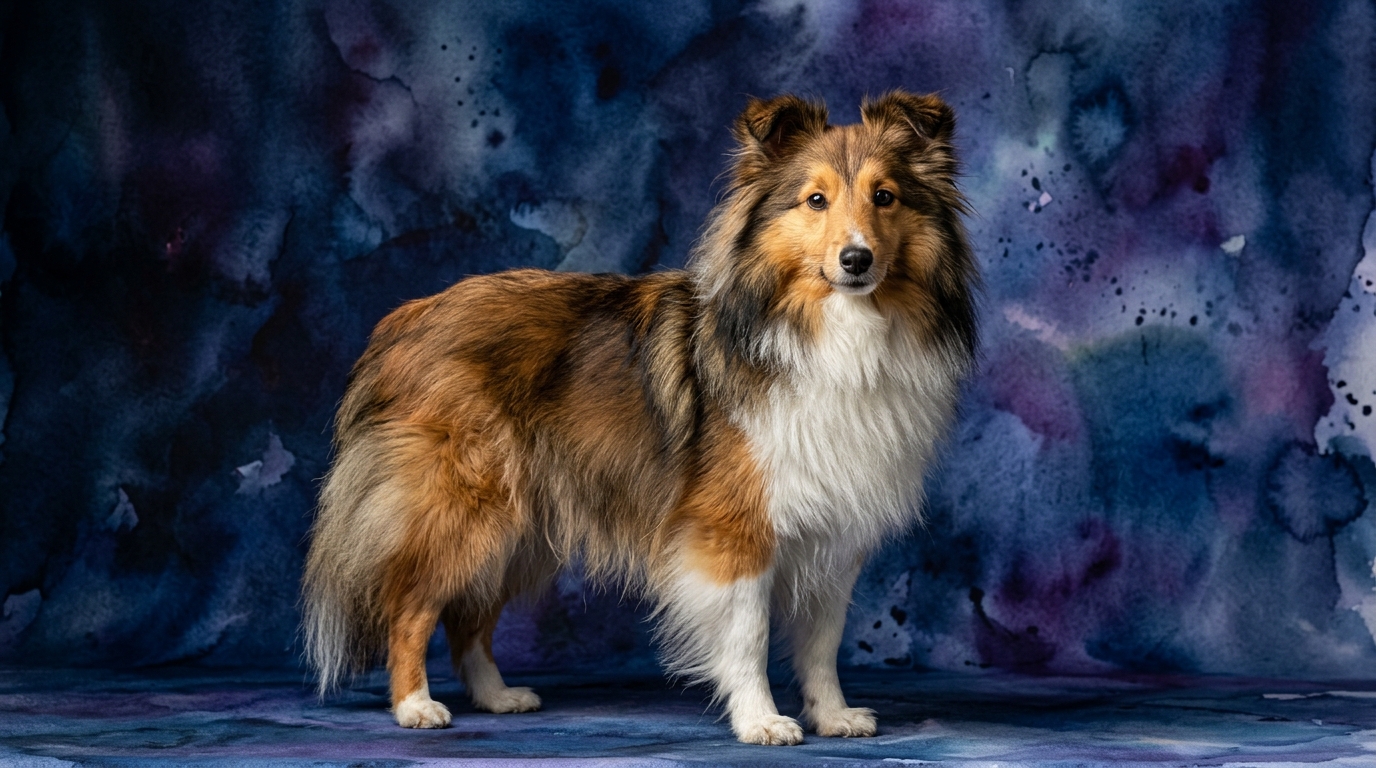

A Side-by-Side Look at Cognitive Profiles
The Cosmic Pet Pet IQ Lab data offers a detailed glimpse into the cognitive strengths of these two distinct herding breeds. For the Shetland Sheepdog, or Sheltie, we observe a Coren rank of #6, placing them among breeds that respond to new commands with fewer than five repetitions and obey the first command 95% of the time or better. Their Problem Solving is rated 4/5, indicating a strong capacity to independently figure out novel challenges, whether it's opening a tricky gate or navigating complex obstacle courses. Training Speed is an exceptional 5/5, meaning they grasp new concepts and commands with remarkable swiftness, often anticipating owner intentions. Social Intelligence, at 4/5, points to a keen awareness of human emotions and social cues, fostering strong bonds and cooperative behavior. Finally, their Instinctive Drive is a robust 5/5, reflecting their strong innate herding behaviors and a persistent drive to work, complemented by an outstanding Memory of 5/5, ensuring long-term retention of learned tasks and experiences.
In contrast, the Old English Sheepdog (OES) holds a Coren rank of #44, suggesting they typically require 25 to 40 repetitions to learn new commands and obey the first command 50% of the time or better. Their Problem Solving ability stands at 3/5, indicating they can solve moderate challenges but might require more guidance or trial-and-error than a Sheltie. Training Speed is rated 3/5, meaning they learn at a steady pace but generally need more repetitions and consistent reinforcement to master new skills. Social Intelligence, also 3/5, suggests they are generally responsive to human interaction and family dynamics, though perhaps not with the same nuanced perception as the Sheltie. Their Instinctive Drive is a balanced 3/5, acknowledging their herding roots but often expressed with a more laid-back approach compared to some high-drive herders. A Memory score of 4/5 is a notable strength within their profile, indicating good retention once a lesson is truly ingrained.
Where the Shetland Sheepdog Excels Cognitively
The Shetland Sheepdog's cognitive advantages are evident across multiple dimensions, particularly in their rapid acquisition of new skills and their ability to independently strategize. Their 5/5 Training Speed means they absorb complex sequences and abstract concepts with minimal repetition, making them adept at advanced obedience, agility, and competitive sports where new routines are frequently introduced. This swift learning is bolstered by their 5/5 Memory, allowing them to recall an extensive repertoire of commands and problem-solving strategies over long periods, minimizing the need for refreshers. Furthermore, their 4/5 Problem Solving capacity allows them to analyze and adapt to novel situations without constant human intervention, a crucial trait for a breed originally tasked with independently managing flocks. This combination of quick learning, strong retention, and independent thought positions the Sheltie as a highly adaptable and mentally agile companion.
Where the Old English Sheepdog Shines Cognitively
While the Old English Sheepdog's cognitive scores are generally lower than the Sheltie's, their profile highlights a different kind of strength, particularly in their memory and social adaptability within a family setting. The OES's 4/5 Memory score is a significant asset, indicating that once a lesson or routine is thoroughly established, it is retained effectively. This means that while initial training may take more repetitions (3/5 Training Speed), the effort invested in consistent teaching yields lasting results. Their 3/5 Social Intelligence, while not as acutely perceptive as the Sheltie's, still reflects a solid capacity for forming affectionate bonds and understanding basic household dynamics, contributing to their reputation as a genial family dog. This blend of good memory and sociable nature allows the OES to become a well-adjusted and dependable member of the household, comfortable with established routines and familiar interactions.
Ease of Training: Sheltie's Swiftness vs. OES's Steadiness
When it comes to ease of training, the Shetland Sheepdog clearly takes the lead due to their superior cognitive attributes. A Sheltie's 5/5 Training Speed means they can master basic commands in a handful of sessions, and advanced tasks like complex tricks or multi-step agility courses are often grasped with surprising alacrity. Their 4/5 Problem Solving and 5/5 Memory further contribute to this ease, as they can independently apply learned principles to new contexts and retain those solutions for the long term. This means fewer repetitions, faster concept acquisition, and a dog that often seems to 'think along' with the trainer, making for a highly responsive and rewarding training experience. Real behavioral differences include the Sheltie's tendency to offer behaviors proactively and their quick response to subtle cues, often before a verbal command is even fully issued.
The Old English Sheepdog, with a 3/5 Training Speed, requires a more patient and consistent approach. While they are certainly trainable, their learning curve is steadier, meaning more repetitions are typically needed for a command to become ingrained. Their 3/5 Problem Solving suggests they might struggle more with novel scenarios, preferring established routines over independent improvisation. However, their 4/5 Memory ensures that once a behavior is thoroughly learned, it tends to stick. Owners should expect to invest more time in foundational training, utilizing positive reinforcement and clear, consistent commands. Behavioral differences include a potential for 'selective hearing' if not properly motivated, and a preference for comfort and established patterns over constant mental challenges, which means training must be engaging and rewarding to maintain their focus.
Matching Cognitive Profiles to Lifestyles: Active vs. Relaxed Owners
The cognitive profiles of these two breeds offer clear guidance for matching them with appropriate owner lifestyles. The Shetland Sheepdog, with its 5/5 Instinctive Drive, 4/5 Problem Solving, and 5/5 Training Speed, thrives with active owners who can provide consistent mental engagement and physical activity. They excel in dog sports like agility, obedience, and herding trials, and require daily opportunities to use their quick minds and energetic bodies. An owner who enjoys teaching new tricks, engaging in puzzle toys, or participating in structured activities will find the Sheltie a highly fulfilling companion. Without sufficient mental stimulation, a Sheltie's keen mind can become bored, potentially leading to undesirable behaviors as they seek their own entertainment.
Conversely, the Old English Sheepdog, with its more moderate 3/5 Instinctive Drive and 3/5 Training Speed, generally suits owners seeking a more relaxed pace. While still a herding breed with a need for regular exercise, their cognitive profile suggests they are less demanding in terms of constant mental challenges. They are content with consistent routines, moderate daily walks, and being a cherished part of family life. An OES can adapt well to a home where the primary desire is a genial, shaggy companion who enjoys leisurely activities and comfortable companionship, rather than intense competitive pursuits. However, 'relaxed' does not mean sedentary; they still require engagement to prevent boredom and maintain their physical and mental well-being, but the intensity and complexity of that engagement can be lower than for a Sheltie.
The Verdict: When to Choose Each Breed
Choosing between a Shetland Sheepdog and an Old English Sheepdog hinges on your lifestyle and what you seek in a canine companion's cognitive engagement. Both offer unique strengths, but their mental approaches to learning and interaction differ significantly.
If you are an active individual or family seeking a highly trainable, mentally agile partner for dog sports, advanced obedience, or a home that thrives on constant intellectual stimulation, the Shetland Sheepdog's exceptional problem-solving, training speed, and memory make them an ideal choice. They will flourish with an owner dedicated to channeling their sharp mind and high drive.
For those who appreciate a more laid-back, affectionate companion who thrives on consistent routines and family life, the Old English Sheepdog's steady learning pace, good memory, and amiable social intelligence offer a rewarding experience. They are best suited for owners who can provide patient, consistent training and enjoy a genial presence rather than a canine prodigy.
The Verdict
Choose the Shetland Sheepdog if you desire a highly trainable, mentally agile companion for active pursuits and complex learning, capable of rapid skill acquisition and long-term retention. Their quick wit and strong drive thrive with owners who provide consistent mental engagement and structured activities.
Opt for the Old English Sheepdog if you prefer a more relaxed, affectionate companion who enjoys consistent routines and family life, and you are prepared for a steady, patient training approach. Their good memory ensures learned behaviors stick, making them a dependable and loving presence in a less high-octane household.
🧠 Find Your Pet's IQ Score
Our Pet IQ Lab assessment covers 25+ tests across 5 cognitive dimensions — personalized to your breed.
Take the Full IQ Test →Frequently Asked Questions
Is the Shetland Sheepdog harder to manage due to its higher intelligence?
Not necessarily harder, but different. A Sheltie's high cognitive abilities and drive mean they require substantial mental stimulation and purpose. Without it, they might invent their own 'jobs,' which can manifest as unwanted behaviors, so they demand engaging management rather than being inherently difficult.
Do Old English Sheepdogs need less exercise than Shetland Sheepdogs?
Old English Sheepdogs generally require moderate daily exercise, like long walks, to stay healthy and content, which is less intense than the Shetland Sheepdog's need for vigorous physical activity and mental challenges. While both are herding breeds, the OES often has a more relaxed energy level compared to the Sheltie's higher drive.
Can an Old English Sheepdog be trained for advanced tasks like agility?
Yes, an Old English Sheepdog can certainly be trained for advanced tasks like agility, though it may take more time and patience due to their 3/5 Training Speed compared to a Sheltie's 5/5. Their 4/5 Memory means that once they learn the sequences, they are likely to retain them well, making consistency key to their success.