
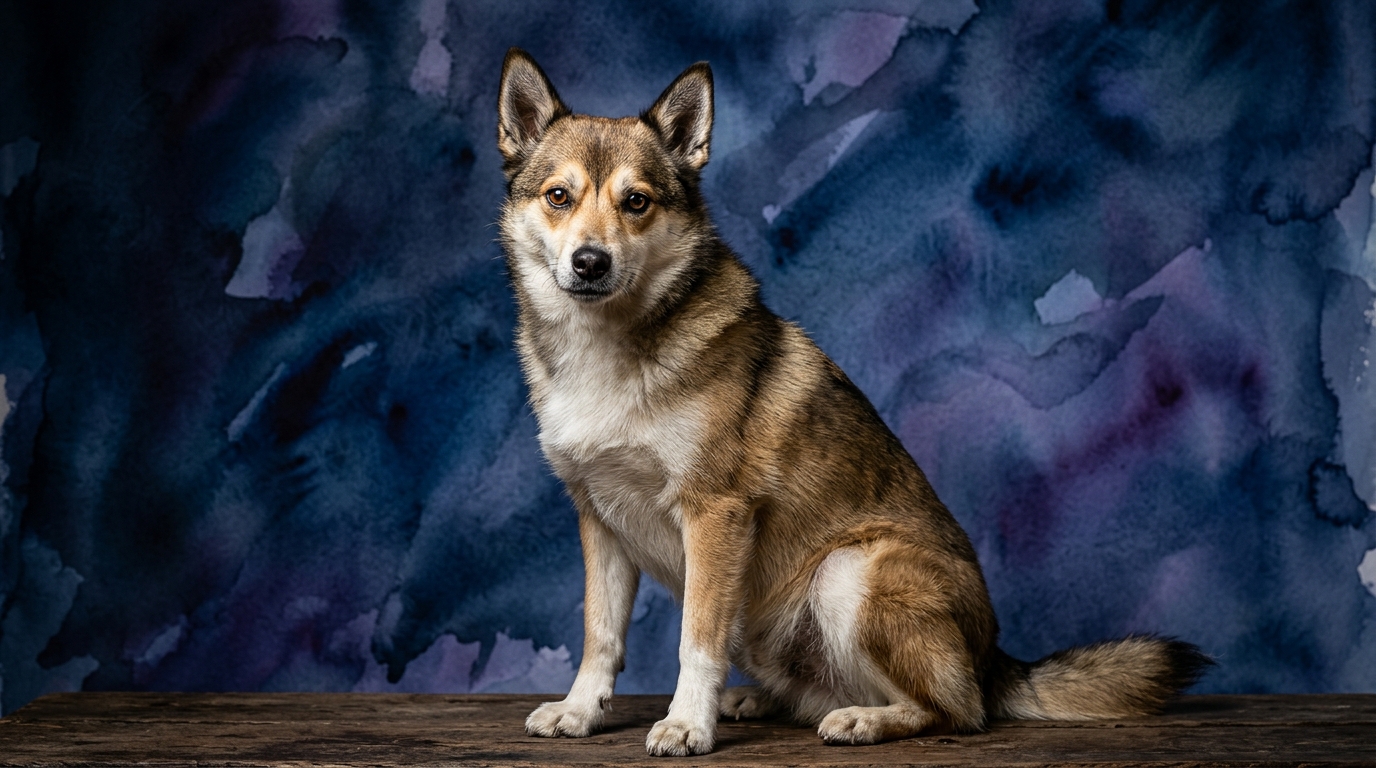
Side-by-Side Cognitive Profiles: Shih Tzu vs. Norwegian Lundehund
The Shih Tzu, a member of the Toy group and holding a Coren rank of #70, presents a cognitive profile deeply influenced by its centuries-long role as a cherished companion. Our Pet IQ Lab assessment shows their Problem Solving at 3/5, indicating a moderate capacity to navigate challenges, often relating to social manipulation or securing comfort. Their Training Speed is noted at 2/5, suggesting a more deliberate pace in acquiring new commands, possibly due to a delightful independence rather than a lack of capacity. Where they truly shine is Social Intelligence, scoring an exceptional 5/5, reflecting their profound understanding of human emotions and social cues. Instinctive Drive is low at 2/5, as their purpose never involved hunting or complex tasks beyond companionship. Memory stands at 3/5, allowing them to recall routines and cherished individuals reliably.
In contrast, the Norwegian Lundehund, classified in the Non-Sporting group and not appearing on Coren's traditional rankings, offers a cognitive blueprint forged by its specialized past as a puffin hunter on steep coastal cliffs. Their Problem Solving rates 3/5, similar to the Shih Tzu, but this often manifests in spatial reasoning, navigating challenging environments, or figuring out how to access tight spaces, a skill vital for their historical role. Their Training Speed is a fair 3/5, suggesting they can learn effectively, though their independence might require engaging and varied methods. Social Intelligence is 3/5, indicating they form bonds and understand human interaction, but perhaps with less intensity than a Shih Tzu. Instinctive Drive is moderate at 3/5, encompassing persistence, agility, and a drive for exploration. Memory is also 3/5, enabling them to retain complex pathways and tasks relevant to their unique heritage.
Where the Shih Tzu's Cognition Excels
The Shih Tzu's standout cognitive strength lies unequivocally in their Social Intelligence, rated at a remarkable 5/5. This dimension reflects an exceptional ability to interpret human cues, emotions, and intentions, making them extraordinarily attuned companions. They are masters of non-verbal communication, often anticipating their owner's moods or desires with an almost uncanny precision. This isn't just about being affectionate; it's a sophisticated cognitive skill that allows them to seamlessly integrate into human family dynamics, providing comfort and eliciting interaction in nuanced ways. Their understanding of social structures within a household, and their charming capacity to subtly influence those around them, demonstrates a profound emotional intelligence that few breeds match. They excel at forging deep, reciprocal bonds, making them empathetic participants in daily life rather than mere observers.
Where the Norwegian Lundehund's Cognition Shines
The Norwegian Lundehund's cognitive advantages are rooted in their history as resourceful hunters. While their Problem Solving is rated 3/5 like the Shih Tzu, its application differs significantly. Lundehunds excel at environmental problem-solving, leveraging their unique physical attributes—like extra toes and flexible joints—to navigate complex terrains, squeeze into narrow crevices, or scale challenging surfaces. Their instinctive drive, rated 3/5, fuels a persistence and curiosity essential for independent exploration and task completion in demanding environments. This translates into a dog that enjoys figuring things out for themselves, whether it's how to open a gate or find a hidden toy. Furthermore, their Training Speed, at 3/5 compared to the Shih Tzu's 2/5, indicates a slightly quicker grasp of new commands, likely due to a history requiring them to adapt to varied hunting scenarios and learn specific tasks, even if they retain an independent streak. They process and respond to training cues with a pragmatic efficiency.
Training Dynamics: Which Breed Learns More Readily?
When considering ease of training, the Norwegian Lundehund holds a slight edge with a Training Speed of 3/5 compared to the Shih Tzu's 2/5. The Shih Tzu, while eager to please in a social context, can sometimes display a charming stubbornness or a preference for comfort over rigorous, repetitive training drills. Their high social intelligence means they excel at understanding human communication, but their motivation might be more tied to affection and attention than strict obedience to commands. They might learn, but at their own unhurried pace, often requiring more patience and positive reinforcement tailored to their companion nature. Distractions can easily divert their focus, as their primary cognitive drive is social interaction.
The Norwegian Lundehund, on the other hand, with its history of independent work, often responds well to training that engages its problem-solving abilities and instinctive drives. While they possess an independent streak that might require creative and consistent approaches, their moderate training speed suggests they absorb and retain commands with reasonable efficiency. They benefit from varied training methods that prevent boredom and tap into their natural curiosity and desire to explore. Owners might find success by incorporating puzzle-solving elements or scent work into their training, appealing to their inherent drive to figure things out. Their training often requires an owner who understands how to channel their tenacity and physical agility into productive learning.
Matching Canine Cognition to Lifestyle: Active vs. Relaxed Owners
For owners seeking a relaxed, deeply connected companion, the Shih Tzu is an excellent match. Their exceptional social intelligence (5/5) means they thrive on close human interaction, often content to be a devoted lap dog or a quiet presence by your side. Their lower instinctive drive (2/5) indicates minimal need for extensive physical exertion or complex mental tasks beyond social engagement. They are perfectly suited for apartment living or homes where the primary activity is shared relaxation, gentle strolls, and abundant affection. Their cognitive strengths are best appreciated in an environment where their empathetic nature and charming personality can flourish, making them ideal for individuals or families who prioritize companionship and emotional connection.
Conversely, the Norwegian Lundehund is better suited for active owners who can appreciate and engage with a dog possessing a moderate instinctive drive (3/5) and a penchant for environmental problem-solving. These dogs thrive on activities that stimulate their agility, curiosity, and physical abilities. Owners who enjoy hiking, exploring new places, or participating in dog sports like agility or scent work will find a Lundehund a willing and capable partner. Their cognitive makeup demands more than just casual walks; they benefit from challenges that allow them to use their unique physical attributes and problem-solving skills. An owner who understands their need for mental and physical engagement will unlock the full potential of this intriguing and tenacious breed.
The Verdict
Choose the Shih Tzu if your priority is an exceptionally social and empathetic companion who excels at reading your moods and thrives on close, affectionate interaction within a relaxed home environment.
Opt for the Norwegian Lundehund if you are an active owner seeking a dog with a unique history, a moderate drive for exploration, and a keen ability for environmental problem-solving, willing to engage in varied physical and mental challenges.
🧠 Find Your Pet's IQ Score
Our Pet IQ Lab assessment covers 25+ tests across 5 cognitive dimensions — personalized to your breed.
Take the Full IQ Test →Frequently Asked Questions
Are Shih Tzus difficult to train for basic obedience?
Shih Tzus are not inherently difficult, but their Training Speed of 2/5 suggests they learn at a more deliberate pace. Their strong social focus means motivation often comes from positive reinforcement and affection, rather than strict adherence to commands. Patience and engaging methods are key to their success.
Do Norwegian Lundehunds require a lot of mental stimulation?
Yes, Norwegian Lundehunds, with their moderate instinctive drive and problem-solving skills, benefit greatly from mental stimulation. Activities like puzzle toys, scent work, and varied training sessions that challenge their agility and curiosity are essential to keep them engaged and prevent boredom.
How do their problem-solving skills differ in everyday life?
A Shih Tzu's problem-solving (3/5) often manifests in social contexts, like figuring out how to get attention or a treat from a human. A Norwegian Lundehund's problem-solving (3/5) is more geared towards navigating physical environments, such as finding creative ways to access areas or overcoming obstacles, reflecting their hunting heritage.