Side-by-Side Cognitive Profiles
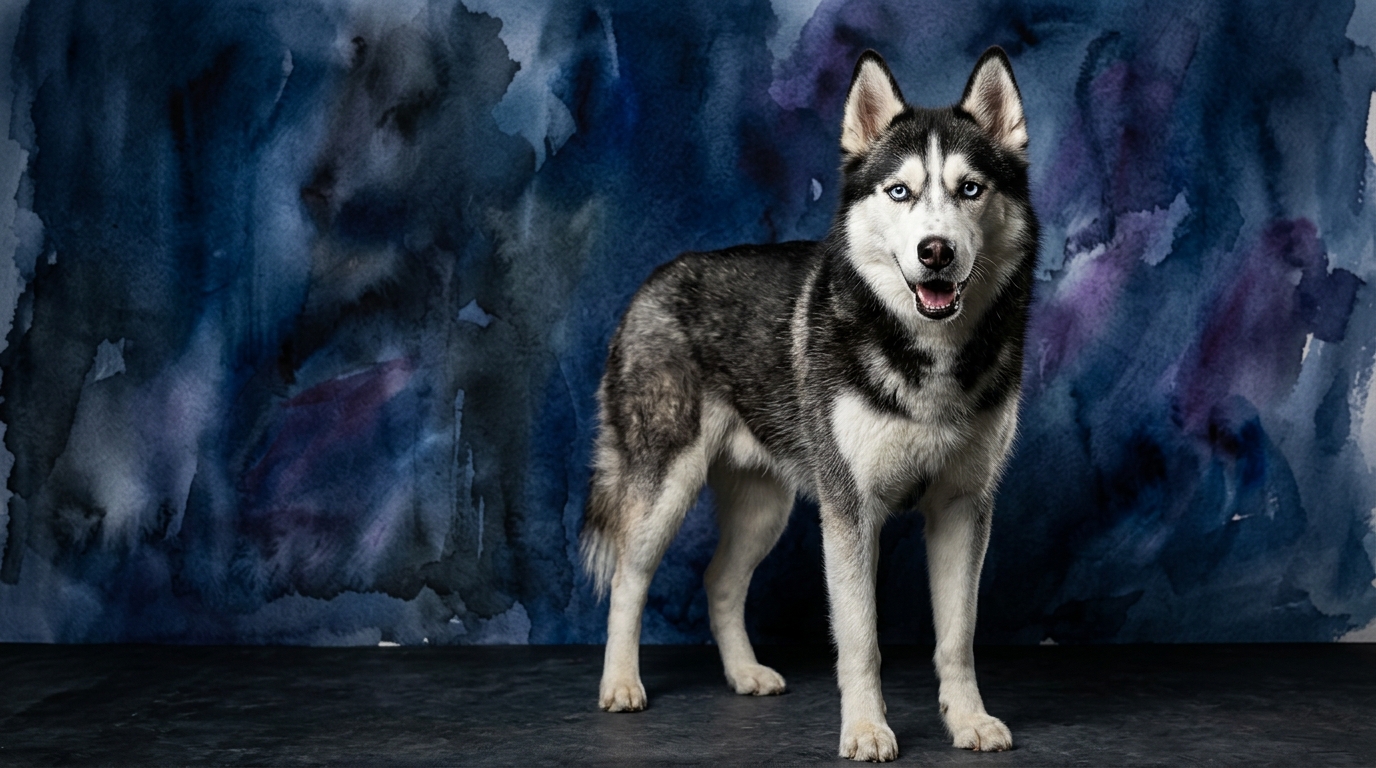
The Siberian Husky, ranking #45 in Coren's intelligence scale, demonstrates a distinct cognitive makeup. Their Problem Solving score of 4/5 indicates an aptitude for practical, environmental challenges, such as navigating complex terrain or overcoming physical obstacles. Training Speed is rated 2/5; while capable of understanding commands, Huskies often display a strong independent streak, choosing to comply based on their own motivations rather than an innate desire to please. Social Intelligence sits at 3/5, suggesting they are generally amiable and pack-oriented, capable of harmonious interaction within a group, but their focus isn't always on human cues in complex social scenarios. Their Instinctive Drive is a powerful 5/5, deeply embedded in their heritage for pulling, exploring, and running. Memory is strong at 4/5, allowing them to retain information about routes, routines, and consequences.
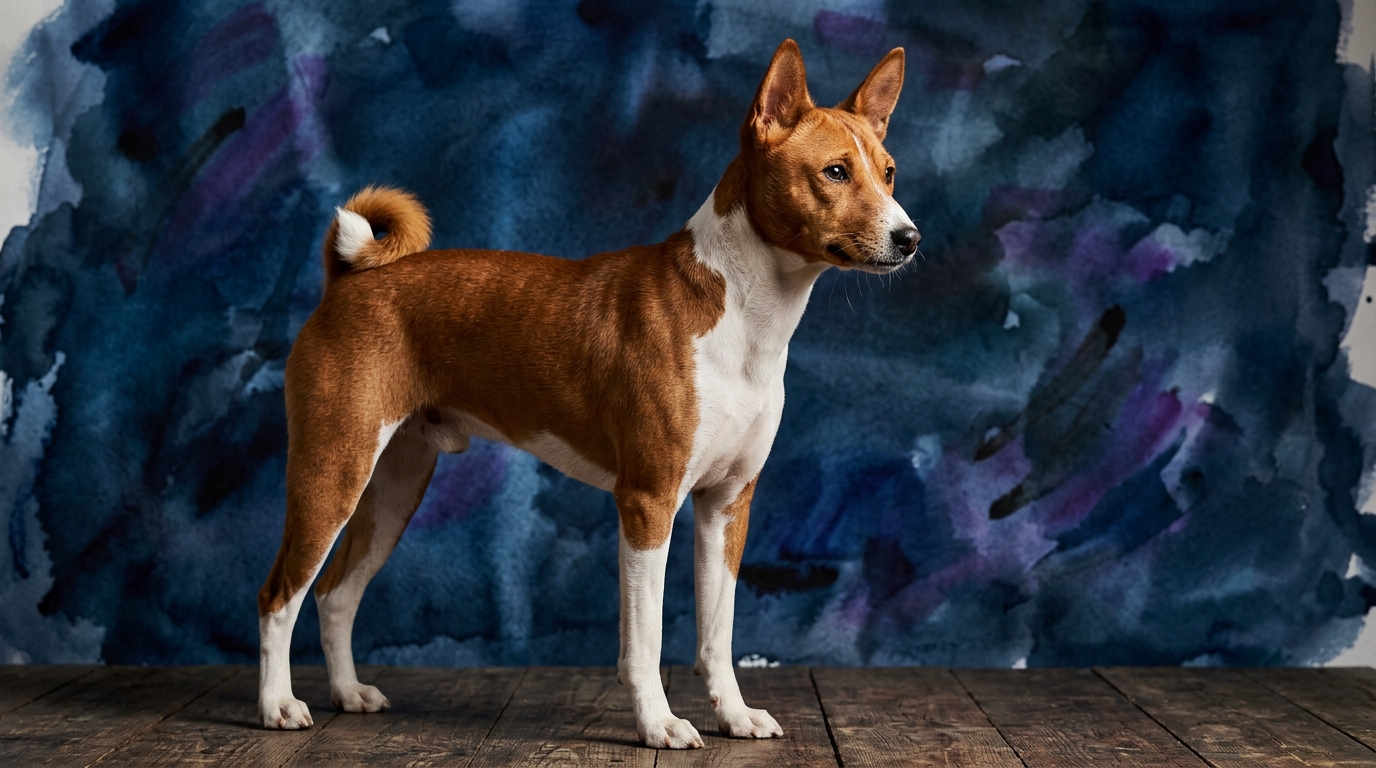
The Basenji, ranking #78, offers a contrasting yet equally compelling cognitive profile. Their Problem Solving is an outstanding 5/5, highlighting their mastery of independent thought and ingenious solutions to achieve personal goals, whether that involves opening doors or figuring out escape routes. Training Speed, however, is a challenging 1/5; their profound self-sufficiency and lack of innate desire to please humans make them notoriously difficult to train in conventional obedience. Social Intelligence is 3/5, similar to the Husky, indicating they form strong bonds but often approach interactions with a degree of aloofness and self-interest. Their Instinctive Drive is also a commanding 5/5, manifesting as a keen prey drive, exceptional environmental awareness, and a strong urge to explore and chase. Memory is a solid 4/5, enabling them to effectively retain information, particularly regarding opportunities for self-reward and successful independent strategies.
Where the Siberian Husky Excels Cognitively
The Siberian Husky's cognitive strengths are profoundly rooted in its heritage as a working sled dog. Their 4/5 problem-solving ability shines brightest when applied to practical, physical challenges or tasks requiring endurance and focus. Unlike breeds that might solve abstract puzzles, Huskies are adept at navigating complex, dynamic environments, remembering intricate routes over vast distances—a direct reflection of their 4/5 memory for spatial and sequential information. This memory, coupled with their unparalleled 5/5 instinctive drive for sustained physical activity, makes them exceptionally reliable in tasks where perseverance and environmental awareness are paramount. They understand the mechanics of their world and how to interact with it to achieve a physical goal, often outsmarting simple barriers or finding the path of least resistance. Their robust physical intelligence allows them to learn and adapt to changing conditions, making them formidable partners in demanding outdoor pursuits.
Where the Basenji Excels Cognitively
The Basenji's cognitive prowess is a testament to its ancient lineage as an independent hunter, with a standout 5/5 score in problem-solving. This isn't about following directions; it's about ingenious, self-motivated resourcefulness. A Basenji will methodically assess a situation, whether it’s a closed door, a latched crate, or a high fence, and devise a strategy to overcome it. Their solutions are often creative and persistent, driven by their powerful 5/5 instinctive drive to explore, chase, and satisfy their own curiosities. This independent problem-solving often manifests as cunning, allowing them to outwit their environment and even their owners to achieve a desired outcome. Their 4/5 memory serves to reinforce these successful strategies, meaning once a Basenji learns how to open a specific cupboard, they are likely to remember and repeat the action. This makes them exceptional at adapting to new challenges on their own terms, demonstrating a profound capacity for self-directed learning.
Training Dynamics: Husky vs. Basenji
When it comes to ease of training, neither the Siberian Husky nor the Basenji fit the conventional mold of an eager-to-please canine student. The Basenji, with its 1/5 training speed, presents a unique challenge. Their cognitive strength lies in independent problem-solving and self-reward, not in complying with human directives. A Basenji learns quickly what they want and how to get it, often bypassing or ignoring commands that don't align with their immediate desires. Their ancient heritage means they operate with a strong sense of self-preservation and autonomy, making traditional obedience methods often ineffective without extreme patience, positive reinforcement, and creative engagement. They might understand a command, but their powerful instinctive drive and independent will mean they simply choose not to execute it if there isn't a compelling personal incentive.
The Siberian Husky, with a slightly higher 2/5 training speed, is also not a breed for the faint of heart in the training arena. While they are capable of learning a vast array of commands and tricks, their strong 5/5 instinctive drive for exploration and running often overrides their willingness to comply. Huskies are notorious for their 'selective deafness,' a trait born from their independent working nature rather than a lack of comprehension. They will weigh the perceived reward of obeying against the immediate gratification of following their own agenda. Training a Husky requires consistency, clear boundaries, and making the training process more rewarding and engaging than their inherent desire to roam. Both breeds demand an owner who understands their intrinsic motivations and is prepared to adapt training methods to suit their unique cognitive profiles, rather than expecting rote obedience.
Matching Breeds to Lifestyles: Active vs. Relaxed Owners
Both the Siberian Husky and the Basenji are fundamentally breeds that thrive with active owners; a 'relaxed owner' expecting a low-maintenance companion would likely be overwhelmed by either. The Siberian Husky, with its 5/5 instinctive drive for sustained physical activity, demands an owner capable of providing extensive daily exercise like long runs, challenging hikes, or participation in dog sports. Their energy is boundless, and without an adequate outlet, their 4/5 memory and 4/5 problem-solving might be directed towards destructive behaviors or elaborate escape attempts. They need mental engagement tied to their physical prowess, such as puzzle toys requiring physical manipulation or training for complex tasks, to channel their working drive constructively.
The Basenji, while not requiring the same sheer mileage as a Husky, equally demands an active and engaged owner, albeit with a focus on mental stimulation and secure environments. Their 5/5 problem-solving and 5/5 instinctive drive translate into a need for constant mental challenges and opportunities for exploration within safe boundaries. Owners must be prepared for rigorous, engaging training that respects their independent nature, along with secure fencing and vigilance to prevent escapes driven by their curiosity and prey drive. Basenjis benefit from scent work, agility, or advanced trick training that challenges their cunning intellect. Neither breed is content to be a mere couch ornament; both require owners who embrace their unique cognitive and physical needs.
The Verdict
Choose a Siberian Husky if you're an active individual or family seeking a physically enduring companion for outdoor adventures, and you're prepared to channel their strong working drive and independent spirit with consistent, engaging training.
Opt for a Basenji if you appreciate a cunning, independent thinker who will constantly challenge your wits, and you're ready to provide ample mental stimulation and secure boundaries for a dog driven by its own clever pursuits.
🧠 Find Your Pet's IQ Score
Our Pet IQ Lab assessment covers 25+ tests across 5 cognitive dimensions — personalized to your breed.
Take the Full IQ Test →Frequently Asked Questions
Are Siberian Huskies truly stubborn or just independent?
Huskies are more accurately described as independent rather than stubborn; their 2/5 training speed reflects their strong will and tendency to prioritize their own agenda over immediate compliance. They understand commands but often choose to execute them based on perceived personal benefit or environmental distractions, a trait stemming from their working heritage.
Does the Basenji's problem-solving make them better at puzzles than Huskies?
Yes, the Basenji's 5/5 problem-solving ability often makes them exceptional at complex puzzles, especially those requiring independent thought and manipulation to achieve a desired outcome. While Huskies (4/5 problem-solving) excel at practical, environmental challenges, Basenjis thrive on abstract, self-motivated intellectual tasks.
How does the 'barkless' trait relate to a Basenji's social intelligence?
The Basenji's 'barkless' trait (they yodel or chortle) is a physical characteristic, not directly related to their 3/5 social intelligence. Their social intelligence score indicates they are capable of forming bonds and interacting, but often with a degree of aloofness and self-interest, rather than a strong focus on human emotional cues.