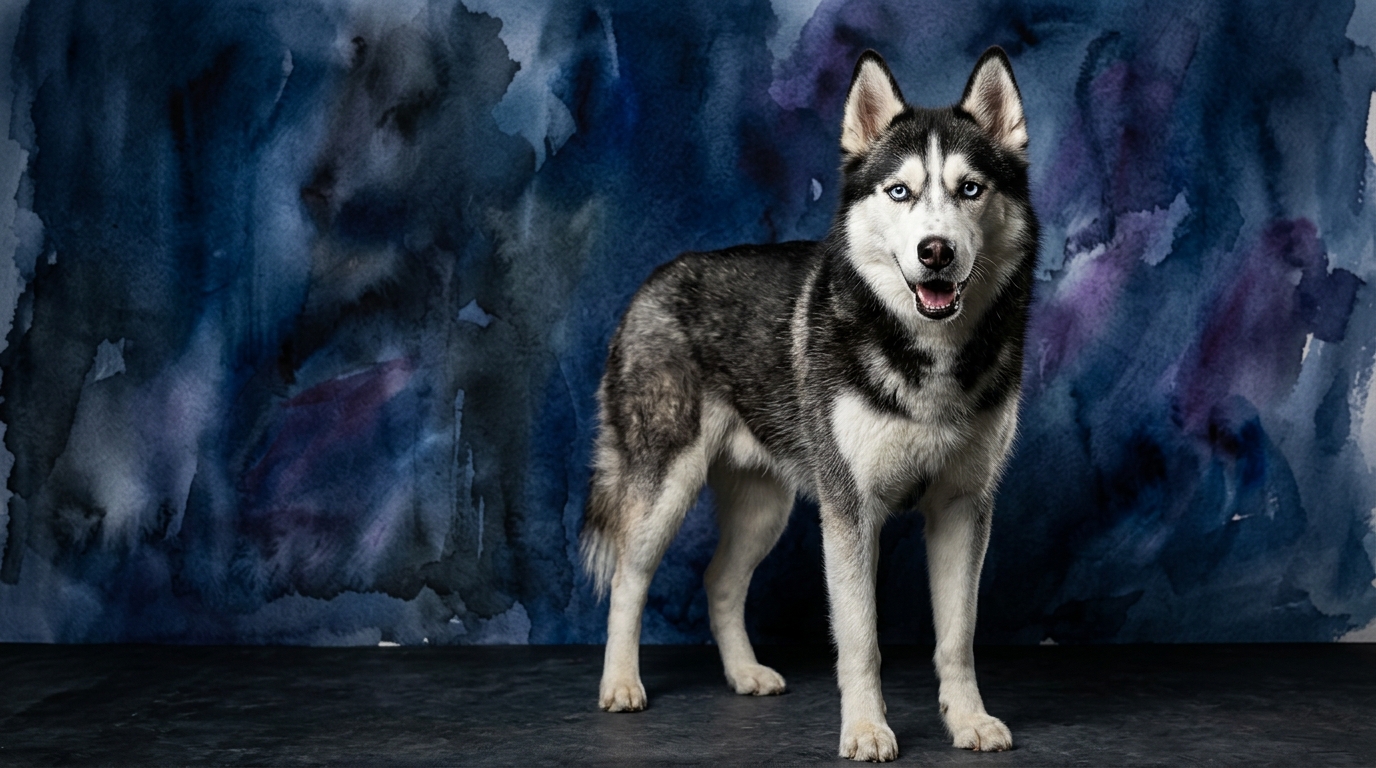
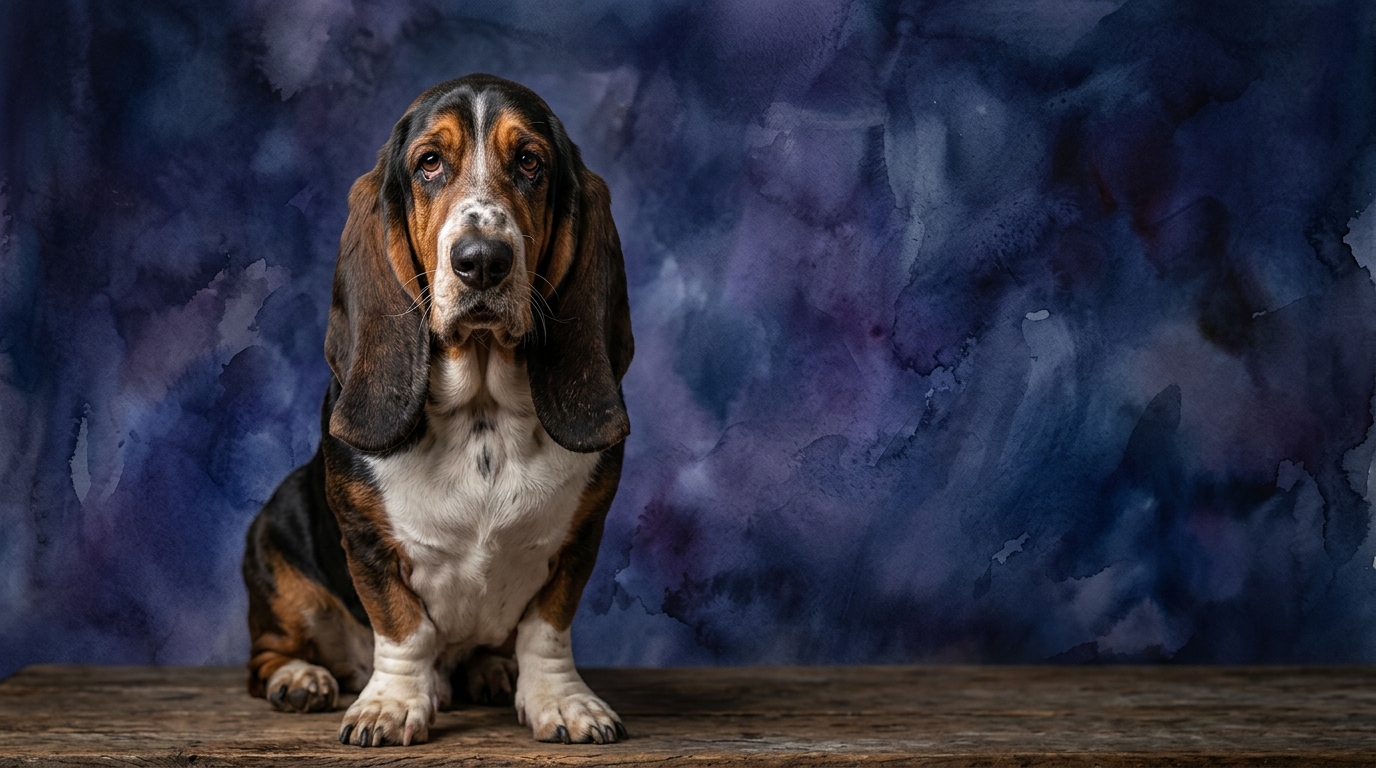
Side-by-Side IQ Profile: Husky vs. Basset
The Cosmic Pet Pet IQ Lab employs a multi-dimensional framework to assess canine cognition, and examining the profiles of the Siberian Husky and Basset Hound reveals distinct mental architectures. The Siberian Husky, with a Coren rank of #45, exhibits a robust cognitive toolkit tailored for endurance and self-sufficiency. Their Problem Solving score of 4/5 reflects a resourceful mind, adept at navigating complex environments or devising strategies to acquire desired items. Their Training Speed at 2/5 indicates an independent streak; while capable, they often weigh commands against their own strong motivations, requiring consistent and engaging methods. Social Intelligence at 3/5 suggests they are generally amicable and pack-oriented, capable of reading cues but not typically seeking constant handler direction. An Instinctive Drive of 5/5 highlights an overpowering urge to run, pull, and pursue, deeply embedded in their sled dog heritage. Finally, their Memory at 4/5 allows them to retain complex routes, routines, and past experiences with remarkable clarity, aiding their independence.
In contrast, the Basset Hound, ranking #71 on the Coren scale, presents a cognitive profile dominated by their extraordinary olfactory capabilities. Their Problem Solving score of 3/5 indicates a focused intelligence primarily directed towards unraveling scent puzzles; they are persistent and methodical when tracking. Training Speed at 3/5 suggests they can learn commands, but their profound focus on scent often leads to "selective hearing" and requires immense patience. Social Intelligence, also at 3/5, describes a generally placid and friendly demeanor, making them excellent companions, though their social interactions might be less nuanced than breeds bred for close human collaboration. Their Instinctive Drive, rated 3/5, is almost entirely channeled into following a scent trail, overriding nearly all other impulses. Their Memory at 3/5 is particularly strong for scent recall and familiar routines, but perhaps less so for complex sequences of actions.
Where the Siberian Husky Wins Cognitively
The Siberian Husky's cognitive strengths shine brightest in scenarios demanding self-reliance, endurance, and resourceful adaptation. Their 4/5 Problem Solving score translates into an uncanny ability to navigate challenges independently, whether it's figuring out how to open a gate, unlatch a crate, or find a way around an obstacle on a long journey. This isn't just about simple trick learning; it's about applying foresight and creativity to achieve a goal, often one of their own choosing. Their Memory, also 4/5, underpins this, allowing them to recall detailed maps of their environment, remember past successes (and failures) in escape attempts, and retain complex routines over extended periods. This exceptional memory, combined with their 5/5 Instinctive Drive for physical activity, makes them masters of long-distance navigation and sustained effort, remembering landmarks and directions even when covering vast distances without direct human guidance. Their cognitive framework is built for performance in demanding, often solitary, working conditions where quick thinking and retention of critical information are paramount for survival and task completion.
Where the Basset Hound Wins Cognitively
The Basset Hound's unique cognitive prowess is almost entirely centered around their unparalleled olfactory abilities and the persistent drive to utilize them. While their general Problem Solving is 3/5, within the realm of scent, they are peerless strategists, capable of dissecting complex scent trails with remarkable precision and tenacity. Their cognitive "win" is their ability to single-mindedly focus on a scent, filtering out visual and auditory distractions that would overwhelm other breeds. This isn't merely a physical act; it involves a sophisticated mental process of tracking, distinguishing, and remembering specific odors over long distances and varied terrains. Their 3/5 Instinctive Drive, while lower than a Husky's overall, is intensely specialized: a relentless, almost meditative pursuit of a scent, demonstrating a unique form of cognitive endurance that few other breeds possess. This specialization means they excel at tasks requiring sustained, focused attention on a singular sensory input, a kind of cognitive tunnel vision that is incredibly effective for their intended purpose.
Which is Easier to Train, and Why?
When considering which breed presents an easier training journey, the Basset Hound (Training Speed 3/5) generally offers a less physically demanding, though equally patient-testing, experience compared to the Siberian Husky (Training Speed 2/5). The Husky's lower training speed stems from their deep-seated independence and powerful instinctive drives. Bred to make decisions independently, they often prioritize their own motivations—like chasing a squirrel—over a handler's command. Training a Husky requires immense creativity, consistency, and high motivation to make desired behavior more rewarding than innate urges. Their "selective hearing" is legendary, rooted in a cognitive framework valuing self-direction.
The Basset Hound, while having a slightly higher Training Speed score, presents its own training intricacies. Their primary cognitive challenge is an overwhelming focus on scent. Once a Basset latches onto a compelling odor, their 3/5 Instinctive Drive kicks in, making them incredibly difficult to redirect. They are not intentionally disobedient; rather, their cognitive resources are completely consumed by the scent trail. This means training involves competing with the most potent sensory input in their world. While generally more amenable to staying physically close than a Husky, their stubbornness when their nose is engaged requires different persistence. Neither is "easy" in a conventional sense; the Basset's challenges are about focused distraction management, while the Husky's are about overriding a powerful, independent will.
Matching Breeds to Owner Lifestyles
The choice between a Siberian Husky and a Basset Hound often directly reflects an owner's lifestyle and energy levels. For active owners, the Siberian Husky is an ideal match. Their 5/5 Instinctive Drive means they are built for sustained physical activity and thrive on regular, vigorous exercise. Owners who enjoy running, hiking, or competitive dog sports will find a Husky an enthusiastic and tireless partner. Beyond physical exertion, their 4/5 Problem Solving and 4/5 Memory mean they also benefit greatly from mental challenges, such as advanced obedience or puzzle toys. A relaxed owner attempting to integrate a Husky into a sedentary lifestyle will quickly encounter a dog with unmet cognitive and physical needs, potentially leading to destructive behaviors or escape attempts driven by boredom.
Conversely, the Basset Hound is generally better suited for more relaxed owners, though "relaxed" should not be mistaken for "inactive." While their physical demands are significantly lower than a Husky's, their 3/5 Instinctive Drive, almost exclusively focused on scent, necessitates consistent opportunities for sniffing and exploration. Owners who enjoy leisurely walks where their dog can meticulously follow scent trails, or who are willing to engage in scent work games, will find the Basset content. They are generally calm and affectionate indoors, making them excellent companions for cozy evenings. However, a "relaxed" owner must still be prepared to manage their Basset's strong scent drive, which can lead them to wander if unsupervised. They require less intense physical activity but still need mental engagement that acknowledges their primary cognitive strength: their nose.
The Verdict
If you lead an active, adventurous life, thrive on intellectual challenges, and are prepared to partner with a dog whose independence and powerful drives require consistent engagement and physical outlets, the resourceful Siberian Husky will be an unmatched companion.
If you prefer a more relaxed pace, appreciate a dog whose primary joy is exploring the world through scent, and are patient with a companion whose deep focus on odors can override other considerations, the amiable Basset Hound will enrich your home with its unique charm.
🧠 Find Your Pet's IQ Score
Our Pet IQ Lab assessment covers 25+ tests across 5 cognitive dimensions — personalized to your breed.
Take the Full IQ Test →Frequently Asked Questions
Is a Siberian Husky difficult to live with due to its intelligence?
A Siberian Husky's 4/5 Problem Solving and 5/5 Instinctive Drive mean they are highly capable and driven, but this requires an owner who can consistently provide mental stimulation and physical outlets. Their independence (Training Speed 2/5) means they might not always comply immediately, making them challenging for first-time or passive owners, but rewarding for those who appreciate their self-reliant nature.
Do Basset Hounds require a lot of exercise despite their relaxed demeanor?
While Basset Hounds are not as physically demanding as Huskies, their 3/5 Instinctive Drive for scent work means they absolutely need regular, leashed walks where they can follow interesting smells. This provides crucial mental stimulation and prevents boredom, even if the pace is slow.
How does Coren rank relate to the IQ dimensions for these breeds?
Coren rank primarily assesses "working intelligence" or obedience, which correlates strongly with Training Speed. The Husky's #45 rank and 2/5 Training Speed reflect their independence, while the Basset's #71 rank and 3/5 Training Speed show their scent-driven distractions. Our IQ dimensions offer a more nuanced view of their specialized cognitive strengths beyond just obedience.