Side-by-Side Cognitive Profiles
To understand these breeds, The Cosmic Pet Pet IQ Lab provides a detailed look at their cognitive dimensions. The Siberian Husky, ranked #45 by Coren for obedience and working intelligence, and the Bouvier des Flandres, though not Coren-ranked, each possess a unique mental blueprint.
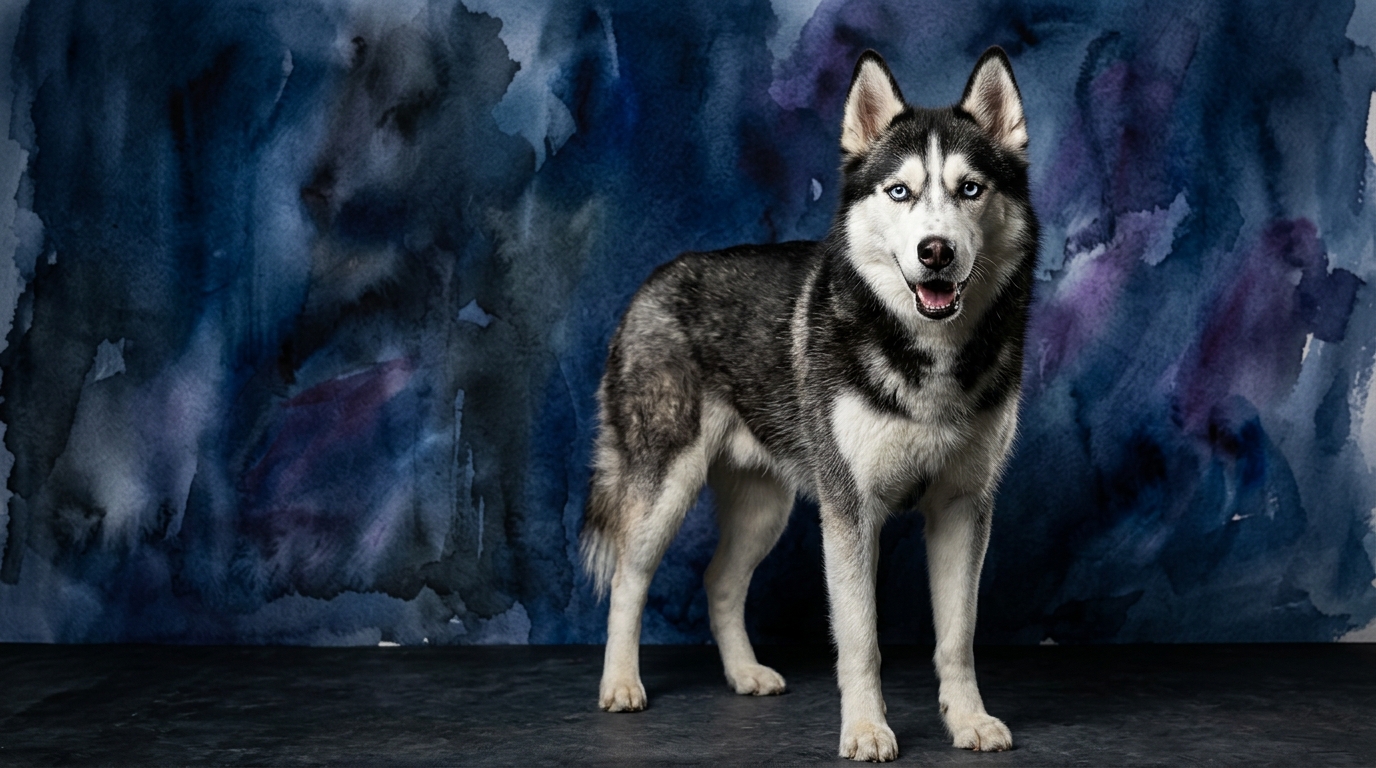
For the **Siberian Husky**:
**Problem Solving (4/5):** Huskies display a significant capacity for independent thought and creative solutions, particularly when overcoming obstacles to their goals, like finding ways around fences. Their ingenuity often serves their own objectives rather than strictly human directives.
**Training Speed (2/5):** Huskies are not typically quick to obey or assimilate new commands, requiring extensive repetition and high motivation. Their independent nature means they frequently weigh the value of a command against their own desires, often appearing stubborn.
**Social Intelligence (3/5):** Huskies possess average social awareness, forming strong bonds within their family "pack" and interacting well, but maintaining a degree of self-reliance. They understand social cues without being overly people-pleasing.
**Instinctive Drive (5/5):** This breed excels in drives for movement, endurance, and exploration. Their powerful urge to run vast distances, coupled with a strong prey drive, is deeply ingrained, making them formidable athletes and persistent trackers.
**Memory (4/5):** Huskies exhibit robust memory, especially for routes, locations, and learned tasks that align with their intrinsic motivations. They recall complex paths and routines accurately, essential for their sled dog heritage.
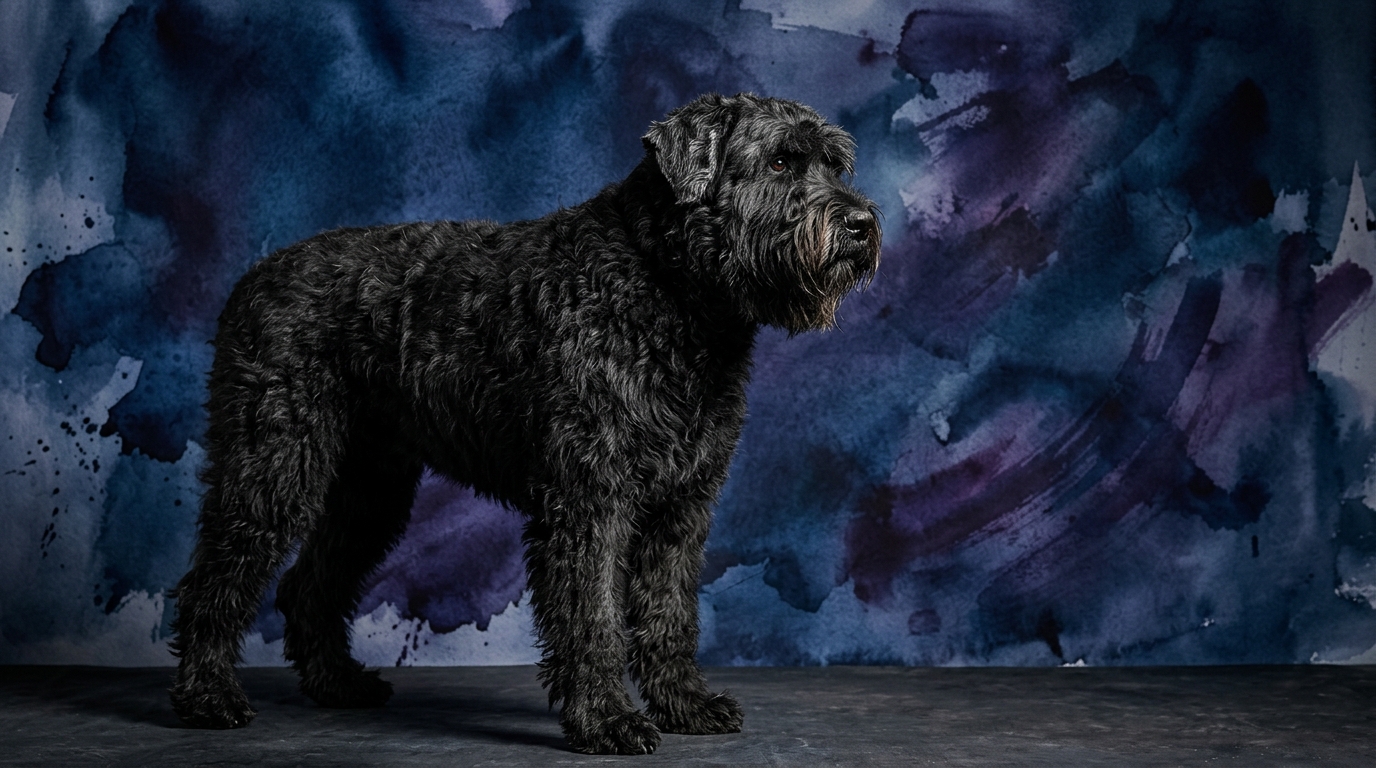
For the **Bouvier des Flandres**:
**Problem Solving (3/5):** Bouviers demonstrate a practical, methodical approach to problem-solving, preferring systematic solutions over creative leaps. They excel at understanding complex, sequential tasks related to herding or guarding, often relying on learned patterns.
**Training Speed (3/5):** Bouviers generally learn new commands at an average pace, showing a willingness to cooperate and absorb instruction steadily. They respond well to consistent training and are typically eager to please their handlers, making them receptive students.
**Social Intelligence (3/5):** Bouviers possess average social intelligence, forming deep attachments to their families but often being reserved with strangers. They are observant of their social environment, focusing on their immediate family unit.
**Instinctive Drive (3/5):** Their instinctive drives are moderately strong, centered around herding, guarding, and protection. Bouviers exhibit a natural inclination to manage livestock and vigilantly protect territory and family, without overwhelming wanderlust.
**Memory (3/5):** Bouviers have reliable memory for commands, routines, and the identity of people and places. This serves them well in their traditional roles, where remembering specific tasks and family members is crucial for effective work.
Where the Siberian Husky Wins Cognitively
The Siberian Husky's cognitive strengths shine brightest in areas demanding independent action and navigational prowess. Their exceptional problem-solving (4/5) manifests as clever strategies to achieve self-determined goals, like outsmarting enclosures. This ingenuity is driven by their own agenda, not just obedience. Coupled with a strong memory (4/5) for routes and spatial information, Huskies possess an internal GPS, recalling complex trails with remarkable accuracy—vital for their sled dog role. Their profound instinctive drive (5/5) for continuous movement and exploration fuels this cognitive package, compelling them to engage with the world through physical and mental exploration, often leading to impressive feats of endurance and self-sufficiency.
Where the Bouvier des Flandres Wins Cognitively
Conversely, the Bouvier des Flandres demonstrates cognitive advantages in areas emphasizing structured learning, reliability, and controlled application of instinct. Their training speed (3/5) surpasses the Husky's, indicating a greater willingness to absorb and execute commands efficiently, making them straightforward pupils. While their problem-solving (3/5) is methodical and practical, excelling at tasks requiring sequential steps for effective herding and protection. Their more balanced instinctive drive (3/5), focused on management and guardianship, means cognitive resources are more readily directed towards human-defined tasks. This blend of trainable intelligence and measured instinct allows Bouviers to excel in roles demanding consistent, thoughtful application of their abilities.
Which Is Easier to Train and Why?
The Bouvier des Flandres generally presents an easier training experience due to its cognitive profile. Its 3/5 training speed reflects a greater intrinsic motivation to cooperate and respond to instruction, making them more receptive. Their instinctive drive (3/5) is also more manageable, focusing on herding and guarding with a desire to please. A Bouvier is more likely to engage with training as a partnership. In contrast, the Siberian Husky’s 2/5 training speed stems from a strong independent streak, often prioritizing their own desires. Their immense instinctive drive (5/5) for running can easily override cues, requiring exceptional patience, creativity, and high-value rewards for consistent obedience.
Suitability for Active vs. Relaxed Owners
The Siberian Husky is unequivocally suited for highly active, adventurous owners. Their extreme instinctive drive for movement (5/5) and need for extensive physical exertion mean they thrive with daily, vigorous exercise like long runs or hikes. Their independent problem-solving (4/5) also benefits from varied environments and mental challenges. A relaxed owner would struggle with a Husky’s boundless energy and potential for destructive boredom. The Bouvier des Flandres, while active, aligns better with active owners who appreciate structured activity and purpose-driven engagement. Their moderate instinctive drive (3/5) for herding means they enjoy regular exercise, training, and tasks that engage their methodical problem-solving. They need activity but are more manageable than a Husky, fitting owners who enjoy daily walks, obedience, and perhaps dog sports.
The Verdict
Choose the Siberian Husky if you are an experienced, highly active individual or family seeking an independent, adventurous companion for endurance sports and outdoor exploration. Be prepared for a significant training commitment and a dog that thrives on self-directed challenges.
Opt for the Bouvier des Flandres if you are an active owner looking for a steadfast, trainable partner for structured activities, protection, or a family guardian. They excel with consistent training and enjoy purposeful work rather than endless, free-form exploration.
🧠 Find Your Pet's IQ Score
Our Pet IQ Lab assessment covers 25+ tests across 5 cognitive dimensions — personalized to your breed.
Take the Full IQ Test →Frequently Asked Questions
Is a Siberian Husky truly harder to train than a Bouvier des Flandres?
Generally, yes. The Husky's lower training speed (2/5) and high independent instinctive drive (5/5) mean they often weigh commands against their own desires, requiring immense patience and consistent, highly motivating rewards. The Bouvier's average training speed (3/5) and more balanced drives make them more receptive to instruction.
Do Siberian Huskies and Bouvier des Flandres have similar social intelligence?
Both breeds are rated 3/5 for social intelligence, indicating an average capacity for understanding social cues and forming bonds. Huskies are often more aloof and pack-oriented, while Bouviers are deeply loyal to their family but can be reserved with strangers, both exhibiting self-reliant social tendencies.
Which breed is better at problem-solving, and how does it manifest?
The Siberian Husky, with a 4/5 rating, shows greater independent problem-solving, often finding creative ways to overcome obstacles for their own goals, like escaping enclosures. The Bouvier, rated 3/5, excels in methodical problem-solving, applying learned patterns and structured approaches to tasks like herding.