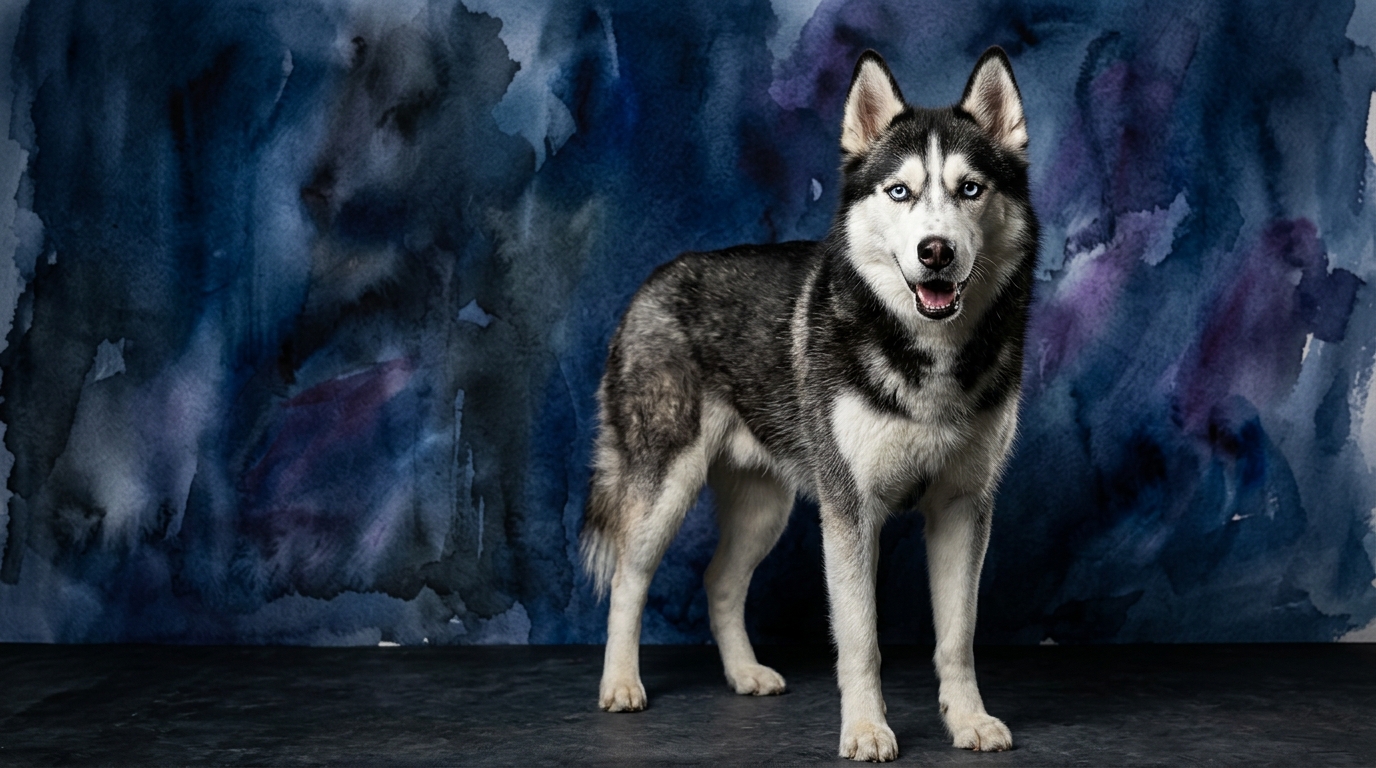
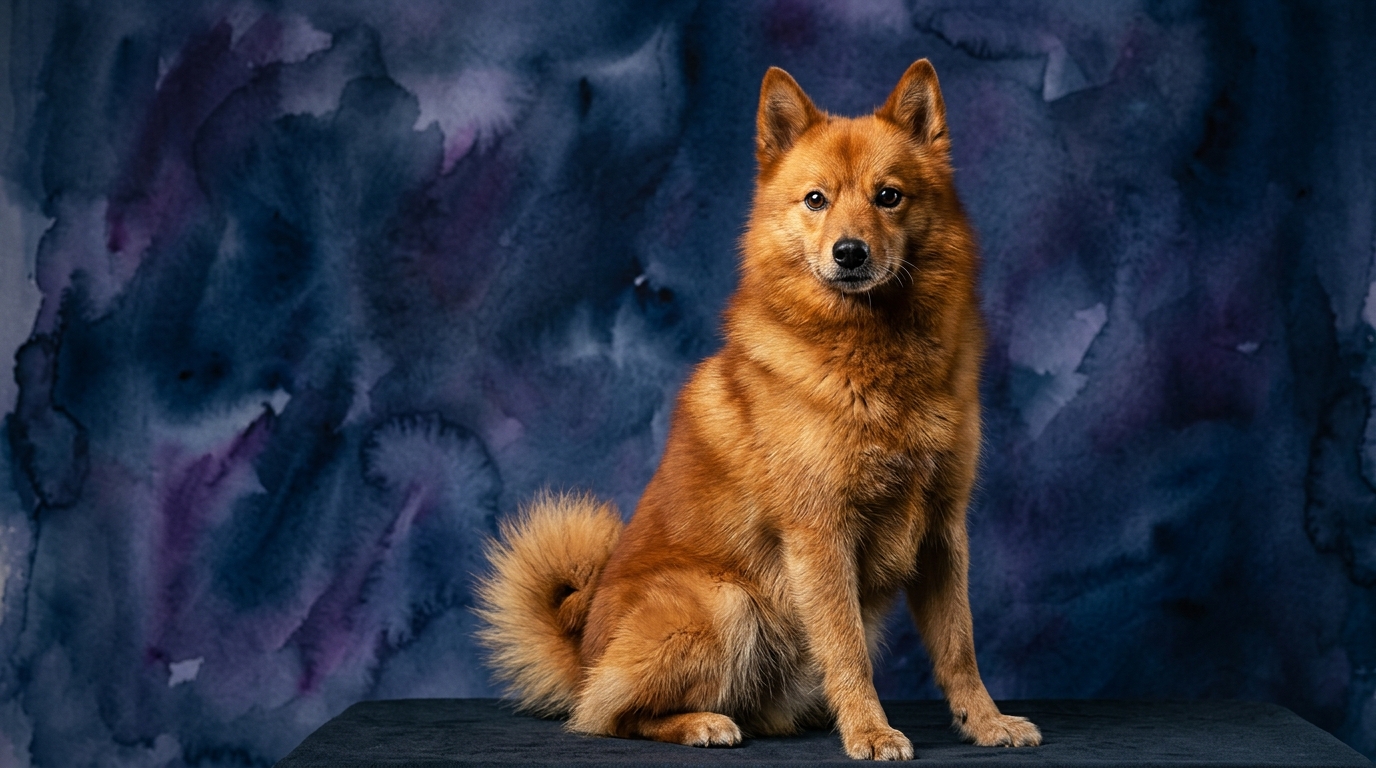
Side-by-Side Cognitive Profiles
At The Cosmic Pet Pet IQ Lab, we delve beyond general impressions to quantify specific cognitive dimensions. The Siberian Husky, a Working group dog, holds Coren rank #45, while the Finnish Spitz, from the Non-Sporting group, is not Coren-ranked, indicating different historical roles and cognitive priorities.
For the Siberian Husky, our assessment reveals a Problem Solving score of 4/5, indicating a remarkable aptitude for independent thought and devising ingenious strategies to overcome obstacles, whether it's unlatching gates, scaling fences, or outsmarting owners to reach forbidden treats. Their historical role as self-sufficient sled dogs in challenging environments fostered this intrinsic ability to assess situations and find creative solutions for survival and progress, often without human direction. Training Speed is rated 2/5; while capable of learning, their independent spirit and high instinctive drive often translate into a slower, more challenging training process, as they may choose not to comply if a task is uninteresting or if their own desires outweigh the reward. Social Intelligence stands at 3/5, meaning they are generally amiable and social with both people and other dogs, thriving in a pack environment, but their social intelligence is more geared towards harmonious coexistence rather than intense human-pleasing. Their Instinctive Drive is a powerful 5/5, encompassing an overwhelming urge to run, pull, and explore vast distances, coupled with a strong prey drive, making them tireless workers and adventurers. Finally, their Memory is a robust 4/5, allowing them to recall complex routes, learned behaviors, and geographical layouts, which is highly beneficial for navigation and learning from past experiences.
The Finnish Spitz, in contrast, shows a Problem Solving score of 3/5, indicating they are adept at navigating their immediate environment and learning from experience, solving problems in a more direct and less overtly cunning manner than a Husky. They can figure out how to open a simple latch or find a hidden toy, but their problem-solving tends to be focused on achieving immediate, tangible goals. Their Training Speed is 3/5; with a moderate pace, the Finnish Spitz is generally responsive to positive reinforcement and eager to engage with their family, picking up commands at a reasonable pace, though they can exhibit a stubborn streak. Social Intelligence is also 3/5, but it manifests differently; they are deeply devoted and affectionate with their chosen family, often forming strong, sensitive bonds, though they can be reserved or wary with strangers. Their Instinctive Drive is 3/5, primarily centered around their historical role as a barking bird dog, involving a specialized drive to locate game, follow its movements, and then vocally alert the hunter, a focused, auditory drive. Their Memory is 3/5, demonstrating a good recall for commands, routines, and their family's daily habits, contributing to their strong family bonds and ability to retain household rules.
Where Siberian Husky's Cognition Excels
The Siberian Husky truly excels in areas demanding self-reliance and environmental mastery. Their problem-solving at 4/5 means they are masters of figuring things out for themselves, from intricate escape routes to creative ways of acquiring resources, a trait honed by centuries of independent work in harsh conditions. This is complemented by an unparalleled 5/5 instinctive drive for endurance and exploration, making them cognitively wired for long-distance travel and navigating complex terrains without constant human input. Furthermore, their 4/5 memory is adept at recalling intricate pathways and past experiences, enabling them to learn from their environment and apply those lessons to future challenges, whether it's finding the shortest route home or remembering where they stashed a prized possession. This combination makes them formidable survivors and highly adaptable in challenging physical environments.
Where Finnish Spitz's Cognition Shines
The Finnish Spitz, while perhaps not exhibiting the Husky's raw environmental ingenuity, offers distinct cognitive strengths. Their balanced 3/5 training speed suggests a more cooperative learning aptitude, making them generally more amenable to structured training sessions and a willingness to work alongside their human companions. Although sharing a 3/5 social intelligence score with the Husky, the Finnish Spitz's expression of this is often characterized by a deeper emotional attunement and devotion to their immediate family, making them more sensitive to subtle human cues and desires within their trusted circle. Their instinctive drive, while numerically lower at 3/5, is highly specialized; it's a finely tuned, auditory hunting drive that requires focused attention and a specific type of cognitive processing to locate and “bark-point” game, a unique form of problem-solving that is deeply ingrained.
Training Dynamics: Which Breed is More Amenable?
For an average owner, the Finnish Spitz (training speed 3/5) will generally present an easier and more straightforward training experience compared to the Siberian Husky (training speed 2/5). The Finnish Spitz's moderate training speed, coupled with their strong family bonds and desire to please their inner circle, means they are often more receptive to learning commands and performing tasks for their owners. Their problem-solving (3/5) is less about outwitting and more about understanding and adapting to household rules, making them more inclined to follow established directives with consistent guidance.
The Siberian Husky, conversely, offers a significant challenge for many. Their lower training speed (2/5) is heavily influenced by their powerful 5/5 instinctive drive and independent 4/5 problem-solving. Huskies are not inherently driven to please humans; rather, they are motivated by their own desires, such as running, exploring, or self-gratification. Training a Husky requires immense patience, creativity, consistency, and a deep understanding of their independent nature, often turning into a negotiation rather than simple instruction. They will quickly learn what benefits them, which may not always align with human expectations, demanding an owner who can consistently outthink and out-motivate them.
Lifestyle Suitability: Active vs. Relaxed Owners
The choice between these two breeds significantly hinges on an owner's lifestyle and energy levels. The Siberian Husky is unequivocally suited for highly active owners who embrace an outdoor-centric, adventurous life. Their 5/5 instinctive drive for running and endurance, coupled with their robust physical needs, means they require extensive daily exercise, often including long runs, hikes, or participation in dog sports like canicross or skijoring. An owner who doesn't provide sufficient outlets for their Husky's powerful cognitive and physical drives will likely find themselves with a bored, destructive, and potentially escape-prone companion. Their independent problem-solving means they will find ways to entertain themselves if not adequately stimulated.
The Finnish Spitz, while still an active breed, is better suited for owners with a moderately active lifestyle. Their 3/5 instinctive drive and more balanced energy levels mean they thrive on regular walks, yard play, and engaging indoor activities, but don't demand the same extreme level of endurance. They are content to be cherished family members, participating in daily routines and enjoying companionship, making them a better fit for those who prefer a less intense physical commitment while still appreciating an alert and engaged canine presence. Their social intelligence fosters a deeper connection with their family, making them satisfied with quality time over constant high-octane adventure.
The Verdict
Choose the Siberian Husky for individuals or families who embrace an extremely active, outdoor-centric lifestyle and are prepared for a dog with a strong independent streak and a formidable problem-solving mind that requires consistent engagement.
Choose the Finnish Spitz for owners seeking a devoted, alert, and moderately active companion who thrives on family interaction and is more amenable to cooperative training, provided they can manage their natural vocal tendencies.
🧠 Find Your Pet's IQ Score
Our Pet IQ Lab assessment covers 25+ tests across 5 cognitive dimensions — personalized to your breed.
Take the Full IQ Test →Frequently Asked Questions
Are Siberian Huskies difficult to live with due to their independence?
Huskies' independence (reflected in their 2/5 training speed and 4/5 problem-solving) means they require consistent boundaries and mental stimulation to prevent boredom and destructive behaviors. While not inherently 'difficult,' they certainly demand an owner who understands their unique cognitive makeup and energy levels, offering appropriate outlets for their powerful drives.
Do Finnish Spitz bark excessively?
Finnish Spitz are known as 'barking bird dogs' due to their instinctive drive (3/5) to vocalize when they detect game, a trait refined over centuries. While not necessarily 'excessive' in their natural context, prospective owners must be prepared to manage and redirect this strong vocal tendency through consistent training and appropriate outlets for their focused hunting drive.
How does Coren's ranking relate to the IQ Lab scores?
Coren's ranking primarily assesses 'working and obedience intelligence,' focusing on how quickly dogs learn new commands. The IQ Lab provides a more nuanced view by breaking down intelligence into five distinct dimensions, offering a broader understanding beyond just trainability. For instance, a breed might rank lower with Coren but score high in problem-solving or instinctive drive, highlighting different cognitive strengths.