Side-by-Side Cognitive Profile: Siberian Husky vs. Komondor
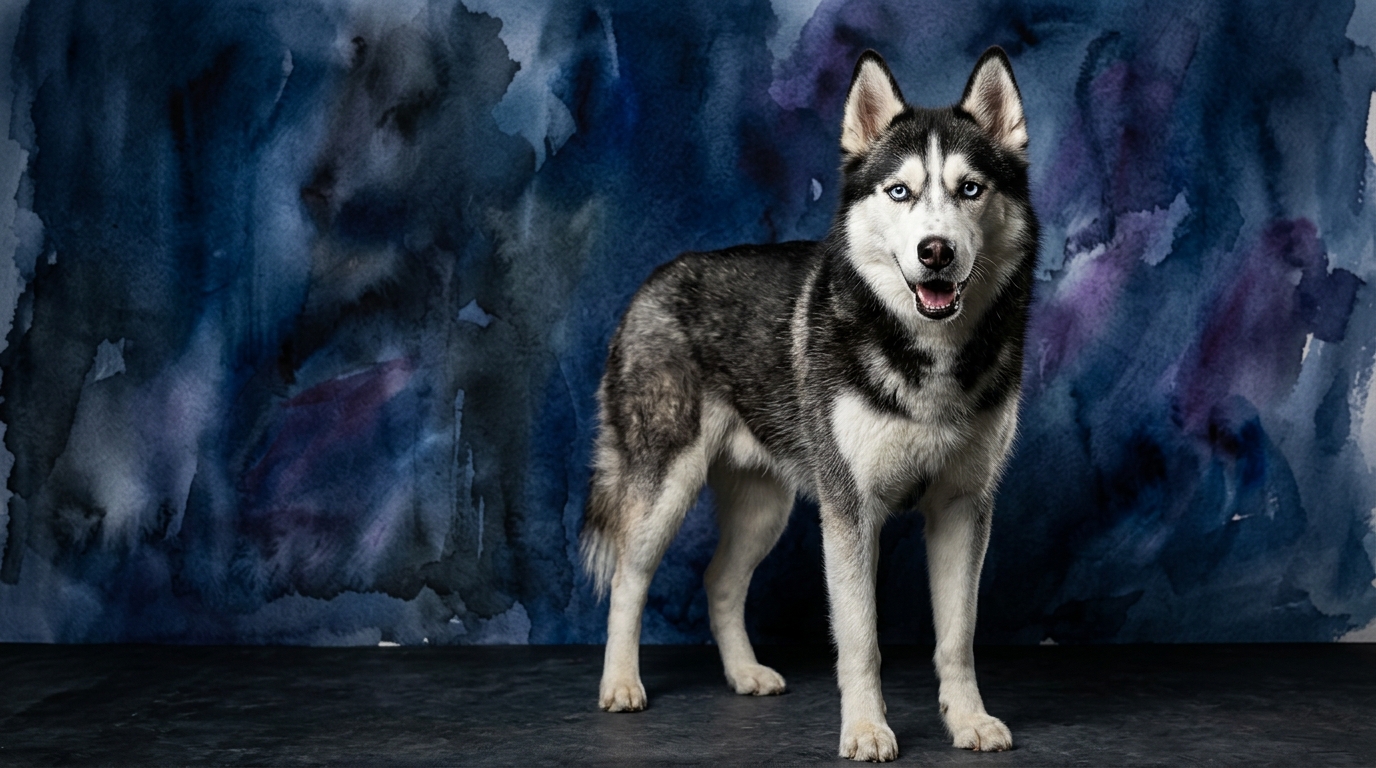
The Siberian Husky, ranking #45 in Coren's intelligence scale, presents a fascinating cognitive makeup. They score 4/5 in Problem Solving, reflecting their adeptness at navigating complex environments, finding ways around obstacles, or figuring out how to open enclosures. Their Training Speed is 2/5; while they can grasp commands, their strong independence means consistent, patient repetition is vital for reliable obedience. Social Intelligence stands at 3/5; generally friendly, their pack mentality means they thrive on clear hierarchies and interaction, sometimes showing selective attention to human cues. An immense Instinctive Drive of 5/5 fuels their urge for pulling, exploring, and hunting, rooted deeply in their sled dog ancestry. Finally, their Memory is rated 4/5, allowing them to recall learned behaviors and routes over long periods, though selective recall for undesirable tasks is also a trait.
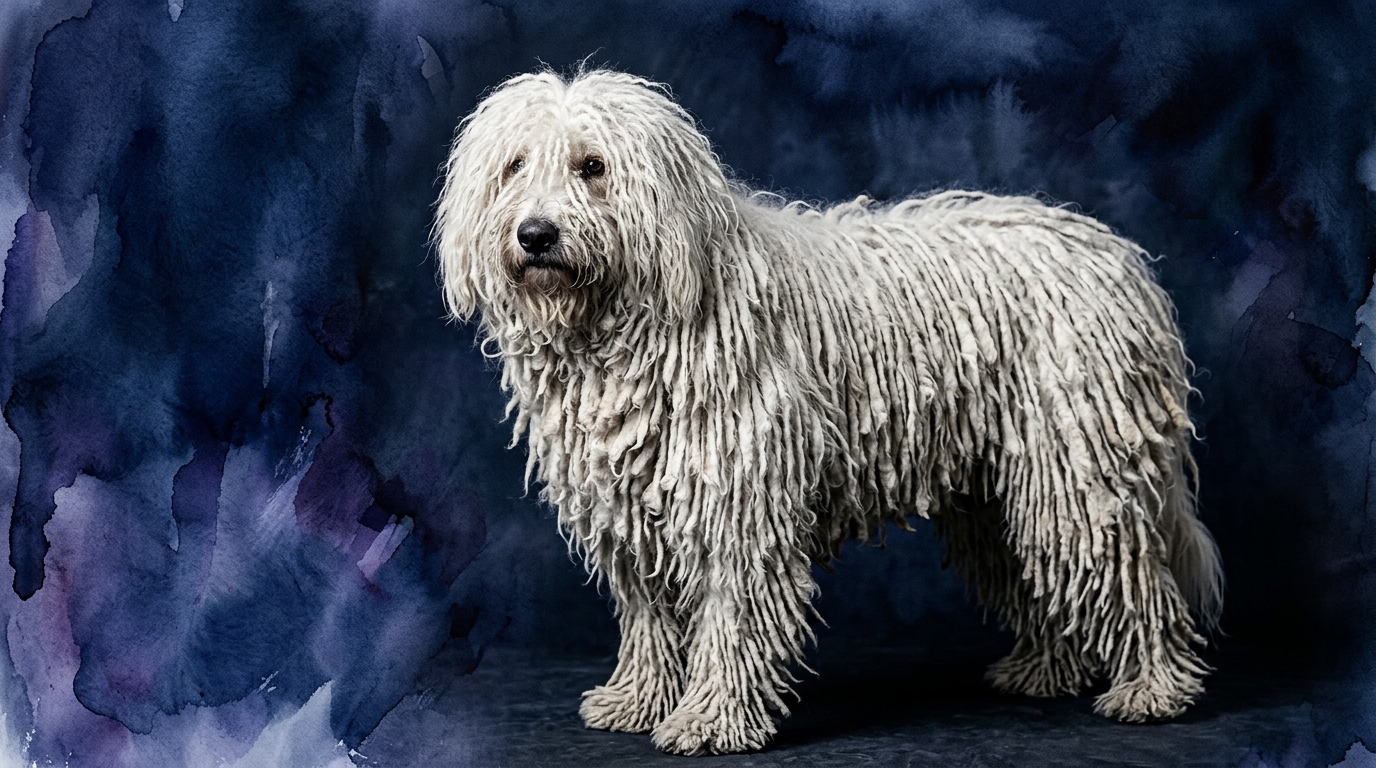
In contrast, the Komondor, with a Coren rank of #67, possesses a distinctly different cognitive blueprint, tailored for its role as a livestock guardian. Their Problem Solving ability is 3/5, indicating competence in assessing threats and strategizing protection for their flock, but they are less inclined towards abstract puzzles or human-initiated "games" of intelligence. Training Speed is 3/5; they learn at a moderate pace, but their inherent guarding instincts and independent nature mean they respond best to training that aligns with their purpose. Social Intelligence is 3/5; while devoted to their family or flock, they are often reserved or wary with strangers, reading social cues primarily through a protective lens. Their Instinctive Drive, rated 3/5, is primarily focused on guarding and protection, making them less inclined towards high-energy pursuits unless directly related to their duty. Their Memory, also 3/5, retains commands and routines, particularly those related to their guarding role, but may not have the same breadth of recall for varied tasks as some other breeds.
Where the Siberian Husky Wins Cognitively
The Siberian Husky demonstrates a distinct cognitive edge in areas requiring flexible problem-solving and environmental adaptation. Their 4/5 rating in problem-solving reflects an innate ability to assess novel situations and devise solutions, whether it's escaping a yard, figuring out how to access a forbidden treat, or navigating complex trail systems during a run. This isn't about academic intelligence, but a practical, survival-oriented cunning that allows them to interact with their environment in highly effective ways. Furthermore, their 5/5 instinctive drive for exploration and physical exertion, coupled with a 4/5 memory, allows them to map out territories and recall routes with impressive accuracy, making them natural navigators. This blend of cognitive mapping and persistent drive means they excel in tasks requiring independent thought and endurance, often thinking several steps ahead in their pursuit of an objective, be it a squirrel or an open gate. Their capacity to learn and remember complex patterns in their environment, even if it's to outsmart their owners, is a testament to their sharp, independent intellect.
Where the Komondor Wins Cognitively
The Komondor's cognitive strengths are deeply rooted in its ancient role as a livestock guardian, manifesting in a unique form of social and situational intelligence. While their problem-solving is rated 3/5, it's highly specialized: they excel at assessing threats, discerning intentions, and making independent decisions in the absence of human direction to protect their charges. This isn't about solving a puzzle box, but about interpreting subtle cues from livestock or potential intruders and reacting appropriately to maintain safety. Their 3/5 social intelligence, though appearing average when compared broadly, is profound within their family unit and flock, demonstrating exceptional loyalty and a nuanced understanding of their specific social structure. They remember who belongs and who doesn't, exhibiting a keen ability to differentiate friend from foe, a critical cognitive function for a guardian breed. Their 3/5 instinctive drive, while not as broad as the Husky's, is intensely focused on protection, leading to a steadfast vigilance and a deep-seated commitment to their duty, requiring significant cognitive bandwidth to maintain constant awareness of their surroundings and charges.
Training Dynamics: Siberian Husky vs. Komondor
Between the Siberian Husky and the Komondor, neither breed is stereotypically 'easy' to train, but for very different reasons stemming from their core cognitive profiles. The Siberian Husky, with a training speed of 2/5, can grasp commands but often chooses whether or not to comply based on its own independent assessment of the situation or its prevailing drives. Their high instinctive drive (5/5) means they are easily distracted by scents, movement, or the urge to run, demanding exceptional patience and consistent reinforcement from their trainer. They learn quickly but require motivation that outweighs their desire for self-directed exploration or mischief. For example, teaching a reliable recall to a Husky means competing with their powerful prey drive and wanderlust, making it a persistent challenge that demands creativity and unwavering consistency.
The Komondor, rated 3/5 for training speed and holding a Coren rank of #67, learns at a moderate pace, but their training challenges arise from their independent, guarding nature. They are bred to make decisions autonomously in the field, not to slavishly obey every human directive. While they are loyal, they will question commands that seem illogical or contrary to their protective instincts, requiring more repetitions to solidify new behaviors compared to breeds with higher obedience ranks. Training a Komondor requires earning their respect and demonstrating that you are a competent leader of their 'flock,' focusing on building a strong bond and leveraging their inherent desire to protect rather than forcing compliance through rote exercises. Their social intelligence, while strong within their specific family unit, does not translate to an eagerness to please a broad range of human directives, meaning motivation must often be tied to their perceived role or the security of their family.
Lifestyle Suitability: Active vs. Relaxed Owners
The Siberian Husky is unequivocally suited for active owners, or perhaps more accurately, owners prepared for an active and cognitively engaging partnership. Their 5/5 instinctive drive demands extensive physical exercise, often requiring several hours of vigorous activity daily to prevent boredom and destructive behaviors. This isn't just about walks; it's about running, hiking, or participating in dog sports like canicross. Beyond physical exertion, their 4/5 problem-solving and 4/5 memory mean they thrive on mental stimulation, such as puzzle toys, scent work, or advanced obedience training, which keeps their keen minds occupied. A relaxed owner will quickly find themselves overwhelmed by a Husky's boundless energy and propensity for independent decision-making, which can manifest as escape artistry, excessive vocalization, or furniture redecoration, as their unspent mental and physical energy finds destructive outlets.
Conversely, the Komondor, while requiring regular exercise, is not built for the same type of sustained, high-intensity activity as the Husky. Their 3/5 instinctive drive is focused more on vigilance and patrolling their territory than on long-distance running or agility courses. They suit owners who appreciate a more relaxed, yet deeply committed, canine presence. 'Relaxed' here doesn't mean passive; it means an owner who understands and respects the Komondor's independent, watchful nature and doesn't demand constant engagement or high-octane adventures. They are content with supervising their domain and family, requiring mental engagement through their guarding duties and consistent, calm leadership rather than endless sprints or complex agility courses. A Komondor would find an overly active, constantly demanding lifestyle stressful and counterproductive to its inherent purpose, preferring to observe and protect from a position of calm authority.
The Verdict
Choose a Siberian Husky if you're an experienced, active owner seeking a cunning, independent companion for adventures, prepared to provide extensive physical and mental stimulation, and who appreciates a dog that thinks for itself.
Opt for a Komondor if you desire a steadfast, protective guardian for your home and family, are prepared for their independent nature and specialized guarding instincts, and can offer calm, consistent leadership without demanding constant obedience.
🧠 Find Your Pet's IQ Score
Our Pet IQ Lab assessment covers 25+ tests across 5 cognitive dimensions — personalized to your breed.
Take the Full IQ Test →Frequently Asked Questions
Is a Siberian Husky better at learning tricks than a Komondor?
Siberian Huskies, with their higher problem-solving score (4/5) and innate curiosity, can often learn a wider variety of tricks more quickly than Komondors, provided their independent streak is managed with engaging, reward-based training. Komondors, while capable, are less motivated by performing tricks and more by tasks directly related to their guarding role or family protection.
Which breed is more prone to independent thought?
Both breeds exhibit significant independent thought, but in different contexts. Siberian Huskies (Instinctive Drive 5/5) act independently to satisfy their strong urges for exploration and physical activity, often making their own decisions about where to go or what to chase. Komondors (Instinctive Drive 3/5, focused on guarding) exercise independent judgment to protect their charges, making decisions without direct human command when they perceive a threat to their family or territory.
How do their memory capabilities differ in practical terms?
A Siberian Husky's 4/5 memory often translates to remembering complex routes, where hidden treats are, or how to manipulate objects to their advantage, even if it's recalling how to open a specific gate. A Komondor's 3/5 memory is more focused on remembering faces, territories, and routines associated with their guarding duties, ensuring they recognize their 'flock' and differentiate strangers from accepted visitors or threats.