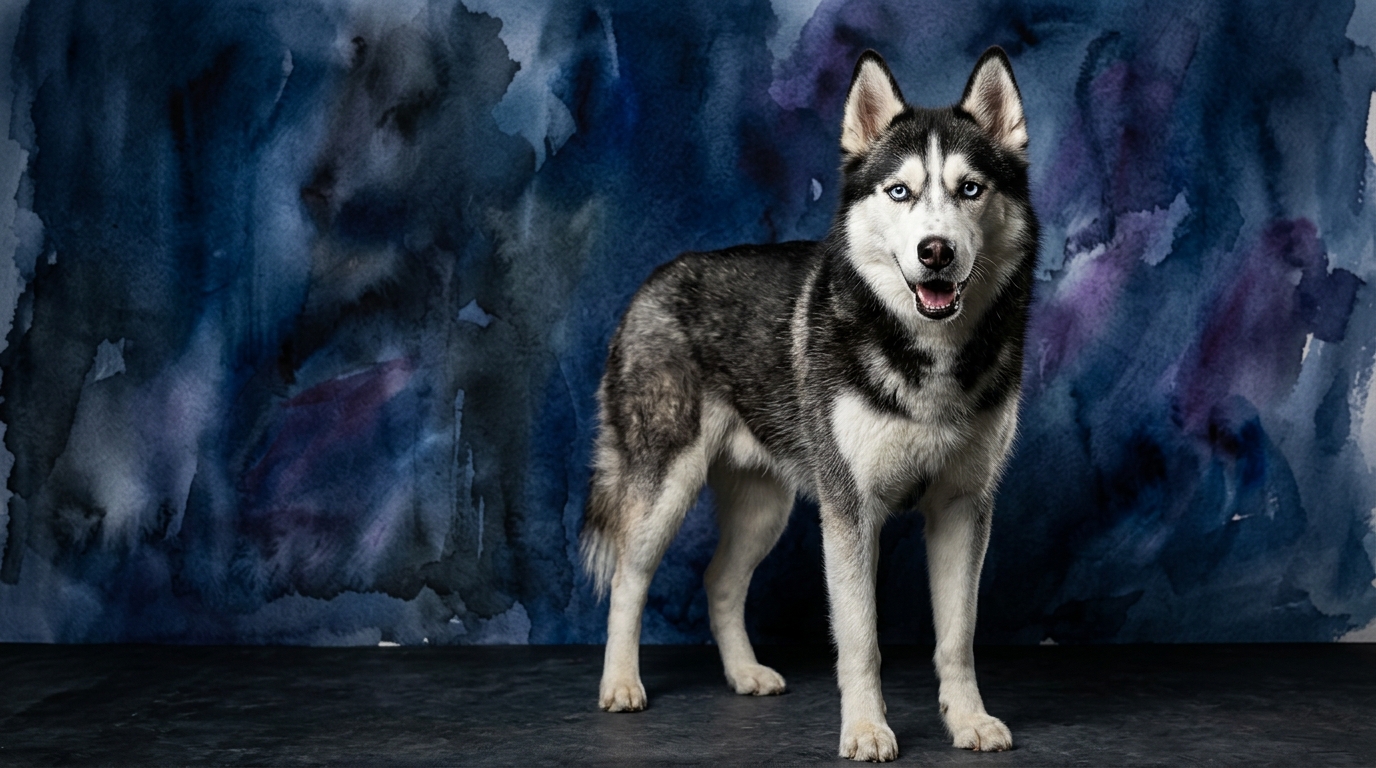
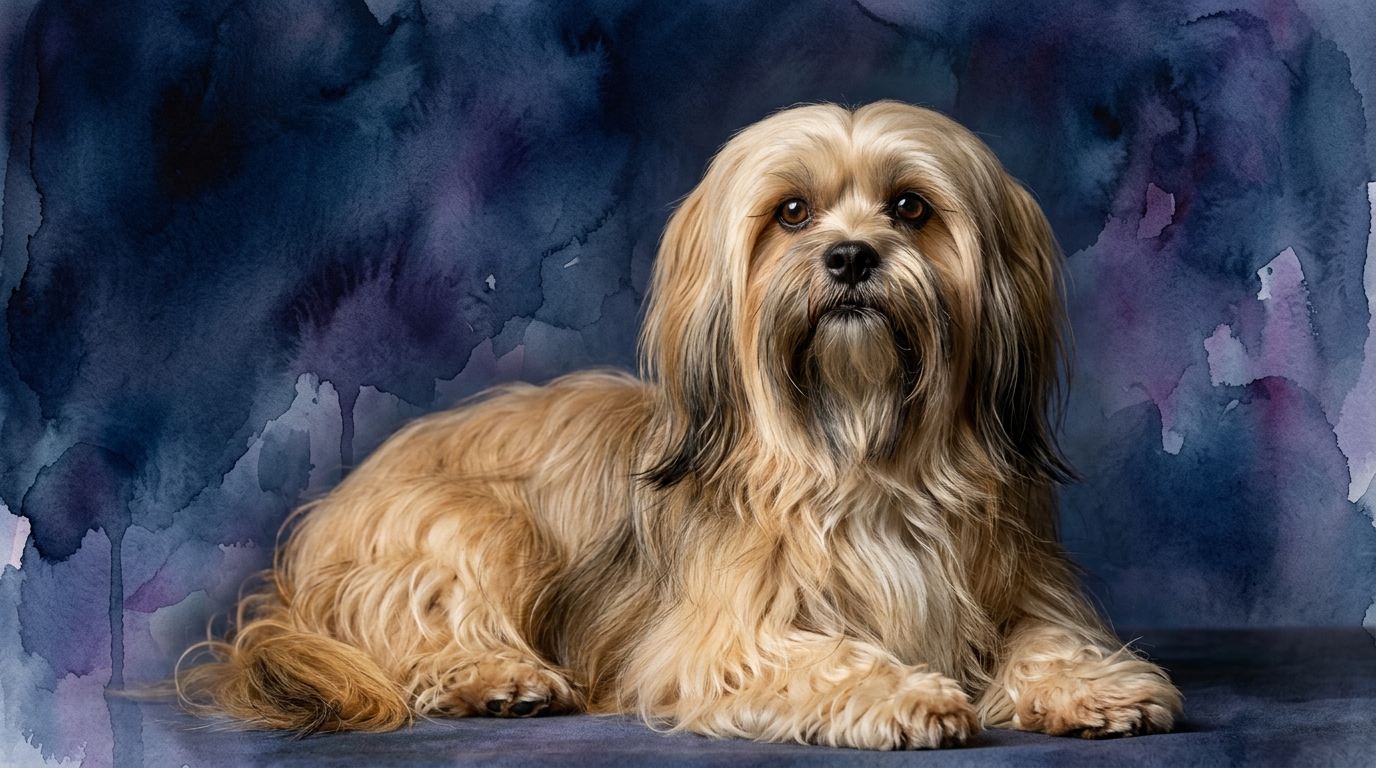
Side-by-Side IQ Profile: Siberian Husky vs. Lhasa Apso
The Cosmic Pet Pet IQ Lab provides a structured way to understand the cognitive strengths of different breeds. For the Siberian Husky, ranked #45 by Coren, its profile reflects a powerful working background. Its Problem Solving is rated 4/5, indicating a strong capacity for independent thought and creative solutions to environmental challenges. Training Speed stands at 2/5, reflecting a breed that understands commands but often weighs compliance against its own powerful impulses. Social Intelligence is 3/5, showing balanced awareness within a pack structure, be it canine or human. Instinctive Drive is a perfect 5/5, fueled by deep-seated motivations for running, pulling, and exploring. Lastly, its Memory is 4/5, enabling effective retention of routes, experiences, and learned behaviors.
The Lhasa Apso, with a Coren rank of #68, presents a different cognitive blueprint, tailored more for companionship and guardianship. Its Problem Solving is 3/5, demonstrating a moderate ability to tackle new problems, often related to managing its immediate domestic sphere. Training Speed is 3/5, suggesting a respectable pace in acquiring new commands, often keen to please its primary caregivers despite an independent streak. Social Intelligence is 3/5, primarily focused on its human family, perceiving household dynamics and moods. Instinctive Drive is 3/5, moderately expressed and centered around companionship, territorial guarding, and comfort. Its Memory is also 3/5, soundly recalling routines, familiar faces, and boundaries within its established home life.
Where the Siberian Husky Wins Cognitively
The Siberian Husky's cognitive strengths distinctly emerge in areas demanding independent action and robust physical engagement. Their Problem Solving score of 4/5 indicates a breed adept at navigating complex scenarios and devising creative solutions, a trait honed by generations of working in challenging environments. This manifests in their ability to strategically figure out how to open gates, escape enclosures, or access desired items. Furthermore, their Instinctive Drive, rated a perfect 5/5, means they possess an unparalleled internal motivation for tasks like running, exploring, and pulling. This deep-seated drive isn't just physical; it's a cognitive engine that fuels their determination and focus when engaged in activities that align with their heritage. Their Memory, at 4/5, underpins these capabilities, allowing them to recall vast territories, remember intricate routes, and retain problem-solving strategies for future use. This strong recall makes them excellent at remembering where they buried a prized toy or how they bypassed a particular obstacle previously. For owners seeking a dog whose mind thrives on challenge and purpose, the Husky's cognitive profile is compelling.
Where the Lhasa Apso Wins Cognitively
While the Lhasa Apso's overall Coren ranking is lower, its cognitive profile showcases specific strengths that are highly valuable in a companion setting. A notable advantage lies in their Training Speed, rated 3/5, which is comparatively higher than the Husky's 2/5. This indicates a breed that, while possessing an independent spirit, generally processes and retains new commands and routines with respectable efficiency. Their willingness to engage in training, particularly with positive reinforcement, often makes them responsive learners for household manners. Their Social Intelligence, also 3/5, is keenly focused on their human family, allowing them to be highly perceptive of subtle cues and emotional shifts within the home. This translates to an empathetic companion who understands household dynamics and can often anticipate needs or react appropriately to moods. The Lhasa Apso's Problem Solving score of 3/5, while not as high as the Husky's, is perfectly suited for navigating a domestic environment, such as finding the most comfortable sunbeam spot or effectively communicating their desires to their family. Their cognitive strengths are tailored for close companionship and guardianship.
Which is Easier to Train and Why
Understanding their distinct cognitive approaches clarifies which breed is 'easier' to train. The Lhasa Apso, with a Training Speed of 3/5, generally exhibits a more straightforward learning curve for obedience commands. They are often motivated by praise and treats from their family, and while they can be stubborn, their desire for companionship often translates into a willingness to cooperate. Their training challenges typically stem from their independent nature and a strong sense of self-importance, meaning they might choose to ignore a command if they don't see the immediate benefit or are otherwise preoccupied. In contrast, the Siberian Husky, despite a Problem Solving score of 4/5 and a Memory of 4/5, has a Training Speed of just 2/5. This isn't due to a lack of understanding, but rather a profound independence and a powerful Instinctive Drive (5/5). Huskies are highly capable of *understanding* what is asked of them, but their decision to *comply* is often weighed against their own strong urges to explore, run, or follow a scent. While a Lhasa Apso might quickly learn a 'sit,' a Husky's training demands a deeper understanding of their motivations and a strategic, patient approach for consistent results, especially off-leash.
Which Suits Active Owners vs. Relaxed Owners
The cognitive profiles of these breeds paint clear pictures for owner suitability. The Siberian Husky, with its dominant Instinctive Drive (5/5) and high Problem Solving (4/5) and Memory (4/5) scores, is unequivocally suited for active owners. These are individuals or families who embrace outdoor adventures, long runs, hiking, or even dog sports like canicross or skijoring. A Husky's mind thrives when given a 'job' or an outlet for its powerful inherent motivations. Without sufficient mental and physical stimulation, their problem-solving might lead to undesirable behaviors like escaping or destructive chewing. They do require consistent mental engagement. Conversely, the Lhasa Apso, with its moderate Instinctive Drive (3/5) and focused social intelligence, aligns well with more relaxed owners who appreciate a devoted, watchful companion. While they enjoy walks and playtime, their cognitive needs are generally met within the confines of a comfortable home environment, alongside their human family. They are content with less strenuous physical activity, preferring to engage their minds through observation, companionship, and perhaps a few short training sessions or puzzle toys.
The Verdict
Choose a Siberian Husky if you seek an independent, highly driven companion whose mind thrives on physical challenges, extensive exploration, and requires consistent, creative engagement to channel its powerful instincts.
Opt for a Lhasa Apso if you desire a perceptive, devoted, and somewhat independent house companion whose cognitive needs are met through close family interaction, moderate activity, and a role as a watchful home guardian.
🧠 Find Your Pet's IQ Score
Our Pet IQ Lab assessment covers 25+ tests across 5 cognitive dimensions — personalized to your breed.
Take the Full IQ Test →Frequently Asked Questions
Does a lower Coren rank mean a dog is less intelligent?
Not necessarily. The Coren ranking primarily measures a dog's ability to understand and obey human commands quickly, reflecting "working intelligence." A lower rank often indicates a breed with a more independent nature or different cognitive priorities, not a lack of problem-solving or social skills in other contexts.
Are Siberian Huskies difficult to train because of their intelligence?
Siberian Huskies are not difficult to train due to a lack of intelligence; rather, their significant independence and strong instinctive drives (like running and exploring) mean they often prioritize their own motivations over human commands. They understand, but may choose not to comply if not sufficiently motivated.
How does the Lhasa Apso's 'social intelligence' differ from the Husky's?
The Lhasa Apso's social intelligence is typically focused on deep bonds with a select human family, showing keen perception of their moods and household dynamics. The Husky's social intelligence is broader, geared towards pack dynamics, whether canine or human, often expressed with more independence and less overt emotional display.