Side-by-Side Cognitive Profile
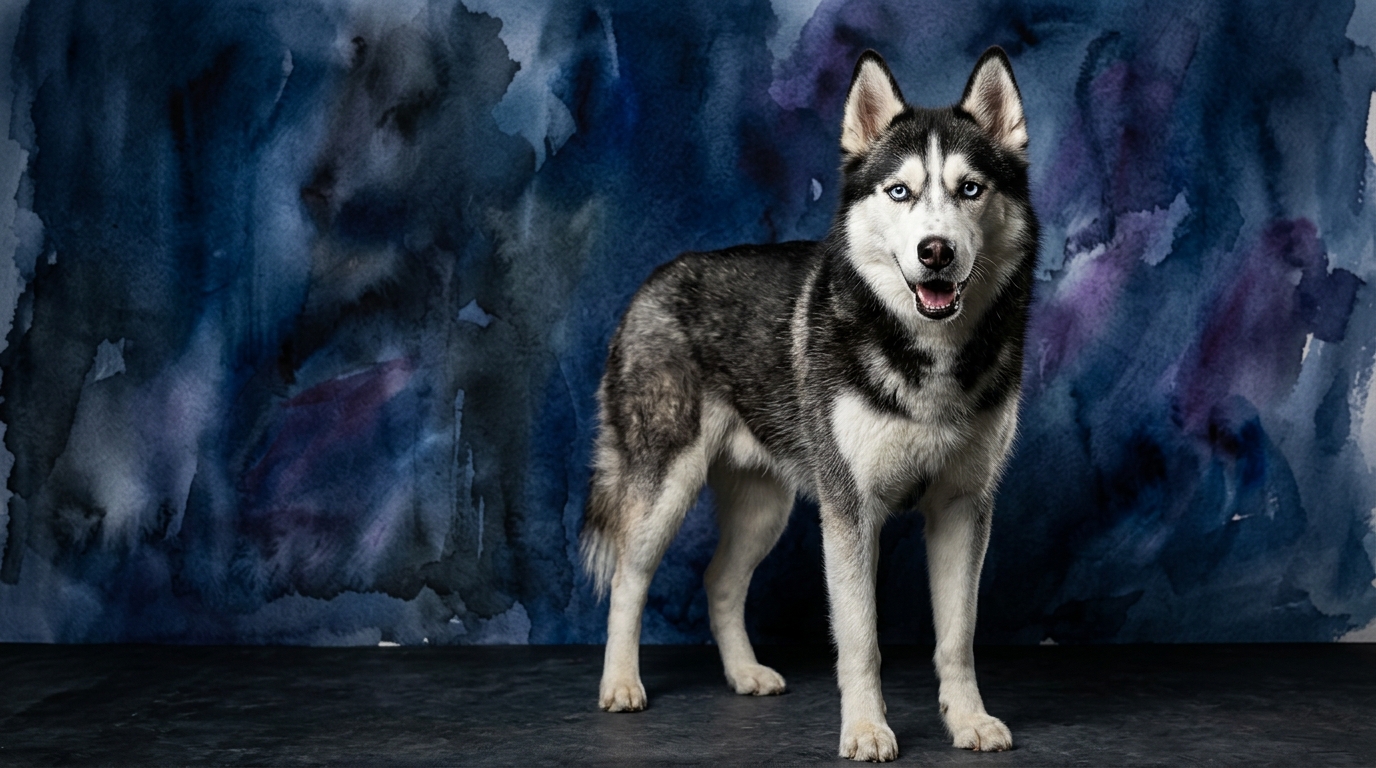
The Cosmic Pet Pet IQ Lab assesses canine intelligence across five crucial dimensions, offering a nuanced view beyond simple obedience. For the Siberian Husky, a Working group dog, we see a profile reflecting its heritage as an endurance sled dog. Its Problem Solving is rated 4/5, indicating a strong capacity for independent thought and finding solutions in complex environments. Training Speed is 2/5, suggesting a more deliberate and often self-motivated approach to learning commands. Social Intelligence stands at 3/5, demonstrating an ability to navigate pack dynamics and human interactions effectively, though not always with eagerness to please. Its Instinctive Drive is a powerful 5/5, reflecting an innate urge to pull, roam, and hunt. Memory is rated 4/5, enabling them to recall complex routes and experiences with precision.
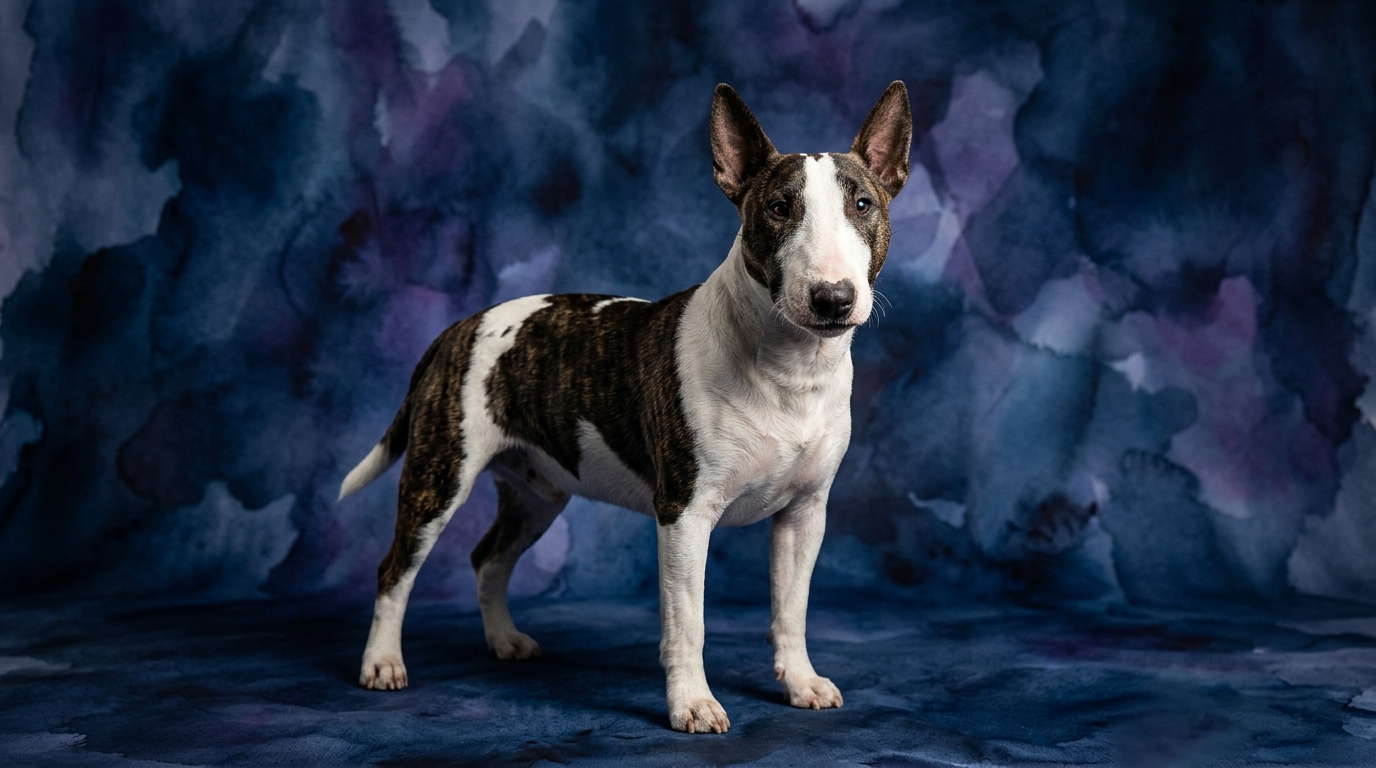
The Miniature Bull Terrier, a Terrier group dog, presents a different cognitive landscape. Its Problem Solving is rated 3/5, showing a moderate ability to figure out challenges, often through persistence. Training Speed is 3/5, indicating a more average learning curve, capable of picking up commands with consistent effort. Social Intelligence matches the Husky at 3/5, suggesting a similar level of understanding and engaging with social cues, though often with a characteristic terrier stubbornness. Its Instinctive Drive is 3/5, a moderate level that still encompasses prey drive and a desire to dig or chase, but less intensely than some working breeds. Memory is rated 3/5, providing a solid, functional recall for routines and learned behaviors.
Where the Siberian Husky Excels Cognitively
The Siberian Husky truly shines in scenarios demanding resourcefulness and independent decision-making, earning its 4/5 in Problem Solving. Bred to traverse vast, often featureless, snowy landscapes for miles, these dogs developed an acute ability to assess situations and find the most efficient path forward, even when human guidance was limited or unavailable. This manifests as a knack for figuring out how to open gates, escape enclosures, or locate hidden resources, often to their owner's surprise. Their 4/5 Memory supports this, allowing them to retain intricate mental maps of their surroundings and recall past solutions to similar challenges, making them adept at navigating new or changing environments with confidence.
Furthermore, the Husky's exceptional 5/5 Instinctive Drive fuels its impressive endurance and purpose-driven focus. This isn't merely about physical stamina; it's a deep-seated cognitive motivation to perform tasks that align with their inherent drives, whether it's pulling a sled, running for miles, or exploring. This strong drive means they are highly motivated by opportunities to engage these natural behaviors, making them incredibly persistent when pursuing a goal they deem worthwhile. Their cognitive strength lies in their ability to sustain mental focus over long periods, driven by their powerful instincts, a trait invaluable in their original working roles.
Where the Miniature Bull Terrier Shows Its Own Cognitive Strengths
While not ranked on the Coren scale, the Miniature Bull Terrier demonstrates distinct cognitive strengths, particularly in areas where its terrier tenacity translates into focused determination. Its 3/5 in Training Speed, compared to the Husky's 2/5, indicates a more straightforward learning curve for commands. This isn't to say they are always eager to please, but once they commit to understanding a task, they can apply themselves with a singular focus that can be very effective in training specific behaviors. Their persistence, a hallmark of the terrier group, means they will often keep trying to achieve a goal, even if it requires repeated attempts, which can be a valuable form of problem-solving (3/5) in itself.
The Miniature Bull Terrier's 3/5 Instinctive Drive, while moderate compared to the Husky, offers a different kind of advantage for pet owners. This more balanced drive means they are less overwhelmingly compelled by primal urges to roam or hunt, making them potentially more manageable in a domestic setting. Their cognitive energy can be more readily directed towards play or specific tasks without the constant pull of extreme working instincts. This allows their 3/5 Social Intelligence to manifest in a more focused way within the family unit, often forming deep, albeit sometimes stubborn, bonds with their chosen humans, capable of understanding and responding to nuanced social cues within their immediate circle.
Which is Easier to Train and Why
When it comes to ease of training, the Miniature Bull Terrier generally presents a more accessible experience for owners, largely due to its 3/5 Training Speed compared to the Siberian Husky's 2/5. Siberian Huskies were bred to think independently and make decisions far from their mushers on a sled team; this translates into a self-reliant mindset where they often weigh commands against their own perceived interests. Their independence means they require highly engaging, varied training sessions and a strong 'what's in it for me?' incentive, making the learning process longer and requiring significant patience to achieve consistent obedience.
Miniature Bull Terriers, while possessing the characteristic terrier willfulness, tend to be more responsive to repetition and consistent reinforcement. Their 3/5 Instinctive Drive, being more moderate, means they are less likely to be completely distracted by an overwhelming urge to chase or explore when a training cue is given. While they will test boundaries and require firm, fair leadership, their cognitive processing for learning new commands often proceeds at a more predictable pace. They may not be as quick to generalize new behaviors as some breeds, but their tenacity means they will often stick with a task until they grasp it, making the overall training journey potentially less frustrating for the average owner seeking reliable obedience.
Which Suits Active Owners vs. Relaxed Owners
For the exceptionally active owner, the Siberian Husky is an ideal match. Its 5/5 Instinctive Drive and the need to engage its 4/5 Problem Solving and Memory demand a lifestyle filled with vigorous physical activity and mental challenges. These dogs thrive on long runs, hikes, sledding, skijoring, or extensive backyard play. Owners who enjoy exploring vast outdoor spaces, engaging in canine sports, or providing intricate puzzle toys and training games will find the Husky's cognitive and physical needs met. A relaxed owner, or one unable to commit to several hours of stimulating activity daily, would likely find themselves with a bored and potentially destructive Husky, as their strong drives compel them to find their own 'work' if not provided.
The Miniature Bull Terrier, with its 3/5 Instinctive Drive and 3/5 Problem Solving, suits owners who are active but perhaps not to the extreme. They require regular, vigorous exercise to be content—daily walks, playtime in a secure yard, or engaging in dog sports like agility are excellent outlets. While they enjoy activity, their endurance is not on par with a Husky's, and they are generally more amenable to winding down indoors after their exercise needs are met. Owners who appreciate a playful, spirited companion for daily adventures but also value quiet evenings at home will find the Miniature Bull Terrier's cognitive and physical demands more aligned with their lifestyle than the relentless energy of a Husky. They are not suited for entirely sedentary owners but offer a more balanced energy output than their sled dog counterpart.
The Verdict
Choose a Siberian Husky if you are an experienced, highly active individual or family prepared to channel immense physical and cognitive energy into structured activities and independent problem-solving challenges.
Opt for a Miniature Bull Terrier if you seek a spirited, tenacious companion for regular activity and consistent training, appreciating a dog with a moderate drive and a strong, albeit sometimes stubborn, personality.
🧠 Find Your Pet's IQ Score
Our Pet IQ Lab assessment covers 25+ tests across 5 cognitive dimensions — personalized to your breed.
Take the Full IQ Test →Frequently Asked Questions
Are Siberian Huskies difficult to live with due to their independence?
Siberian Huskies are indeed independent thinkers (Problem Solving 4/5, Training Speed 2/5), which means they require consistent, engaging training and ample mental stimulation to prevent boredom and potential mischief. Their self-reliant nature can make them challenging for first-time dog owners unless they are fully prepared for their unique cognitive needs.
Do Miniature Bull Terriers have a strong prey drive?
Miniature Bull Terriers possess a moderate instinctive drive (3/5), which includes a notable prey drive typical of terriers. While not as extreme as a Husky's, they may still be inclined to chase small animals, requiring secure fencing and leash discipline during walks to manage this natural inclination effectively.
Which breed is better for apartment living?
Neither breed is ideally suited for small apartment living without significant owner commitment, but a Miniature Bull Terrier (Instinctive Drive 3/5) might adapt slightly better given sufficient daily exercise, as they generally have less overwhelming roaming instincts than a Siberian Husky (Instinctive Drive 5/5). A Husky's profound need for extensive space and activity makes apartment life particularly challenging for them.