Side-by-Side Cognitive Profiles
The Cosmic Pet Pet IQ Lab employs a five-dimensional framework to assess canine intelligence, offering a granular view beyond simple obedience. Let's explore how the Siberian Husky and Parson Russell Terrier stack up in each category.
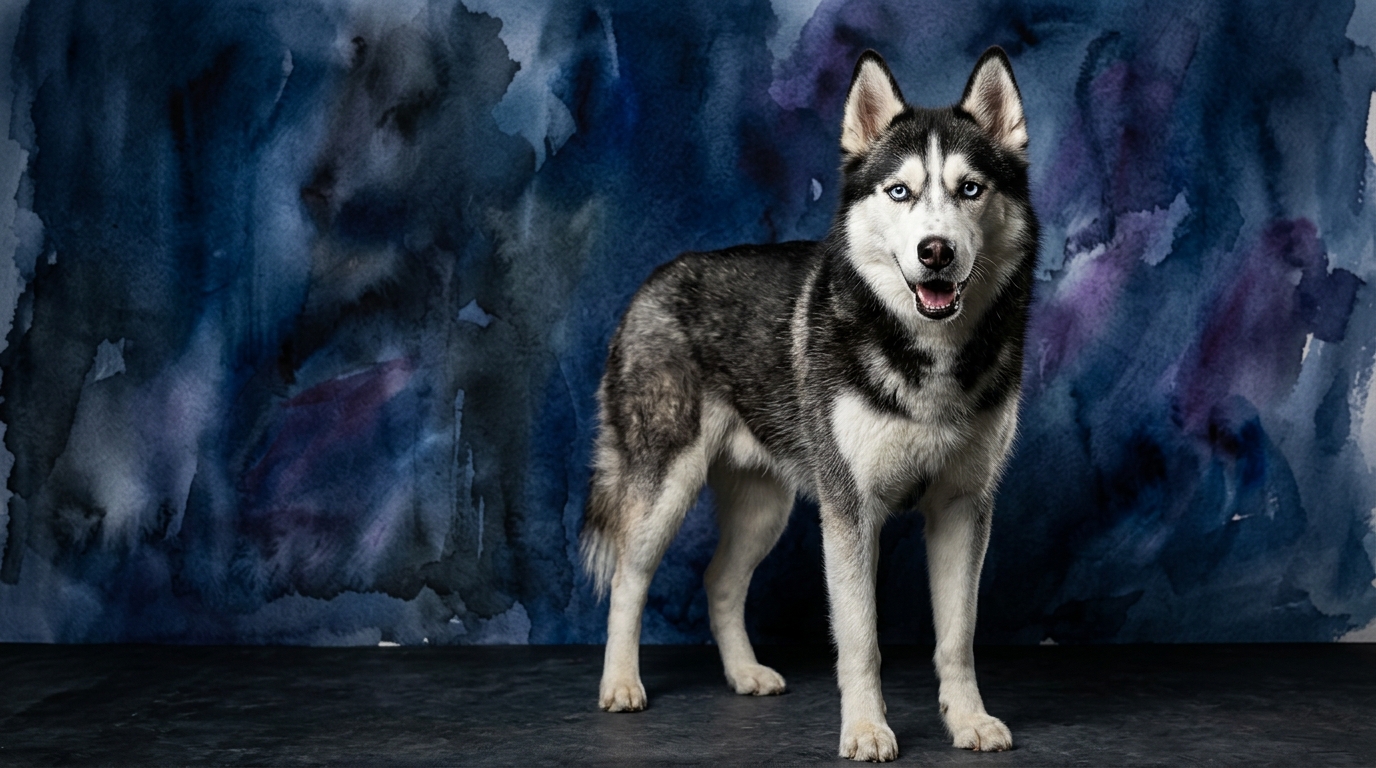
The Siberian Husky, a member of the Working Group and Coren-ranked #45, exhibits a unique blend of strengths and a strong independent streak. Their Problem Solving is rated 4/5, indicating a resourceful mind capable of figuring out complex situations, often to their own benefit. Training Speed, however, stands at 2/5, reflecting their independent nature and selective compliance. Social Intelligence is 3/5; they are generally amiable but not overly focused on human emotional nuances. Their Instinctive Drive is an exceptional 5/5, encompassing intense wanderlust, high prey drive, and a deep desire to run and pull. Finally, their Memory is 4/5, allowing them to recall routes, experiences, and learned behaviors effectively.
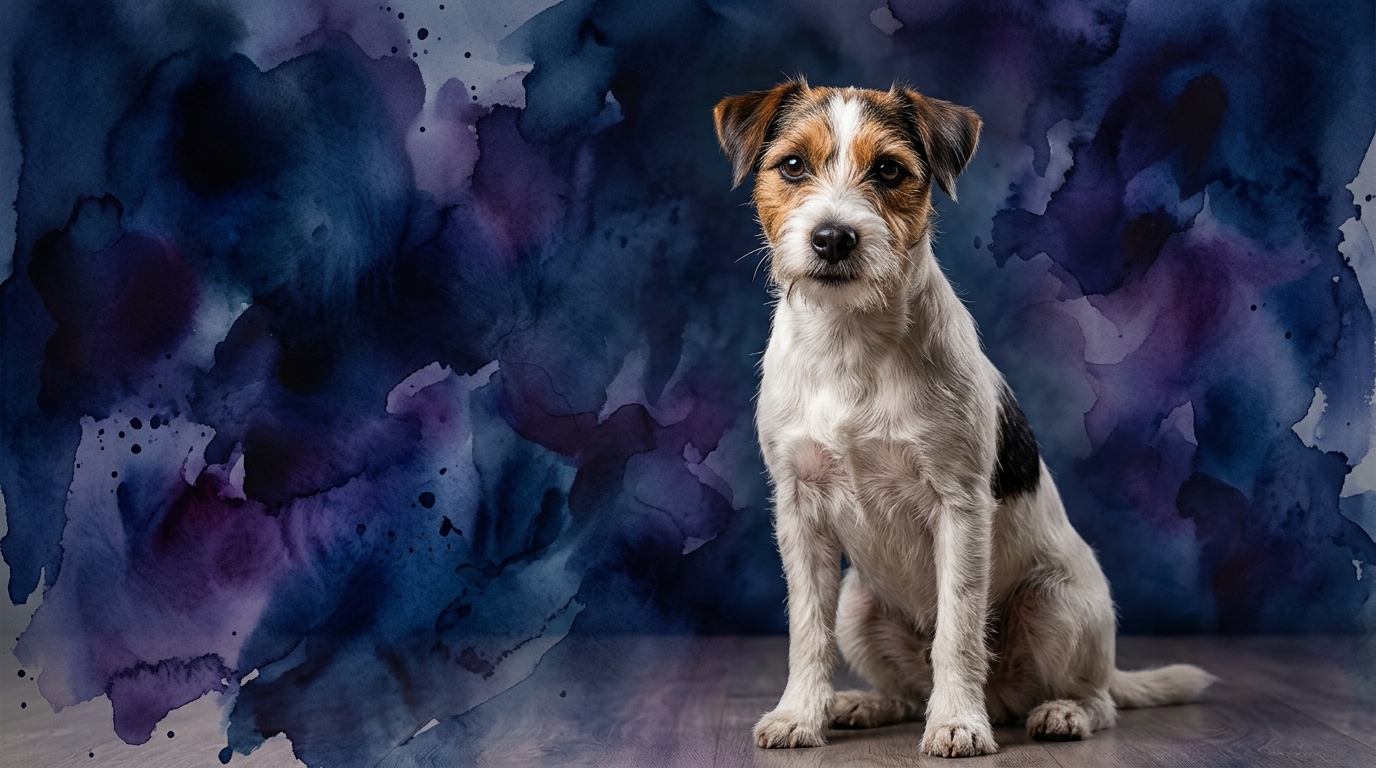
The Parson Russell Terrier, a tenacious member of the Terrier Group, brings a different set of cognitive attributes to the table, without a specific Coren ranking. Their Problem Solving is rated 3/5, demonstrating cleverness and persistence, especially when pursuing a goal related to their terrier instincts. Training Speed is 3/5, meaning they can learn quickly when motivated, but their focus can be challenged by distractions. Social Intelligence is also 3/5; they are confident and can form strong bonds, though their task-oriented nature might sometimes override subtle social cues. Their Instinctive Drive is 3/5, primarily focused on digging, barking, and a potent prey drive for small vermin. Their Memory is 3/5, solid for retaining commands and routines, particularly those tied to their innate drives.
Where the Siberian Husky Excels Cognitively
When it comes to sheer ingenuity in navigating environments and achieving self-motivated goals, the Siberian Husky's 4/5 Problem Solving score shines. They are often masters of escape, capable of figuring out latches, scaling fences, or strategically maneuvering to access desired items. This isn't necessarily about human-pleasing; it's about their own resourcefulness in a given situation. Their high Coren ranking of #45, while not directly comparable to the unranked Parson, suggests a higher capacity for working and obedience intelligence in a structured environment.
Furthermore, the Husky's 4/5 Memory is a distinct advantage, particularly in spatial recall. They can remember complex routes, territories, and past experiences with impressive accuracy, a critical trait for a breed historically reliant on navigating vast, often featureless, landscapes. This strong memory, combined with their 5/5 Instinctive Drive for endurance and coordinated effort in a pack, highlights a different kind of cognitive strength—one focused on sustained activity and environmental mastery rather than quick, precise bursts of solo action.
Where the Parson Russell Terrier Shows Its Mettle
The Parson Russell Terrier's cognitive strengths lie in its tenacious focus and adaptability within specific tasks. With a 3/5 for Training Speed, they often pick up new commands with reasonable alacrity, especially if the training is engaging and reward-based. This is a point where they edge out the Husky's 2/5, suggesting a potentially quicker initial grasp of new instructions, provided their attention can be held. Their problem-solving, while rated 3/5, is characterized by an unwavering persistence in pursuit of a goal, such as locating a hidden scent or burrowing for a perceived 'prey' item. This focused determination is a significant cognitive asset.
Their 3/5 Instinctive Drive, while lower than the Husky's, is intensely concentrated on tasks like digging and hunting small vermin. This focus allows them to excel in activities that tap into these specific drives, such as earthdog trials or agility courses, where their quick reflexes and determined nature come to the forefront. Their memory, also 3/5, effectively supports their ability to retain training and past experiences relevant to these focused, high-energy tasks.
Training: A Question of Cooperation and Drive
When considering which breed is easier to train, the Parson Russell Terrier generally holds an advantage due to its 3/5 Training Speed compared to the Husky's 2/5. Parsons are often more eager to engage in interactive learning and respond well to immediate rewards, making them responsive to positive reinforcement methods. While they possess a strong independent streak and can be easily distracted by their innate drives, their desire to participate and learn can be harnessed effectively with consistent, stimulating training.
Siberian Huskies, on the other hand, present a greater training challenge due to their profound independence and powerful instinctive drives. They are not inherently motivated to please and will often weigh compliance against their own desires, such as the urge to run or explore. Successful training with a Husky demands immense patience, creativity, and highly motivating rewards. Owners must find ways to make training enjoyable and relevant to the Husky's natural inclinations, as rote repetition will likely be met with stubborn refusal or disinterest. Their understanding of commands is often present, but their willingness to obey is conditional.
Matching Canine Cognition to Lifestyle
For active owners, both breeds require significant physical and mental engagement, but their needs differ in nature. The Siberian Husky, with its 5/5 Instinctive Drive for running and pulling, is an ideal companion for owners who embrace long-distance activities like running, hiking, or dog sledding. They thrive on sustained, vigorous exercise and mental challenges that tap into their problem-solving abilities, such as complex puzzle toys or scent work. A relaxed owner will quickly find themselves overwhelmed by a Husky's boundless energy and potential for destructive or escape behaviors if not adequately stimulated.
The Parson Russell Terrier, while also requiring an active lifestyle, has needs that are often met with shorter, intense bursts of activity. Their 3/5 Instinctive Drive for digging and hunting means they excel in activities like agility, flyball, or earthdog trials that provide outlets for their quick reflexes and focused determination. They need mental engagement to prevent boredom, but their exercise requirements, while substantial, might be more manageable for an active owner who isn't necessarily seeking a long-distance running partner. Neither breed is suitable for truly sedentary households; both demand owners committed to providing consistent physical and cognitive stimulation.
The Verdict
Choose the Siberian Husky if you are an experienced, highly active owner ready for an independent, physically robust companion who thrives on endurance activities and intelligent problem-solving.
Opt for the Parson Russell Terrier if you seek a tenacious, spirited partner for focused, high-energy activities like agility or earthdog trials, who values shorter, intense bursts of mental and physical engagement.
🧠 Find Your Pet's IQ Score
Our Pet IQ Lab assessment covers 25+ tests across 5 cognitive dimensions — personalized to your breed.
Take the Full IQ Test →Frequently Asked Questions
Are Siberian Huskies difficult to train?
Siberian Huskies can present a training challenge due to their high independence and strong instinctive drive, scoring 2/5 for training speed. They often prefer to make their own choices, requiring creative, consistent, and highly motivating training methods to build cooperation rather than strict obedience.
Do Parson Russell Terriers dig a lot?
Yes, Parson Russell Terriers possess a strong instinctive drive, scoring 3/5, which includes a pronounced urge to dig. This behavior is deeply rooted in their history as hunting dogs bred to unearth burrowing prey, and owners should provide appropriate outlets for this natural instinct.
Which breed is better with children?
Both breeds can be good with children with proper socialization and training, scoring 3/5 for social intelligence. The Husky's pack mentality often makes them tolerant, while the Parson Russell Terrier's spirited nature means interactions should be supervised, ensuring both child and dog respect boundaries.