Side-by-Side IQ Profile
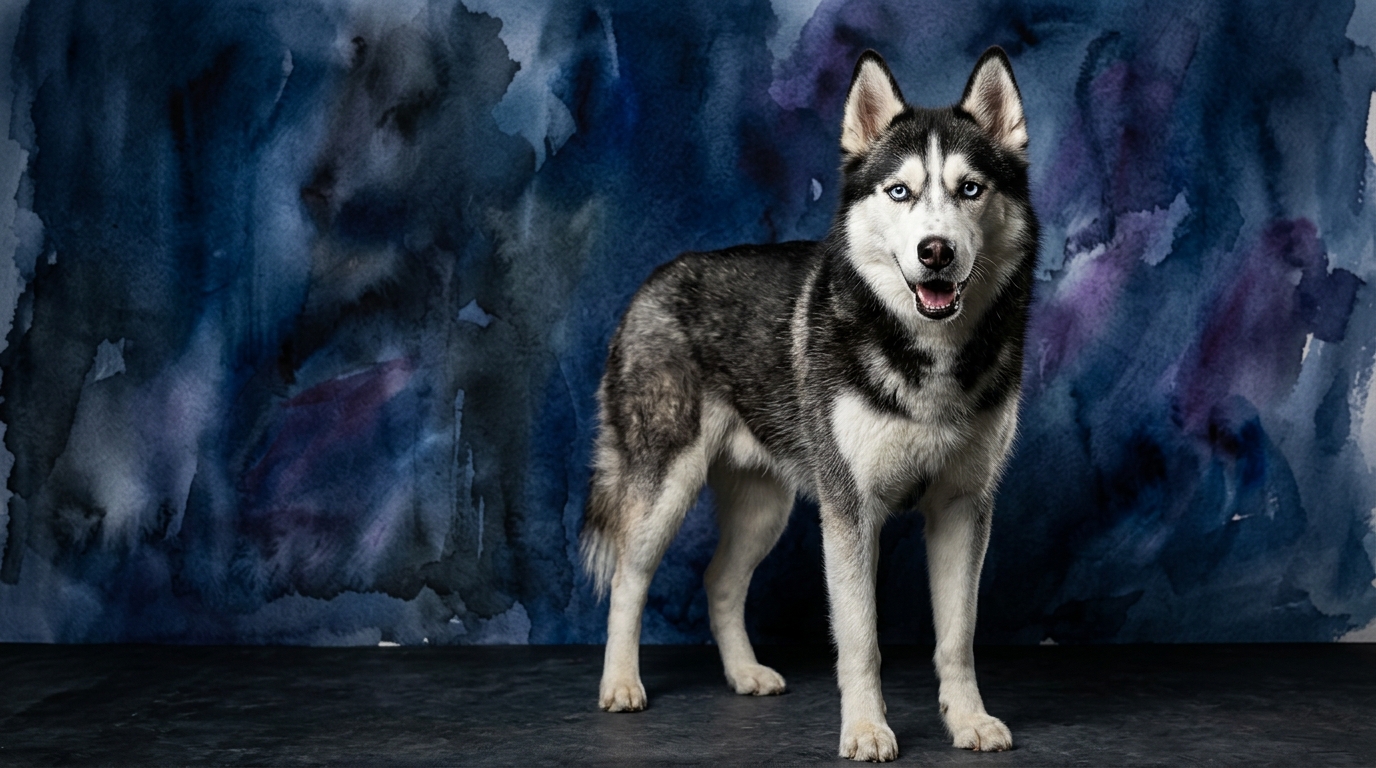
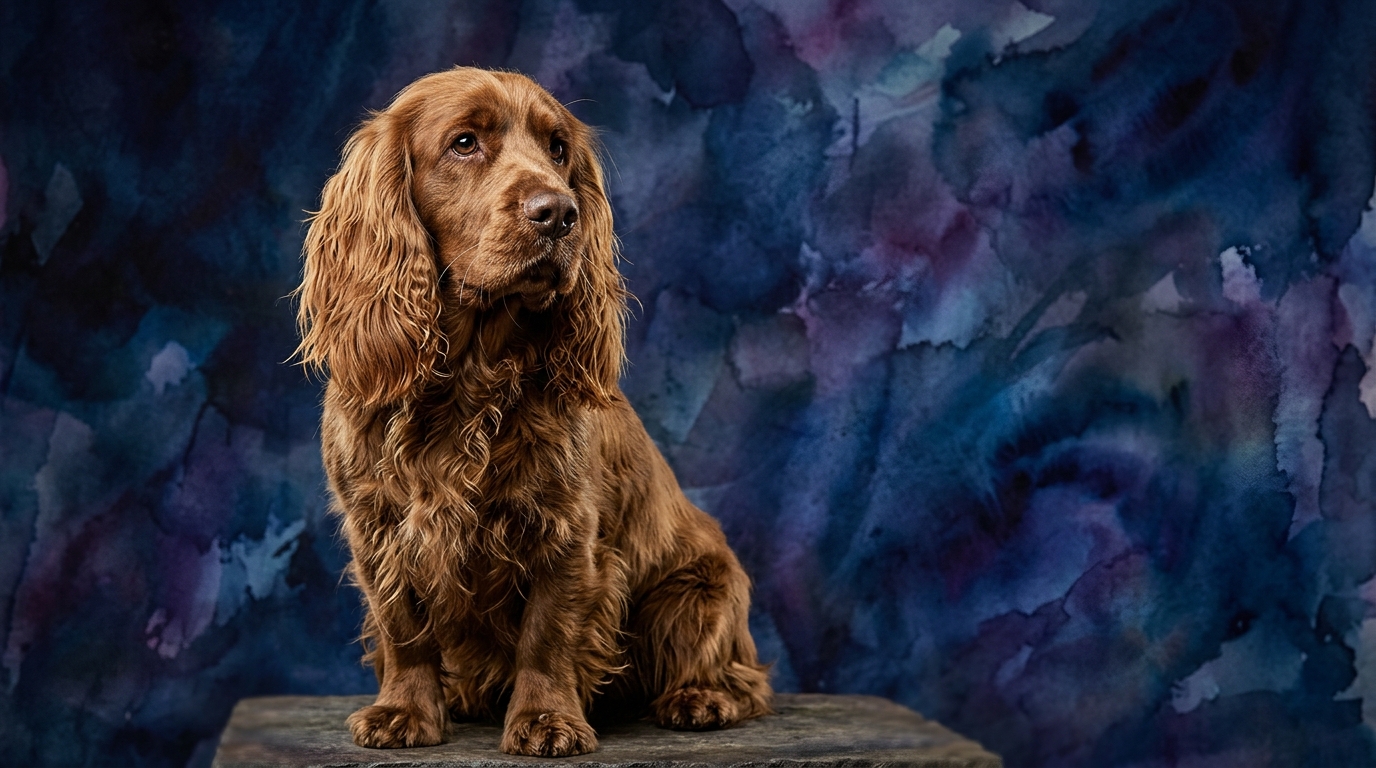
At The Cosmic Pet Pet IQ Lab, we evaluate canine cognition across five critical dimensions, providing a granular view beyond general perceptions. The Siberian Husky, a Working breed, holds a Coren rank of #45, indicating a strong capacity for learning and obedience among all breeds. The Sussex Spaniel, a Sporting breed, ranks at #62, signifying an average working intelligence.
The Siberian Husky's cognitive profile showcases: Problem Solving 4/5, indicating a strong ability to independently figure out solutions to environmental challenges; Training Speed 2/5, suggesting they can learn but often require more repetition and motivation; Social Intelligence 3/5, reflecting a balanced ability to understand and interact within social structures; Instinctive Drive 5/5, highlighting an exceptionally powerful innate urge for specific behaviors like running and exploring; and Memory 4/5, demonstrating a robust recall of learned experiences and spatial information.
In contrast, the Sussex Spaniel's profile reveals: Problem Solving 3/5, showing a solid capacity for moderate problem-solving, particularly when linked to their primary functions; Training Speed 3/5, indicating a generally receptive and cooperative learning pace; Social Intelligence 3/5, similar to the Husky, suggesting good social awareness within their family unit; Instinctive Drive 3/5, a moderate drive focused on specific hunting behaviors like scenting and flushing; and Memory 3/5, possessing a reliable recall for routines and commands.
Where the Siberian Husky Wins Cognitively
The Siberian Husky distinctly excels in areas demanding independent thought and powerful intrinsic motivation. Their Problem Solving score of 4/5 outshines the Sussex Spaniel's 3/5, signifying a superior knack for navigating complex environments and overcoming obstacles without direct human instruction. This manifests in their notorious ability to figure out how to open gates, escape enclosures, or locate hidden food puzzles using spatial reasoning and persistent trial-and-error. Their cognitive approach is often about actively finding a way to achieve a goal, even if it means deviating from a learned path, showcasing a proactive and self-directed mental process.
The Husky's Instinctive Drive, rated a perfect 5/5 compared to the Spaniel's 3/5, represents a significant cognitive advantage. This isn't just about physical energy; it's a deep-seated mental framework for exploration and endurance. Their ancestral role as sled dogs has ingrained a relentless internal motivation to cover vast territories, constantly processing environmental stimuli, mapping routes, and identifying potential pathways. This powerful drive fuels their exploratory cognition, making them mentally resilient and adaptable in demanding conditions, always scanning and interpreting their surroundings for opportunities to move and discover.
Furthermore, the Siberian Husky's Memory score of 4/5 surpasses the Sussex Spaniel's 3/5. Huskies exhibit a robust recall, particularly for spatial information and sequences of events within their environment. This aids their remarkable ability to navigate complex terrains, remember specific routes, and recall the locations of resources or past 'successes' in problem-solving. Their memory is finely tuned for practical application in their surroundings, retaining details crucial for independent action and efficient traversal.
Where the Sussex Spaniel Wins Cognitively
While the Husky's independence is a strength, the Sussex Spaniel shines in areas requiring cooperative learning and focused application. Their Training Speed of 3/5, compared to the Husky's 2/5, gives them a notable edge in the acquisition of new commands and behaviors. This isn't necessarily about raw intelligence, but about a cognitive disposition towards working in partnership. Sussex Spaniels generally possess a stronger desire to please their handler, processing new instructions with a cooperative mindset that leads to quicker retention of basic obedience skills. They are more inclined to seek handler approval, making the training process more direct and efficient.
The Sussex Spaniel's Instinctive Drive, while moderate at 3/5, is a specific cognitive advantage in its focused application. Unlike the Husky's broad exploratory drive, the Spaniel's drive is precisely tuned towards scent work and flushing game. This means their cognitive energy is channeled efficiently towards a singular objective, making them exceptionally good at tasks requiring sustained concentration on specific sensory inputs. Their problem-solving in this domain is methodical and persistent, a cognitive strength that allows for deep engagement with a specific task without being easily distracted by broader environmental stimuli.
Moreover, the Sussex Spaniel's cognitive profile, particularly its combination of moderate Instinctive Drive and higher Training Speed, makes it inherently more reliable in structured environments. Their Coren rank of #62 suggests an average working intelligence that thrives on routine and clear direction. They are less likely to deviate from a learned task due to overwhelming independent drives, preferring to follow established patterns and handler cues. This makes them cognitively 'easier' to direct and more predictable in controlled settings, valuing consistency over constant self-determination.
Which is Easier to Train and Why
Based on their cognitive profiles, the Sussex Spaniel is generally easier to train than the Siberian Husky. The Spaniel's Training Speed score of 3/5, coupled with its moderate Instinctive Drive (3/5) and a natural inclination to cooperate, means it typically responds well to positive reinforcement and clear instruction. Bred to work in close partnership with hunters, Sussex Spaniels are often attentive to their handler's cues and motivated by a desire to please and a love for routine. They process new commands with a focus on compliance and partnership.
In contrast, the Siberian Husky's Training Speed of 2/5 and exceptionally high Instinctive Drive (5/5) present a greater challenge. Huskies are independent thinkers, bred to make decisions on their own in vast, open spaces, rather than constantly deferring to a human. They learn quickly but may choose not to comply if a command conflicts with their strong innate drives to run, explore, or simply do their own thing. Their cognitive process often involves weighing the perceived benefit of obedience against their intrinsic motivation, leading to selective hearing or what's often termed 'Husky stubbornness.' For example, a Husky might understand the 'come' command perfectly but opt to continue chasing a squirrel because their prey drive is more compelling in that moment. A Sussex Spaniel, conversely, would likely disengage from the squirrel more readily when called, prioritizing the handler's command and partnership.
Which Suits Active Owners vs Relaxed Owners
The Siberian Husky is unequivocally suited for highly active owners who thrive on outdoor adventure and are prepared to engage with a dog possessing immense physical and mental stamina. Their 5/5 Instinctive Drive means they require extensive daily exercise, often involving running, hiking, or pulling activities, to satisfy their innate need for movement and exploration. Cognitively, they need owners who can channel their 4/5 Problem Solving skills into constructive activities like agility, scent work, or complex puzzle toys, preventing boredom-driven destructive behaviors. Owners must appreciate and manage their independent nature and strong memory for escape routes.
The Sussex Spaniel, while still a sporting dog, aligns better with owners seeking a more moderately active pace. Their 3/5 Instinctive Drive means they enjoy regular walks, scent games, and moderate outdoor play, but don't demand the relentless, high-intensity exercise of a Husky. They thrive on companionship and mental stimulation through training sessions that engage their 3/5 Problem Solving and 3/5 Memory, but these are typically less physically demanding. Owners who appreciate a dog that is content with a cozy spot after a good walk and enjoys predictable routines will find the Sussex Spaniel a more harmonious fit. They are not couch potatoes, but their activity needs are substantial enough to require consistent engagement without being extreme.
The Verdict
Select a Siberian Husky if you are an incredibly active individual or family, passionate about outdoor adventures like running, hiking, or sledding, and are prepared to engage a highly independent, problem-solving canine with significant exercise and mental stimulation requirements.
Opt for a Sussex Spaniel if you desire a devoted, moderately active companion who enjoys consistent routines, thrives on companionship, and is generally more amenable to traditional training methods for a rewarding partnership.
🧠 Find Your Pet's IQ Score
Our Pet IQ Lab assessment covers 25+ tests across 5 cognitive dimensions — personalized to your breed.
Take the Full IQ Test →Frequently Asked Questions
Are Siberian Huskies truly stubborn?
Their perceived stubbornness stems from a strong independent streak and high instinctive drive. They understand commands but often weigh them against their own desires or environmental stimuli, choosing to comply only if sufficiently motivated or if it aligns with their immediate goals.
Do Sussex Spaniels need a lot of grooming?
Yes, Sussex Spaniels have a thick, wavy, and often feathery coat that requires regular brushing (2-3 times a week) to prevent mats and tangles, especially around their ears, legs, and tail. Professional grooming for trimming may also be beneficial.
Can a Siberian Husky live in an apartment?
While physically possible, it's challenging. Huskies require immense exercise and mental stimulation daily, often several hours of vigorous activity. An apartment dweller would need to commit significant time to outdoor activities like long runs and dog park visits to prevent boredom and destructive behaviors.