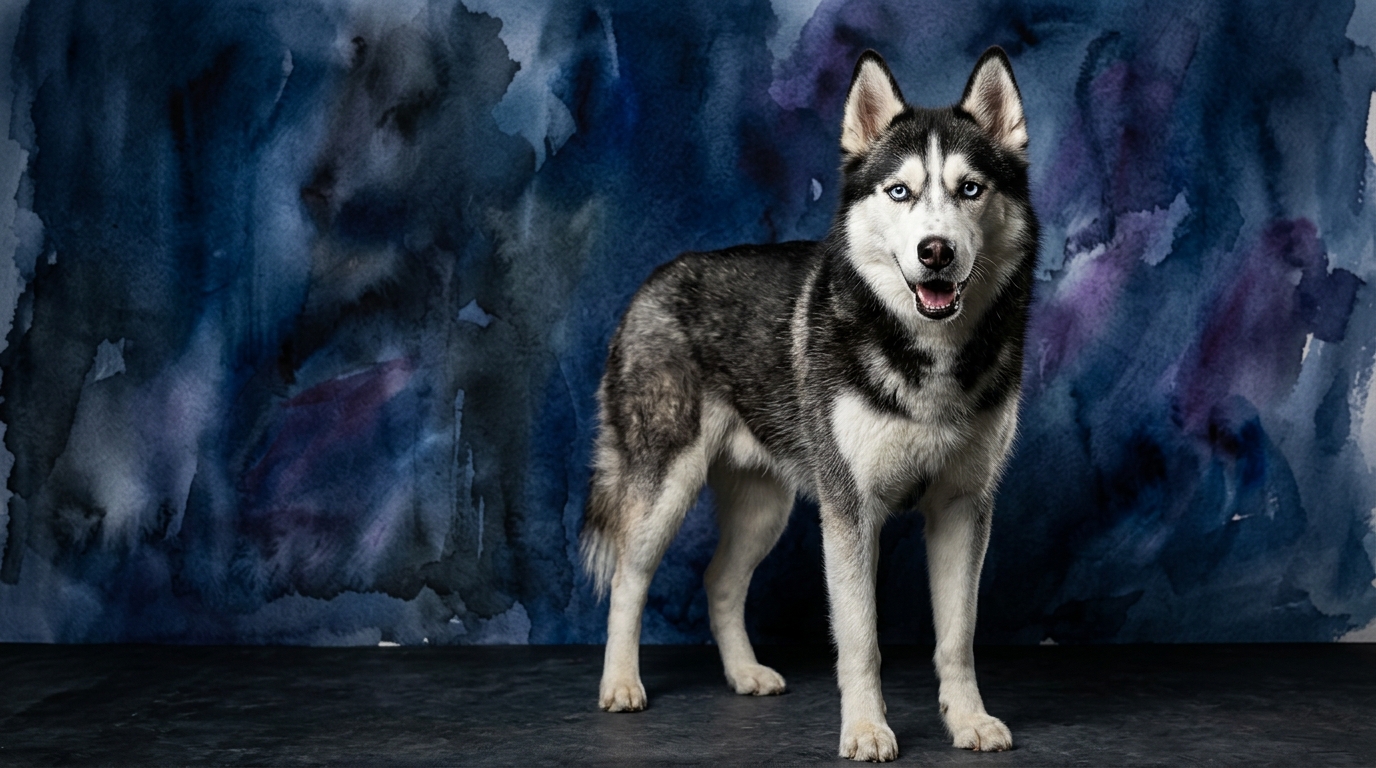
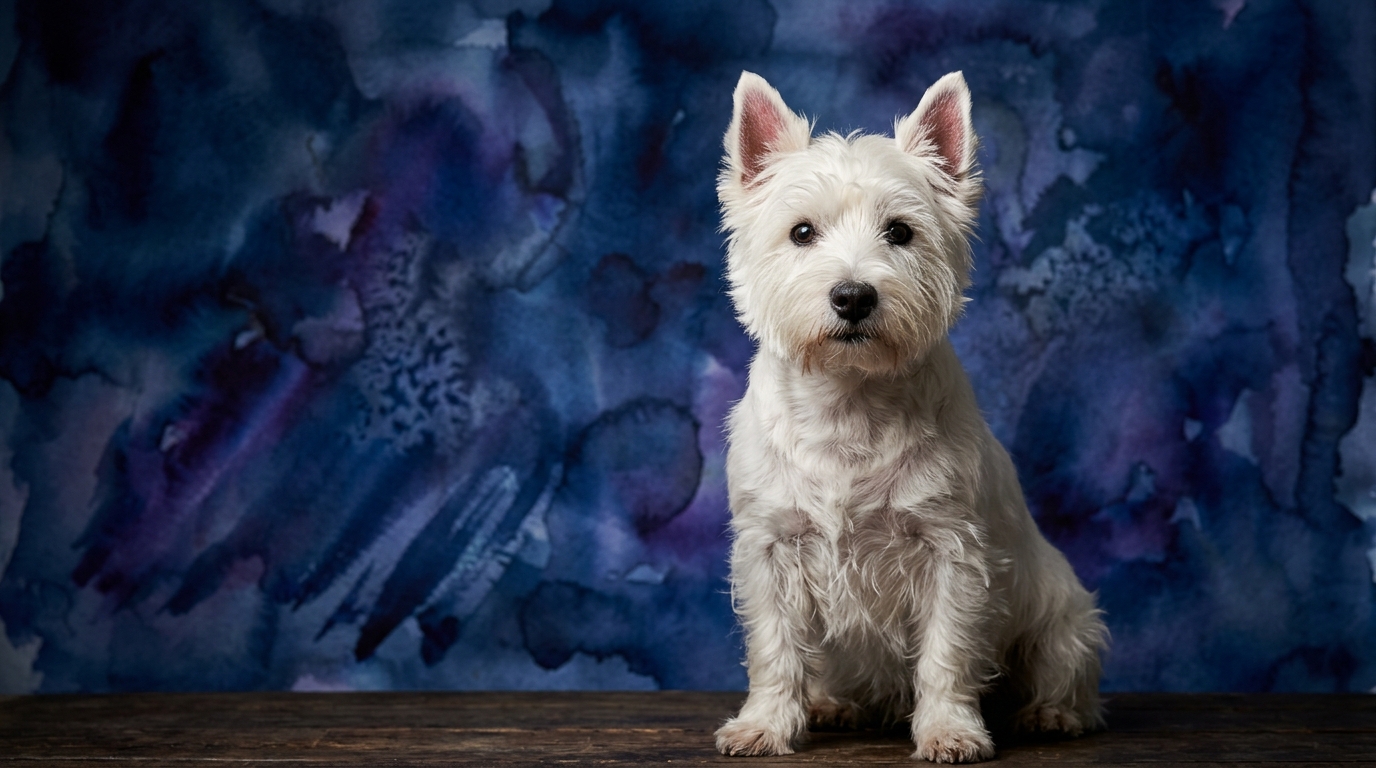
Side-by-side IQ profile
The Siberian Husky, a working breed with a Coren rank of #45, displays a formidable cognitive profile shaped by its heritage as an endurance sled dog. Its problem-solving ability scores an impressive 4/5, indicating a high capacity for navigating complex situations and overcoming obstacles. Training speed, however, is rated 2/5, reflecting an independent spirit that prioritizes self-directed action over immediate obedience. Social intelligence sits at 3/5, suggesting a moderate understanding of human cues, often filtered through their own strong motivations. Their instinctive drive is a remarkable 5/5, propelling them with an intense urge to run, explore, and work. Finally, their memory stands at 4/5, allowing them to retain intricate information about their environment and past experiences.
In contrast, the West Highland White Terrier, a terrier breed ranked #47 by Coren, presents a different cognitive blueprint, honed for independent vermin control. Its problem-solving score is 3/5, indicating competence in figuring out challenges, particularly those related to their hunting tasks. Training speed is rated 3/5, suggesting a quicker initial grasp of commands than the Husky, though their terrier tenacity can introduce its own challenges. Social intelligence, like the Husky, is 3/5, demonstrating an ability to understand human interactions, often with a clever, self-serving twist. Their instinctive drive is 3/5, manifesting as a persistent urge to dig, scent, and chase small prey. Their memory, at 4/5, is robust, enabling them to recall important details about their territory and routines.
Where Siberian Husky wins cognitively
The Siberian Husky's cognitive strengths distinctly outshine the Westie’s in areas demanding complex environmental navigation and sustained, high-energy application of intellect. With a problem-solving score of 4/5, these dogs exhibit a superior ability to strategize and execute multi-step solutions, particularly when it comes to overcoming physical barriers or finding optimal routes in varied terrains. This mental agility is frequently observed in their legendary knack for escaping enclosures or devising ways to reach desired areas, showcasing a proactive and adaptive mind.
Furthermore, the Husky's unparalleled instinctive drive, rated a perfect 5/5, fuels their problem-solving with relentless determination. This isn't merely about understanding a puzzle, but about possessing the immense internal motivation and physical stamina to pursue a solution until it's achieved, whether that's covering vast distances or persistently working at a latch. Their strong memory (4/5) complements this by allowing them to recall successful strategies and complex routes, ensuring efficiency in their independent pursuits, a level of sustained, self-directed ingenuity that the Westie's more focused, smaller-scale drive does not typically necessitate.
Where West Highland White Terrier wins cognitively
While the Siberian Husky excels in broad, environmental problem-solving, the West Highland White Terrier demonstrates a distinct cognitive edge in areas requiring focused persistence and a particular kind of independent thought. Their problem-solving score of 3/5, though lower than the Husky's, is acutely geared towards tasks within their traditional role, such as figuring out how to access confined spaces to flush out prey or persistently engaging with a challenge until a goal is met. This isn't about covering vast distances but about intense, localized mental application.
The Westie's training speed, rated 3/5, also offers a subtle advantage over the Husky's 2/5. This indicates a comparatively quicker initial uptake of new commands and concepts, often driven by their desire for interaction and the rewards associated with training. While their social intelligence is numerically similar to the Husky's (3/5), Westies often apply this understanding with a more direct, sometimes charmingly manipulative, approach in domestic settings, learning quickly what actions elicit desired human responses. Their strong memory (4/5) further enhances their ability to recall which behaviors yield success, whether it's getting an extra treat or asserting their preference.
Which is easier to train and why
When evaluating ease of training, the West Highland White Terrier generally holds a slight advantage, primarily due to its higher training speed score of 3/5 compared to the Siberian Husky's 2/5. Westies often demonstrate a quicker initial grasp of commands and a greater inclination to engage in training sessions, especially when motivated by food or play. However, their terrier tenacity and independent spirit mean that consistency is paramount; they are not inherently "eager to please" and will test boundaries if given the chance, requiring a firm yet positive approach to maintain learned behaviors.
The Siberian Husky, with its lower training speed, presents a more significant challenge in obedience training. Their deep-seated independence and incredibly high instinctive drive (5/5) for running and exploring mean they are not easily swayed by conventional rewards if they perceive a more appealing alternative. Huskies often question the purpose of a command, and their impressive problem-solving (4/5) can lead them to find creative ways to circumvent instructions if they lack sufficient motivation or see no immediate benefit. Effective training for a Husky demands immense patience, unwavering consistency, and highly motivating rewards that tap into their natural inclinations, such as opportunities for controlled running or exploration.
Which suits active owners vs relaxed owners
For active owners, the Siberian Husky is an undeniable match. Their extraordinary instinctive drive (5/5) for physical activity and exploration means they thrive in environments where they can engage in extensive daily exercise, such as long-distance running, hiking, or pulling sports. These dogs require consistent, high-intensity physical outlets to channel their boundless energy and prevent boredom, which, combined with their 4/5 problem-solving, can otherwise lead to imaginative but often destructive behaviors around the home. An owner who embraces an outdoor, adventurous lifestyle will find a dedicated and enduring companion in a Husky.
Conversely, owners seeking a companion that requires a more moderate level of activity might find the West Highland White Terrier a better fit. While spirited and requiring regular walks and playtime, their instinctive drive of 3/5 does not demand the same endurance or extensive daily commitment as a Husky. Westies are content with engaging playtime in a secure yard, consistent walks, and mentally stimulating activities within the home. A "relaxed owner" in this context refers to someone who provides consistent engagement and activity but isn't necessarily seeking a running partner for miles each day, appreciating a dog whose cognitive challenges are often focused on domestic interaction and focused tasks rather than vast environmental exploration.
The Verdict
Choose the Siberian Husky if you lead a highly active, adventurous lifestyle and are prepared to channel a powerful, independent intellect and immense physical drive through consistent training and extensive daily engagement.
Opt for the West Highland White Terrier if you appreciate a tenacious, clever companion with a strong personality, who thrives on consistent interaction, moderate activity, and engaging mental challenges within a domestic setting.
🧠 Find Your Pet's IQ Score
Our Pet IQ Lab assessment covers 25+ tests across 5 cognitive dimensions — personalized to your breed.
Take the Full IQ Test →Frequently Asked Questions
Do Siberian Huskies really try to escape often?
Yes, their exceptional problem-solving (4/5) combined with a powerful instinctive drive (5/5) for exploration and covering ground means they are highly adept at finding and exploiting weaknesses in enclosures. Their strong memory (4/5) ensures they remember successful escape routes, making secure containment a constant priority for Husky owners.
Are West Highland White Terriers good at learning tricks?
Westies have a moderate training speed (3/5) and strong memory (4/5), making them quite capable of learning a variety of tricks with consistent, positive reinforcement. While their independent nature means they might sometimes choose when to perform, they generally enjoy the mental engagement and rewards associated with trick training.
How do their social intelligence scores (3/5 for both) compare in practice?
While numerically similar, their social intelligence manifests distinctly. Huskies interpret cues often within a broader "pack" or environmental context, sometimes prioritizing their own agenda. Westies, however, frequently use their social understanding to engage with and subtly influence their human companions for desired outcomes, often with a charming assertiveness tailored to domestic interactions.