A Side-by-Side Look at Canine Cognition
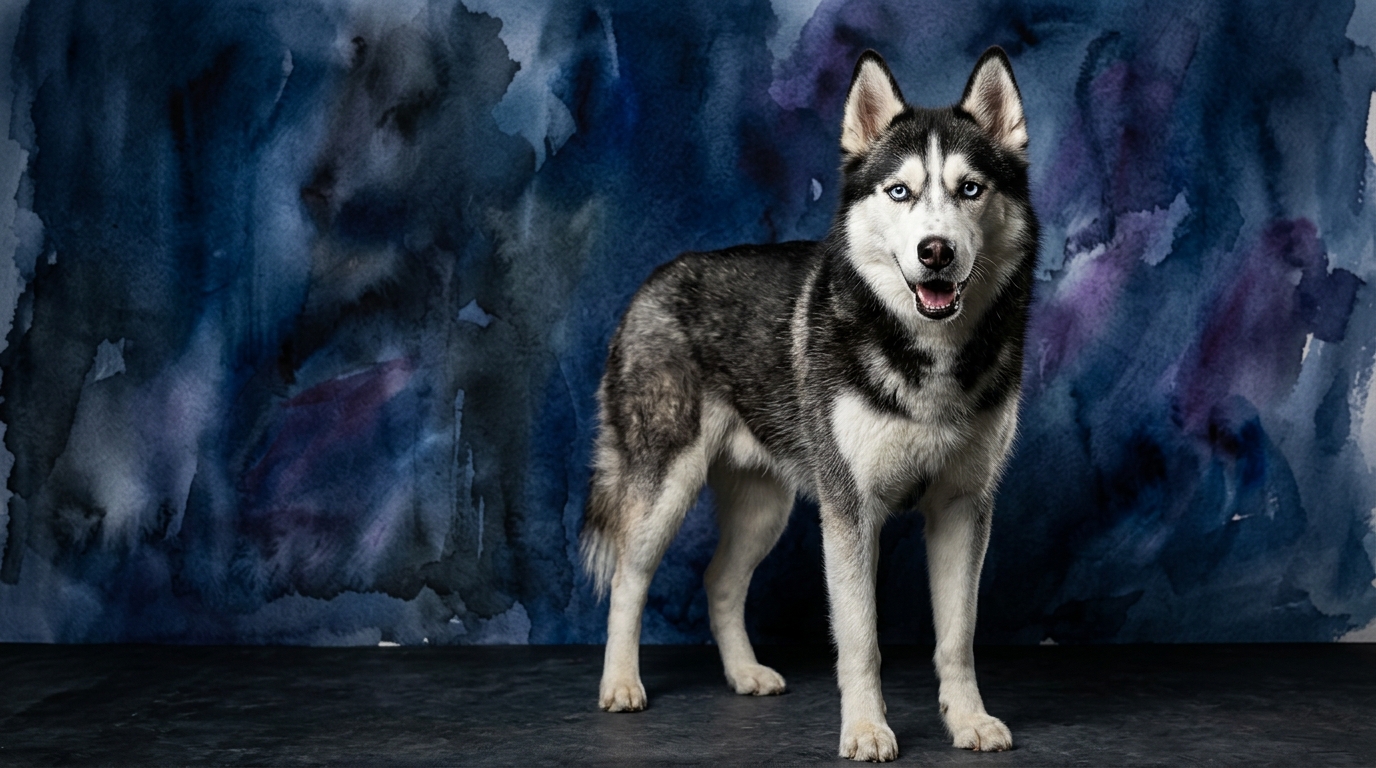
The Cosmic Pet Pet IQ Lab employs a comprehensive framework to assess canine intelligence, examining five crucial dimensions: Problem Solving, Training Speed, Social Intelligence, Instinctive Drive, and Memory. For the Siberian Husky, a breed historically engaged in demanding working roles, its profile reflects a strong aptitude for independent thought and action. It scores 4/5 in Problem Solving, indicating a resourceful mind capable of navigating complex situations, often with an independent streak. Its Training Speed is rated 2/5, suggesting a more deliberate or selective approach to learning human-directed commands, often prioritizing its own motivations. Social Intelligence stands at 3/5, reflecting its pack-oriented nature but not necessarily a strong desire for human biddability. A robust Instinctive Drive scores 5/5, manifesting as a powerful urge to run, explore, and utilize its predatory senses. Lastly, its Memory is rated 4/5, enabling it to recall routes, routines, and experiences with considerable accuracy.
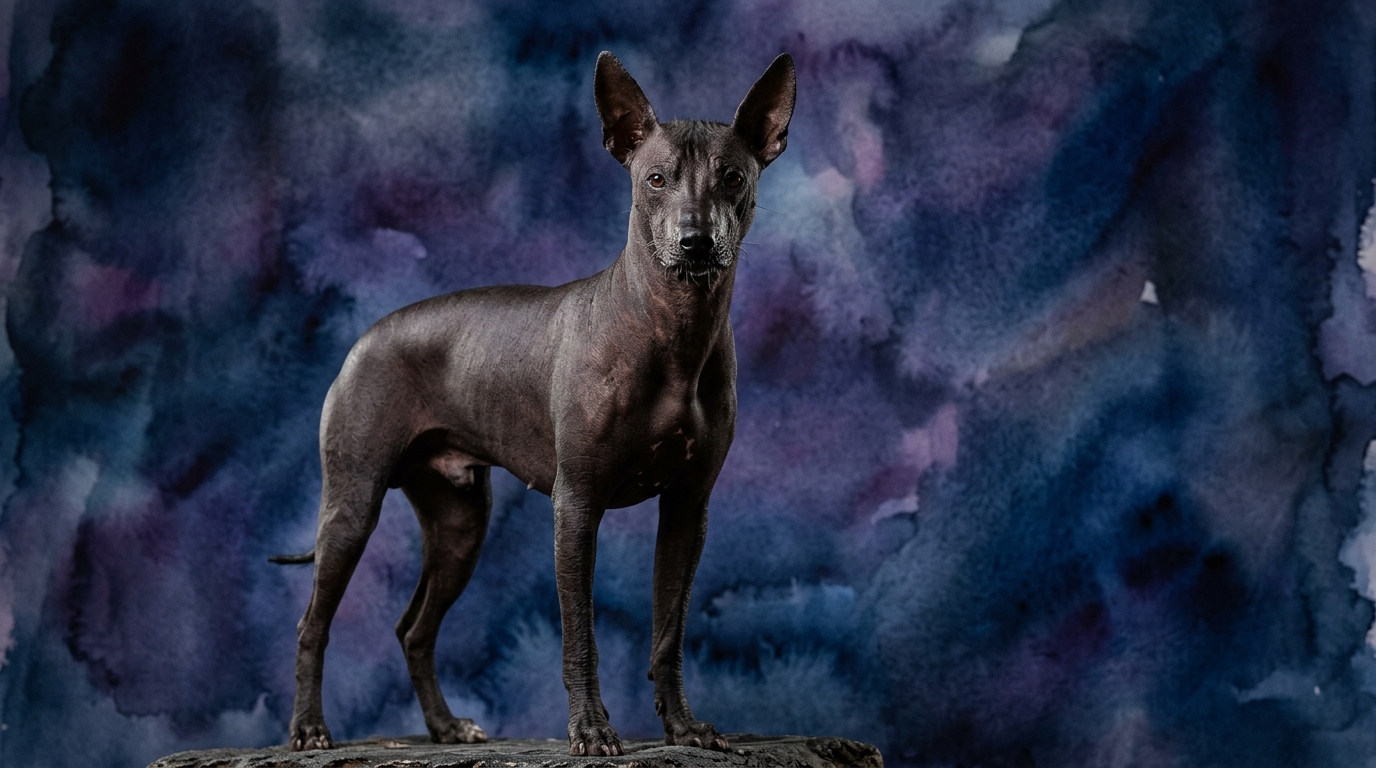
In contrast, the Xoloitzcuintli, a breed with a long history as a companion and guardian, presents a different cognitive blueprint. Its Problem Solving ability is rated 3/5, indicating a moderate capacity for adapting to new challenges, often relying on established routines or human guidance. Its Training Speed, at 3/5, suggests a more cooperative learning style than the Husky, though it can still exhibit sensitivity or a need for consistent, positive reinforcement. Social Intelligence is also 3/5, but this manifests as deep devotion to its family unit and a cautious approach to strangers, rather than the Husky's broader pack dynamics. The Xolo's Instinctive Drive is 3/5, signifying a moderate level of natural urges, less intense than the Husky's powerful working drives. Its Memory is rated 3/5, indicating a solid ability to remember its core family members and daily patterns, but perhaps with less detail retention for complex sequences compared to the Husky.
Where the Siberian Husky's Mind Shines Brightest
The Siberian Husky's cognitive strengths are deeply rooted in its heritage as a sled dog, requiring independent decision-making in challenging environments. Its 4/5 Problem Solving score isn't just about figuring out puzzles; it's about evaluating situations, often independently of human input, to achieve a goal. This manifests as a remarkable ability to navigate unfamiliar terrains, find creative solutions to 'escape' perceived confinement (a common Husky trait), or strategically conserve energy during long hauls. Their high instinctive drive, scoring 5/5, fuels this problem-solving, directing their intelligence towards tasks like tracking scents, enduring long runs, or even outsmarting prey, making them adept at tasks requiring sustained physical and mental engagement in the outdoors. For an owner, this means a dog that can often think for itself, which is a blessing in some scenarios and a challenge in others.
Furthermore, the Husky's 4/5 Memory score, combined with its strong instinctive drive, allows it to excel in tasks requiring spatial awareness and route recall. A Husky can remember intricate trails and return to specific locations, a critical skill for a working dog covering vast distances. This memory also contributes to their understanding of routines, even if their training speed suggests a selective adherence to human commands. When faced with an environmental challenge, such as a fallen tree blocking a path or a change in weather conditions, the Husky's problem-solving acumen, fueled by its robust instincts, allows it to adapt and find a way forward, demonstrating a practical intelligence geared towards survival and task completion in dynamic settings.
The Xoloitzcuintli's Unique Cognitive Advantages
While the Xoloitzcuintli may not boast the Husky's raw problem-solving scores, its cognitive strengths lie in areas that foster deep human-animal bonds and adaptability within a domestic setting. The Xolo's 3/5 Social Intelligence, though numerically similar to the Husky's, translates differently; it manifests as a profound devotion to its primary caregivers and a keen sensitivity to their emotional states. This makes them excellent emotional support animals, capable of picking up on subtle cues from their owners and offering comfort. Their moderate Problem Solving (3/5) is often applied to understanding household dynamics and learning specific routines that benefit the family, rather than independent exploration or challenging boundaries.
The Xolo's 3/5 Training Speed, while not exceptionally fast, indicates a willingness to engage in cooperative learning when motivated by positive reinforcement and a strong bond. They are often eager to please their loved ones, which, when coupled with their moderate instinctive drive (3/5), means they are less likely to be distracted by external stimuli or driven by overwhelming urges to roam or hunt compared to a Husky. This allows them to focus more intently on human instruction in a calm environment. Their 3/5 Memory is particularly strong for recalling the faces, voices, and habits of their family members, contributing to their role as a loyal and watchful companion. They learn who belongs and who doesn't, making them naturally discerning guardians of their home.
Training Dynamics: Biddability vs. Independence
When considering ease of training, the Siberian Husky (Training Speed 2/5) and Xoloitzcuintli (Training Speed 3/5) present distinct experiences. The Husky's lower score is largely attributed to its profound independence and high instinctive drive. A Husky frequently evaluates whether a command aligns with its own desires or perceived needs. For example, a 'recall' command might be ignored if a compelling scent or the thrill of a chase is present, reflecting its 5/5 instinctive drive overriding biddability. Training a Husky often feels like a negotiation; it requires consistent, engaging, and varied sessions to maintain their interest, as repetitive drills quickly lead to boredom and selective hearing. Their natural inclination to pull, rooted in their sledding heritage, requires dedicated counter-conditioning from an early age, as their strong physical drive is an inherent part of their being.
The Xoloitzcuintli, with its slightly higher Training Speed of 3/5, generally exhibits more willingness to cooperate. Their moderate instinctive drive means they are less prone to being overwhelmingly distracted by external stimuli. However, Xolos can be sensitive, so harsh training methods are counterproductive, potentially leading to shutdown or fear-based behaviors. They respond best to positive reinforcement, patience, and consistency, thriving on the bond they form with their trainer. While they might not learn complex tricks at lightning speed, they are often more reliable in adhering to basic obedience commands once they understand the expectation and trust their handler. Their devotion to family means they are often motivated by pleasing their beloved humans, making them more amenable to structured learning within a loving environment.
Matching Canine Minds to Owner Lifestyles
Choosing between a Siberian Husky and a Xoloitzcuintli largely depends on an owner's lifestyle and their capacity to meet a breed's specific cognitive and physical needs. The Siberian Husky, with its high problem-solving capacity, intense instinctive drive (5/5), and lower training speed, is an ideal fit for highly active, experienced owners who enjoy outdoor adventures and are prepared for a dog that consistently seeks mental and physical engagement. They thrive with owners who can provide outlets for their powerful urge to run, explore, and 'work,' whether through sledding, canicross, long hikes, or engaging puzzle toys that challenge their resourceful minds. An owner must be prepared for a dog that will test boundaries and requires consistent, creative management to prevent boredom-induced behaviors like escaping or destructive chewing. They are not a dog to be left idle; their intelligence demands a job.
Conversely, the Xoloitzcuintli, with its moderate scores across most cognitive dimensions and deep social intelligence (3/5 towards family), is better suited for owners seeking a devoted, calm, and relatively less physically demanding companion. While they still require regular exercise and mental stimulation, their needs are typically met with daily walks, indoor play, and consistent training that reinforces their bond. They excel with owners who appreciate a dog's sensitive nature and are committed to consistent socialization to help them navigate new people and situations. Their strong family loyalty makes them excellent home guardians, but they are not typically suited for owners who are away for long periods, as their deep attachment can lead to separation anxiety. They are a wonderful choice for those who want a constant, affectionate presence and are willing to invest in building a secure, trusting relationship.
The Verdict
Choose the Siberian Husky if you are an active, experienced owner ready for a dog with a powerful independent mind, high energy, and a drive for adventure that requires consistent, engaging management.
Opt for the Xoloitzcuintli if you seek a deeply devoted, sensitive companion who thrives on close family bonds and consistent, positive interaction, fitting a more relaxed yet attentive lifestyle.
🧠 Find Your Pet's IQ Score
Our Pet IQ Lab assessment covers 25+ tests across 5 cognitive dimensions — personalized to your breed.
Take the Full IQ Test →Frequently Asked Questions
Is the Siberian Husky truly difficult to train?
The Siberian Husky's training speed is rated 2/5 due to its independent nature and strong instinctive drives. This means they are not inherently difficult to teach, but they often choose whether to obey based on their own motivations, requiring consistent, engaging, and patient training to maintain focus and compliance.
How does Xoloitzcuintli social intelligence differ from a Husky's?
Both breeds score 3/5 in social intelligence, but it manifests differently: the Xolo's is characterized by deep devotion to its immediate family and wariness of strangers, while the Husky's reflects a broader pack mentality, being generally friendly but less intensely focused on individual human emotional states.
Which breed is better for a first-time dog owner?
Given the Siberian Husky's high energy, strong drive, and independent problem-solving (4/5), it is generally not recommended for first-time owners. The Xoloitzcuintli, with its moderate drives and higher training speed (3/5), can be a good fit for dedicated first-time owners who are prepared for consistent positive reinforcement and socialization.