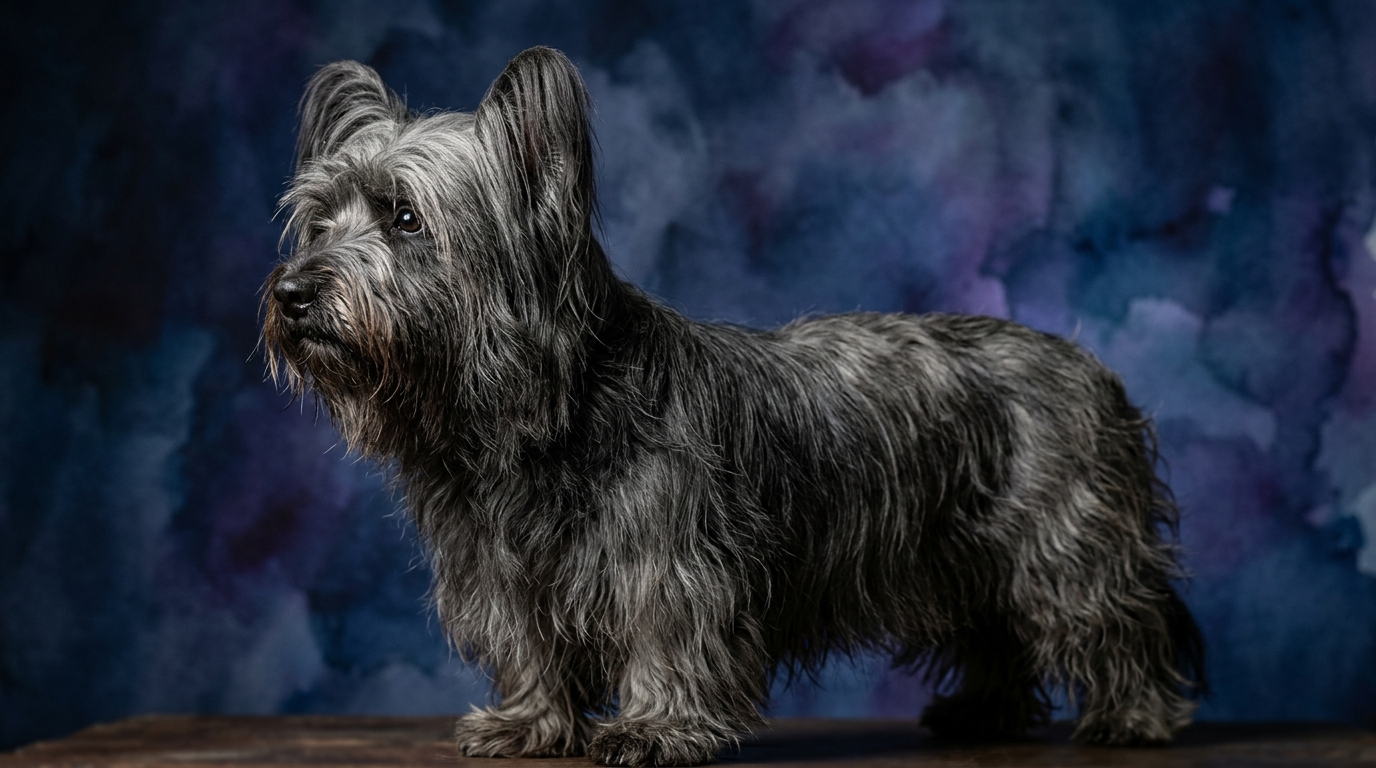
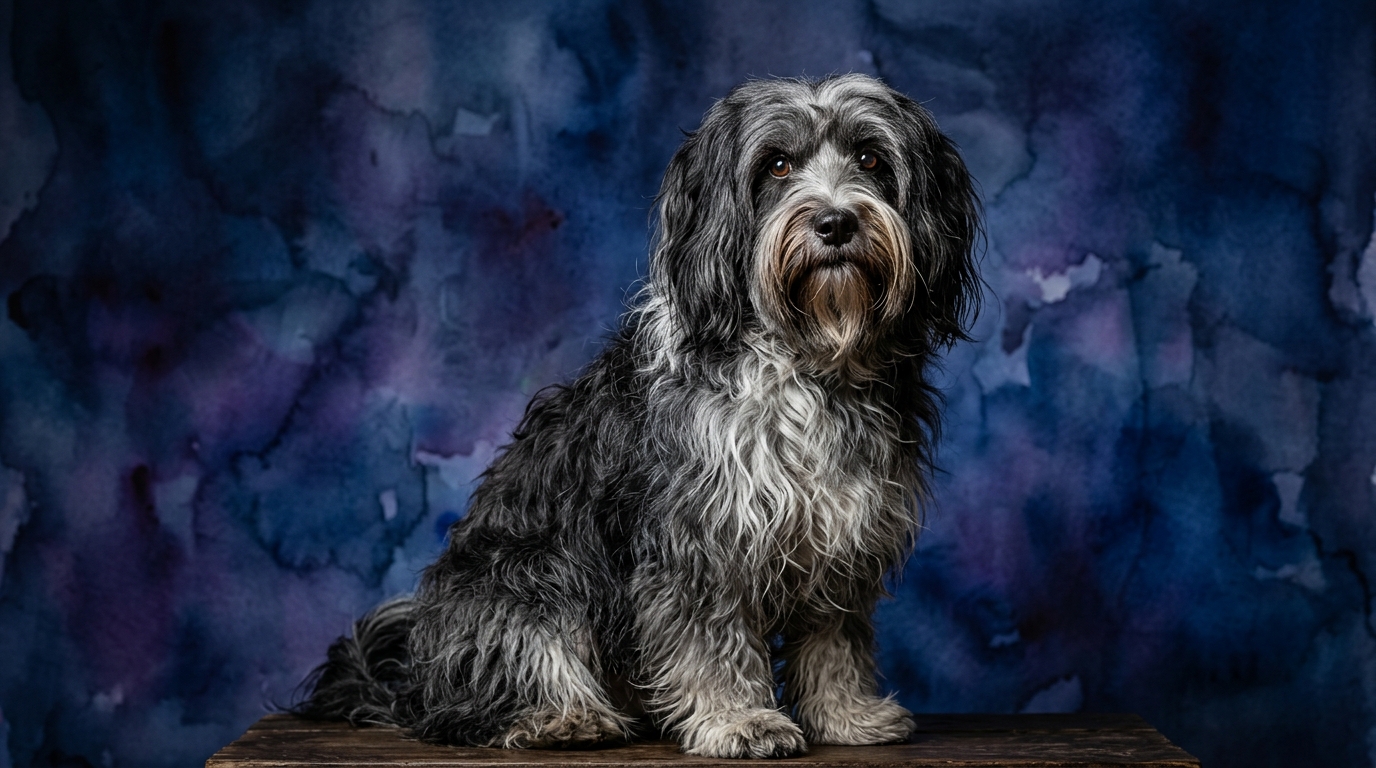
Side-by-Side Pet IQ Lab Profile
**Skye Terrier:** Hailing from the Isle of Skye, this breed was developed for tenacious hunting, a heritage reflected in its Pet IQ Lab scores:
**Problem Solving (3/5):** This score indicates an independent capacity to devise solutions, often related to navigating terrain or outsmarting prey, showcasing a self-reliant approach.
**Training Speed (3/5):** A moderate pace for learning commands; the Skye's independent nature means it learns effectively but often requires consistent, patient guidance rather than eager compliance.
**Social Intelligence (3/5):** While affectionate with its chosen family, the Skye's social score points to a discerning nature, observing human cues but engaging or disengaging based on its own assessment, often reserved with strangers.
**Instinctive Drive (3/5):** A moderate yet persistent drive rooted in its hunting past, manifesting as an innate desire to explore, dig, and pursue.
**Memory (3/5):** The Skye possesses a good memory, retaining learned behaviors, routines, and past experiences effectively.
**Tibetan Terrier:** From the "Roof of the World," this breed served as a companion, watch-dog, and good luck charm. Its Pet IQ Lab scores and Coren ranking of #63 illustrate a versatile, perceptive canine:
**Problem Solving (3/5):** Demonstrates sound problem-solving, but its historical role suggests this leans towards navigating social dynamics or understanding household routines more than independent predation.
**Training Speed (3/5):** A moderate learning pace, yet the Tibetan Terrier's inherent desire for involvement and social nature often lead to a more cooperative attitude in training. Its Coren ranking (#63) supports its capacity for learning standard commands.
**Social Intelligence (3/5):** This breed excels in understanding its human companions; its social score indicates keen awareness of moods and intentions, making it highly attuned to family dynamics.
**Instinctive Drive (3/5):** Present, but less focused on predatory pursuits, often manifesting as an urge to patrol, alert, and participate in family activities, reflecting its watch-dog and companion origins.
**Memory (3/5):** Exhibits a good memory, recalling commands, routines, and environmental intricacies, aiding its adaptability and formation of strong bonds.
Where the Skye Terrier Wins Cognitively
The Skye Terrier’s cognitive strength lies in its profound independence and tenacity, traits honed for solitary hunting. Its 3/5 problem-solving often manifests as a determined, self-directed approach to obstacles, whether physical or conceptual. A Skye will assess a situation and devise its own strategy, exhibiting resilience in overcoming challenges and a cognitive fortitude in pursuing its own objectives, such as investigating scents or accessing confined spaces.
Where the Tibetan Terrier Wins Cognitively
The Tibetan Terrier's cognitive advantages shine in its nuanced social awareness and adaptability. While also scoring 3/5 in social intelligence, its historical role as a monastic companion fostered a profound ability to read and respond to human cues. This breed often demonstrates a remarkable capacity for empathy, understanding subtle shifts in human mood or intention and adjusting its behavior accordingly. Its problem-solving can lean towards navigating complex social situations, making it exceptionally perceptive in family environments. This social attunement, combined with its Coren ranking, suggests a dog that integrates well into human society and learns through observation.
Which is Easier to Train and Why
When considering ease of training, the Tibetan Terrier generally offers a more cooperative experience. Both breeds carry a "3/5 training speed" score, implying a moderate learning curve. However, the Tibetan Terrier's stronger social inclination and historical role as a companion mean it often possesses a greater eagerness to please its human counterparts. Its Coren rank of #63, placing it within the "average working/obedience intelligence" category, further supports this; they are often more receptive to positive reinforcement and keen to engage in reciprocal learning.
The Skye Terrier, conversely, brings its formidable Terrier independence to training. While capable of learning, its "3/5 training speed" combined with its "3/5 instinctive drive" and autonomous problem-solving means it often requires a more patient, consistent, and creative approach. A Skye might understand a command but choose not to execute it if it perceives a more interesting alternative or if the motivation isn't compelling enough. Their self-reliance demands an owner establish clear leadership and make training engaging to harness their intellectual capacity effectively.
Which Suits Active Owners vs. Relaxed Owners
For owners seeking a companion that thrives on consistent engagement and adapts well to varied activities, the Tibetan Terrier is often a more suitable match. They are energetic and playful, enjoying regular walks, games, and mental puzzles. Their social intelligence means they genuinely enjoy participating in family life and are often game for new experiences, whether a hike or a trip to a dog-friendly cafe. Their adaptability makes them a good fit for active owners wanting a dog to share adventures, but also for those appreciating a playful presence in the home.
The Skye Terrier, while not a couch potato, suits owners who appreciate a dog with a more independent spirit and a rhythm best described as "moderately active with bursts of intense focus." They require regular, though not extensive, exercise for physical needs and mental stimulation to prevent boredom. A relaxed owner in this context would value a dog's self-possessed nature, understand the need for consistent structure, and be prepared for grooming requirements. They are often content with a good walk and then a quiet spot, ideal for individuals who enjoy a calm home environment but are committed to thoughtful engagement.
The Verdict
Opt for a Skye Terrier if you appreciate a dog with a deep sense of self-reliance, a tenacious spirit, and a discerning affection, and you are prepared for a consistent, patient training approach to channel its independent problem-solving.
Select a Tibetan Terrier if you desire an adaptable, socially perceptive companion eager to engage in family activities, who offers a more cooperative training experience and thrives on participation in your daily life.
🧠 Find Your Pet's IQ Score
Our Pet IQ Lab assessment covers 25+ tests across 5 cognitive dimensions — personalized to your breed.
Take the Full IQ Test →Frequently Asked Questions
Are Skye Terriers difficult to train due to their independence?
Skye Terriers are not difficult to train, but their independent nature and Terrier tenacity require consistent, patient, and engaging methods. They learn effectively but often choose when to comply, responding best to positive reinforcement and clear boundaries.
Do Tibetan Terriers need a lot of exercise given their energy?
Tibetan Terriers are energetic and require regular exercise, typically a good daily walk or playtime, to keep them physically and mentally content. While not extreme athletes, they thrive on activity and participation in family outings.
How do their social intelligence scores of 3/5 manifest differently?
For the Skye Terrier, a 3/5 social intelligence often means they are discerning, bonding deeply with family but reserved with strangers. The Tibetan Terrier's 3/5 social intelligence leans towards keen perceptiveness of human moods and intentions, making them highly attuned and adaptable companions within their family unit.