Side-by-Side IQ Profile: Skye Terrier vs. Toy Poodle
At The Cosmic Pet Pet IQ Lab, we analyze canine cognition across five crucial dimensions: Problem Solving, Training Speed, Social Intelligence, Instinctive Drive, and Memory. While both the Skye Terrier and Toy Poodle share a common ancestral root as dogs, their breed-specific evolutions have sculpted distinct cognitive blueprints.
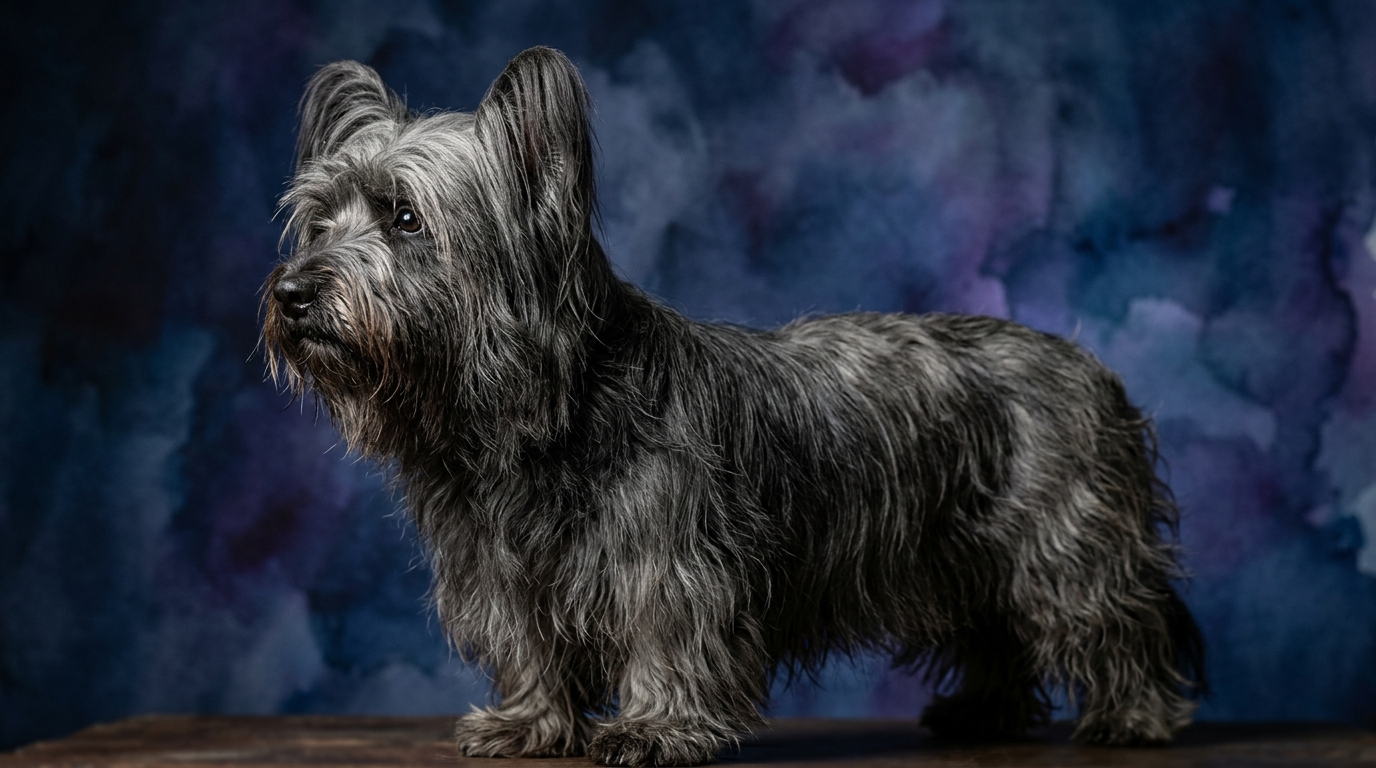
The Skye Terrier presents a balanced yet tenacious profile. Their Problem Solving is rated 3/5, indicating a methodical, persistent approach rather than quick, intuitive leaps. Training Speed also sits at 3/5, suggesting they learn steadily but often require consistent, patient guidance tailored to their independent spirit. Social Intelligence is 3/5, meaning they are observant and capable of forming deep bonds, though they might not be universally outgoing. Their Instinctive Drive is 3/5, reflecting a moderate, purposeful engagement with tasks, often tied to their original working roles. Memory, at 3/5, points to a reliable retention of routines and experiences, though perhaps not for highly complex sequences.
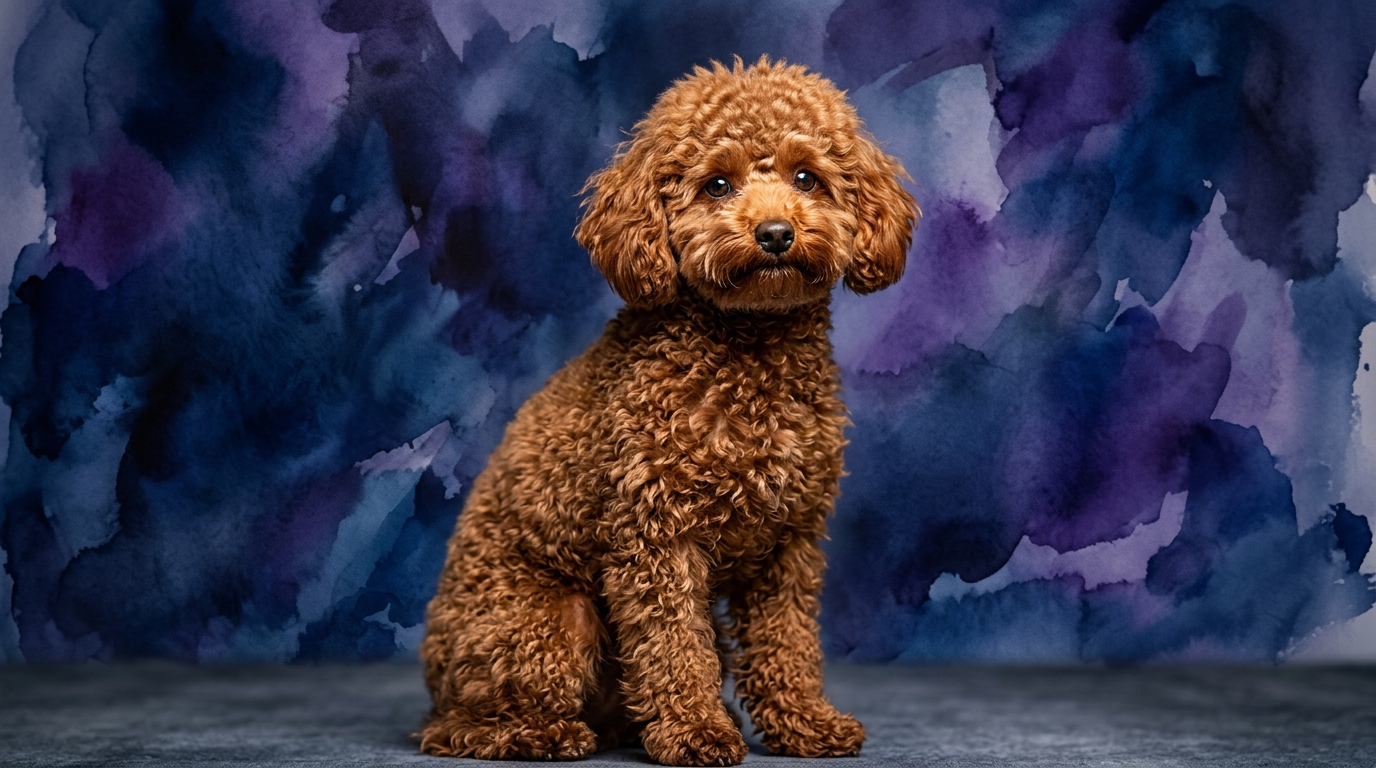
In contrast, the Toy Poodle showcases a remarkably agile cognitive profile, earning a #2 ranking on the Coren scale. Their Problem Solving is a stellar 5/5, signifying a rapid ability to assess situations and devise effective strategies. This agility extends to their Training Speed, also 5/5, indicating they grasp new commands and concepts with minimal repetition. Like the Skye Terrier, their Social Intelligence is 3/5, demonstrating adaptability and an ability to read cues, while their Instinctive Drive is also 3/5, allowing for versatile engagement in various activities. However, their Memory truly shines at 5/5, reflecting an exceptional capacity for long-term retention of intricate information and learned behaviors.
Where the Skye Terrier Wins Cognitively
While the Toy Poodle might boast higher numerical scores in several categories, the Skye Terrier's 3/5 ratings are not a measure of deficit but rather a descriptor of a unique cognitive style rooted in their terrier heritage. Their 3/5 in Problem Solving signifies a tenacious, unyielding approach. When faced with an obstacle, a Skye Terrier isn't looking for the fastest route; they are committed to finding *a* route, often through sheer persistence and a refusal to give up. This makes them formidable in tasks requiring sustained effort and determination, even if the solution isn't immediately apparent.
Their 3/5 Training Speed, rather than indicating a slower learner, suggests a dog that processes information deeply and perhaps critically. A Skye Terrier might not instantly comply with a command, but once they understand its purpose and value, they commit to it with unwavering consistency. This methodical learning style can result in deeply ingrained behaviors that are less prone to breaking down under pressure, as they have been thoroughly considered and integrated.
The Skye Terrier's 3/5 Social Intelligence points to a discerning nature. They aren't indiscriminately friendly; their bonds are often fewer but profoundly strong. This means they are acutely attuned to the nuances of their chosen family members, offering a deep, loyal companionship that thrives on mutual understanding and quiet observation. Their 3/5 Instinctive Drive further supports this, channeling their energy into purposeful investigation and exploration, making them excellent companions for owners who appreciate a dog with a clear, self-directed focus.
Where the Toy Poodle Wins Cognitively
The Toy Poodle's cognitive strengths are evident in their exceptional scores, particularly in areas demanding mental agility and retention. Their 5/5 in Problem Solving highlights an impressive ability to quickly analyze novel situations and formulate effective solutions. Whether it's figuring out a complex puzzle toy or navigating a new environment, they demonstrate a remarkable capacity for rapid insight and strategic thinking, often appearing to 'think on their feet' with ease.
This mental quickness translates directly to their 5/5 Training Speed. Toy Poodles acquire new commands and concepts with astonishing rapidity, often requiring only a few repetitions before a behavior is understood and generalized. This isn't just about obedience; it's about an efficient cognitive processing system that readily forms associations and integrates new information. They thrive on the challenge of learning and are eager to engage in activities that stimulate their active minds.
Complementing their quick learning is their 5/5 Memory score. Toy Poodles exhibit an exceptional capacity for retaining information over extended periods. They recall intricate routines, complex sequences of tricks, and a vast vocabulary of commands with remarkable accuracy. This makes them highly consistent performers once a behavior is established, capable of recalling past lessons with precision, even after a long break. Their 3/5 Social Intelligence, while not their highest score, indicates a balanced adaptability, allowing them to read human cues effectively and engage in appropriate social interactions, making them highly responsive companions.
Which is Easier to Train and Why?
Comparing the training ease of the Skye Terrier and Toy Poodle reveals distinct approaches shaped by their core cognitive profiles. The Toy Poodle, with its 5/5 Training Speed and 5/5 Memory, is unequivocally easier to train for a broad range of tasks. They exhibit an eagerness to please and a rapid grasp of new concepts, making them highly responsive to positive reinforcement. Their superior problem-solving ability also means they can often infer the desired behavior or understand the *why* behind a command, leading to quicker mastery and generalization of skills. They actively seek mental engagement and thrive on the interactive challenge of learning, making training a joyful and efficient process.
The Skye Terrier, with a 3/5 Training Speed, is capable but presents a different training dynamic. Their learning is more methodical and often requires greater patience and consistency from the trainer. Being terriers, they possess a degree of independence and a strong sense of self-preservation, which means they might not always see the immediate value in complying with a command that doesn't align with their instincts or current interests. They learn best when training is structured, purposeful, and presented in a way that respects their thoughtful, sometimes stubborn, nature. While they may take more repetitions to initially grasp a concept, their 3/5 memory ensures that once learned, behaviors are retained reliably, though perhaps less flexibly applied to new contexts than a Poodle's.
Which Suits Active Owners vs. Relaxed Owners?
The choice between a Skye Terrier and a Toy Poodle also hinges on an owner's lifestyle and their preferred level and type of activity. For truly active owners who enjoy structured activities like dog sports, advanced obedience, or trick training, the Toy Poodle is an exceptional match. Their 5/5 problem-solving and training speed mean they thrive on consistent mental engagement and excel in activities that challenge their agile minds. They are eager participants in agility, rally, and canine freestyle, channeling their energy into learning and interactive play. A Toy Poodle requires an owner who can consistently provide this intellectual stimulation to prevent boredom and ensure a well-adjusted companion.
For owners who are more relaxed but still appreciate purposeful outdoor activity, the Skye Terrier offers a unique companionship. While they require consistent daily walks and opportunities for exploration to satisfy their terrier instincts, they are generally less demanding of constant, high-energy interactive play compared to a Poodle. Their 3/5 instinctive drive translates to a focused engagement with activities like scent work or investigating their environment, rather than a boundless enthusiasm for repetitive tasks. A relaxed owner who enjoys quiet companionship, consistent routines, and appreciates a dog that can entertain itself after its exercise needs are met, might find a steadfast partner in the Skye Terrier. However, it's crucial that 'relaxed' doesn't equate to 'inactive,' as the Skye still needs its physical and mental outlets, albeit of a different character than the Poodle's.
The Verdict
Choose the Skye Terrier if you seek an independent, persistent companion who values consistency and a methodical approach to life, and who appreciates a dog with a strong sense of self and an observant nature.
Opt for the Toy Poodle if you desire a highly trainable, adaptable, and mentally agile partner for dog sports, trick training, or a family that enjoys frequent, engaging interaction and problem-solving activities.
🧠 Find Your Pet's IQ Score
Our Pet IQ Lab assessment covers 25+ tests across 5 cognitive dimensions — personalized to your breed.
Take the Full IQ Test →Frequently Asked Questions
Is the Skye Terrier difficult to train?
The Skye Terrier isn't 'difficult,' but their 3/5 training speed suggests they learn at a moderate pace, often requiring patience and consistent, positive reinforcement. Their independent terrier spirit means they may need more compelling motivation than some breeds, preferring to understand the purpose behind a command.
Do Toy Poodles need a lot of mental stimulation?
Absolutely. With 5/5 scores in problem-solving and memory, Toy Poodles thrive on mental engagement. Daily activities like puzzle toys, learning new tricks, or participating in dog sports are crucial to keep their agile minds occupied and prevent boredom.
How do their social intelligence scores compare?
Both breeds score 3/5 in social intelligence, indicating a balanced approach to interactions. They are observant and capable of forming strong bonds with their families, but neither is exceptionally outgoing or universally friendly with strangers, preferring a more discerning social circle.