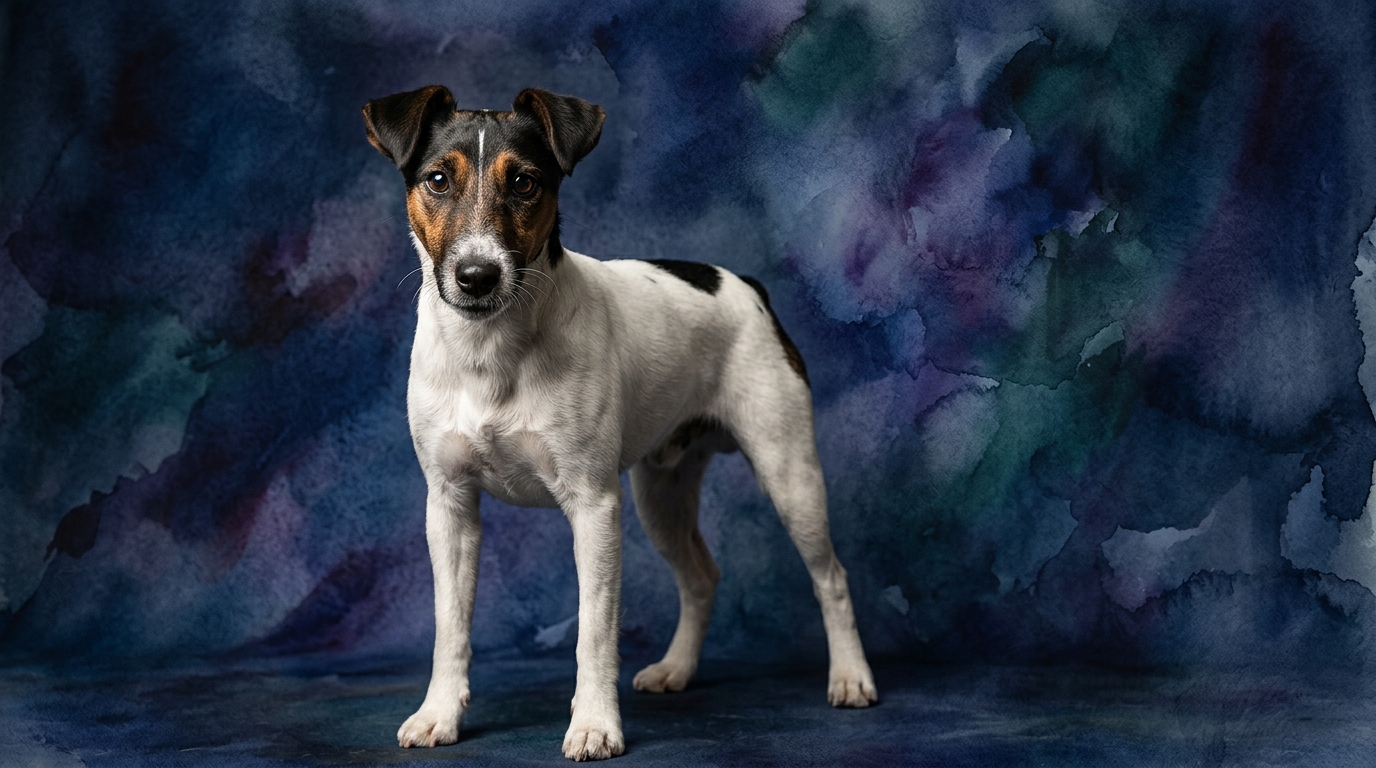
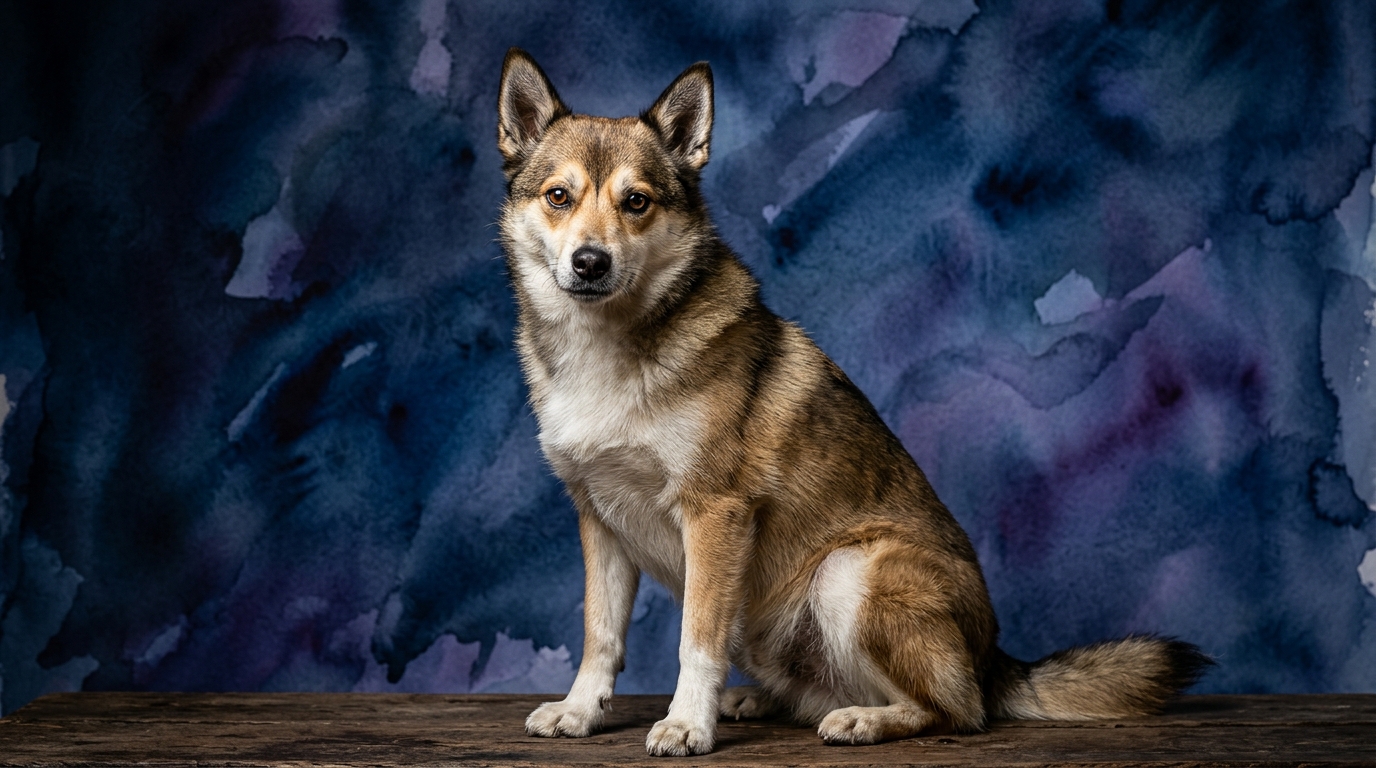
Side-by-Side IQ Profile: Smooth Fox Terrier vs. Norwegian Lundehund
Despite both breeds scoring a consistent 3/5 across all five cognitive dimensions in The Cosmic Pet IQ Lab, the manifestation of these capabilities is deeply rooted in their historical roles and physical attributes. Understanding these subtle differences requires a closer look at what each 3/5 score signifies within their unique contexts.
For the **Smooth Fox Terrier**, a 3/5 in problem-solving reflects their terrier heritage of independently strategizing to locate and flush out quarry. They exhibit resourcefulness in navigating complex environments, like dense undergrowth or underground burrows, to achieve their objective, often demonstrating a trial-and-error approach to overcome obstacles. Their 3/5 training speed indicates they possess the capacity to learn new commands and routines at a moderate pace, but their keen prey drive and independent nature can introduce distractions. While capable of quick uptake, consistent and engaging training methods are essential to maintain focus and channel their inherent zest for activity. Scoring 3/5 in social intelligence means the Smooth Fox Terrier can adeptly read human emotions and social cues within their established family unit. However, their social interactions with other dogs or strangers might be characterized by a confident, sometimes assertive demeanor, requiring careful socialization to ensure balanced responses. A strong 3/5 in instinctive drive highlights their powerful urge to hunt, chase, and dig, a direct link to their original purpose. This manifests as a persistent pursuit of small moving objects and an inclination to explore scents, often overriding other impulses if not properly managed. Finally, a 3/5 memory score suggests they retain learned behaviors, routes, and experiences effectively, remembering training commands, the location of favored toys or sniffing spots, and past interactions, contributing to their ability to adapt to routines and familiar environments.
For the **Norwegian Lundehund**, a 3/5 in problem-solving speaks to their unique historical role of navigating treacherous cliff faces and extracting puffins from narrow crevices. Their cognitive problem-solving is often intertwined with their extraordinary physical agility, requiring spatial reasoning and adaptability to complex, multi-dimensional challenges. A 3/5 in training speed reflects their ability to learn but underscores their independent, somewhat cat-like nature. They can grasp concepts, yet their motivation often stems from self-interest or a strong bond with their owner, rather than an inherent desire to please, necessitating patience and reward-based methods. A 3/5 in social intelligence means Lundehunds are capable of forming deep, discerning bonds with their primary caregivers and can interpret their moods. While often reserved or wary with strangers, they exhibit a nuanced understanding of social dynamics within their chosen “pack,” preferring close, familiar interactions. Their 3/5 instinctive drive is distinctly tied to their puffin-hunting heritage, manifesting as a drive to climb, explore, and retrieve, often in confined or unusual spaces. This translates into a strong desire for physical and mental engagement that utilizes their unique flexibility and dexterity. Lastly, a 3/5 memory score indicates a solid capacity for recall, particularly regarding complex routes, the location of hidden objects, and the patterns of their environment, supporting their ability to navigate intricate paths and remember specific hunting strategies or routines, even after long periods.
Where the Smooth Fox Terrier Excels Cognitively
While both breeds score 3/5 across the board, the Smooth Fox Terrier's cognitive strengths often shine in scenarios demanding quick, decisive action and unwavering focus on a singular, tangible objective. Their problem-solving, though rated equally, often manifests as a more direct, persistent drive to overcome a physical barrier to reach a perceived 'prey' item, whether it's a hidden toy or a scent trail. This terrier tenacity, combined with their moderate training speed, means they can often be channeled effectively into agility or earthdog trials where rapid decision-making and sustained effort towards a clear goal are paramount. Their social intelligence, while not overly demonstrative, allows them to quickly assess and react to dynamic situations involving other dogs or humans in competitive or working environments, often with a confident, self-assured approach.
Where the Norwegian Lundehund Excels Cognitively
Conversely, the Norwegian Lundehund's 3/5 cognitive scores express themselves uniquely in situations requiring intricate spatial reasoning, physical adaptability, and a more methodical, exploratory approach to problem-solving. Their historical role demanded not just finding prey, but navigating extremely complex, often vertical terrain and extracting birds from tight crevices—tasks requiring a different kind of ingenuity. This translates into an exceptional ability to assess and conquer physical puzzles, demonstrating a memory for complex routes and a problem-solving style that integrates their flexible joints and extra toes. Their instinctive drive is less about a direct chase and more about exploratory investigation and physical manipulation of their environment, making them exceptional at puzzle toys that require dexterity or navigating obstacle courses that mimic natural terrain.
Training Dynamics: Which is 'Easier'?
Given both breeds score 3/5 in training speed, neither is inherently 'easy' in the traditional sense, but their training challenges differ significantly. The Smooth Fox Terrier, while possessing a strong independent streak and easily distracted by its high prey drive, often has an underlying eagerness to engage with its human. When a trainer can effectively manage distractions and make training sessions exciting and rewarding, channeling their keen instinctive drive, they can learn commands and routines with moderate speed. Their challenge lies in consistency and managing their boundless energy and focus on external stimuli. The Norwegian Lundehund, however, presents a different hurdle. Their independence is less about distraction and more about an intrinsic 'what's in it for me?' attitude. They are capable of learning, but their social intelligence leans towards discerning self-interest, making them less inclined to blindly obey. Training a Lundehund requires immense patience, creativity, and a deep understanding of positive reinforcement, making every command feel like their own discovery or a highly rewarding game. For an experienced, confident trainer who can channel a dog's drive, the Smooth Fox Terrier might offer slightly quicker results in structured obedience, whereas the Lundehund demands a more nuanced, relationship-driven approach to truly unlock their learning potential.
Ideal Owners: Active vs. Relaxed Lifestyles
Neither the Smooth Fox Terrier nor the Norwegian Lundehund is suited for a truly 'relaxed' owner; both require significant daily engagement. The Smooth Fox Terrier thrives with an owner who can provide structured, vigorous activity. This includes long, brisk walks, demanding games of fetch, agility training, or earthdog sports, all of which satisfy their high instinctive drive and problem-solving needs. Their energy is palpable and requires consistent outlets to prevent boredom and destructive behaviors. The Norwegian Lundehund also demands an active lifestyle, but with a different emphasis. While they need regular exercise, their cognitive and physical needs are best met by activities that allow for exploration, climbing, and intricate problem-solving, such as hiking on varied terrain, puzzle games that utilize their dexterity, or unique canine sports like parkour. An owner who appreciates a dog's independent spirit and enjoys providing mental challenges intertwined with physical exploration will find the Lundehund a fascinating companion, whereas the Smooth Fox Terrier often prefers a more directed, 'working together' approach to activity.
The Verdict
Choose the Smooth Fox Terrier if you are an experienced, active owner seeking a spirited companion who thrives on structured activities, agility challenges, and has a confident, direct approach to life, provided you can consistently manage their high prey drive.
Opt for the Norwegian Lundehund if you appreciate a unique, independent canine mind, are prepared for creative, patient training, and enjoy providing opportunities for intricate exploration, climbing, and problem-solving that leverage their extraordinary physical adaptations.
🧠 Find Your Pet's IQ Score
Our Pet IQ Lab assessment covers 25+ tests across 5 cognitive dimensions — personalized to your breed.
Take the Full IQ Test →Frequently Asked Questions
Are Smooth Fox Terriers good family dogs?
Smooth Fox Terriers can be excellent family dogs for active households that understand their energetic and independent nature. They thrive with consistent training and socialization from a young age, and while often playful and affectionate with their family, their strong prey drive means supervision around very small pets is crucial.
Do Norwegian Lundehunds bark a lot?
Norwegian Lundehunds are not typically known for excessive barking, though individual personalities vary. They tend to be reserved and watchful, often using barks to alert their family to new arrivals or unusual situations, rather than engaging in incessant vocalizations.
What unique physical traits affect the Lundehund's cognitive expression?
The Lundehund's six toes, flexible neck, and highly mobile shoulder joints are integral to their cognitive expression, particularly in problem-solving and instinctive drive. These adaptations allow them to navigate and manipulate complex environments, influencing how they perceive and interact with physical challenges, making their intelligence intertwined with their unique physicality.