
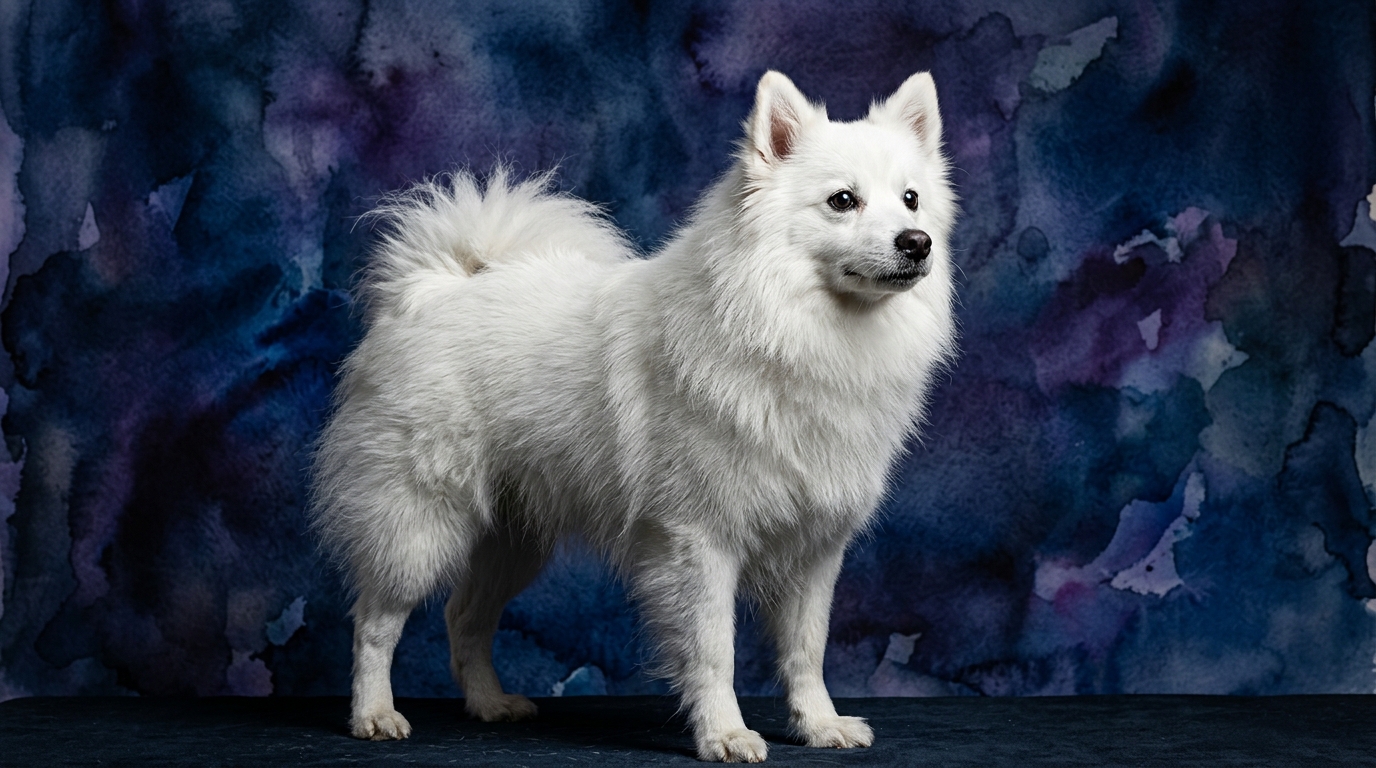
Side-by-Side Cognitive Profile: Wheaten Terrier vs. Eskie
While both the Soft Coated Wheaten Terrier and the American Eskimo Dog register a consistent 3/5 across all five measured cognitive dimensions, their breed origins and intrinsic temperaments mean this identical score often translates into distinct expressions of mental ability. A score of 3/5 indicates a solid, dependable level of cognitive function, suggesting these breeds are neither at the extreme ends of rapid learning or slow comprehension, but rather possess a balanced and capable intellect.
For Problem Solving, the Wheaten Terrier, rooted in its terrier heritage, typically approaches challenges with a tenacious, physically engaged methodology. This might involve persistent attempts to physically manipulate an object or explore an environment to achieve a goal, demonstrating a practical and hands-on investigative style. The American Eskimo Dog, conversely, often applies its problem-solving acumen through keen observation and strategic communication. An Eskie might cleverly use vocalizations or specific body language to influence outcomes, showcasing a more socially nuanced and 'thinking' approach to navigating obstacles.
Regarding Training Speed, both breeds learn new commands and routines at a moderate pace. The Wheaten Terrier, while generally eager and responsive, can sometimes be sidetracked by its inherent exuberance or environmental stimuli. Its learning curve is steady, but engagement must be consistently high to maintain focus. The American Eskimo Dog also grasps concepts quickly, yet its independent spirit means that while it understands rapidly, consistent motivation and a clear 'what's in it for me?' incentive are crucial for reliable execution.
In Social Intelligence, the Wheaten Terrier typically exhibits a moderate ability to interpret human cues, often manifesting as an outward friendliness and a desire for interactive connection, epitomized by its characteristic 'wheaten greetin'.' They generally integrate well into family dynamics, seeking out companionship. The American Eskimo Dog also possesses a moderate capacity for social understanding, frequently demonstrating a sharp awareness of household routines and the emotional states of its human companions. An Eskie often uses expressive facial cues and body language to communicate its own needs and feelings, fostering deep, perceptive bonds.
Instinctive Drive in the Wheaten Terrier, at a 3/5, leans into its terrier roots, presenting inclinations for digging, chasing small prey, and a watchful alertness. These drives are present and manageable but require appropriate outlets. The American Eskimo Dog’s 3/5 instinctive drive is often expressed through its Spitz-type heritage, involving a strong propensity for vocalizing as an alert, a natural desire to be an active participant in family 'pack' activities, and an enjoyment of structured 'work' like tricks or dog sports.
Finally, for Memory, both breeds reliably retain information. The Wheaten Terrier remembers commands, routines, and environmental details, such as the location of interesting scents or play objects, supporting its exploratory nature. The American Eskimo Dog also demonstrates a consistent memory, recalling learned behaviors, the location of favored items, and the schedules of its human family, which contributes significantly to its adaptability and success in trick training and performance.
Where the Soft Coated Wheaten Terrier Excels Cognitively
Despite sharing identical 3/5 scores, the Soft Coated Wheaten Terrier often demonstrates particular cognitive strengths rooted in its terrier lineage. Their moderate problem-solving ability, when combined with their inherent tenacity and physical prowess, makes them particularly adept at overcoming physical challenges. A Wheaten is more likely to engage in persistent, multi-faceted physical efforts to retrieve a hidden toy or navigate a complex agility obstacle, showcasing a 'never give up' approach to practical puzzles. This manifests as a resourceful and hands-on intelligence in their environment.
Furthermore, the Wheaten's moderate instinctive drive, coupled with their curiosity, allows them to excel in activities that require sustained physical and mental engagement in varied settings. They thrive when presented with novel physical brain games or scent work that taps into their investigative nature. Their cognitive profile supports a dog that is eager to explore, manipulate, and physically interact with their world to understand and conquer it, making them stand out in dynamic, physically demanding cognitive tasks.
Where the American Eskimo Dog Shines Cognitively
The American Eskimo Dog, with its identical 3/5 cognitive scores, frequently displays its own distinct areas of cognitive brilliance. Its moderate social intelligence often translates into an exceptional ability to 'read' human emotions and intentions, paired with sophisticated communication skills. Eskies are particularly adept at using a range of vocalizations, body language, and direct eye contact to express their desires or influence their human companions, demonstrating a highly effective form of social persuasion and understanding within the family unit.
Additionally, while both breeds possess a 3/5 memory, the Eskie's aptitude for performance and trick training often means their memory is particularly sharp for complex sequences of commands and routines. They seem to genuinely enjoy the mental exercise of remembering multiple steps in a performance, which aligns with their desire for engagement and 'work' alongside their owners. This makes them outstanding in activities requiring precise recall of intricate behaviors and makes them excellent partners for dog sports that demand sequential learning.
Training Dynamics: Which is Easier and Why?
When considering trainability, both breeds present a moderate training speed (3/5), yet the practical experience of training each can differ significantly due to their behavioral predispositions. The Soft Coated Wheaten Terrier's training journey is often characterized by enthusiasm mixed with a terrier's independent spirit and occasional distractibility. While they grasp concepts readily, their exuberance and tendency to follow their nose can make maintaining focus a challenge. Effective training for a Wheaten requires short, engaging sessions, abundant positive reinforcement, and creative ways to channel their boundless energy, preventing boredom or a wandering mind from slowing progress.
The American Eskimo Dog also learns quickly but brings a distinct 'what's in it for me?' attitude to the training arena. Their independence and vocal nature mean that while they understand commands, they may choose not to comply if the motivation isn't compelling enough or if they perceive a task as lacking value. Consistency, clear expectations, and high-value rewards are paramount for the Eskie. An owner must be patient and creative in maintaining their engagement, understanding that their moderate stubbornness requires a firm yet gentle hand and a deep appreciation for their desire to interact and please on their own terms, ensuring their 3/5 speed is fully utilized.
Matching Breeds to Owner Lifestyles: Active vs. Relaxed
Choosing between these two breeds often comes down to aligning their specific cognitive and physical needs with an owner's lifestyle. The Soft Coated Wheaten Terrier, with its moderate instinctive drives and physically engaged problem-solving, is generally a better fit for active owners. They thrive on consistent, varied physical and mental stimulation that goes beyond a simple walk around the block. Owners who enjoy long hikes, off-leash exploration in secure environments, agility training, or interactive brain games that involve physical manipulation will find a Wheaten to be an enthusiastic and fulfilled companion. Their need for dynamic engagement aligns perfectly with an owner who embraces an active, outdoor-oriented lifestyle.
Conversely, while not sedentary, the American Eskimo Dog's moderate social intelligence and strong memory for routines make them highly adaptable to a slightly less physically intense but still mentally enriching lifestyle. They excel with owners who can provide consistent companionship, engage in regular trick training, puzzle toys, and involve them in daily household activities. Their 'work' can often be more focused on mental challenges, performance, and being a vigilant, interactive companion. They still require daily walks and playtime, but their energy and cognitive needs can be satisfied effectively through structured mental exercises and quality one-on-one interaction, making them suitable for owners who prioritize companionship and mental engagement over constant high-impact physical exertion.
The Verdict: When to Choose Each Breed
Both the Soft Coated Wheaten Terrier and the American Eskimo Dog offer a rewarding partnership, each with a unique cognitive flavor despite their identical IQ scores. Your choice will hinge on the specific manifestation of intelligence you seek in a companion and how it aligns with your lifestyle and training approach.
The Verdict
Choose the Soft Coated Wheaten Terrier if you appreciate a physically active, persistent problem-solver who approaches life with exuberance and thrives on varied outdoor adventures and hands-on mental stimulation.
Opt for the American Eskimo Dog if you seek a companion who excels at social communication, remembers complex routines, and thrives on mental challenges and close, interactive family engagement, making them a perceptive and expressive partner.
🧠 Find Your Pet's IQ Score
Our Pet IQ Lab assessment covers 25+ tests across 5 cognitive dimensions — personalized to your breed.
Take the Full IQ Test →Frequently Asked Questions
Do Soft Coated Wheaten Terriers bark a lot?
Wheatens can be moderately vocal, often using barks to alert their owners to new arrivals or perceived threats, as part of their terrier watchdog nature. Their characteristic 'wheaten greetin'' can also involve enthusiastic vocalizations when meeting people, but they are not typically incessant barkers.
Are American Eskimo Dogs good with children?
American Eskimo Dogs are generally good with respectful children, often forming strong bonds and enjoying play within the family. Their social intelligence helps them understand family dynamics, but supervision is always recommended, especially with very young children, due to their alert nature and potential for sensitivity.
How much exercise do these breeds need daily?
Both breeds require moderate daily exercise. Soft Coated Wheaten Terriers benefit from 30-60 minutes of varied physical activity, including brisk walks and engaging play. American Eskimo Dogs also need 30-60 minutes of activity, often enjoying a mix of walks, playtime, and mental stimulation through training or puzzle toys to keep them content.