
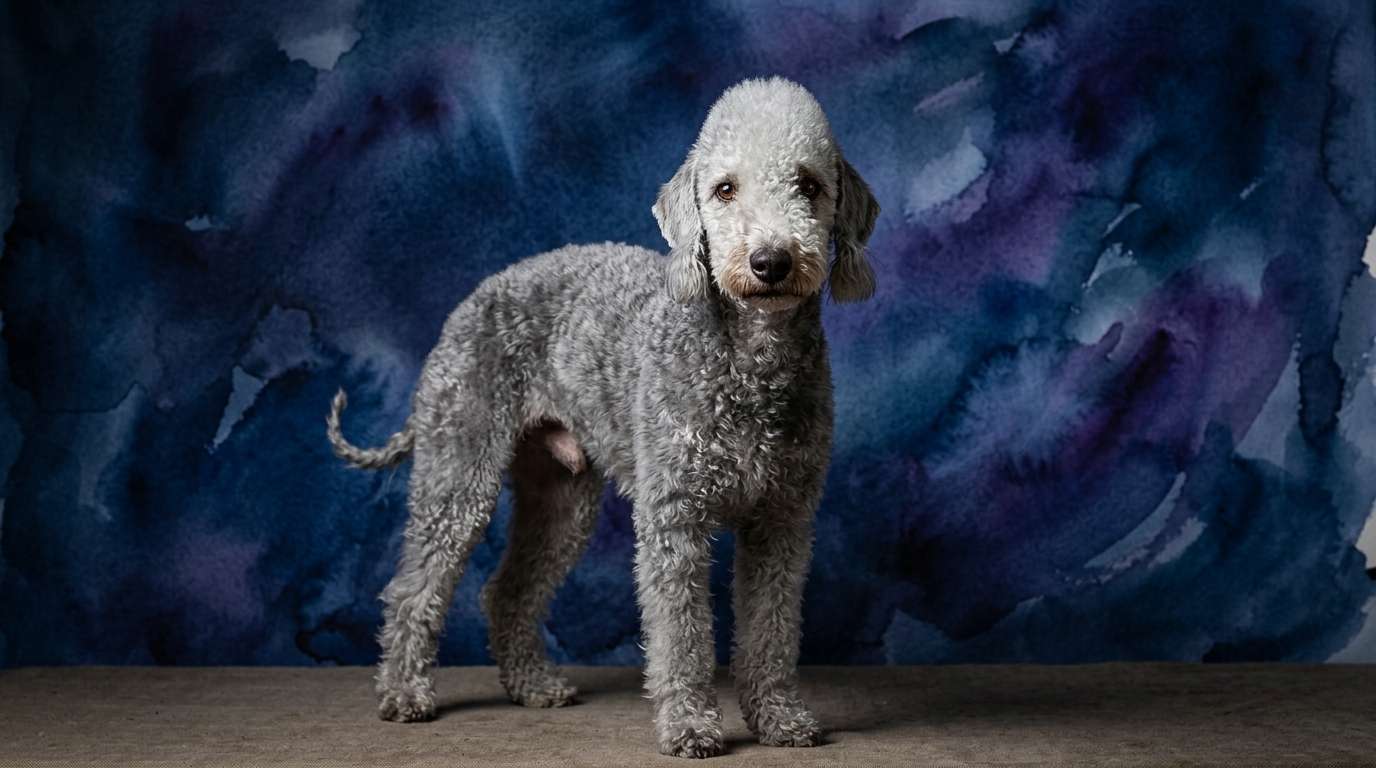
Side-by-Side IQ Profile: Soft Coated Wheaten Terrier vs. Bedlington Terrier
The Cosmic Pet Pet IQ Lab assesses canine intelligence across five key dimensions, each rated on a scale of 1 to 5. Interestingly, both the Soft Coated Wheaten Terrier and the Bedlington Terrier register a consistent 3/5 across all categories. This identical numerical score, however, belies distinct behavioral manifestations of their cognitive abilities, shaped by their unique temperaments and breed histories.
For the Soft Coated Wheaten Terrier, their **Problem Solving (3/5)** often involves an optimistic, sometimes boisterous, approach. They tend to tackle challenges by seeking interaction or achieving a desired outcome through energetic trial-and-error. If a door is closed, a Wheaten might try nudging it, pawing it, or even employing their considerable charm to 'woo' a human to open it, often prioritizing social engagement over intricate strategy. Their **Training Speed (3/5)** is generally good; they are eager to learn, especially when training involves positive reinforcement and a playful approach. While they grasp concepts quickly, their exuberance and occasional distractibility mean consistent, polished execution requires patience and sustained engagement. Their **Social Intelligence (3/5)** is typically high, manifesting as a strong desire for connection and participation in family activities, often initiating interactions with enthusiastic greetings and playful overtures. They are adept at reading emotional cues and often seek to engage or amuse their people. The Wheaten’s **Instinctive Drive (3/5)**, while possessing classic terrier tenacity, is frequently channeled into playful pursuits rather than solely focused on traditional prey drive. They enjoy chasing, digging, and exploring, but these drives are typically balanced with a strong desire for human companionship and often fuel their zest for life. Their **Memory (3/5)** is solid, enabling them to retain learned commands, routines, and the location of favorite toys, contributing to their adaptability and ability to integrate well into family life.
The Bedlington Terrier, by contrast, approaches its **Problem Solving (3/5)** with a quiet determination and often surprising resourcefulness. Their method can involve a more calculated approach, observing a situation before acting, or persistently working at a challenge until a solution is found. This might manifest as figuring out how to bypass an obstacle to reach a specific scent or subtly manipulating a situation to their advantage, leveraging their agility and keen senses. Their **Training Speed (3/5)** is also good; Bedlingtons typically respond well to training, showing a willingness to learn and a desire to please their primary caregivers. They can pick up new commands at a good pace, especially with engaging and positive methods. However, their independent terrier streak requires consistency and clear communication, as their underlying determination means they can be selective about when they apply learned behaviors if not adequately motivated. Bedlingtons possess a nuanced **Social Intelligence (3/5)**, often described as sensitive and observant, capable of forming deep bonds with their chosen family. Their social cues can be more subtle; they might assess new situations and people with quiet watchfulness before engaging, adapting their behavior to the mood of their environment. Their **Instinctive Drive (3/5)** is pronounced, particularly their prey drive, reflecting their historical role as vermin hunters. This drive fuels their curiosity and love for chasing and digging, displaying a focused intensity when engaging with perceived 'prey.' The Bedlington’s **Memory (3/5)** is robust, allowing them to retain information from routines, commands, and experiences, contributing to their general good behavior and adaptability in established environments once lessons are thoroughly ingrained.
Where Soft Coated Wheaten Terrier Wins Cognitively
The Soft Coated Wheaten Terrier often displays a cognitive advantage in scenarios requiring overt social engagement and adaptable, optimistic problem-solving. Their problem-solving, rated 3/5, frequently involves creative attempts to initiate interaction or elicit a response from their human companions. For instance, a Wheaten might more readily figure out how to 'ask' for attention by bringing a toy, nudging a hand, or performing a playful trick, demonstrating a proactive approach to social problem-solving. Their social intelligence, also 3/5, shines in their ability to quickly integrate into diverse family dynamics, often acting as a cheerful social lubricant. They excel in environments where their energetic attempts to engage are met with positive reinforcement, making them particularly adept at navigating complex human social cues that lead to shared activities or affection. This manifests as a quick understanding of how to get what they want through charming persistence rather than purely logical deduction.
Where Bedlington Terrier Wins Cognitively
The Bedlington Terrier, while sharing similar cognitive scores, often demonstrates superior cognitive performance in situations demanding subtle observation, focused persistence, and independent decision-making, particularly when driven by instinct. Their problem-solving, also 3/5, tends to be more analytical and less overtly attention-seeking than the Wheaten's. A Bedlington might meticulously work out how to access a specific area or retrieve a desired item by patiently assessing the environment and utilizing their agility, rather than relying on boisterous appeals. Their instinctive drive, rated 3/5, is often channeled into highly focused tasks, enabling them to maintain concentration on a scent trail or a designated 'hunt' for an extended period. This quiet tenacity, combined with their strong memory (3/5) for learned patterns and successful strategies, makes them particularly effective at tasks requiring sustained, independent effort and precise execution, even in the absence of immediate human direction.
Which is Easier to Train and Why
Both the Soft Coated Wheaten Terrier and the Bedlington Terrier share a training speed rating of 3/5, indicating they are generally receptive learners. However, the experience of training them can differ significantly due to their behavioral nuances. The Wheaten, with its effervescent personality and strong social intelligence, often approaches training as a fun, interactive game. They are typically eager to please and respond well to enthusiastic praise and positive reinforcement, making them enjoyable to train for owners who appreciate a lively, engaged student. Their exuberance, however, can sometimes translate into distractibility, meaning consistency is key to help them focus and refine behaviors.
The Bedlington, by contrast, while also eager to please its chosen person, possesses a more independent and sometimes sensitive nature. They might learn commands quickly but require a patient, gentle, and consistent approach, as harsh methods can cause them to shut down. Their inherent determination, a facet of their instinctive drive, means they might be more inclined to question a command if they don't see its immediate purpose, requiring trainers to be clear, fair, and motivating. Therefore, while both learn at a similar pace, the Wheaten might be perceived as 'easier' for owners who enjoy a high-energy, interactive training partner, while the Bedlington might suit those who prefer a more subtle, thoughtful, and consistent approach to training.
Which Suits Active Owners vs. Relaxed Owners
For active owners seeking a dynamic companion, the Soft Coated Wheaten Terrier often aligns perfectly. Their general zest for life, combined with a problem-solving approach that frequently involves physical interaction and their relatively high instinctive drive (3/5) channeled into playful energy, makes them ideal partners for activities like hiking, jogging, or dog sports such as agility. They thrive on consistent engagement and sufficient exercise to prevent their lively minds and bodies from becoming restless. Their social intelligence (3/5) means they genuinely enjoy participating in family outings and being at the center of attention.
Conversely, while not sedentary, the Bedlington Terrier can be a better fit for owners who appreciate activity but also value periods of calm and a more independent companion. Their focused instinctive drive (3/5) means they enjoy purposeful walks, scent games, or controlled bursts of play, but they are often content to relax quietly indoors once their needs are met. Their nuanced social intelligence allows them to be empathetic companions without constantly demanding overt interaction, making them suitable for owners who prefer a dog that can entertain itself or simply enjoy quiet presence after a good outing.
The Verdict
If you seek a perpetually cheerful, highly interactive, and outwardly affectionate companion who thrives on being involved in every family activity and approaches life with optimistic gusto, the Wheaten is an excellent choice.
If you prefer a more discerning, subtly affectionate, and quietly determined companion who appreciates purposeful activity balanced with calm companionship and possesses a keen, focused intelligence, the Bedlington might be your ideal match.
🧠 Find Your Pet's IQ Score
Our Pet IQ Lab assessment covers 25+ tests across 5 cognitive dimensions — personalized to your breed.
Take the Full IQ Test →Frequently Asked Questions
Are Soft Coated Wheaten Terriers good with children?
Soft Coated Wheaten Terriers are generally known for their playful and affectionate nature, often making them good companions for older, respectful children who can match their energy. Supervision is always recommended with any dog and child interaction.
Do Bedlington Terriers require extensive grooming?
Yes, Bedlington Terriers have a unique, lamb-like coat that requires regular grooming, including brushing several times a week and professional clipping every 6-8 weeks to prevent matting and maintain their distinctive appearance.
Which breed is more prone to barking?
Both terriers can be vocal, but the Soft Coated Wheaten Terrier is often described as more prone to 'Wheaten Greetin's' and general exuberance, while Bedlingtons might bark more specifically at perceived threats or during bursts of their instinctive prey drive.