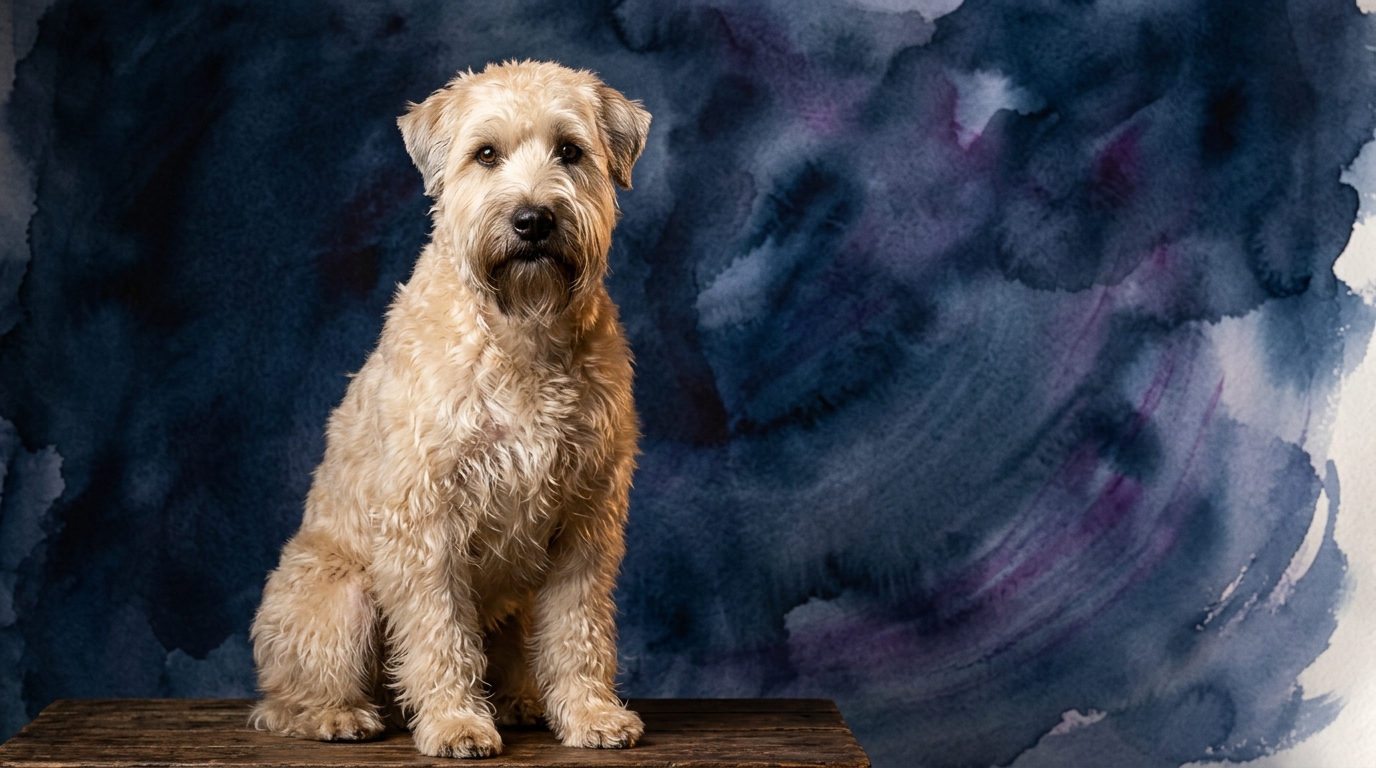
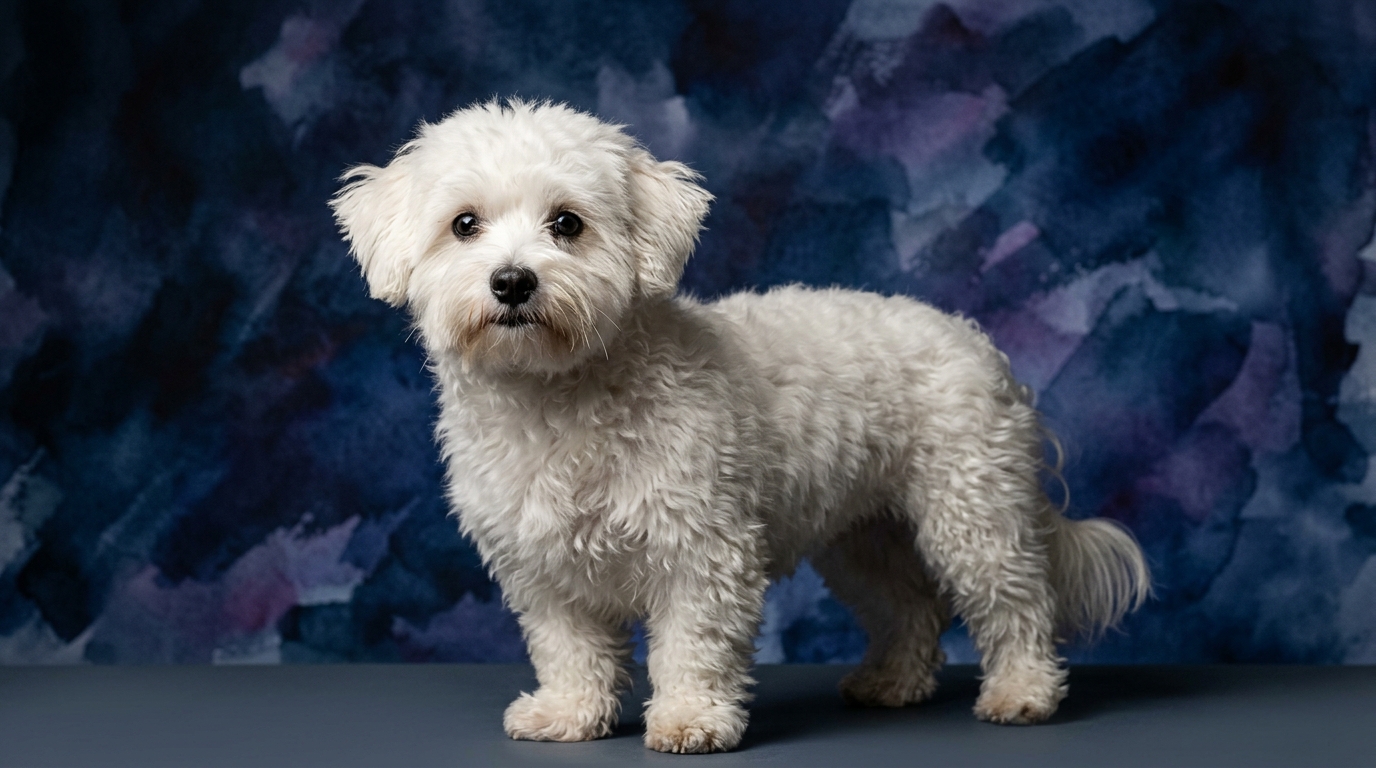
Side-by-Side Cognitive Profiles
Both the Soft Coated Wheaten Terrier and the Coton de Tuléar are assessed with a 3/5 in Problem Solving, indicating a moderate aptitude for navigating new situations. The Wheaten often approaches challenges with a terrier's characteristic persistence and independent trial-and-error, willing to experiment to achieve a goal. The Coton, while equally capable, tends to employ a more socially-driven strategy, often observing human cues or charming their owners to assist with a puzzle, integrating their environment and social context into their solutions.
In Training Speed, both breeds again score 3/5, signifying a moderate pace for acquiring new commands. Wheaten Terriers can learn a wide array of behaviors but require consistent, engaging methods to overcome their independent streak, as they may question the 'why' of a command. Coton de Tuléars, motivated by praise and social interaction, learn best with gentle, positive reinforcement, though their sensitivity means harshness can lead to reluctance.
Their Social Intelligence is also rated 3/5. The Wheaten Terrier displays moderate capacity to interpret human cues, often with a boisterous enthusiasm, forming strong, assertive bonds within the family. The Coton de Tuléar, conversely, exhibits this moderate social intelligence through a deep attunement to their owner's emotional states, often seeking to offer comfort or engage in subtle, charming ways, making them highly responsive to nuanced social dynamics.
For Instinctive Drive, both breeds receive a 3/5, but its manifestation differs significantly. The Wheaten Terrier's drive encompasses their terrier heritage, including a moderate prey drive, a propensity for digging, and an independent working spirit that requires constructive outlets. The Coton de Tuléar's drive is rooted in their companion role, centered on close attachment, seeking comfort, and being an integrated, affectionate part of their human family, with less emphasis on independent work or hunting.
Finally, both breeds score 3/5 in Memory, indicating a moderate capacity for recalling learned experiences and commands. Wheaten Terriers remember routines and commands with consistent practice, though their independence might lead them to occasionally 'test' boundaries based on past outcomes. Coton de Tuléars are adept at recalling people, places, and routines, and their memory for past interactions, both positive and negative, strongly influences their future responses and relationships within the household.
Where the Soft Coated Wheaten Terrier Excels Cognitively
Despite identical baseline scores, the Wheaten Terrier often demonstrates an edge in situations demanding a blend of persistence and independent thought. Their terrier heritage instills a moderate drive to investigate and solve problems on their own terms, making them adept at tasks that require sustained effort without constant human direction. For instance, a Wheaten might more readily persist in figuring out a complex puzzle feeder that requires multiple steps, or independently navigate a new environment, driven by their innate curiosity to explore and understand their surroundings without immediately deferring to their owner for guidance. This self-reliant cognitive approach allows them to tackle challenges with a determined, sometimes stubborn, problem-solving style.
Where the Coton de Tuléar Excels Cognitively
The Coton de Tuléar, conversely, often shines in cognitive tasks that benefit from their strong social intelligence and sensitivity to human cues. While their problem-solving score is the same, their approach is often more collaborative. They excel at deciphering subtle human body language or vocal inflections, making them particularly responsive in interactive games or learning situations where nuanced communication is key. A Coton might more quickly grasp a new trick demonstrated by their owner through mirroring or anticipating the desired action based on their owner's encouraging tone and gestures. Their cognitive strength lies in their ability to integrate social information into their learning and problem-solving strategies, often seeking to work with, rather than independently of, their human partners.
Training Dynamics: Wheaten vs. Coton
Determining which breed is 'easier' to train is nuanced, as both hold a 3/5 training speed score, but their underlying motivations differ significantly. The Coton de Tuléar often appears more straightforward to train in early stages due to their inherent desire to please and their strong social bond with their owner. They are generally responsive to positive reinforcement and praise, making basic obedience and house-training progress quite smoothly when handled gently. However, their sensitivity means harsh corrections can lead to reluctance or even anxiety, making consistency and patience crucial. The Soft Coated Wheaten Terrier, while equally capable of learning, can present a greater challenge due to their independent and sometimes mischievous terrier temperament. They might question the necessity of a command or become bored with repetition, requiring a trainer who can make sessions engaging, varied, and firmly establish boundaries. While a Coton might be quicker to pick up 'sit' for a treat, a Wheaten might need more convincing that 'stay' is worth their while, leveraging their moderate memory to reinforce the value of compliance over time.
Lifestyle Match: Active vs. Relaxed Owners
The choice between a Wheaten Terrier and a Coton de Tuléar also hinges on an owner's lifestyle, as their instinctive drives and energy levels, while moderately scored, manifest differently. Soft Coated Wheaten Terriers, despite their 3/5 instinctive drive, possess a robust energy level and a need for regular, engaging physical and mental activity. Their terrier background means they thrive with active owners who can provide daily walks, play sessions, and opportunities for exploration or even dog sports like agility. They suit individuals or families who enjoy an outdoor lifestyle and can channel their moderate prey drive and independent spirit into constructive outlets, preventing boredom-induced behaviors. Coton de Tuléar, with their similar 3/5 instinctive drive centered on companionship, are generally more adaptable to a relaxed household. While they enjoy play and walks, their primary need is for close human interaction and being involved in daily family life. They are content with moderate exercise and thrive in environments where they can be near their owners, making them an excellent fit for less active individuals, seniors, or families seeking a devoted indoor companion who enjoys cuddles as much as a gentle stroll.
The Verdict
Choose the Soft Coated Wheaten Terrier if you seek a resilient, enthusiastic companion who enjoys an active lifestyle and responds well to engaging, consistent training that respects their independent spirit.
Opt for the Coton de Tuléar if you desire a sensitive, charming, and highly adaptable companion who thrives on close family bonds and gentle, positive reinforcement training.
🧠 Find Your Pet's IQ Score
Our Pet IQ Lab assessment covers 25+ tests across 5 cognitive dimensions — personalized to your breed.
Take the Full IQ Test →Frequently Asked Questions
Do Soft Coated Wheaten Terriers bark a lot?
Soft Coated Wheaten Terriers can be vocal, often using barks to express excitement, alert their owners to visitors, or communicate their needs. Their moderate social intelligence means they are aware of their surroundings and may be prone to "woofing" as a form of communication or territorial expression, especially if not adequately trained or stimulated. Consistent training can help manage excessive barking.
Are Coton de Tuléars good with children?
Coton de Tuléars are generally known for being good with children, especially when properly socialized from a young age. Their moderate social intelligence and gentle nature allow them to adapt well to family life, often enjoying playful interactions. However, like all dogs, supervision is important, and children should be taught how to interact respectfully with the dog to ensure a positive experience for everyone.
How much grooming do these breeds require?
Both breeds require significant grooming to maintain their distinctive coats. The Soft Coated Wheaten Terrier has a single, silky coat that needs regular brushing to prevent matting, typically several times a week, along with occasional professional grooming. The Coton de Tuléar's long, cotton-like coat also requires daily brushing to prevent tangles and matting, and may benefit from regular trims to keep it manageable.