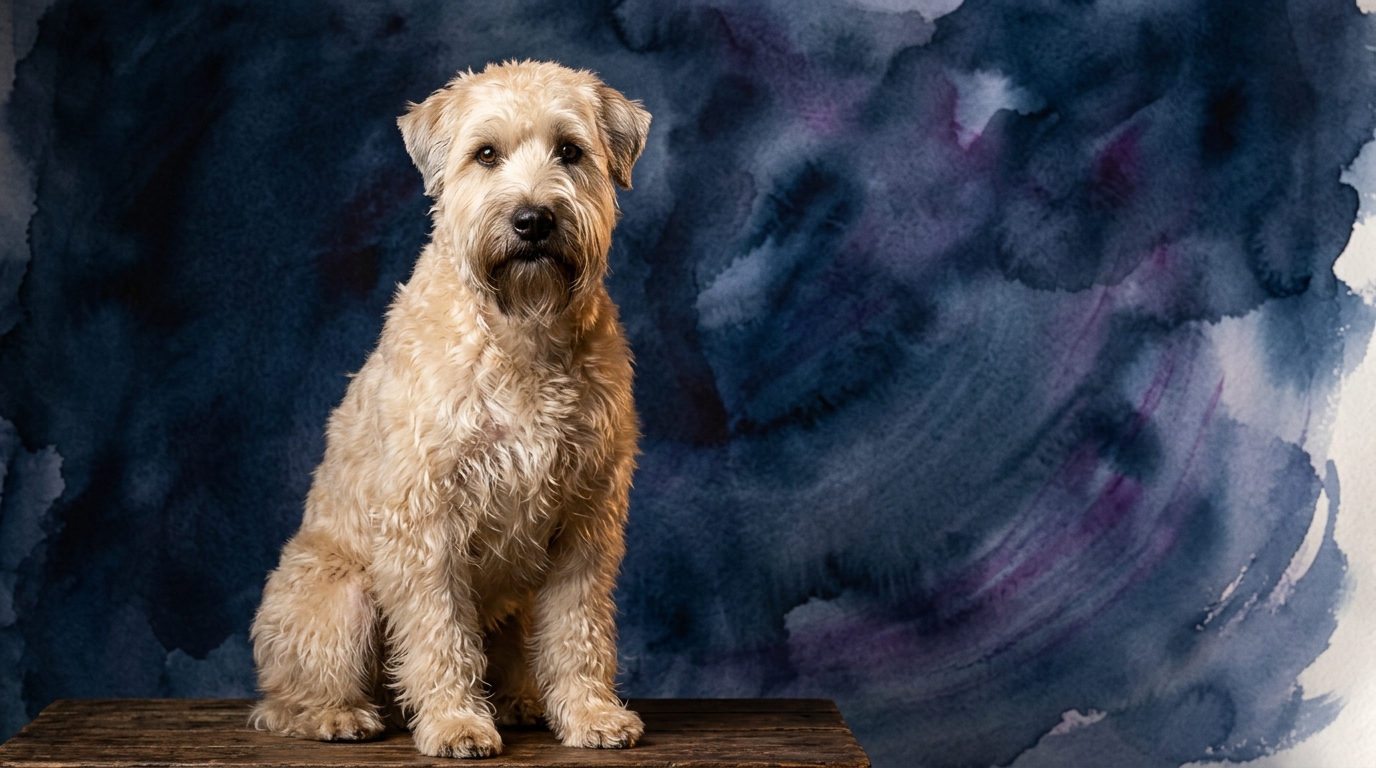
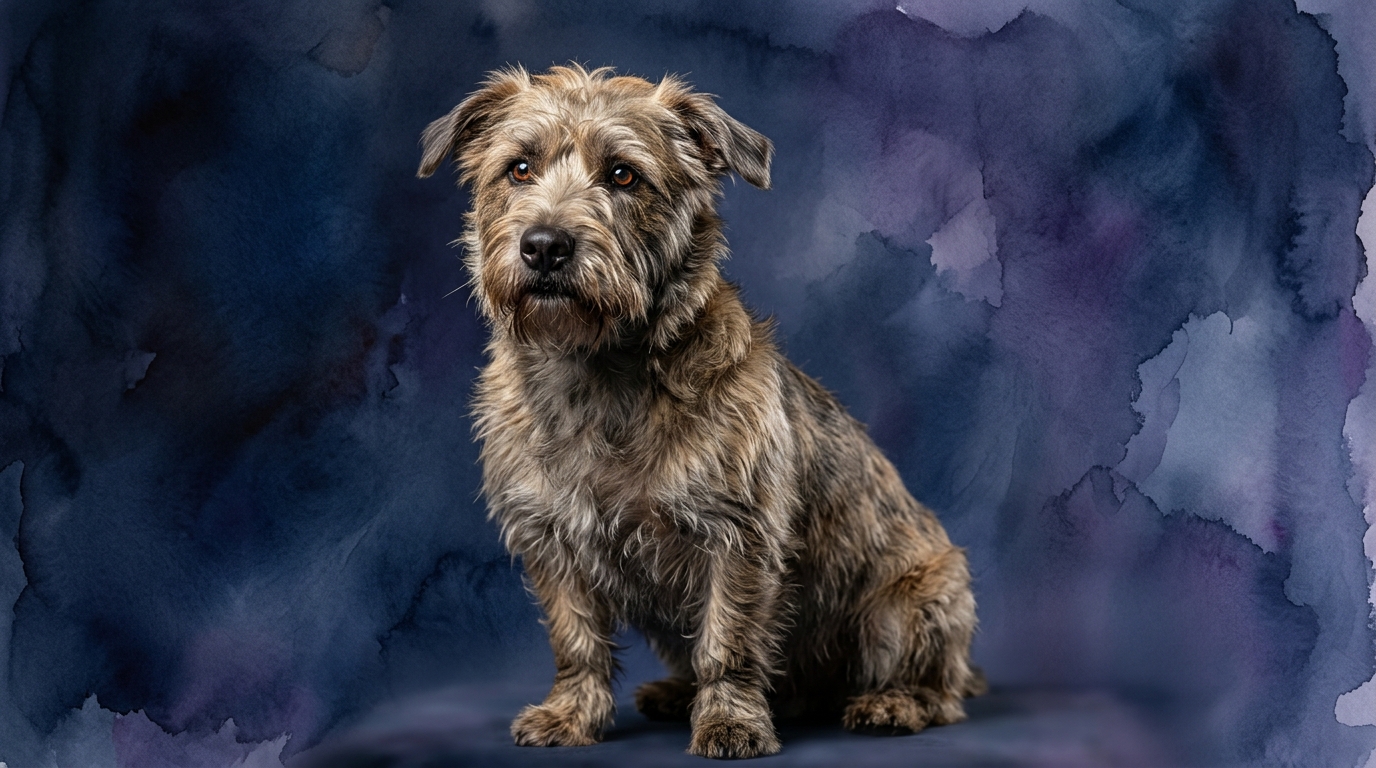
Side-by-Side Cognitive Profile
At The Cosmic Pet Pet IQ Lab, we evaluate canine intelligence across five key dimensions, and interestingly, both the Soft Coated Wheaten Terrier and the Glen of Imaal Terrier score a consistent 3/5 across the board. However, these identical scores don't imply identical cognitive manifestations; rather, they highlight different styles of applying their mental faculties.
The **Soft Coated Wheaten Terrier (SCWT)** demonstrates a moderate capacity for independent thought in problem-solving (3/5), often seeking creative, sometimes playful, ways to achieve goals, like figuring out how to access a forbidden treat. Their training speed (3/5) is steady, showing a willingness to learn when sessions are engaging and positive reinforcement is abundant, balanced by a characteristic terrier independence. Their social intelligence (3/5) is marked by an effusive friendliness and adaptability, allowing them to read human emotions and respond with enthusiastic engagement. The Wheaten's instinctive drive (3/5) is present but typically channeled into interactive play and chasing, reflecting a versatile farm dog heritage. Lastly, their memory (3/5) is solid, enabling them to recall routines, commands, and past experiences that led to either positive or negative outcomes with good consistency.
The **Glen of Imaal Terrier (GOIT)**, while sharing the same numerical scores, applies its cognitive skills with a distinct tenacity. Their problem-solving (3/5) is characterized by a persistent, methodical approach, often involving determined effort to overcome obstacles, such as systematically working on a puzzle toy or attempting to dig under a barrier. Their training speed (3/5) is moderate, but requires immense patience and consistent motivation, as their deep-seated independence means they'll weigh compliance against their own strong desires. Social intelligence (3/5) in Glens is expressed through a quiet perceptiveness and loyalty to their inner circle, often appearing more reserved with strangers. The Glen's instinctive drive (3/5) is powerful and deeply rooted in their working heritage, manifesting as a strong urge to explore, dig, and pursue, demanding appropriate outlets. Their memory (3/5) is robust, especially for spatial layouts and successful past strategies, allowing them to recall preferred pathways or effective solutions with remarkable persistence.
Where the Soft Coated Wheaten Terrier Shines Cognitively
The Soft Coated Wheaten Terrier often demonstrates a more socially adaptable and flexible cognitive approach, making them particularly adept in dynamic family environments. Their 'social intelligence' at 3/5, while numerically matching the Glen, manifests as a greater eagerness to engage with a wide variety of people and situations, allowing for quicker integration into diverse social settings. This translates into a dog that more readily seeks interaction and adjusts to new faces and places with an open, friendly demeanor, rather than cautious observation. Their 'problem solving' (3/5) frequently involves a more creative, less brute-force method, often seeking human interaction or clever manipulation rather than sheer persistence. For instance, a Wheaten might figure out how to nudge a door open using its nose and paw, or 'ask' for assistance, showcasing a cognitive preference for interaction-based solutions over purely independent, instinct-driven ones. This collaborative problem-solving can be highly appealing in a domestic context. Furthermore, their 'training speed' (3/5) often benefits from their inherent desire to participate and please, making them generally more responsive to novel commands and less prone to persistent independent decision-making during initial learning phases. This eagerness to engage translates into a smoother initial training experience for many owners, as they are often more motivated by praise and connection.
Where the Glen of Imaal Terrier Shines Cognitively
The Glen of Imaal Terrier excels in cognitive domains requiring deep focus, persistence, and independent decision-making, reflecting their specialized working history. Their 'problem solving' (3/5) is characterized by an unwavering determination to achieve a goal, particularly when it involves investigation or overcoming physical barriers. This isn't about playful manipulation but a focused, methodical approach, like figuring out how to get to a scent source or systematically dismantling a sturdy chew toy. This tenacity, while sometimes challenging for owners, indicates a profound mental resilience and self-reliance, making them exceptionally good at tasks requiring prolonged, single-minded effort. Their 'instinctive drive' (3/5) is a powerful asset in activities requiring sustained effort and an innate understanding of scent and terrain, making them exceptional at specific, goal-oriented activities that tap into their heritage. While numerically similar to the Wheaten, the Glen's drive is often more singular and intense, allowing for prolonged engagement in specialized pursuits like earthdog trials or scent work. Moreover, their 'memory' (3/5) often includes a strong recall for spatial awareness and the most efficient routes to accomplish a task. Combined with their persistence, this makes them particularly effective at navigating complex environments or remembering where they 'hid' a prized possession, demonstrating a robust practical memory geared towards their innate objectives.
Training Adaptability: Which is Easier?
Between the two, the Soft Coated Wheaten Terrier is generally perceived as somewhat easier to train, primarily due to their more overt desire for social interaction and approval. While both breeds hold a 'training speed' of 3/5, the Wheaten's characteristic exuberance and 'joie de vivre' often translates into a greater willingness to engage in training sessions as a form of bonding and fun. They respond well to positive reinforcement and praise, often eager to repeat behaviors that elicit a positive human reaction. Their 'social intelligence' (3/5) allows them to more readily pick up on their owner's moods and adjust their behavior, making them more pliable and collaborative in a training context. This doesn't mean they lack a terrier streak, but their inclination to please often outweighs their stubbornness.
In contrast, the Glen of Imaal Terrier, with its deep-seated independence and 'instinctive drive' (3/5) for self-directed activity, can present a greater challenge. While they are certainly capable of learning, their training often requires more patience, creativity, and a consistent understanding of their terrier mindset. A Glen might learn a command quickly but choose not to execute it if they perceive a more interesting, self-serving alternative, requiring an owner to be more adept at making training irresistible and proving its value. Their problem-solving (3/5) often means they'll try to figure out how to *avoid* a command if it doesn't align with their current goal, demanding an owner who can be both firm and fair, establishing clear boundaries and leveraging their natural drive in constructive ways.
Matching Canine Cognition to Lifestyle
For owners seeking a companion for a dynamic and interactive lifestyle, the Soft Coated Wheaten Terrier often aligns more readily. Their 'instinctive drive' (3/5) and 'social intelligence' (3/5) combine to make them enthusiastic partners for walks, hikes, and playful activities that involve human interaction. They thrive on engagement and can adapt to varied schedules, making them suitable for owners who enjoy including their dog in daily outings, social events, and family adventures. Their problem-solving (3/5) is often channeled into playful exploration, making walks a dynamic experience where they might creatively investigate new scents or sights, always eager to share the discovery with their human.
Conversely, the Glen of Imaal Terrier, while certainly benefiting from exercise, might be better suited for owners who appreciate a more relaxed, yet mentally stimulating, home environment. Their 'instinctive drive' (3/5) is potent but often directed towards specific, focused tasks like digging or scent work, rather than boundless, generalized energy. They are content with a good daily walk and mental challenges, but aren't typically seeking constant, high-energy social interaction like a Wheaten. A relaxed owner who can provide consistent mental enrichment, like puzzle toys or structured scent games, and understands the Glen's need for independent downtime and focused activities, would find a strong, devoted companion. Their tenacity in problem-solving (3/5) means they need outlets for their concentrated determination, perhaps through dedicated training sessions focused on their natural aptitudes.
The Verdict
Choose the Soft Coated Wheaten Terrier if you seek a highly engaged, adaptable companion who thrives on social interaction and a more collaborative training approach, fitting seamlessly into varied family activities.
Opt for the Glen of Imaal Terrier if you appreciate a tenacious, independent spirit with a quiet devotion, and are prepared to engage their deep-seated drives with patient, consistent training and focused mental enrichment.
🧠 Find Your Pet's IQ Score
Our Pet IQ Lab assessment covers 25+ tests across 5 cognitive dimensions — personalized to your breed.
Take the Full IQ Test →Frequently Asked Questions
Do Soft Coated Wheaten Terriers get along with other pets?
Soft Coated Wheaten Terriers, with their moderate social intelligence, often adapt well to living with other pets, especially if introduced thoughtfully during puppyhood. While they can be exuberant, their generally friendly nature means they can coexist peacefully, though proper introductions and supervision are always important.
Are Glen of Imaal Terriers good apartment dogs?
Glen of Imaal Terriers can be suitable for apartment living due to their relatively compact size and moderate activity needs indoors. However, their strong instinctive drive, particularly for digging and exploring, means they require consistent daily walks and mental stimulation to prevent boredom and destructive behaviors.
How do their problem-solving skills differ in daily life?
The Soft Coated Wheaten Terrier's problem-solving often involves finding clever, interactive ways to get what they want, like charming you for a treat or figuring out how to open a door. The Glen of Imaal Terrier, on the other hand, typically employs more persistent, determined methods, such as methodically working on a puzzle toy until it yields, or attempting to dig under a fence with unwavering focus.