Side-by-Side Cognitive Profile: Wheaten Terrier vs. Schipperke
To truly understand the mental strengths of these two breeds, The Cosmic Pet Pet IQ Lab employs a five-dimensional cognitive framework. This allows us to move beyond anecdotal observations and pinpoint exactly where each breed shines and where their approaches diverge.
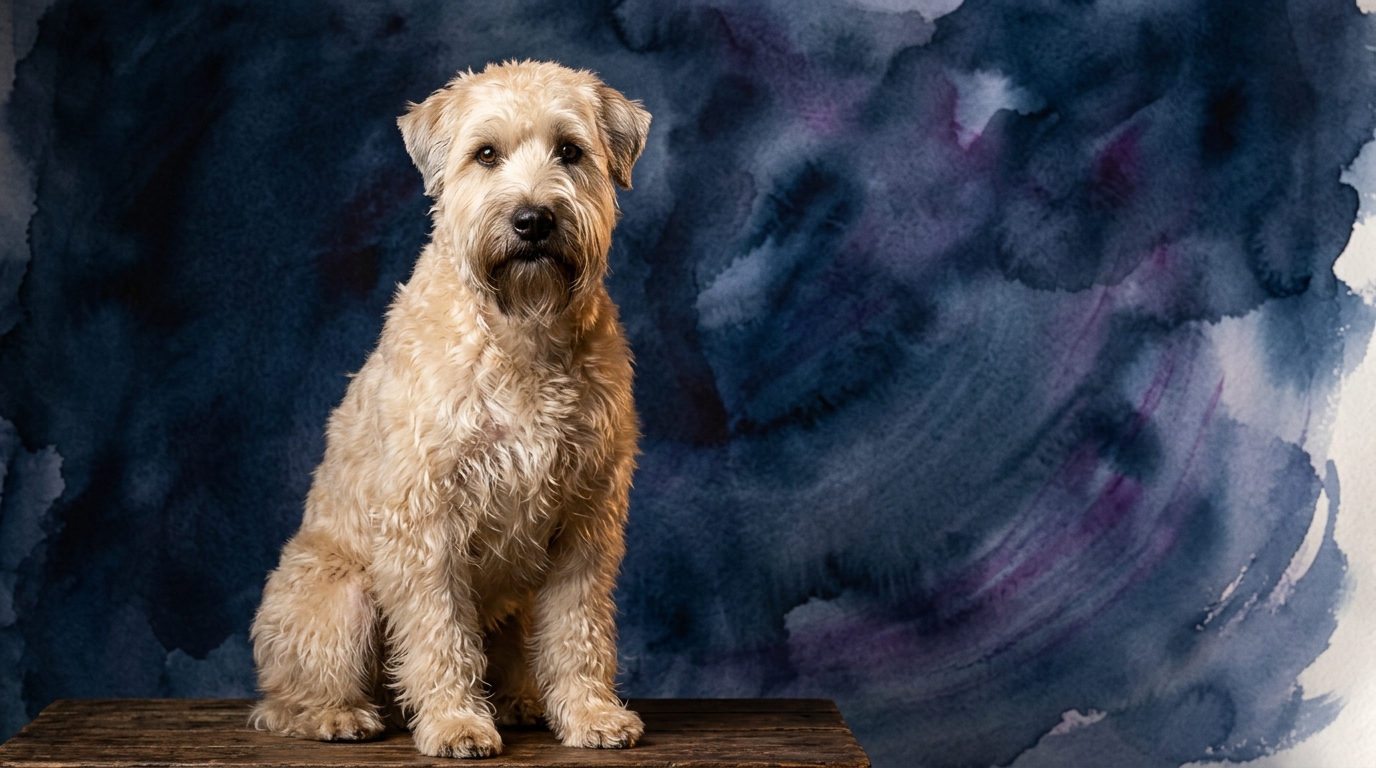
The Soft Coated Wheaten Terrier, a charming and spirited member of the Terrier group, presents a balanced cognitive profile:
• Problem Solving (3/5): Wheatens demonstrate a moderate capacity for navigating novel challenges, often relying on learned patterns or owner cues rather than immediate, inventive solutions. Their approach to a puzzle toy might involve persistent manipulation or seeking assistance, showing a steady but not groundbreaking ability to figure things out independently.
• Training Speed (3/5): Learning new commands takes a moderate amount of repetition for the Wheaten. They are generally cooperative but may require consistent, patient guidance to solidify new behaviors, reflecting a steady pace of acquisition rather than rapid understanding.
• Social Intelligence (3/5): Wheatens possess a balanced understanding of social cues, both canine and human. They can typically read body language and respond appropriately in various social settings, demonstrating a comfortable awareness of their environment and companions without being overly perceptive or oblivious.
• Instinctive Drive (3/5): Their terrier heritage grants them a moderate drive for activities like chasing or digging, but this is usually manageable. While they enjoy engaging with their environment, these drives are typically balanced and can be channeled with appropriate outlets, not dominating their daily conduct.
• Memory (3/5): Wheatens exhibit a reliable, average memory for commands, routines, and experiences. They recall familiar faces and places without difficulty, and once a behavior is learned, it generally sticks, though it may fade without occasional reinforcement over long periods.
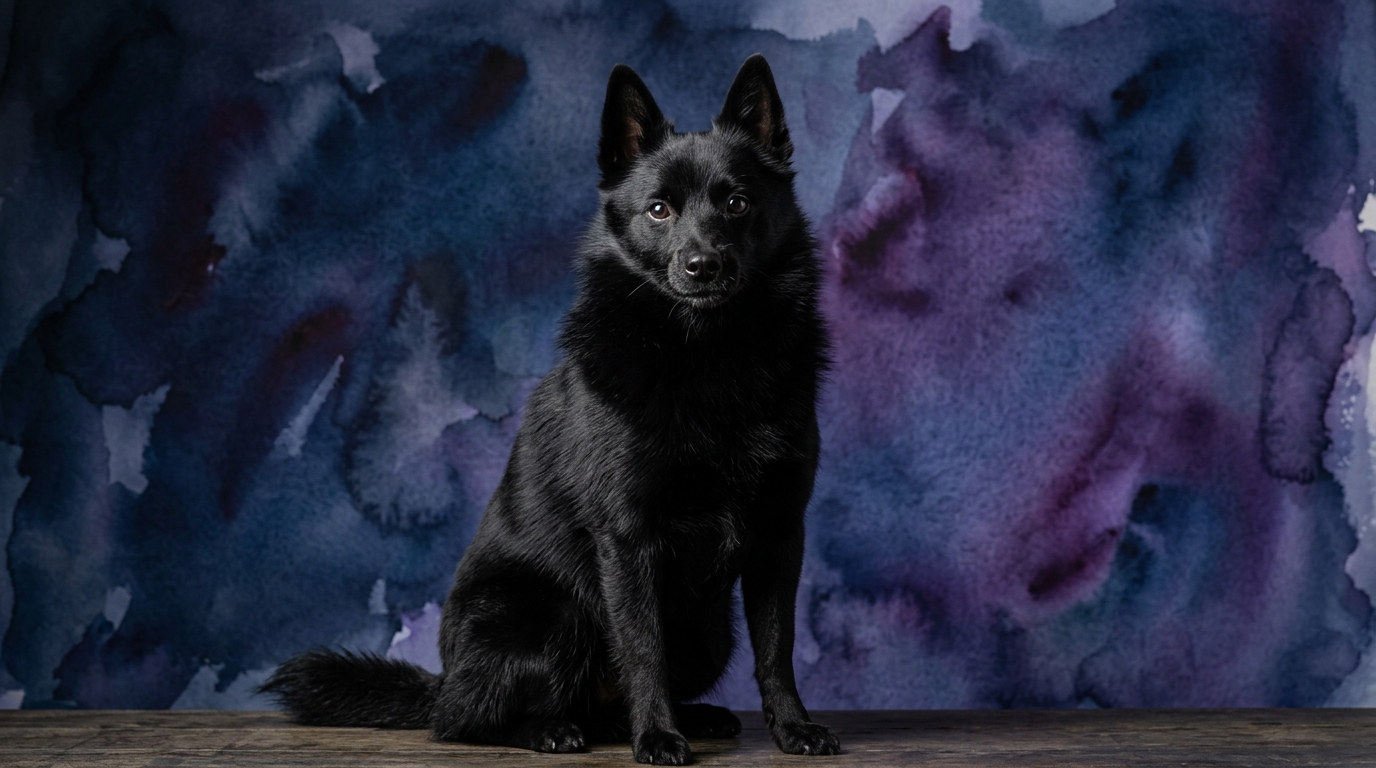
In stark contrast, the Schipperke, a vigilant Non-Sporting breed with a Coren ranking of #15, showcases a more specialized and elevated cognitive design:
• Problem Solving (5/5): The Schipperke excels in problem-solving, displaying a remarkable aptitude for independent thought and creative solutions to obstacles. They are often observed devising clever strategies to achieve their goals, whether it's opening a cabinet or figuring out how to reach a high perch, indicating a strong capacity for innovative thinking.
• Training Speed (5/5): Schipperkes are exceptionally quick learners, often grasping new commands and concepts with minimal repetition. Their eagerness to engage and their sharp minds mean they pick up complex tasks rapidly, making them highly responsive to consistent, positive reinforcement training.
• Social Intelligence (3/5): Similar to the Wheaten, Schipperkes show a moderate level of social intelligence. They are adept at interpreting social signals and interacting appropriately within their social spheres, maintaining a balanced understanding of their surroundings and the intentions of others.
• Instinctive Drive (3/5): Despite their history as barge dogs and ratters, the Schipperke's instinctive drive is rated as moderate. While they retain some prey drive and vigilance, these instincts are typically well-controlled and can be directed through engaging activities, rather than manifesting as overwhelming urges.
• Memory (5/5): Schipperkes possess an outstanding memory, capable of retaining a vast array of commands, routines, and experiences over extended periods. Once something is learned, it is deeply ingrained, allowing them to recall complex sequences and past events with impressive accuracy.
Where the Soft Coated Wheaten Terrier Wins Cognitively
While the Schipperke often garners attention for its sharp intellect, the Soft Coated Wheaten Terrier brings its own unique cognitive strengths to the forefront. The Wheaten's balanced scores across all five dimensions, particularly its 3/5 in Social Intelligence, suggests a nuanced advantage in adaptability and emotional regulation within a family setting. Unlike some breeds that might be overly sensitive or too independent, a Wheaten often exhibits a steady emotional baseline, allowing them to integrate smoothly into diverse household dynamics without becoming easily stressed by subtle social shifts or demanding excessive attention.
Their moderate instinctive drive (3/5) also means they are generally less prone to obsessive behaviors like incessant digging or chasing small animals compared to some higher-drive breeds, making them a more consistently calm and predictable presence in a home environment. This cognitive equilibrium translates into a dog that is generally less 'needy' in terms of constant mental stimulation to manage intense drives, offering a more harmonious partnership for owners seeking a steady, emotionally responsive companion.
Where the Schipperke Wins Cognitively
The Schipperke's cognitive profile clearly outshines the Wheaten in several key areas, particularly in raw intellectual horsepower. Their perfect 5/5 scores in Problem Solving, Training Speed, and Memory indicate a breed with exceptional mental agility and retention. A Schipperke will often independently figure out how to open child-proof latches, manipulate objects to their advantage, or even learn complex multi-step routines with astonishing speed, sometimes after only a handful of repetitions. This superior problem-solving ability means they are less likely to simply give up on a challenge and more likely to experiment with different approaches until they succeed.
Furthermore, their outstanding memory ensures that once a lesson is learned, it is rarely forgotten, making them exceptionally reliable in recalling commands and routines even after long breaks. This combination of rapid learning and enduring recall makes the Schipperke a formidable student for advanced obedience, dog sports, or any activity requiring a quick-witted, highly retentive mind.
Ease of Training: Behavioral Differences Unpacked
Based on their respective IQ profiles, the Schipperke is demonstrably easier to train, primarily due to its superior Training Speed (5/5) and Memory (5/5). A Schipperke often grasps new commands in just a few repetitions, exhibiting a keen eagerness to learn and respond. For example, teaching a Schipperke to 'stay' or 'come' can progress rapidly, as they quickly associate the vocal cue with the desired action and remember it reliably. Their problem-solving prowess also means they can generalize learned behaviors to new situations with less guidance, making complex sequences or chaining commands more accessible.
In contrast, the Soft Coated Wheaten Terrier, with a 3/5 in Training Speed and Memory, requires more patience and consistency. While trainable, a Wheaten might need more repetitions to fully understand and solidify a new command, and occasional refreshers to maintain proficiency. For instance, house-training a Wheaten might take a bit longer to achieve complete reliability, and they might test boundaries more frequently before fully committing to a rule. Their moderate instinctive drive (3/5) means they can be distracted by scents or sounds, potentially slowing down training sessions compared to the hyper-focused Schipperke. The Schipperke's inherent drive for mental engagement and quick processing makes the training journey more fluid and often more rewarding in terms of speed and complexity of learned tasks.
Matching Cognitive Needs to Owner Lifestyles
The choice between a Wheaten Terrier and a Schipperke also hinges on an owner's lifestyle and their capacity for mental and physical engagement. For active owners who relish intellectual challenges and enjoy participating in dog sports or advanced training, the Schipperke is an exceptional match. Its high problem-solving ability, rapid training speed, and excellent memory demand consistent mental stimulation to prevent boredom and destructive behaviors. Owners who can offer daily puzzle toys, agility training, advanced obedience, or even scent work will find the Schipperke thrives, channeling its considerable mental energy productively. Physically, while small, they are energetic and benefit from regular walks and play, but their primary need is often mental engagement.
Conversely, the Soft Coated Wheaten Terrier, with its balanced 3/5 scores across the board, is better suited for owners seeking a companion that is active but not perpetually demanding intense mental gymnastics. Wheatens enjoy play, walks, and family activities, but their cognitive needs are more moderate. They appreciate routine and consistent, positive reinforcement training, but aren't constantly seeking out new problems to solve or complex tasks to master. A Wheaten owner might enjoy regular park visits, neighborhood strolls, and basic obedience, finding satisfaction in a dog that is present, affectionate, and generally well-adjusted without requiring constant intellectual stimulation to prevent mischief. They offer a comfortable medium for owners who are active but also appreciate periods of relaxed companionship.
The Verdict
Choose the Soft Coated Wheaten Terrier if you seek a balanced, emotionally steady companion that integrates smoothly into family life with moderate training needs and a predictable temperament. They are ideal for owners who appreciate a dog that is affectionate and active without requiring constant, intense mental challenges.
Opt for the Schipperke if you are an engaged owner who enjoys intellectual challenges, thrives on rapid training progress, and is prepared to provide consistent, stimulating mental exercises for a remarkably bright and quick-witted canine partner.
🧠 Find Your Pet's IQ Score
Our Pet IQ Lab assessment covers 25+ tests across 5 cognitive dimensions — personalized to your breed.
Take the Full IQ Test →Frequently Asked Questions
Do Schipperkes require more mental stimulation than Soft Coated Wheaten Terriers?
Yes, Schipperkes, with their 5/5 scores in problem-solving and memory, require significantly more consistent mental stimulation to prevent boredom and potential destructive behaviors. Wheatens, rated 3/5 in these areas, have more moderate mental exercise needs.
Which breed is better for a first-time dog owner regarding trainability?
While both are trainable, the Schipperke's rapid learning speed and memory make it easier to train for an experienced owner who can keep up with its intellect. For a first-time owner, the Wheaten's more moderate training speed and less intense mental demands might be a more forgiving and manageable introduction to dog ownership.
Are Soft Coated Wheaten Terriers or Schipperkes more prone to independent thinking?
Schipperkes are considerably more prone to independent thinking due to their 5/5 problem-solving ability, often devising their own solutions to situations. Wheatens, with a 3/5, are more inclined to follow established routines or seek guidance from their owners.