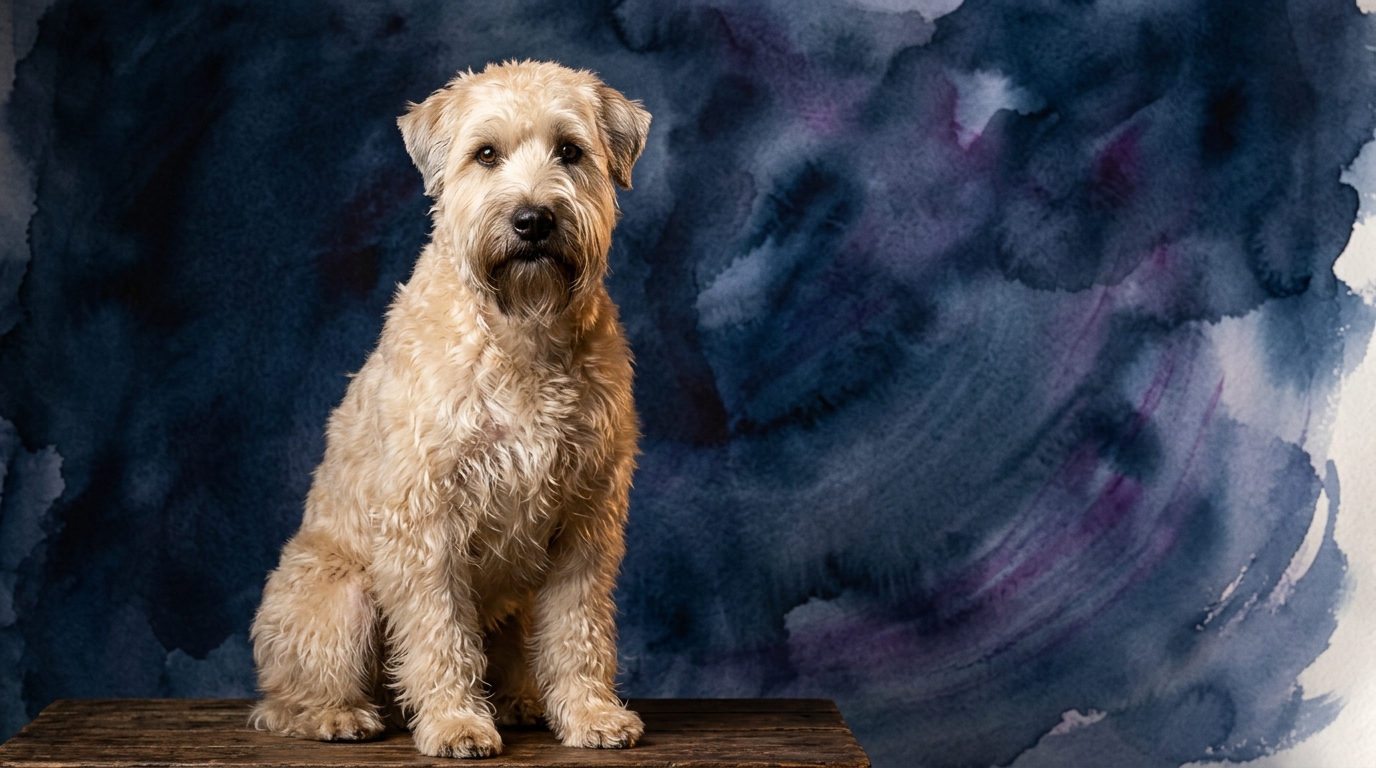
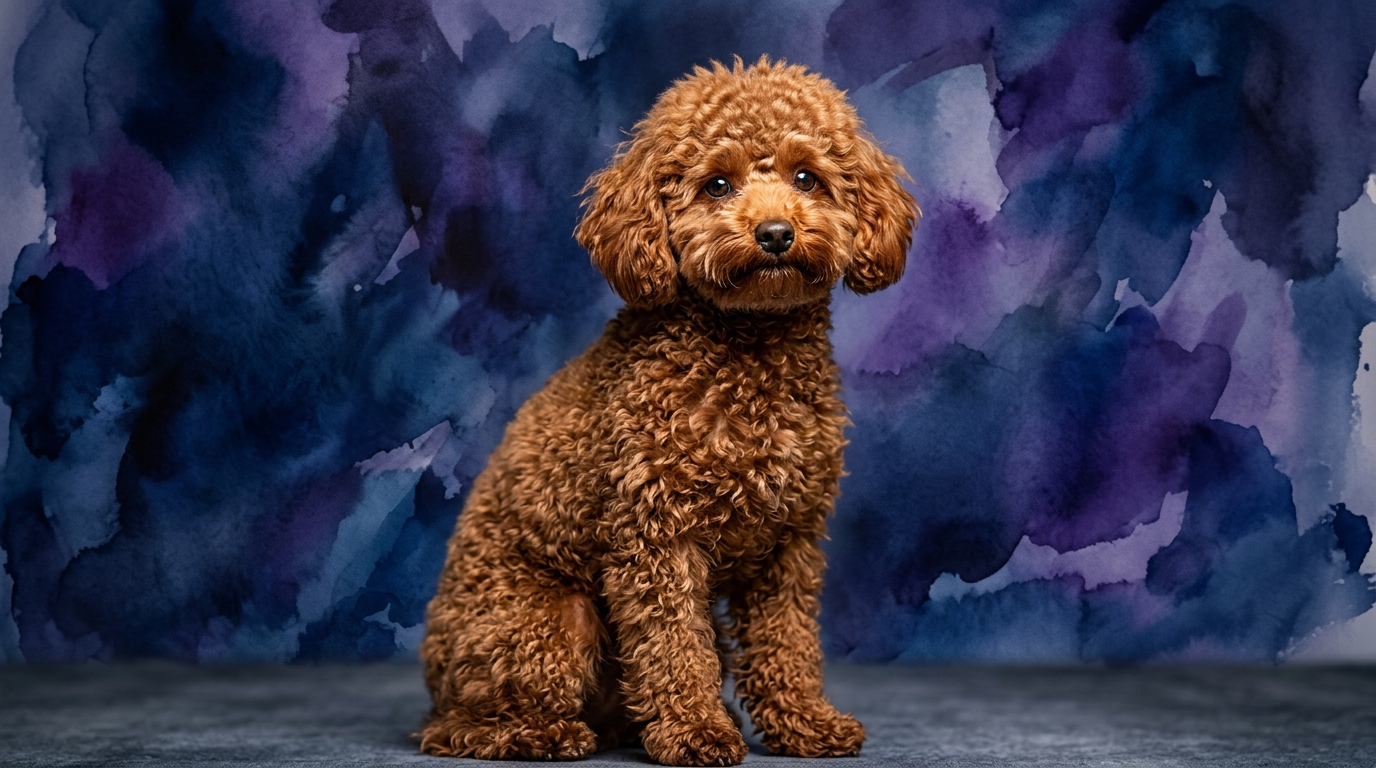
Side-by-Side IQ Profile: Soft Coated Wheaten Terrier vs. Toy Poodle
The Cosmic Pet Pet IQ Lab provides a five-dimensional cognitive framework to understand canine intelligence, offering specific scores for each breed. For the Soft Coated Wheaten Terrier (SCWT), we see a consistent profile across the board, reflecting a balanced, adaptable intellect.
The SCWT's Problem Solving is rated 3/5, indicating these terriers approach new situations with a practical, persistent methodology, often figuring things out through trial-and-error rather than overt strategy. Their Training Speed also scores 3/5, meaning Wheatens absorb new commands at a moderate pace, requiring consistent repetition and clear, positive reinforcement to solidify understanding. In Social Intelligence, Wheatens achieve a 3/5, capable of reading social cues and connecting well with companions, but without excessive sensitivity or complex emotional demands. Their Instinctive Drive is 3/5, reflecting a moderate terrier drive for activities like digging and chasing that is present but manageable. Finally, their Memory is 3/5, allowing them to retain learned behaviors and routines effectively over time, though perhaps not with the depth of breeds scoring higher.
In stark contrast, the Toy Poodle presents a profile with several peak cognitive strengths. Their Problem Solving is an exceptional 5/5, demonstrating a remarkable capacity for analytical thought and creative solutions, quickly assessing novel situations. Training Speed also scores 5/5, meaning these poodles grasp new commands and concepts with astonishing swiftness, often requiring only a few repetitions to understand and execute tasks. Their Social Intelligence, like the Wheaten, is 3/5, indicating a good attunement to human moods and intentions, forming close bonds without being overly complex in social dynamics. Instinctive Drive is similarly 3/5, typically expressed as a playful chase instinct or curiosity rather than a dominant force. Crucially, their Memory is a formidable 5/5, capable of recalling a vast array of commands, routines, and experiences over extended periods, making their training durable and extensive.
Where the Soft Coated Wheaten Terrier Wins Cognitively
While the Toy Poodle shows higher scores in several cognitive dimensions, the Soft Coated Wheaten Terrier's balanced cognitive profile offers unique advantages. Their consistent 3/5 across problem-solving, training speed, social intelligence, instinctive drive, and memory suggests a robust, adaptable intellect that doesn't overspecialize. This balanced nature means Wheatens are less prone to single-minded obsessions or the potential for boredom that can plague a breed with exceptional problem-solving skills if not constantly challenged. Their moderate social intelligence fosters affection without being overly demanding, allowing for a degree of self-sufficiency.
Instead of excelling in one specific cognitive area, the Wheaten integrates its functions smoothly, allowing for a resilient and consistently capable approach to daily life. Their problem-solving, while not lightning-fast, is persistent and practical, suited for real-world navigation. This terrier grit, combined with dependable memory and trainable nature, means they are reliably competent across tasks without requiring the intense mental gymnastics some higher-scoring breeds demand to stay content. They embody a functional intelligence that adapts reliably to various environments and challenges.
Where the Toy Poodle Wins Cognitively
The Toy Poodle’s cognitive strengths are pronounced, particularly in areas critical for learning and adaptability. Their 5/5 score in Problem Solving indicates a remarkable capacity to analyze new situations, innovate solutions, and apply abstract reasoning. This makes them exceptionally adept at navigating complex environments, mastering intricate puzzle toys, or even figuring out how to open cabinets. Coupled with a 5/5 in Training Speed, Toy Poodles grasp new commands and concepts with astonishing rapidity, often requiring only a few repetitions. This quick comprehension allows for accelerated learning in obedience, agility, or advanced trick training, making them a handler’s dream.
Furthermore, their 5/5 Memory ensures that these learned behaviors and solutions are retained for extended periods, reducing the need for constant reteaching. This impressive cognitive triad – superior problem-solving, rapid learning, and enduring memory – positions the Toy Poodle as a highly versatile and capable companion, eager to engage in mental challenges and excel in structured learning environments. Their intellect is about deep understanding and retention, enabling nuanced interaction with their environment and human partners, which is reflected in their Coren rank of #2 among breeds.
Which is Easier to Train and Why
When it comes to ease of training, the Toy Poodle holds a distinct advantage, primarily due to their exceptional scores in Training Speed (5/5) and Problem Solving (5/5). They possess an innate eagerness to engage with their trainers and a profound ability to quickly connect actions with desired outcomes. This means they learn commands, house rules, and complex sequences with remarkable efficiency, often needing fewer repetitions and less intensive guidance. Their cognitive agility allows them to understand what is being asked and adapt their behavior accordingly, making training feel like a collaborative intellectual exercise.
In contrast, the Soft Coated Wheaten Terrier, with a Training Speed of 3/5, is certainly trainable, but the journey requires more patience and consistency. Wheatens exhibit a degree of terrier independence; they might question commands or need stronger motivation to comply, often requiring more repetitions to solidify new behaviors. Their problem-solving (3/5) is more practical and persistent than analytical, meaning they may take longer to figure out novel tasks. While a Wheaten will ultimately learn, their process is often characterized by a thoughtful, sometimes stubborn, approach rather than the Poodle’s enthusiastic, rapid assimilation. For owners prioritizing a swift and straightforward training experience, the Toy Poodle’s cognitive predispositions make them a more amenable student.
Cognitive Fit: Active Owners vs. Relaxed Owners
The choice between a Soft Coated Wheaten Terrier and a Toy Poodle also hinges on an owner’s lifestyle and energy levels. The Soft Coated Wheaten Terrier, with its terrier lineage and balanced instinctive drive (3/5), generally thrives with active owners who can provide consistent physical exercise and engage their practical problem-solving skills. They enjoy robust outdoor activities, whether long walks, hiking, or structured play sessions that allow them to explore and expend energy. Their moderate social intelligence means they appreciate companionship but also possess a degree of self-reliance, making them suitable for owners who enjoy a dog that can keep up without being overly clingy. Their all-around 3/5 cognitive profile suggests adaptability to varied activities, finding contentment in a routine that offers both physical and mental stimulation.
Conversely, the Toy Poodle, despite its impressive mental prowess, is physically smaller and can adapt well to a somewhat more relaxed owner, provided their significant cognitive needs are met. While they enjoy walks and play, their physical exercise requirements are typically less demanding than a Wheaten’s. For a relaxed owner, the key is to substitute intense physical exertion with ample mental engagement. Their 5/5 problem-solving and memory excel in activities like puzzle toys, trick training, or canine sports emphasizing precision and strategy over endurance. A relaxed owner who enjoys teaching new things and spending quality, interactive time indoors can find the Toy Poodle an ideal companion, as their intelligence demands consistent mental exercise rather than solely physical output.
The Verdict
Choose the Soft Coated Wheaten Terrier if you appreciate a balanced, persistent intellect that combines terrier grit with affectionate companionship, and you're prepared for a moderately paced, consistent training journey. They thrive with active owners seeking a resilient, adaptable dog for varied outdoor adventures and a strong, independent bond.
Opt for the Toy Poodle if you seek a companion with exceptional learning capabilities, rapid training potential, and a formidable memory, ideal for advanced obedience or mental challenges. They suit owners who can provide consistent mental stimulation and enjoy a highly responsive, eager-to-learn partner, adaptable to both active and more relaxed indoor lifestyles.
🧠 Find Your Pet's IQ Score
Our Pet IQ Lab assessment covers 25+ tests across 5 cognitive dimensions — personalized to your breed.
Take the Full IQ Test →Frequently Asked Questions
Does the Soft Coated Wheaten Terrier's moderate IQ score mean they are difficult to train?
Not at all; a 3/5 training speed indicates they are reliably trainable, but they require more patience and consistency than breeds with higher scores. Their independent terrier nature means they respond best to positive reinforcement and clear boundaries, learning at a steady pace.
Are Toy Poodles prone to boredom if their high intelligence isn't constantly stimulated?
Yes, Toy Poodles benefit greatly from consistent mental engagement. Their 5/5 problem-solving and memory mean they quickly master tasks and can become bored or mischievous if not provided with regular challenges like puzzle toys, training sessions, or interactive games.
How do the social intelligence scores of these two breeds compare?
Both breeds score 3/5 in social intelligence, indicating they are generally well-adjusted in social settings and capable of forming strong bonds. They are responsive to human cues without being overly sensitive or exhibiting complex social manipulation, making them adaptable companions.