Side-by-Side IQ Profile: Spanish Water Dog vs. Norwegian Elkhound
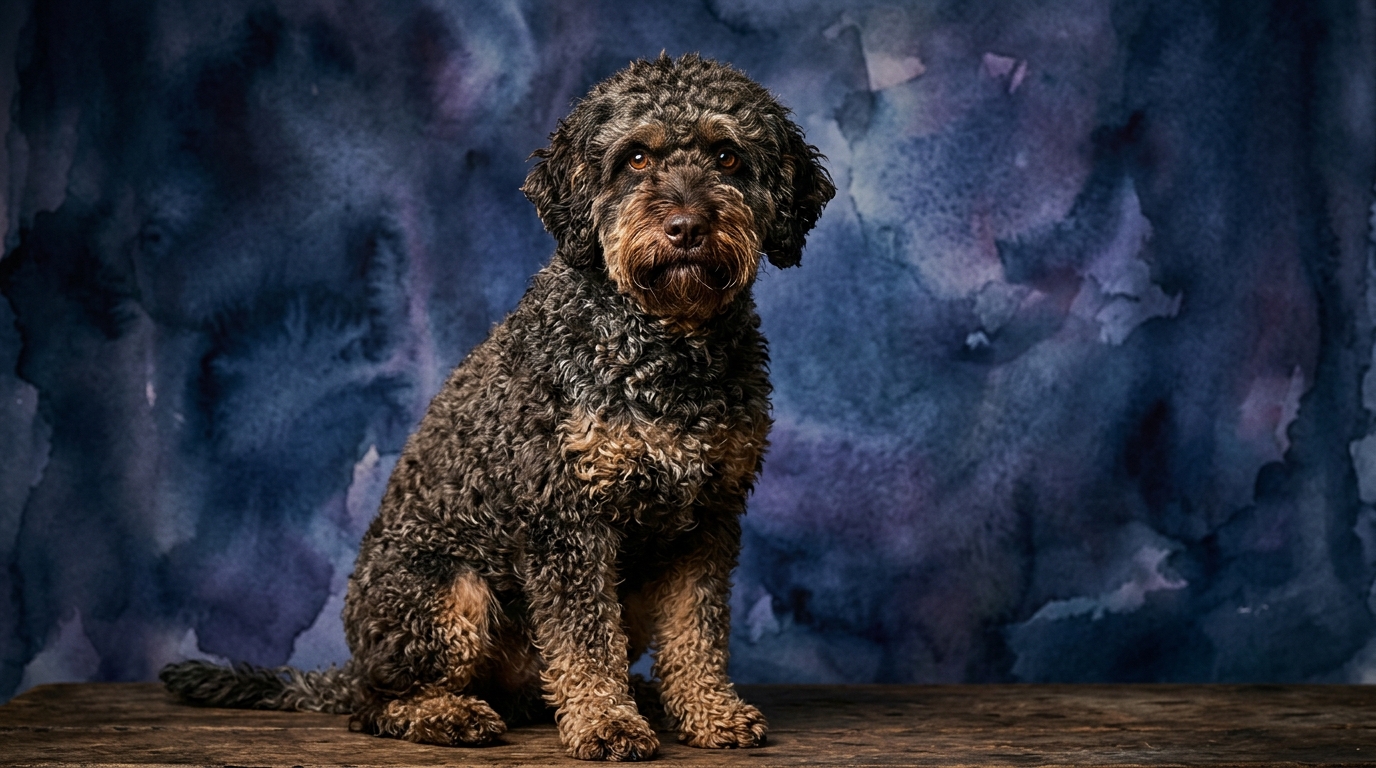
The Cosmic Pet Pet IQ Lab provides a detailed breakdown of canine cognitive abilities across five key dimensions. For the Spanish Water Dog, a member of the Herding group, its profile reveals a remarkably balanced intellect. Its Problem Solving is rated 3/5, indicating a moderate capacity for navigating novel situations and figuring out solutions, suggesting it learns effectively through experience but might not always be the quickest to innovate. Training Speed also stands at 3/5, reflecting a steady but not exceptionally rapid ability to grasp new commands and routines, meaning consistency and patience are key for successful instruction. The Spanish Water Dog's Social Intelligence scores 3/5, pointing to a reasonable understanding of human cues and pack dynamics, allowing it to integrate well into a family structure and respond to social learning. Its Instinctive Drive, at 3/5, highlights a moderate inclination towards its inherent breed-specific behaviors, such as herding, which can be channeled into productive activities. Finally, Memory is rated 3/5, suggesting a solid recall for learned behaviors and experiences, maintaining a foundation of knowledge over time. This overall consistency across cognitive domains often translates into a versatile and adaptable companion, though not one that typically stands out for extreme aptitude in any single area.
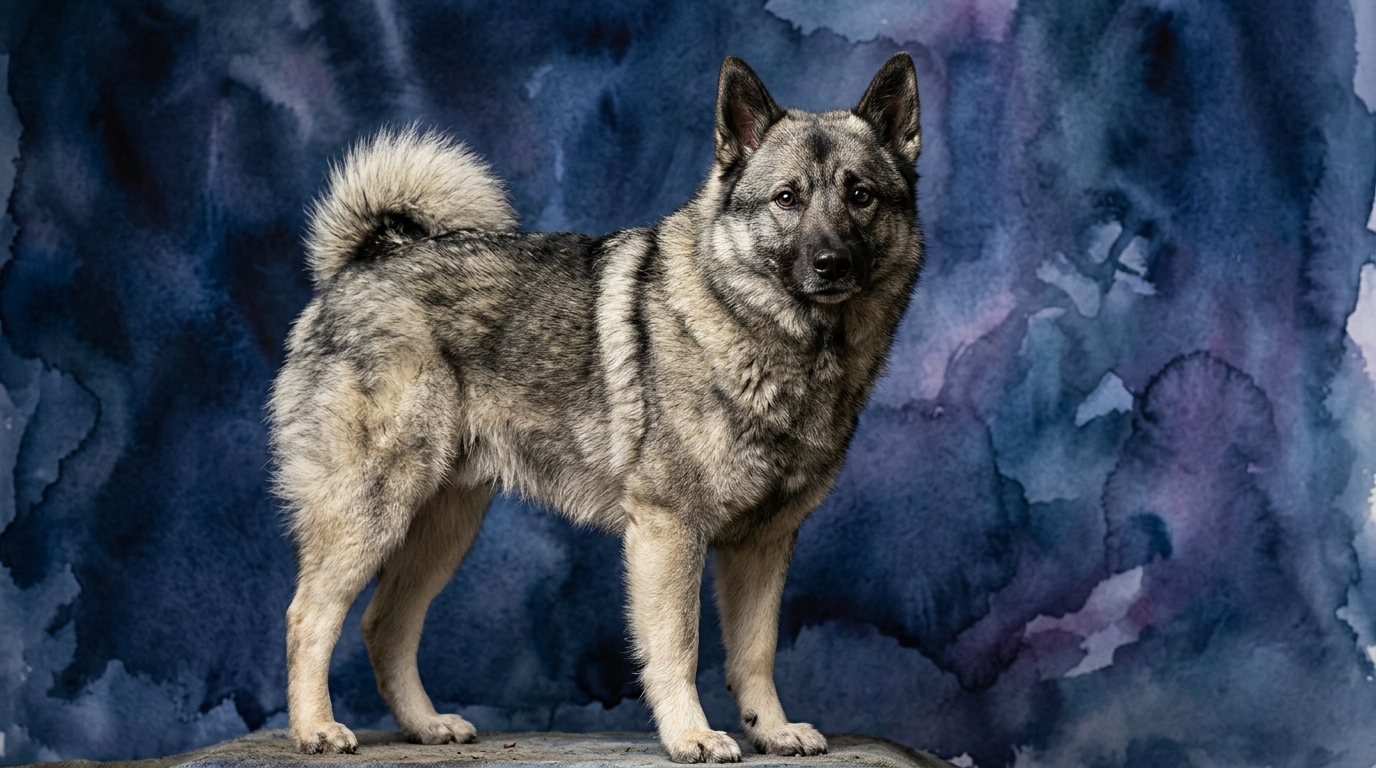
In contrast, the Norwegian Elkhound, a Hound group member with a Coren rank of #36, showcases a distinct cognitive advantage in several key areas. Its Problem Solving is a robust 4/5, demonstrating a strong aptitude for tackling new challenges and finding effective solutions, often showing ingenuity in navigating obstacles or achieving goals. This breed's Training Speed is also 4/5, indicating a relatively swift ability to learn and retain commands, making it generally responsive to consistent training methods and capable of mastering complex tasks. Social Intelligence aligns with the Spanish Water Dog at 3/5, suggesting a comparable understanding of social cues and interactions, allowing it to connect effectively with its human family. The Elkhound's Instinctive Drive, while also moderate at 3/5, is primarily geared towards its historical role as a hunter, manifesting in tracking and scent-work tendencies. Crucially, its Memory is a notable strength at 4/5, meaning it retains learned information and experiences for extended periods, contributing significantly to its trainability and reliability once a behavior is established. These elevated scores in problem-solving, training speed, and memory suggest a dog with a pronounced capacity for learning and applying information, often with a purpose-driven focus.
Where the Spanish Water Dog Wins Cognitively
While the Norwegian Elkhound often displays a quicker grasp of new commands and problem-solving, the Spanish Water Dog's balanced cognitive profile across all five dimensions (each scoring 3/5) suggests a unique versatility. This consistency means there are no pronounced cognitive 'weak spots,' allowing the Spanish Water Dog to apply its intellect broadly and adaptably. Its moderate scores, particularly in Social Intelligence (3/5) and Instinctive Drive (3/5), are often channeled into its core herding behaviors, which require a sophisticated understanding of movement, space, and group dynamics. A Spanish Water Dog might not solve a puzzle box as fast as an Elkhound, but its herding background imbues it with a practical, adaptive intelligence focused on managing and responding to a constantly changing environment. This breed excels in tasks requiring a steady, consistent application of moderate cognitive skills rather than bursts of exceptional brilliance in a single area. For instance, its herding drive, though moderate, is highly focused, demanding a continuous assessment of livestock and a nuanced response to their movements, a complex cognitive dance that its balanced profile supports effectively, making it less prone to frustration in tasks requiring sustained, repetitive application of learned skills.
Where the Norwegian Elkhound Wins Cognitively
The Norwegian Elkhound clearly demonstrates cognitive advantages in several key areas, particularly in Problem Solving (4/5), Training Speed (4/5), and Memory (4/5). Its higher Coren rank of #36 further substantiates its aptitude for obedience and working intelligence compared to many breeds. The Elkhound's enhanced problem-solving ability means it is more likely to independently figure out how to open a gate, retrieve a hidden toy, or navigate a complex agility course with less human intervention. Its quicker training speed translates to fewer repetitions needed to master new commands, making training sessions potentially more efficient and rewarding for both dog and owner. Furthermore, the superior memory (4/5) ensures that once a lesson is learned, it is retained for a longer duration, leading to greater consistency in behavior over time. These cognitive strengths are deeply rooted in its heritage as a big-game hunter, where independent decision-making, rapid learning of terrain and scent, and excellent recall were vital for survival and success in challenging environments. An Elkhound's intellect is geared towards efficient learning and effective application of knowledge, particularly when motivation is aligned with its hunting instincts.
Which is Easier to Train and Why
Based on their respective IQ profiles, the Norwegian Elkhound is generally easier to train than the Spanish Water Dog. The Elkhound's Training Speed of 4/5, compared to the Spanish Water Dog's 3/5, directly indicates a faster acquisition of new commands and routines. This is further supported by the Elkhound's superior Memory (4/5), which ensures that learned behaviors are retained for longer periods, requiring less frequent refreshers. Real behavioral differences underscore this: Elkhounds, with their independent hunting background, often respond well to clear, consistent instruction once they understand the expectation, and their problem-solving skills mean they can often generalize learned behaviors to new contexts. The Spanish Water Dog, while trainable, requires more patience and repetition due to its moderate Training Speed. Its strong herding drive, while useful for specific tasks, can also manifest as an independent streak or a tendency to 'herd' family members or other pets, requiring consistent management and redirection. While both breeds benefit from positive reinforcement, the Elkhound's cognitive makeup often results in a quicker, more fluid training process, making it a more straightforward choice for novice trainers or those seeking rapid skill acquisition.
Matching Breed to Owner Lifestyle: Active vs. Engaged
Neither the Spanish Water Dog nor the Norwegian Elkhound is suitable for truly relaxed owners, as both possess significant energy levels and require mental stimulation. However, their specific needs cater to different types of active lifestyles. The Spanish Water Dog, with its herding heritage and moderate instinctive drive, thrives with owners who can provide consistent, engaging activities that tap into its working intelligence. This includes dog sports like agility, dock diving, or even actual herding work, where its balanced cognitive profile and physical stamina can be fully utilized. It requires an owner who understands the need for a 'job' and can provide varied, interactive engagement to prevent boredom and potential behavioral issues. The Norwegian Elkhound, while also active, often leans towards endurance and independent exploration, reflecting its history as a big-game hunter. Owners who enjoy long hikes, scent work, or activities that allow for sustained physical exertion and mental tracking will find the Elkhound a suitable companion. While it can participate in dog sports, its hunting drive means it might be more motivated by activities involving scent or a 'chase.' Neither breed is content with minimal exercise; both demand dedicated owners willing to invest time in physical activity and mental enrichment.
The Verdict
For those seeking a versatile, consistently capable companion that excels with varied, interactive work and a balanced cognitive approach, the Spanish Water Dog is an excellent choice.
If you prioritize a dog with a quicker learning curve, strong problem-solving skills, and a reliable memory, particularly for scent work or endurance activities, the Norwegian Elkhound is likely the better fit.
🧠 Find Your Pet's IQ Score
Our Pet IQ Lab assessment covers 25+ tests across 5 cognitive dimensions — personalized to your breed.
Take the Full IQ Test →Frequently Asked Questions
Are Spanish Water Dogs difficult to train?
Spanish Water Dogs are not difficult to train, but their moderate Training Speed (3/5) means they require consistency and patience. Their balanced cognitive profile makes them adaptable, but they benefit from engaging, varied training methods to keep them motivated and prevent boredom.
What kind of mental stimulation do Norwegian Elkhounds need?
Norwegian Elkhounds thrive on mental stimulation that engages their strong problem-solving and memory skills, often related to their hunting instincts. Scent work, puzzle toys, advanced obedience, and opportunities for independent exploration during supervised outings are all excellent choices.
undefined
undefined
How do the social intelligences of these two breeds compare?
Both the Spanish Water Dog and Norwegian Elkhound score 3/5 in Social Intelligence, indicating a comparable understanding of human cues and pack dynamics. While they both integrate well into families, their expression of this intelligence might differ based on their individual personalities and breed-specific drives.