A Side-by-Side Look at Their Cognitive Profiles
The Cosmic Pet Pet IQ Lab assesses canine intelligence across five key dimensions, and both the Staffordshire Bull Terrier (SBT) and the Irish Wolfhound (IW) register a score of 3/5 in each category. This identical scoring does not suggest cognitive uniformity, but rather indicates a comparable level of functional intelligence expressed through vastly different lenses. Understanding these breeds requires delving into the unique ways each manifests its capabilities within their respective physical and historical contexts.
For the Staffordshire Bull Terrier, a 3/5 in Problem Solving speaks to a tenacious and practical approach. These compact dogs often excel at figuring out how to retrieve a toy from under a sofa or navigate a physical obstacle course, driven by a focused determination rather than abstract reasoning. Their Training Speed at 3/5 reflects a willingness to learn, often fueled by their desire to please their beloved people, though their inherent terrier assertiveness means consistency and positive reinforcement are paramount. Social Intelligence, also 3/5, indicates a deep attunement to their immediate human family's emotions, forming strong, empathetic bonds and often acting as keen observers of household dynamics. Their Instinctive Drive at 3/5 is rooted in their terrier heritage – a robust prey drive, an unwavering courage, and a powerful drive for interaction and play. Finally, a 3/5 in Memory means they retain learned commands, routines, and experiences effectively, remembering both positive and negative interactions with clarity.
The Irish Wolfhound's 3/5 in Problem Solving manifests differently, often characterized by a more thoughtful, sometimes ponderous approach. Given their immense size, their solutions might involve leveraging their reach or weight to achieve a goal, such as nudging open a gate or carefully maneuvering around furniture to access a desired spot. Their 3/5 in Training Speed highlights their intelligence and willingness to learn, but also their sensitivity and independent spirit; they respond best to gentle, patient methods and can be easily discouraged by harshness. Social Intelligence at 3/5 reveals a profoundly empathetic nature, making them highly sensitive to human moods and excellent at navigating complex social situations, particularly with children or other animals, often choosing calm diplomacy over direct confrontation. Their Instinctive Drive, also 3/5, stems from their sighthound ancestry – a strong chase instinct for moving objects, coupled with a gentle protective instinct towards their family. Their 3/5 in Memory signifies an excellent retention of people, places, and established routines, allowing them to anticipate household patterns and remember interactions over long periods.
Where the Staffordshire Bull Terrier Shows Unique Cognitive Strengths
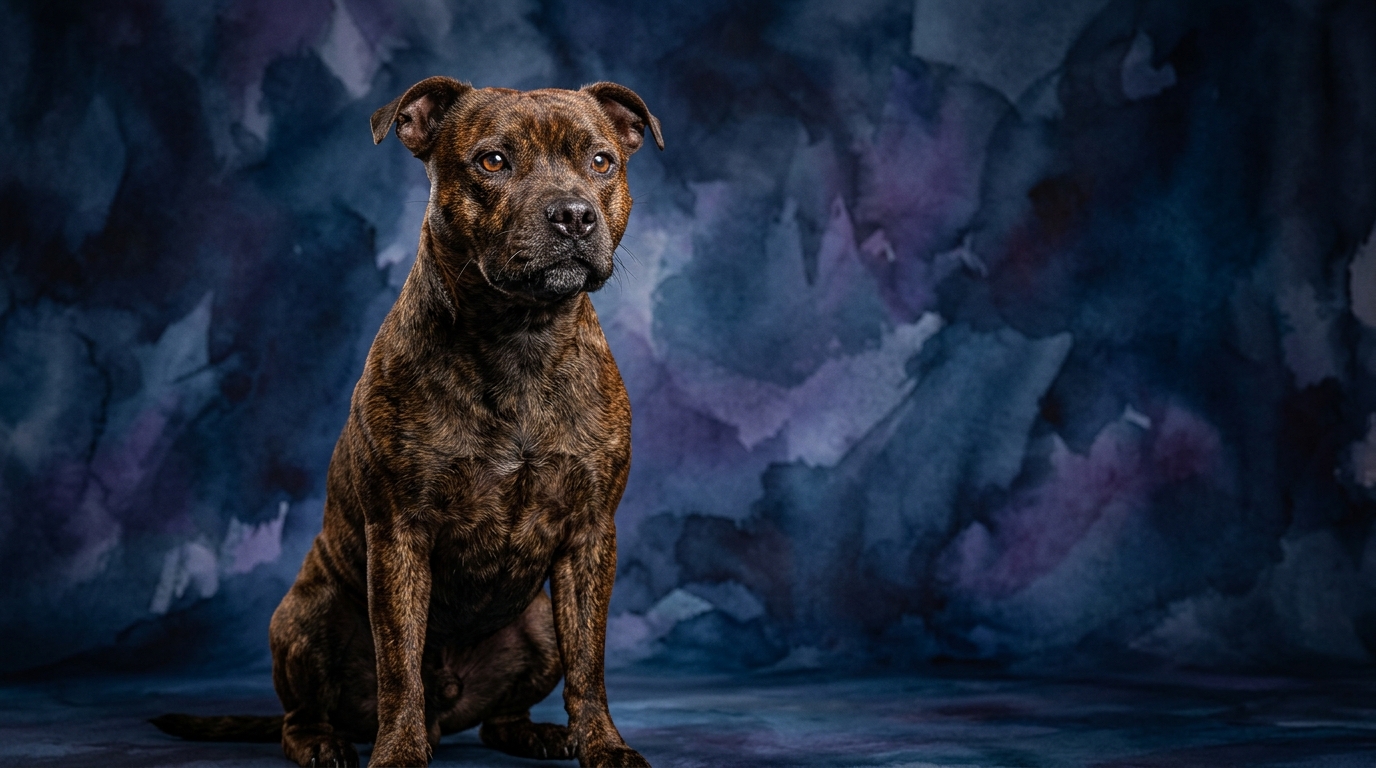
The Staffordshire Bull Terrier's cognitive strengths often shine in scenarios demanding focused determination and physical agility, a direct inheritance from their working lineage. Their Problem Solving, while scored identically, often presents as a more immediate, hands-on tenacity compared to the Wolfhound. For instance, an SBT might more quickly devise a strategy to extract a hidden treat from a puzzle toy requiring manipulation or persistent effort, demonstrating a concentrated, practical intelligence geared towards tangible rewards.
In social settings, the SBT's 3/5 social intelligence often translates into a remarkable ability to form intensely loyal and expressive bonds with their core family. They are adept at reading their owner's subtle cues and responding with a direct, affectionate engagement. While the Wolfhound might offer a more nuanced, gentle empathy, the SBT provides a robust, unambiguous emotional connection, often acting as a highly attuned, interactive companion who understands the family's emotional pulse with an almost intuitive grasp of their immediate social circle's needs and moods.
Where the Irish Wolfhound Exhibits Distinct Cognitive Advantages
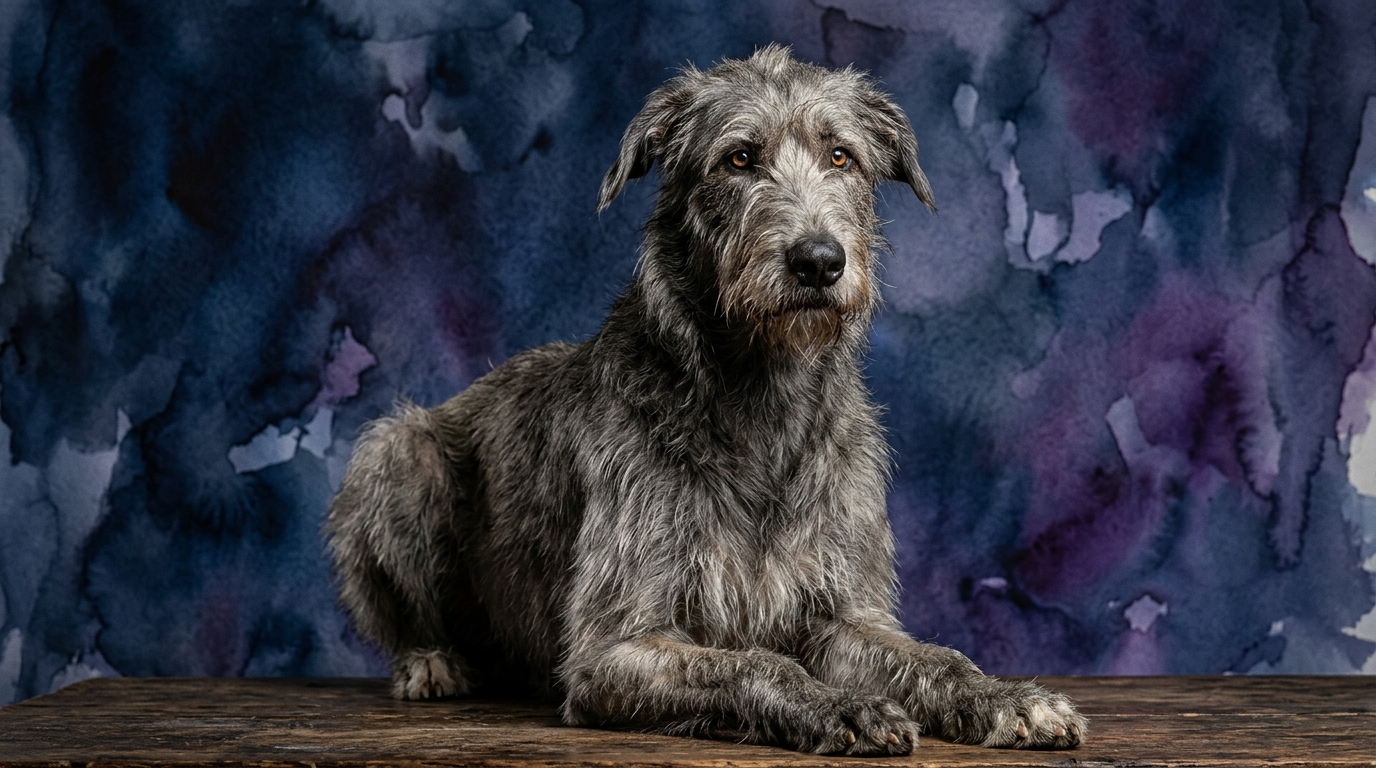
The Irish Wolfhound's cognitive advantages often lie in their thoughtful deliberation and profound social sensitivity, which are uniquely expressed through their immense physical presence. Their Problem Solving, while equally rated, tends to be less about brute force and more about strategic application of their size and reach. An Irish Wolfhound might thoughtfully assess a situation, such as how to comfortably navigate a new space or how to gently retrieve a dropped item without causing damage, showcasing a calmer, more considered approach than the often-impulsive terrier.
Their 3/5 social intelligence is particularly remarkable for its depth and gentleness, especially within a diverse social group. An Irish Wolfhound excels at reading subtle shifts in group dynamics, demonstrating an innate ability to be calm and reassuring around vulnerable individuals like children or the elderly. This nuanced understanding allows them to be exceptionally patient and tolerant, often mediating interactions with a quiet, observant empathy that sets them apart. Furthermore, their memory often facilitates a seamless integration into complex household routines, allowing them to anticipate daily events and adapt to changes with a serene understanding.
Training Dynamics: Which Breed is Easier and Why?
While both breeds score 3/5 in Training Speed, their approaches to learning and the ease with which they can be trained diverge significantly due to their inherent temperaments and physical attributes. The Staffordshire Bull Terrier, with their eager-to-please nature, can be highly motivated by praise, play, and food. However, their strong-willed terrier spirit means they can also be prone to 'selective hearing' if not consistently engaged and challenged. Training an SBT requires firm, fair, and incredibly consistent methods, channeling their tenacity into positive behaviors. Their compact size makes physical handling during training relatively straightforward, but their occasional stubbornness demands patience and creativity to keep them invested.
The Irish Wolfhound, despite their intelligence, can present a different set of training challenges. Their sensitivity means they respond poorly to harsh corrections, which can make them shut down or become resistant. They are independent thinkers, and while they understand commands, they may not always see the immediate 'point' in obeying if it doesn't align with their comfort or perceived best interest. Their sheer size necessitates early and consistent positive reinforcement training to ensure they are manageable giants. A Wolfhound's slower maturity also means that training is a longer-term commitment, requiring an owner to be patient and understanding of their gentle, sometimes ponderous, development. Ultimately, neither is 'easier' in a simple sense; rather, they require different training philosophies: the SBT needs consistent, engaging structure to harness their drive, while the IW needs patient, gentle guidance that respects their sensitive independence.
Matching Breeds to Lifestyles: Active vs. Relaxed Owners
The energy output and ideal daily rhythm for a Staffordshire Bull Terrier and an Irish Wolfhound cater to distinct owner lifestyles. Staffordshire Bull Terriers are robust, energetic dogs that thrive on regular physical activity and mental stimulation. They are well-suited for active owners who enjoy vigorous play sessions, brisk walks, and engaging in activities like agility or obedience training. Their concentrated energy means they need consistent outlets to prevent boredom, which can manifest as destructive behaviors. An SBT is an ideal companion for someone who wants an involved, interactive dog to share their active pursuits.
Conversely, the Irish Wolfhound, while requiring daily exercise to maintain their health and joint integrity, is generally considered a more relaxed companion within the home. They need space to stretch their long legs and enjoy long, steady walks or opportunities to gallop in a secure area, but they are not high-strung and often enjoy significant periods of lounging. They suit owners who appreciate a gentle, majestic presence and are content with a companion that is happy to be a 'couch potato' after their daily constitutional. While they need commitment to exercise, their in-home demeanor is often calm, making them suitable for relaxed owners who can still provide dedicated outdoor time without needing a constantly 'on-the-go' partner.
The Verdict
Choose a Staffordshire Bull Terrier if you seek a compact, tenacious, and profoundly loyal companion, ready for active engagement and consistent, structured training that celebrates their spirited nature.
Opt for an Irish Wolfhound if you desire a gentle, majestic companion, prepared for their substantial physical presence, and who can offer patient, sensitive training, valuing their calm demeanor and deep empathy.
🧠 Find Your Pet's IQ Score
Our Pet IQ Lab assessment covers 25+ tests across 5 cognitive dimensions — personalized to your breed.
Take the Full IQ Test →Frequently Asked Questions
Do Staffordshire Bull Terriers and Irish Wolfhounds have the same intelligence?
While both breeds score 3/5 across all five dimensions in The Cosmic Pet Pet IQ Lab, this indicates a comparable functional intelligence, not identical cognitive expression. Their intelligence manifests uniquely through their distinct physical attributes, historical roles, and temperaments.
Which breed is better for first-time dog owners?
Neither breed is typically recommended as an 'easy' first dog without significant commitment. Staffordshire Bull Terriers require owners who can manage their strong will and provide consistent training, while Irish Wolfhounds demand patient, gentle handling due to their sensitivity and immense size, which requires responsible management.
Are Irish Wolfhounds difficult to train because of their size?
Irish Wolfhounds are intelligent and willing learners, but their large size necessitates early and consistent positive reinforcement training to ensure they are manageable. Their sensitive nature means they respond best to gentle methods, and their independent streak means patience is key, making training a long-term, rewarding process rather than a 'difficult' one.