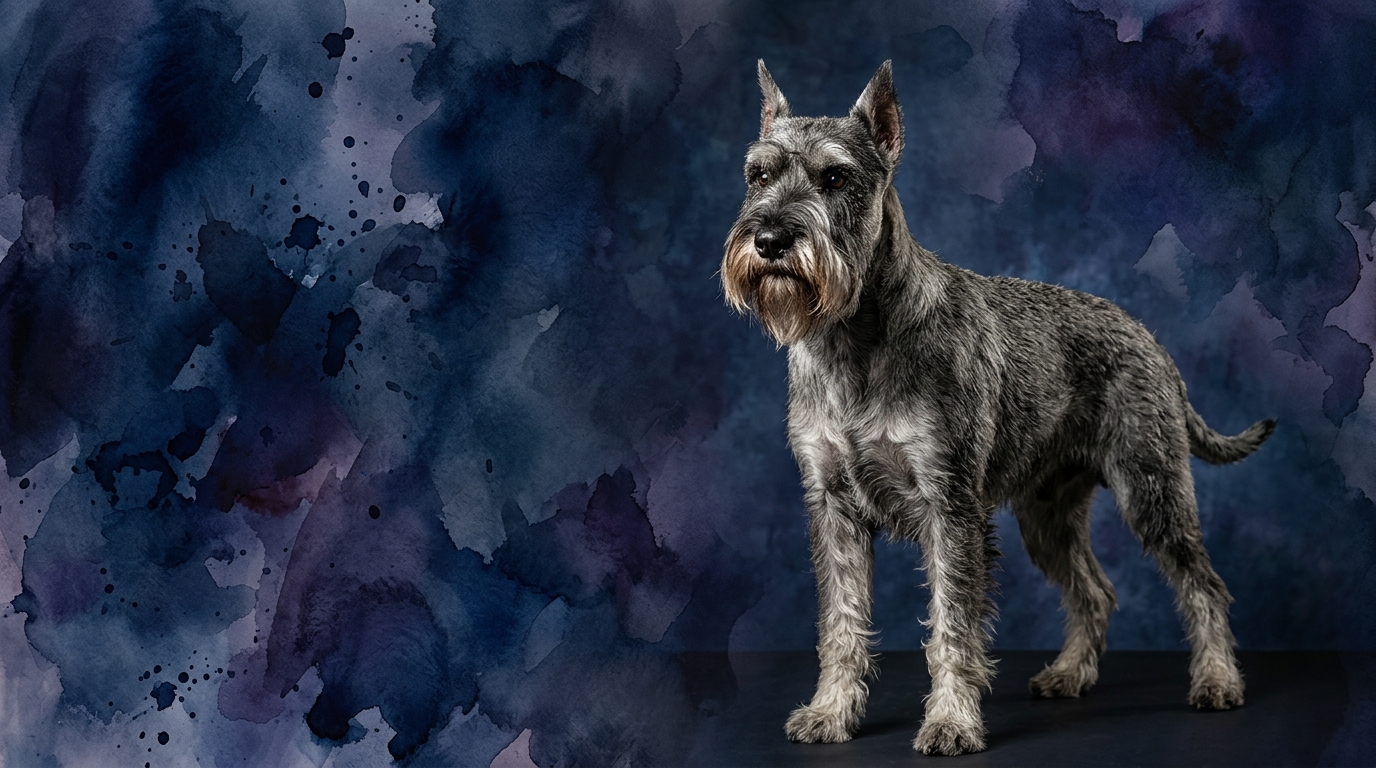
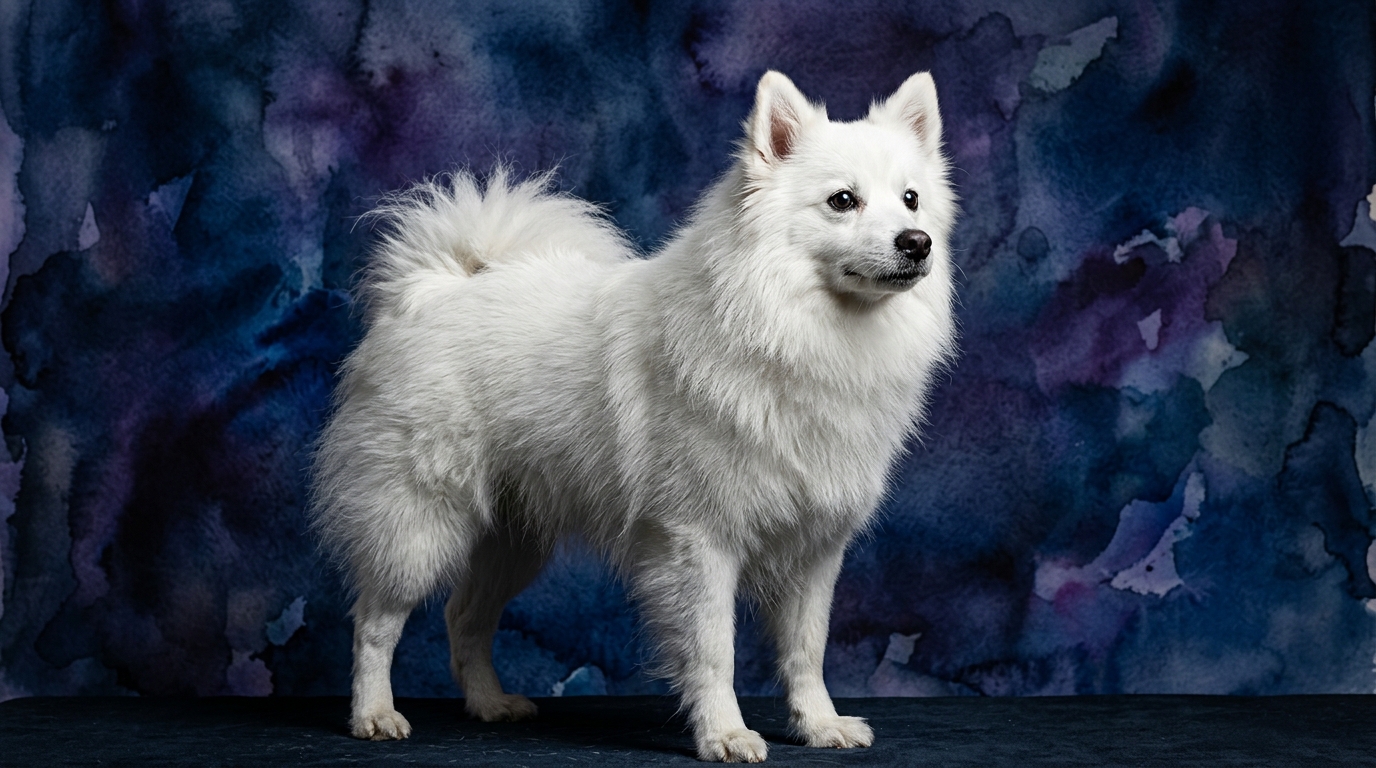
Side-by-Side Cognitive Profiles
To truly understand the mental strengths of these two breeds, we examine their cognitive dimensions through The Cosmic Pet Pet IQ Lab framework. The Standard Schnauzer, recognized by Coren at rank #22, presents a profile reflecting its working heritage. Its Problem Solving ability scores a robust 4/5, indicating a strong capacity for independent thought and figuring out complex situations. Training Speed also registers at 4/5, suggesting a quick grasp of new commands and routines. Social Intelligence is rated 3/5, meaning it capably understands human cues but might retain a degree of independence. Instinctive Drive stands at 3/5, pointing to a moderate level of innate behaviors like guarding or chasing, while Memory earns a high 4/5, allowing for excellent retention of learned information and experiences.
In contrast, the American Eskimo Dog, though not Coren-ranked, possesses a balanced cognitive profile well-suited to its companion role. Its Problem Solving ability is rated 3/5, demonstrating competence in navigating everyday challenges, albeit with less emphasis on intricate task resolution. Training Speed also sits at 3/5, indicating a steady, consistent learning pace rather than rapid assimilation. Social Intelligence scores 3/5, suggesting a good understanding of its human family's emotions and intentions, fostering a close bond. Instinctive Drive is likewise 3/5, reflecting a moderate level of inherent urges that are generally manageable. Finally, its Memory is 3/5, allowing it to retain learned behaviors and social dynamics with consistent reinforcement.
Where the Standard Schnauzer Excels Cognitively
The Standard Schnauzer's cognitive strengths distinctly shine in areas demanding proactive engagement and retention. Its superior 4/5 Problem Solving score means this breed isn't just waiting for instructions; it’s actively assessing its environment and devising solutions. This manifests in a dog that can often figure out how to open latches, navigate complex obstacle courses, or even anticipate routines, making it a dynamic participant in daily life rather than a passive observer. Such aptitude is invaluable for tasks requiring initiative and adaptability, from farm work to competitive dog sports.
Furthermore, the Schnauzer's 4/5 Memory and 4/5 Training Speed work in tandem to create a highly efficient learner. This breed typically requires fewer repetitions to master a new command or trick, and once learned, that knowledge is deeply ingrained. Owners will find that complex sequences of behaviors, multi-step tasks, or advanced obedience routines are within the Schnauzer’s grasp, allowing for a broader spectrum of shared activities and mental engagement. This capacity for deep learning and retention makes the Schnauzer a compelling choice for individuals who relish ongoing training and intellectual partnership with their canine companion.
Where the American Eskimo Dog Excels Cognitively
While the American Eskimo Dog's scores are consistently 3/5, this balanced profile isn't a limitation; rather, it highlights strengths particularly valuable in a dedicated companion. Its 3/5 Instinctive Drive suggests a moderate level of innate behaviors, meaning while it possesses natural urges, they are typically less intense or specialized than those of many working breeds. This can be a significant cognitive advantage for owners seeking a dog whose natural inclinations are present but generally manageable without constant, rigorous redirection, allowing for smoother integration into diverse household environments.
The Eskie's 3/5 Social Intelligence, though not higher than the Schnauzer's, often translates into a specific aptitude for deeply intuitive companionship within its immediate family circle. This breed excels at reading the subtle cues of its primary human companions, offering comfort or seeking interaction at opportune moments. This focused social cognition fosters a profound, responsive bond, making the American Eskimo Dog a perceptive and devoted family member. Its cognitive profile supports a steady, adaptable presence, thriving on consistent interaction and predictable routines rather than demanding constant novelty or complex intellectual challenges.
Ease of Training: Schnauzer vs. Eskie
When it comes to ease of training, the Standard Schnauzer generally offers a more accelerated experience due to its higher Training Speed (4/5) and Memory (4/5). This breed tends to pick up new commands with fewer repetitions and retains them over longer periods. Owners often report that Schnauzers anticipate cues and enjoy the process of learning, making training sessions engaging and productive. Their problem-solving acumen also means they can generalize learned behaviors to new situations more readily, adapting their understanding to different environments or distractions.
The American Eskimo Dog, with its 3/5 Training Speed and Memory, is certainly trainable but typically requires a more patient and consistent approach. They learn steadily and reliably, but owners should be prepared for more repetitions and ongoing reinforcement to solidify commands. This isn't a sign of reluctance, but rather a preference for clear, consistent guidance. Behavioral differences might include the Eskie's occasional independent streak or a tendency to be more sensitive to tone, meaning positive reinforcement and a calm, encouraging training environment yield the best results for building a strong foundation of obedience.
Matching Canine Cognition to Lifestyle
For active owners seeking a dynamic partner for mentally stimulating activities, the Standard Schnauzer's cognitive profile aligns perfectly. Owners who enjoy engaging in dog sports like agility, obedience trials, or even complex trick training will find the Schnauzer's 4/5 Problem Solving and Training Speed to be a significant asset. This breed thrives when given a 'job' and requires consistent mental challenges beyond just physical exercise to prevent boredom and channel its considerable mental energies constructively. They are best suited for individuals who are prepared to invest time in ongoing training and intellectual enrichment.
Conversely, the American Eskimo Dog, with its balanced 3/5 scores across the board, suits owners who appreciate a devoted companion and can offer consistent, moderate engagement. While still active and enjoying play, the Eskie may not demand the same level of intense cognitive problem-solving or complex task learning daily. They thrive on regular walks, interactive games, and consistent social interaction with their family. This breed is well-suited for owners who enjoy a predictable routine, value strong family bonds, and can provide a loving environment with ample attention and balanced activities, rather than constant, high-stakes mental challenges.
The Verdict
Choose the Standard Schnauzer if you desire a highly engaged, proactive partner for advanced training, dog sports, and a life rich in shared mental challenges.
Opt for the American Eskimo Dog if you seek a devoted, adaptable companion who thrives on consistent interaction, moderate activity, and a strong, intuitive family bond.
🧠 Find Your Pet's IQ Score
Our Pet IQ Lab assessment covers 25+ tests across 5 cognitive dimensions — personalized to your breed.
Take the Full IQ Test →Frequently Asked Questions
Are Standard Schnauzers difficult to manage due to their working background?
While Standard Schnauzers possess a moderate instinctive drive (3/5) and a high problem-solving capacity (4/5), they are not inherently difficult to manage. Their working background means they thrive with consistent training, mental engagement, and clear boundaries. Unchanneled mental energy can lead to creative but undesirable behaviors, so active owners who provide structure will find them cooperative and responsive.
Do American Eskimo Dogs make good family pets given their intelligence profile?
Absolutely. The American Eskimo Dog's balanced intelligence profile, including a 3/5 social intelligence score, makes them excellent family pets. They are typically very attuned to their family members, forming strong bonds and enjoying participation in household activities. Their moderate instinctive drive means they are generally adaptable and can thrive in various family settings, provided they receive consistent attention and moderate exercise.
How does the 'Not Coren-ranked' status for the American Eskimo Dog impact our understanding of its intelligence?
Coren's ranking primarily assesses obedience and working intelligence, which focuses on a dog's ability to learn and execute commands quickly. The American Eskimo Dog's 'Not Coren-ranked' status simply means it wasn't extensively included in that specific study; it doesn't indicate a lack of mental capacity. Our Pet IQ Lab scores provide a more nuanced view, detailing its balanced aptitude across various cognitive dimensions, affirming its capable and adaptable mental makeup for its intended role.