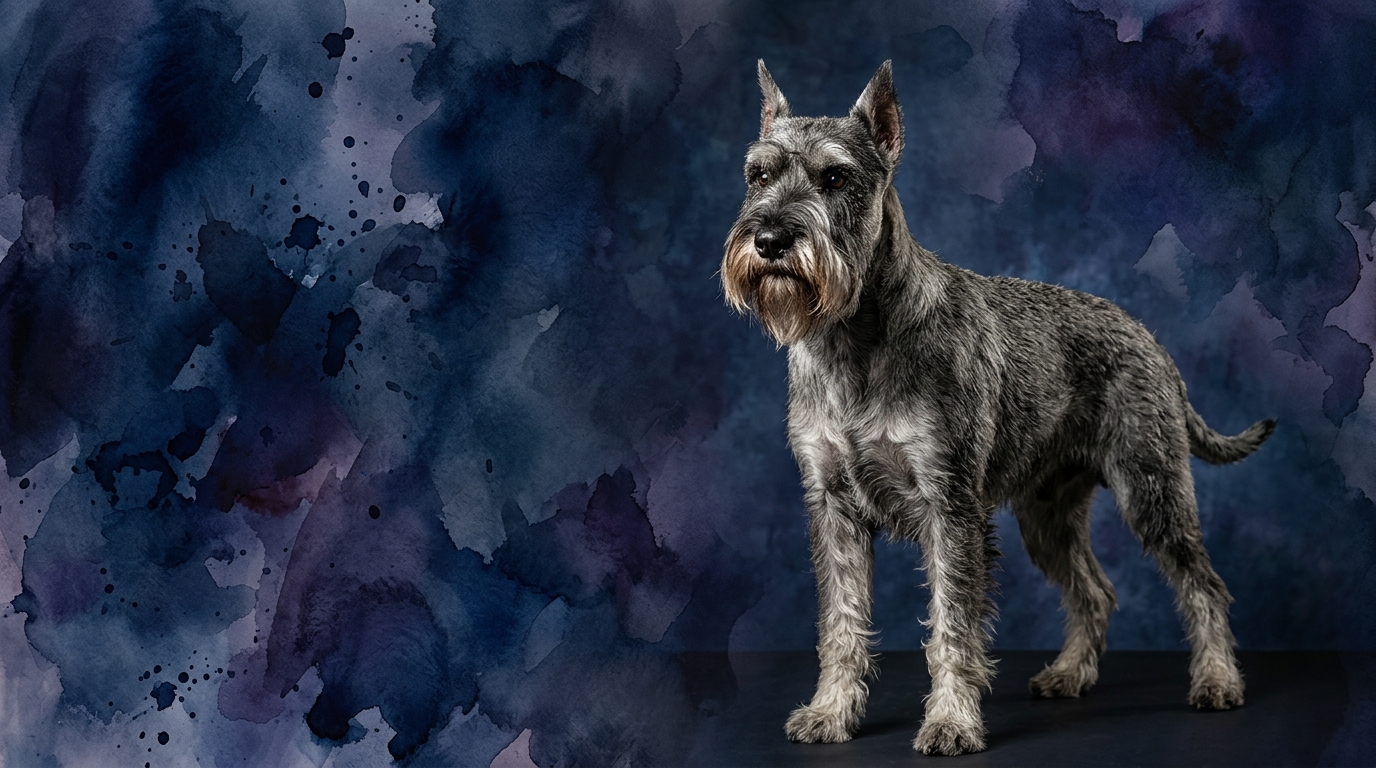
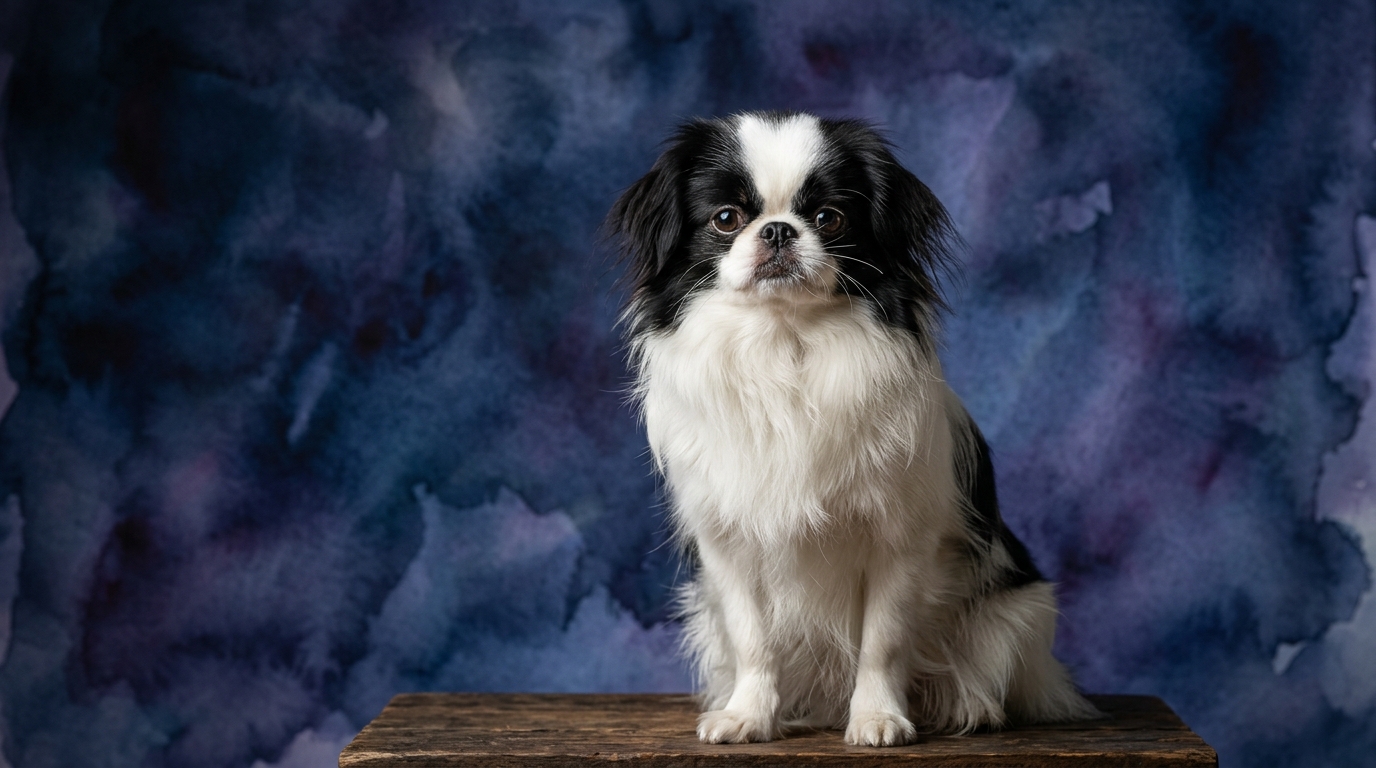
Side-by-Side IQ Profile: Standard Schnauzer vs. Japanese Chin
The Cosmic Pet Pet IQ Lab employs a five-dimensional framework to assess canine intelligence, offering a granular view of each breed's cognitive strengths. For the Standard Schnauzer, a Working breed ranked #22 by Coren, its profile reflects a dog built for purpose and partnership. Its Problem Solving is rated 4/5, indicating an adeptness at navigating complex tasks and devising solutions. Training Speed also stands at 4/5, suggesting a quick grasp of new commands and routines. Social Intelligence is 3/5, signifying discerning bonds rather than universal gregariousness, while Instinctive Drive is 3/5, often expressed through a desire for purposeful activity. Finally, Memory is strong at 4/5, contributing to consistent performance and reliability.
In contrast, the Japanese Chin, a charming Toy breed not ranked by Coren, presents a profile geared towards companionship. Its Problem Solving capacity is rated 3/5, indicating an ability to handle straightforward challenges. Training Speed is 3/5, suggesting a steady learning pace that benefits from positive reinforcement. Mirroring the Schnauzer, its Social Intelligence is 3/5, but this manifests as a profound attunement to human emotions and a strong desire for close proximity. Instinctive Drive is also 3/5, focusing primarily on interaction and pleasing its people. Memory for the Japanese Chin is 3/5, allowing for adequate retention of routines and learned behaviors.
Where the Standard Schnauzer Wins Cognitively
The Standard Schnauzer's cognitive strengths shine particularly in areas requiring independent thought and execution. With a Problem Solving score of 4/5 compared to the Japanese Chin's 3/5, Schnauzers exhibit a superior capacity to understand and resolve multi-step challenges. Their historical role as farm guardians and versatile working dogs demanded a breed capable of making decisions and adapting strategies without constant human intervention. This translates into an ability to figure out complex puzzle toys more readily or generalize learned commands to novel situations with greater ease.
Furthermore, the Schnauzer's higher scores in Training Speed (4/5) and Memory (4/5) collectively contribute to a more robust cognitive advantage in structured learning environments. They absorb new information quickly and retain it effectively, allowing for rapid progression through training regimens. An owner might observe a Schnauzer mastering a new trick in fewer repetitions or recalling a sequence of commands flawlessly after a long break, demonstrating a cognitive efficiency rooted in their working heritage.
Where the Japanese Chin Wins Cognitively
While the Japanese Chin's scores might appear numerically lower across the board, its cognitive strengths are distinctly refined for its purpose: companionship. Both breeds share a Social Intelligence rating of 3/5, but the *nature* of this intelligence differs significantly. The Japanese Chin excels in a nuanced understanding of human emotional states and subtle cues, often displaying an uncanny empathy. Their cognitive processing is deeply attuned to maintaining harmony and closeness within their human family, a specialized form of social acumen that prioritizes emotional connection over task-oriented interaction.
This breed's Instinctive Drive, also rated 3/5, is fundamentally directed towards building and reinforcing these social bonds. Their cognitive energy is focused on observing, interpreting, and responding to their human companions' needs, often preemptively seeking to comfort or engage. This isn't about solving external problems, but rather navigating the intricate emotional landscape of human-canine interaction with a delicate precision, making them exceptionally responsive and devoted companions.
Which is Easier to Train, and Why
Based on their cognitive profiles, the Standard Schnauzer generally presents as the easier breed to train. Their higher Training Speed (4/5), combined with superior Problem Solving (4/5) and Memory (4/5), means they typically grasp new commands and routines more quickly and retain them over longer periods. Schnauzers often possess an innate desire to engage in purposeful activities alongside their human, making them highly receptive to structured training. Their ability to generalize learned behaviors to new contexts also accelerates the training process, reducing the need for constant re-teaching.
The Japanese Chin, with its 3/5 ratings across these same dimensions, is certainly trainable but may require more patience and a highly consistent, positive reinforcement-based approach. While they are eager to please their beloved people, their motivation stems more from companionship than an inherent drive for 'work' or task completion. Owners might find that Chins benefit from shorter, more frequent training sessions and can be more sensitive to harsh corrections, which could dampen their willingness to participate. Success with a Chin often hinges on making training a fun, bonding experience rather than a rigorous task.
Which Suits Active Owners vs. Relaxed Owners
For owners with an active lifestyle and a desire for a canine partner in structured activities, the Standard Schnauzer is an ideal match. Its cognitive profile—marked by strong problem-solving, rapid training speed, and excellent memory—indicates a dog that thrives on mental engagement alongside physical activity. Owners who enjoy dog sports like agility, obedience, or even advanced trick training will find the Schnauzer's cognitive eagerness and moderate instinctive drive highly rewarding. They flourish when given 'jobs' or consistent challenges that tap into their robust intellectual capabilities.
Conversely, the Japanese Chin is exceptionally well-suited for owners seeking a more relaxed pace of life and a deeply empathetic companion. Their cognitive strengths are centered around social intelligence and a profound attunement to their human's emotional state, rather than rigorous task performance. Owners who appreciate quiet companionship, gentle affection, and a dog whose primary joy is close proximity and emotional connection will find the Chin's disposition perfectly aligned. While they still benefit from mental stimulation, it's typically through interactive play and social engagement rather than demanding cognitive tasks.
The Verdict: Choosing Your Cognitive Companion
The Verdict
Choose the Standard Schnauzer if you seek a mentally agile partner eager to learn and engage in structured activities, offering a robust partnership built on shared tasks and problem-solving.
Opt for the Japanese Chin if you desire a deeply empathetic companion whose cognitive strengths are expressed through profound emotional attunement and a gentle, affectionate presence.
🧠 Find Your Pet's IQ Score
Our Pet IQ Lab assessment covers 25+ tests across 5 cognitive dimensions — personalized to your breed.
Take the Full IQ Test →Frequently Asked Questions
Do Standard Schnauzers require extensive mental stimulation?
Yes, their strong problem-solving and memory capabilities mean they benefit greatly from consistent training, puzzle toys, and varied activities to prevent boredom and channel their cognitive energy constructively.
Are Japanese Chins difficult to house train?
While their training speed is moderate, Japanese Chins can be successfully house trained with consistency, positive reinforcement, and a regular schedule, though it may take more patience than with some working breeds.
How do these breeds typically interact with strangers?
Standard Schnauzers often display a discerning social intelligence, being reserved or watchful with new people. Japanese Chins, while devoted to their family, can also be somewhat cautious with strangers, preferring to observe before engaging.