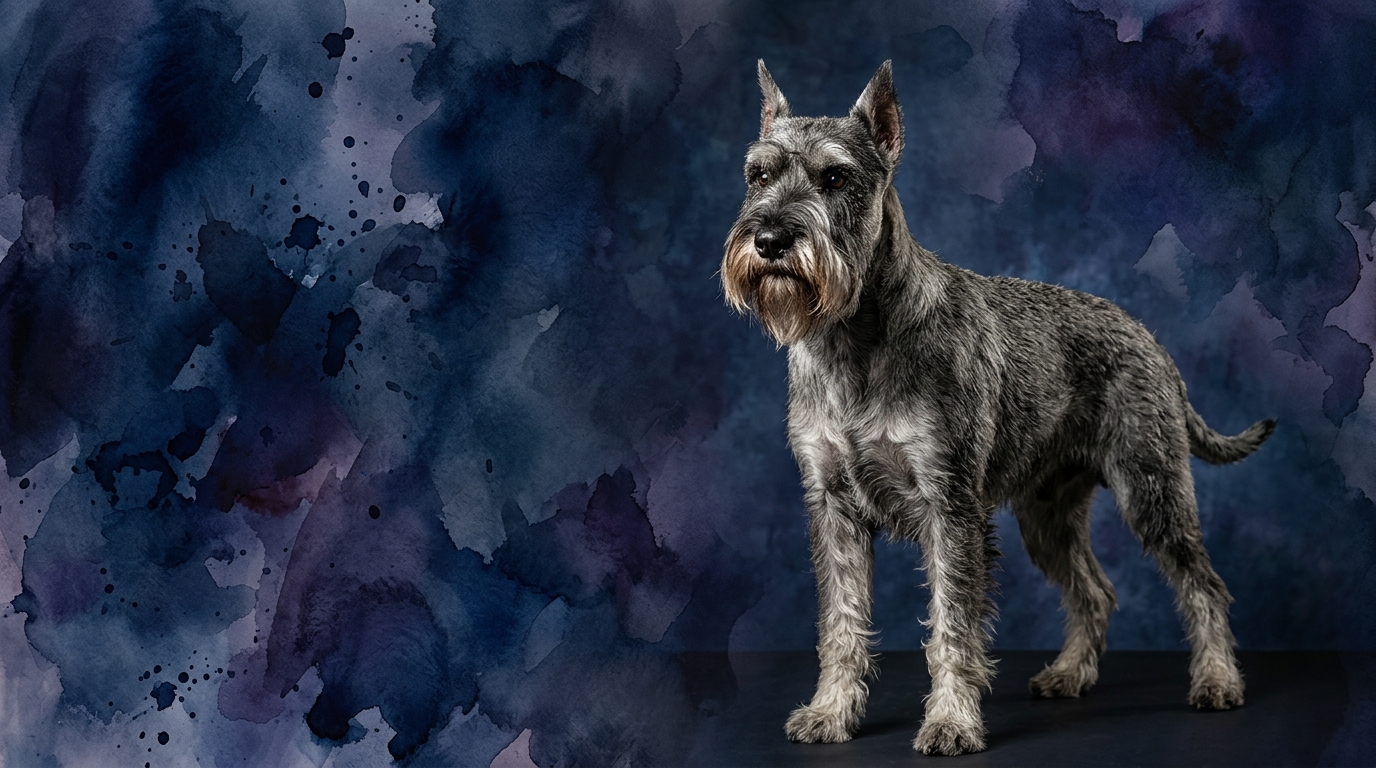
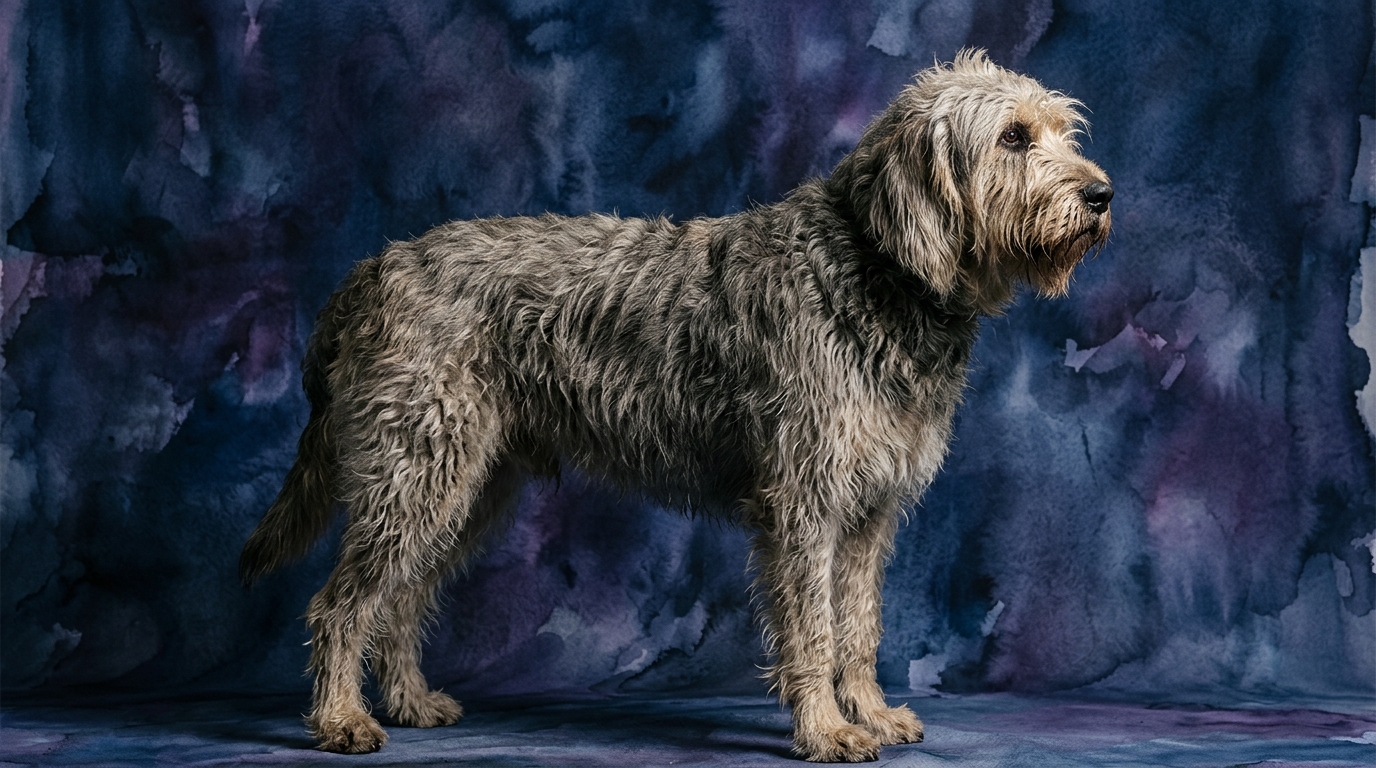
Side-by-Side IQ Profile
The Standard Schnauzer, a stalwart Working group member and Coren-ranked #22, demonstrates remarkable mental agility. Their Problem Solving is rated 4/5, indicating a capacity to analyze situations and devise strategies. Training Speed, also 4/5, reflects their quick grasp of commands and enjoyment of structured learning. Social Intelligence sits at 3/5, showing awareness of human moods, though they maintain a dignified independence. Their Instinctive Drive is 3/5, a balanced blend of protective instincts and desire for purposeful activity. Memory is 4/5, allowing recall of complex sequences and past lessons.
In contrast, the Otterhound, a magnificent Hound group member not Coren-ranked, possesses a different cognitive priority. Their Problem Solving is 3/5; while capable, solutions are often rooted in scent. Training Speed is 3/5, meaning they learn, but at their own pace, requiring patience. Social Intelligence is 3/5; affectionate with family, but potentially less attuned to subtle human cues when focused on scent. Their Instinctive Drive is 3/5, powerfully dominated by unwavering scenting ability. Memory is 3/5, sufficient for important information, but recall might seem selective if a compelling scent diverts focus.
Where Standard Schnauzer Wins Cognitively
The Standard Schnauzer excels in areas requiring direct human collaboration and abstract problem-solving. Their 4/5 ratings in Problem Solving and Training Speed mean they are predisposed to learning complex commands and applying logical thought to novel situations. A Schnauzer is more likely to methodically work through a puzzle toy or quickly master a multi-step agility course, anticipating obstacles. Their high Memory score (4/5) ensures learned tasks are retained, making them consistent performers in obedience and various dog sports. This breed’s cognitive strengths lie in processing information efficiently, generalizing behaviors, and maintaining focus on human-directed tasks, making them adaptable partners in intellectual pursuits.
Where Otterhound Wins Cognitively
While the Otterhound's scores appear modest, their cognitive strengths are profoundly specialized. Their 3/5 Instinctive Drive, combined with Problem Solving (3/5) and Memory (3/5), forms a formidable intelligence dedicated to scent work. An Otterhound's "win" lies in their unparalleled ability to interpret and follow a scent trail, navigating complex terrains and ignoring distractions with singular focus. This is solving the intricate "puzzle" of a lost scent, often over vast distances. Their tenacity and endurance, driven by instinct, are cognitive feats, demonstrating a relentless, independent problem-solving capacity unique to their purpose. They excel at pattern recognition in scent, remembering specific trails, and developing strategies to reacquire a lost scent.
Which Is Easier to Train and Why
In a conventional training sense, the Standard Schnauzer offers a more straightforward experience. Their higher Training Speed (4/5), Problem Solving (4/5), and Memory (4/5) mean they grasp new commands rapidly and enjoy learning. They are often keen to please and respond well to positive reinforcement, viewing training as engaging mental exercise. Their focus is readily directed towards the trainer, making them excellent candidates for obedience and performance sports where precision and prompt responses are valued. A Schnauzer is less likely to be distracted by environmental stimuli during training.
The Otterhound, while trainable, requires a different approach and greater patience. Their independent nature and powerful instinctive scent drive (3/5) make their attention challenging to capture. Training involves highly rewarding lessons, often incorporating food or scent-based games. While they have respectable Problem Solving (3/5) and Training Speed (3/5), their motivation is internal and tied to their primary purpose. They might learn a command, but if a compelling scent is present, their selective attention can make it seem they've forgotten. Consistency, creativity, and understanding hound motivation are crucial.
Which Suits Active Owners vs. Relaxed Owners
Both breeds thrive with active engagement, making neither suited for a purely sedentary owner. However, the *nature* of that activity differs.
The Standard Schnauzer is ideal for owners who enjoy structured activities and mental challenges. They excel with consistent training, participation in dog sports like agility or tracking, and engagement with puzzle toys. An "active owner" for a Schnauzer enjoys a partnership, with the dog keen to follow direction and learn. Their exercise needs are substantial, requiring daily vigorous activity and mental stimulation to prevent boredom.
The Otterhound, also requiring considerable physical exercise, suits an owner whose activity might be more exploratory. They need long, meandering walks or hikes where they can indulge their scenting abilities, safely exploring. An "active owner" for an Otterhound appreciates an independent spirit, is prepared for wanderlust on a scent, and can provide secure, fenced areas or supervised off-leash opportunities. They are not for owners seeking a perfectly "heel-trained" companion, but rather a robust, independently minded partner in outdoor adventures.
The Verdict
Choose the Standard Schnauzer if you desire a highly engaged, trainable partner for diverse activities, who enjoys mental challenges, consistent interaction, and excels in structured learning environments.
Opt for the Otterhound if you appreciate an independent, scent-driven companion, are prepared to accommodate their powerful instincts, and can provide ample outdoor exploration where their nose can lead the way.
🧠 Find Your Pet's IQ Score
Our Pet IQ Lab assessment covers 25+ tests across 5 cognitive dimensions — personalized to your breed.
Take the Full IQ Test →Frequently Asked Questions
Is the Standard Schnauzer prone to stubbornness?
While intelligent and eager to learn, Standard Schnauzers possess a confident and sometimes assertive personality that can be perceived as stubbornness if training isn't consistent or engaging enough. Their strong opinions require a firm yet fair approach.
How much exercise does an Otterhound truly need?
Otterhounds require substantial daily exercise, ideally including long walks, hikes, or opportunities to run in a securely fenced area. Their stamina and powerful scent drive mean they benefit greatly from activities that allow them to explore and use their nose for extended periods.
Are either of these breeds good with children?
Both breeds can be good with children, but require proper socialization and supervision. Standard Schnauzers can be protective and playful, while Otterhounds are generally good-natured and boisterous, though their size and energy might overwhelm very young children without guidance.