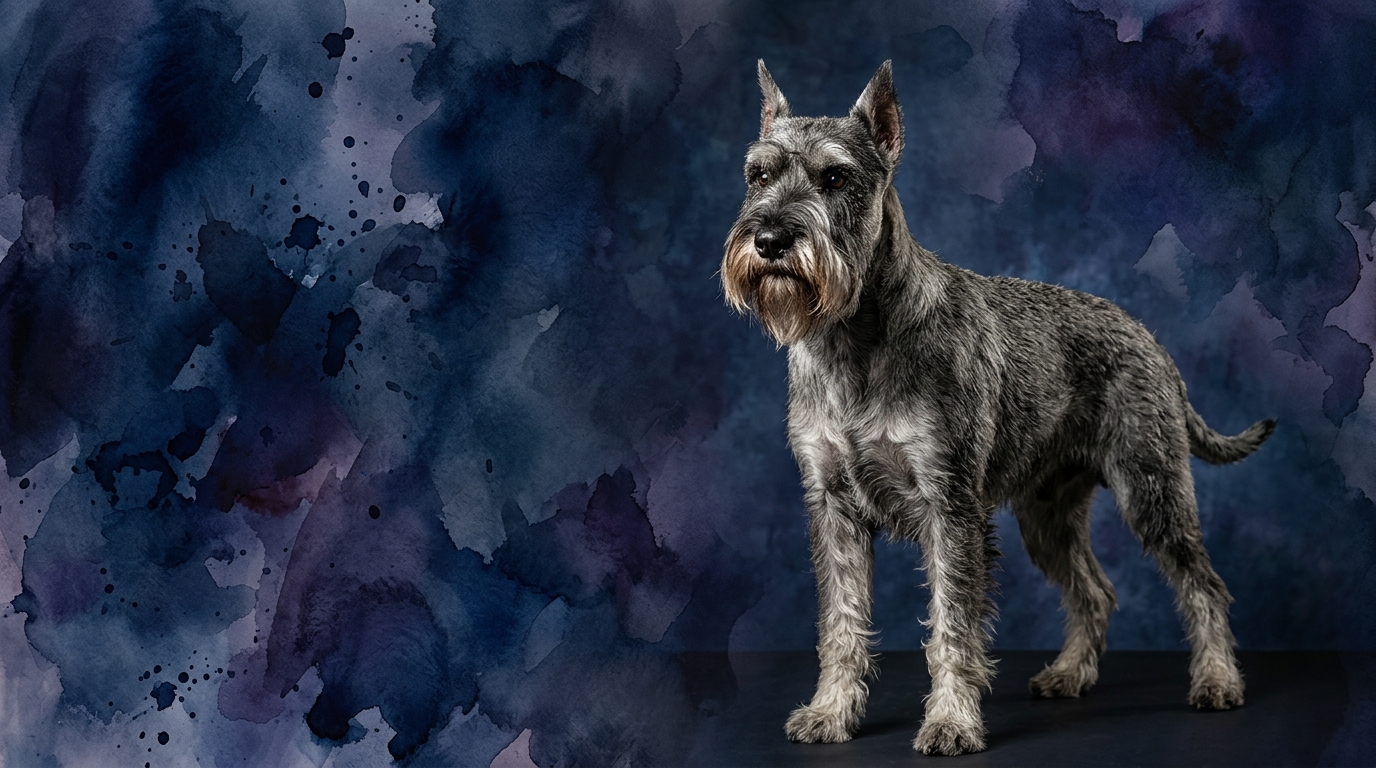
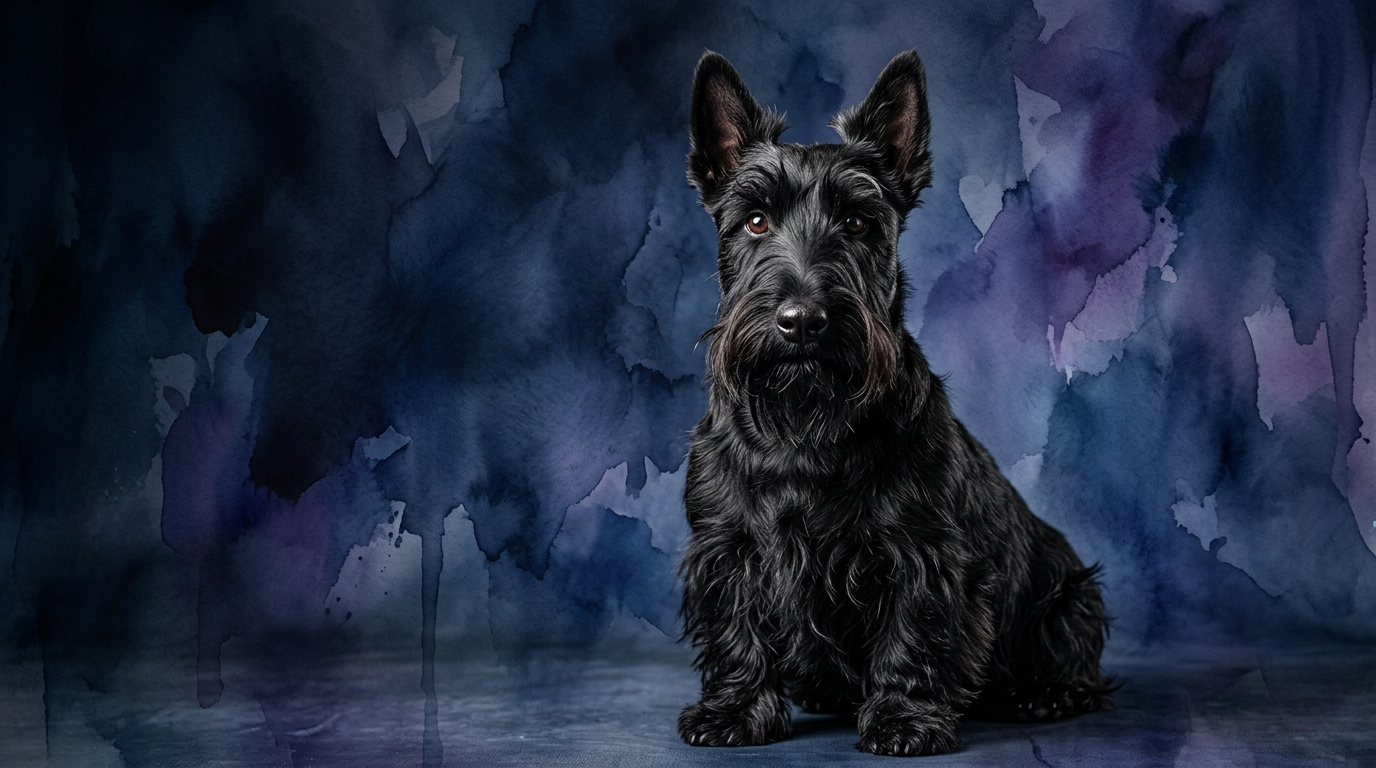
Side-by-Side IQ Profile: Standard Schnauzer vs. Scottish Terrier
The Cosmic Pet Pet IQ Lab assesses canine intelligence across five key dimensions, offering a detailed look at how breeds process information and interact with their world. For the Standard Schnauzer, a Working Group dog with a Coren rank of #22, its profile reflects a breed built for purpose and partnership. Its Problem Solving is rated 4/5, indicating a strong capacity for analyzing situations and devising effective solutions. Training Speed is also 4/5, meaning these dogs absorb new commands and routines with impressive efficiency. Social Intelligence stands at 3/5, suggesting a moderate understanding of group dynamics and communication cues, while Instinctive Drive is 3/5, representing a balanced set of inherent urges. Finally, Memory is 4/5, highlighting an excellent ability to retain learned information and experiences over time.
In contrast, the Scottish Terrier, a member of the Terrier Group with a Coren rank of #65, presents a profile characteristic of its independent and tenacious heritage. Its Problem Solving ability is rated 3/5, indicating competence in navigating challenges, though perhaps with less immediate adaptability than the Schnauzer. Training Speed is 3/5, meaning they learn at a steady pace, benefiting from consistent and engaging methods. Social Intelligence is 3/5, similar to the Schnauzer, signifying an adequate grasp of social signals. Instinctive Drive also scores 3/5, reflecting a typical terrier's focused determination and prey drive. Memory is rated 3/5, suggesting a reasonable capacity for retaining learned behaviors and past experiences. These scores collectively paint a picture of two distinct cognitive styles.
Where the Standard Schnauzer Wins Cognitively
The Standard Schnauzer's cognitive strengths are notably pronounced in areas requiring rapid assimilation of information and flexible application of solutions. Their superior problem-solving (4/5) and memory (4/5) are direct assets in tasks demanding sequential learning or independent decision-making in novel contexts. Originating as farm dogs tasked with guarding and vermin control, their working dog heritage means they often excel at figuring out how to manipulate objects, retrieve specific items from a group, or navigate complex agility courses with less human intervention. This isn't merely about following commands, but about understanding the *goal* of a task and adapting their approach to achieve it. Their quicker training speed (4/5) means they grasp new concepts and associate actions with consequences more readily, making them highly responsive to varied training regimes and environmental changes. For instance, a Schnauzer might quickly generalize a 'stay' command to new, distracting environments or understand that a specific toy's name refers to that toy regardless of its location or other toys present.
Where the Scottish Terrier Wins Cognitively
While the Scottish Terrier scores consistently 3/5 across several cognitive metrics, its distinct strengths lie in the persistent, independent application of its instinctive drive (3/5) to solve specific, often highly focused, problems. Their tenacity in pursuing a goal, such as meticulously investigating a scent trail or diligently attempting to 'dig out' a perceived burrowing creature, is a hallmark of their cognitive style. This isn't about rapid learning of complex sequences but rather an unwavering determination to achieve a singular, often instinct-driven, objective. Their problem-solving (3/5) is geared towards practical, often physical, challenges, demonstrating a focused approach rather than broad adaptability. Their memory (3/5) and training speed (3/5) are more than sufficient to remember these specific, instinct-driven tasks and apply them persistently, even if the generalizability to abstract or multi-step tasks is less pronounced. A Scottie might not learn a complex dance routine as fast as a Schnauzer, but it will remember precisely where it saw a squirrel disappear yesterday and diligently check that exact spot again today, demonstrating a focused and enduring cognitive engagement with its environment.
Which Is Easier to Train and Why
Based on The Cosmic Pet Pet IQ Lab data, the Standard Schnauzer holds a clear advantage in overall trainability. Its Training Speed is rated 4/5 compared to the Scottish Terrier's 3/5. This numerical difference translates into practical behavioral outcomes: Schnauzers typically pick up new commands and routines more quickly, requiring fewer repetitions to master a task. Their higher Problem Solving capacity (4/5) also means they are more likely to understand the 'why' behind a command or the sequence of an exercise, making them adaptable to varied training methods and less prone to simply rote memorization. They are often eager to please and enjoy the mental engagement that training provides, which further accelerates their learning.
In contrast, the Scottish Terrier, while certainly trainable, often exhibits a more independent and sometimes stubborn streak, characteristic of many terriers. Their training requires more patience, consistency, and highly motivating rewards to overcome their innate desire to follow their own agenda, rather than immediately complying with human directives. While they are capable of learning, their 3/5 Training Speed suggests they may take longer to solidify commands and might test boundaries more frequently. For example, a Schnauzer might quickly learn to heel through a crowded park, maintaining focus on its handler, while a Scottie might be more inclined to stop and investigate every interesting scent, requiring more consistent and firm redirection to maintain the heel.
Which Suits Active Owners vs. Relaxed Owners
For active owners seeking a canine companion that thrives on mental engagement and varied physical activities, the Standard Schnauzer is often a more fitting choice. Their working dog background means they appreciate having a 'job' to do, whether it's participating in dog sports like agility or obedience, going on long hikes, or engaging in complex puzzle toys. Their balanced Instinctive Drive (3/5), combined with superior Problem Solving and Memory, makes them excellent partners for owners who enjoy teaching new tricks and exploring different environments. They require regular, stimulating exercise to prevent boredom and channel their energy constructively, making them ideal for individuals or families with an active lifestyle who can commit to consistent training and varied outings.
Conversely, the Scottish Terrier, while not a sedentary breed, can be better suited for owners who prefer a more relaxed pace but still appreciate a dog with character. While they enjoy walks and playtime, their exercise needs are generally moderate compared to a Schnauzer. Their tenacity and moderate Instinctive Drive (3/5) mean they are content with regular, interesting strolls where they can investigate their surroundings and engage their keen senses, rather than needing high-intensity, structured activities. They are often happy to spend time indoors with their family after a good sniff-walk, making them suitable for individuals or families who appreciate a loyal, less demanding companion in terms of constant high-energy mental and physical stimulation, as long as their independent spirit is respected and managed.
The Verdict
Choose the Standard Schnauzer if you desire a highly trainable, versatile companion eager for mental challenges and structured activities, and you appreciate a dog that picks up new concepts quickly.
Opt for the Scottish Terrier if you value an independent, persistent companion with a charming personality, and you are prepared for consistent, patient training to harness their unique terrier drive.
🧠 Find Your Pet's IQ Score
Our Pet IQ Lab assessment covers 25+ tests across 5 cognitive dimensions — personalized to your breed.
Take the Full IQ Test →Frequently Asked Questions
Is a Standard Schnauzer easy to live with for first-time dog owners?
A Standard Schnauzer can be a good fit for first-time owners who are committed to consistent training and providing ample mental and physical stimulation. Their quick learning ability means they respond well to clear guidance, but their need for engagement requires dedicated effort.
Do Scottish Terriers need a lot of grooming?
Yes, Scottish Terriers do require regular grooming to maintain their distinctive wiry coat. Weekly brushing is essential to prevent matting, and professional stripping or clipping every few months is typically needed to keep their coat healthy and tidy.
Which breed is better with children?
Both breeds can be good with children, but it largely depends on individual temperament, socialization, and the children's behavior. Standard Schnauzers, with their social intelligence, can be patient and playful, while Scottish Terriers, though loyal, might prefer calmer interactions and require supervision to ensure respectful play.