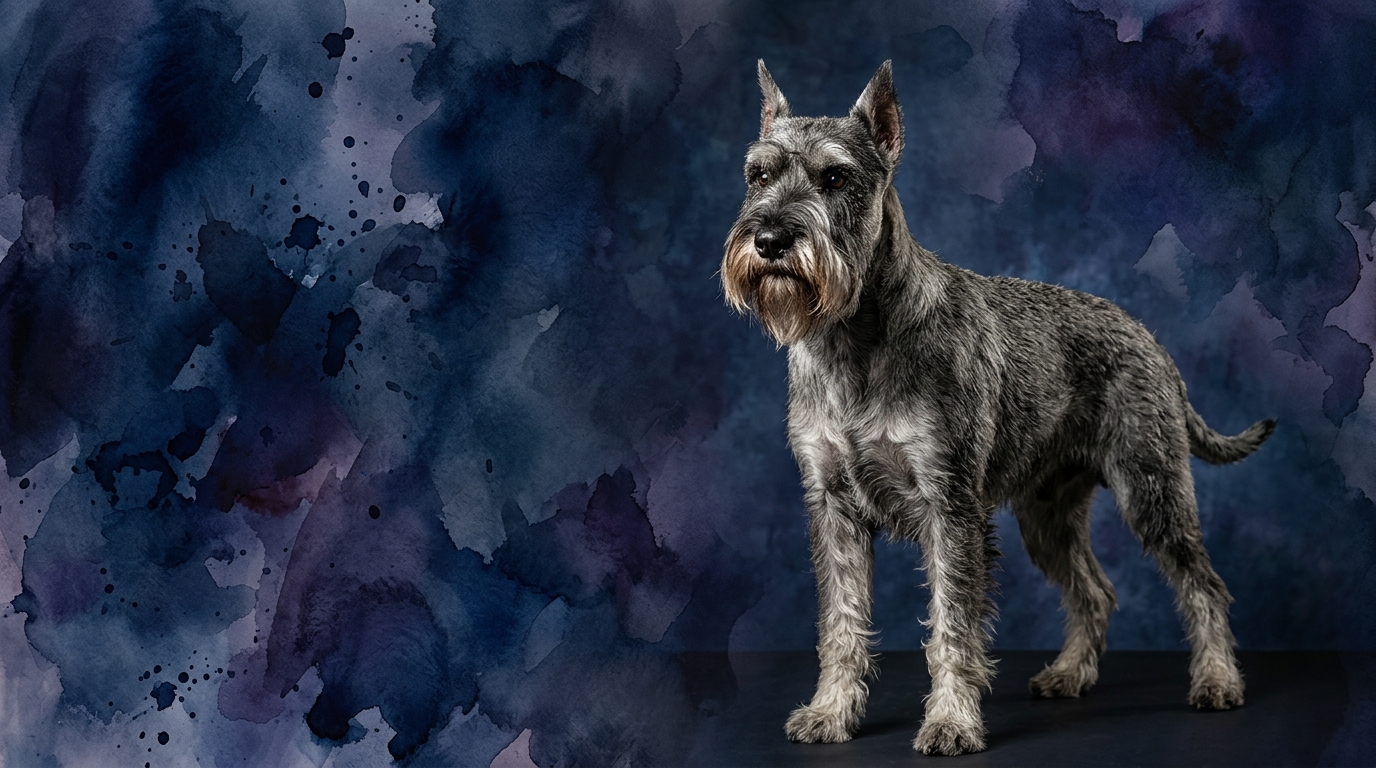
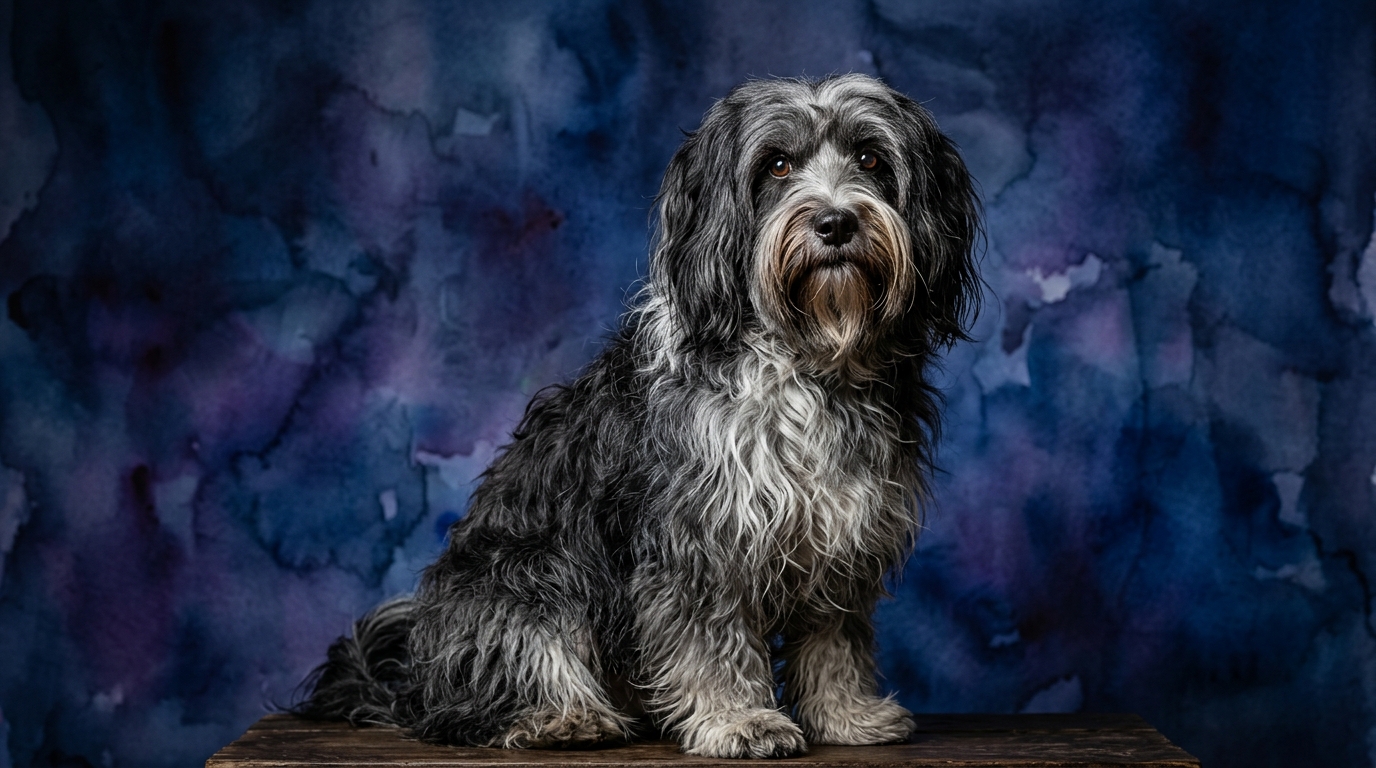
Side-by-Side IQ Profile: Standard Schnauzer vs. Tibetan Terrier
The Cosmic Pet Pet IQ Lab employs a five-dimensional framework to assess canine intelligence, providing a nuanced view beyond simple obedience. For the Standard Schnauzer, a Working group dog with a Coren rank of #22, its profile reflects a sharp, capable mind. Its Problem Solving is rated 4/5, indicating a strong capacity to analyze situations and devise solutions independently. Training Speed also scores 4/5, suggesting it grasps new commands and routines with efficiency. Social Intelligence is 3/5, meaning it can read human and canine cues effectively, though perhaps not with the extreme sensitivity of some companion breeds. Its Instinctive Drive is 3/5, reflecting a moderate inherent inclination towards its breed's original tasks, balanced with adaptability. Finally, its Memory is 4/5, allowing it to retain learned information and experiences over significant periods.
In contrast, the Tibetan Terrier, a Non-Sporting breed with a Coren rank of #63, presents a balanced yet distinct cognitive profile. Its Problem Solving capability is rated 3/5, indicating it can navigate moderately complex challenges but might require more guidance for intricate puzzles. Training Speed also stands at 3/5, meaning it learns consistently, albeit perhaps not with the rapid acquisition seen in higher-ranked breeds. Social Intelligence matches the Schnauzer at 3/5, signifying a similar ability to interpret social signals and form bonds. Its Instinctive Drive is also 3/5, showing a moderate innate inclination, likely tied to its original role as a companion and watch dog in challenging environments. The Tibetan Terrier's Memory is 3/5, meaning it retains information adequately for daily life and training, though perhaps not with the same depth or duration as the Schnauzer.
Where the Standard Schnauzer Wins Cognitively
The Standard Schnauzer's cognitive strengths are particularly evident in its superior Problem Solving and Training Speed. With a 4/5 in both dimensions, Schnauzers exhibit a remarkable aptitude for figuring things out and absorbing new information quickly. This manifests in their ability to independently strategize on how to access a desired object or bypass an obstacle, often requiring less human intervention to reach a solution. Their faster training acquisition means they can master complex command sequences and learn new tricks or sports disciplines more rapidly, making them excellent candidates for advanced obedience, agility, or rally. This breed's 4/5 Memory further enhances its learning capacity, ensuring that once a lesson is learned, it is not easily forgotten, contributing to a consistently reliable response to commands and a deep understanding of household rules.
Where the Tibetan Terrier Wins Cognitively
While the Tibetan Terrier's individual scores are generally a point lower than the Schnauzer's in several categories, its cognitive profile represents a different kind of strength, particularly in its balanced adaptability. Its 3/5 Social Intelligence, matching the Schnauzer, indicates an equally capable understanding of social dynamics and an ability to form strong, reciprocal bonds with family members. This isn't a 'win' in terms of superiority, but rather a demonstration of robust relational intelligence. Moreover, its 3/5 Instinctive Drive, while moderate, means its innate urges are less intense than some working breeds, which can translate into a more manageable household companion less prone to intense herding, guarding, or hunting behaviors without specific direction. Their moderate problem-solving and memory, combined with their non-sporting heritage, suggest a dog that is perfectly capable of navigating daily life and learning routines without the intense mental demands of a traditional working dog, making them highly adaptable companions in diverse living situations.
Which Is Easier to Train and Why?
Based on their IQ Lab profiles, the Standard Schnauzer is generally easier to train compared to the Tibetan Terrier. The Schnauzer's 4/5 Training Speed means it processes and internalizes new commands with greater efficiency, often requiring fewer repetitions to achieve proficiency. Its higher Problem Solving (4/5) also contributes to this, as Schnauzers are more likely to generalize learned behaviors to new contexts and think through novel training scenarios. For example, teaching a multi-step routine or a complex trick would likely progress faster with a Schnauzer. Their excellent Memory (4/5) ensures that once a behavior is established, it remains consistent over time, reducing the need for frequent refreshers.
The Tibetan Terrier, with its 3/5 Training Speed and Problem Solving, will certainly learn, but often at a more deliberate pace. Training a Tibetan Terrier might require more patience, consistency, and varied reinforcement methods to keep them engaged. While capable of learning a wide array of commands, they might not pick up on nuances as quickly or generalize as readily. Their moderate Memory (3/5) means that while they retain information, occasional reinforcement sessions are beneficial to keep commands sharp, especially if not practiced regularly. Owners of Tibetan Terriers might find success by breaking down complex tasks into smaller, more manageable steps and celebrating every small victory.
Suitability for Active vs. Relaxed Owners
The cognitive and temperamental traits of these breeds lend themselves to different owner lifestyles. The Standard Schnauzer, with its higher Problem Solving and Training Speed, coupled with its Working group background, thrives with active owners who can provide consistent mental engagement and physical exercise. These dogs enjoy learning new things, participating in dog sports, or having a 'job' to do, even if it's just advanced obedience or puzzle-solving. An owner who enjoys structured training sessions, outdoor adventures, and can channel the Schnauzer's sharp mind will find a highly rewarding partnership. A relaxed owner might find the Schnauzer's need for mental stimulation manifests as boredom-driven behaviors if not adequately addressed.
The Tibetan Terrier, while certainly not a couch potato, is generally a better fit for owners who prefer a more relaxed pace but still value regular activity and engagement. Its balanced IQ profile, with moderate scores across the board, means it can adapt well to various living situations without the intense 'work ethic' of the Schnauzer. They appreciate walks, playtime, and companionship, but might not demand the same level of rigorous mental challenges or high-impact sports. Their social intelligence and adaptability make them wonderful family companions, content with being included in daily activities. An owner seeking a devoted, adaptable companion who enjoys moderate exercise and quality time, rather than constant mental challenges, would find the Tibetan Terrier a fulfilling choice.
The Verdict: When to Choose Each Breed
Choosing between a Standard Schnauzer and a Tibetan Terrier ultimately depends on an owner's lifestyle, experience, and what they seek in a canine companion. The Standard Schnauzer is an exceptional choice for those who are prepared to engage a keen intellect, enjoy structured training, and desire a partner for advanced activities or working roles. Its quick learning and problem-solving abilities make it a rewarding project for an owner dedicated to consistent mental and physical enrichment.
Conversely, the Tibetan Terrier is ideal for individuals or families seeking an adaptable, devoted companion that thrives on social interaction and moderate activity, without the demanding cognitive intensity of a working breed. Its balanced temperament and moderate learning curve make it a suitable choice for those who appreciate a less driven but equally affectionate and intelligent presence in their home.
The Verdict
Choose the Standard Schnauzer if you are an active owner seeking a highly trainable, problem-solving partner for advanced activities and consistent mental stimulation. This breed thrives with owners who enjoy structured learning and engaging a sharp intellect.
Opt for the Tibetan Terrier if you desire a devoted, adaptable companion who enjoys moderate activity and strong social bonds, without the intense cognitive demands of a working breed. It's an excellent choice for families seeking a balanced, affectionate presence.
🧠 Find Your Pet's IQ Score
Our Pet IQ Lab assessment covers 25+ tests across 5 cognitive dimensions — personalized to your breed.
Take the Full IQ Test →Frequently Asked Questions
Is the Standard Schnauzer difficult to live with due to its high intelligence?
The Standard Schnauzer's high cognitive abilities mean it requires consistent mental stimulation and training to prevent boredom, which can lead to unwanted behaviors. With proper engagement, they are highly rewarding companions, but they are not suited for owners who cannot commit to their intellectual needs.
Do Tibetan Terriers need a lot of exercise despite their moderate IQ scores?
Tibetan Terriers, while not as intensely driven as some working breeds, still require regular moderate exercise to maintain physical and mental well-being. Daily walks, playtime, and opportunities for exploration are important to keep them content and prevent restlessness, regardless of their IQ profile.
How does 'Social Intelligence' impact daily life for these breeds?
A 3/5 Social Intelligence for both breeds indicates they are capable of reading human emotions and canine body language effectively, allowing them to form strong bonds and interact appropriately. This means both breeds can be sensitive to their family's moods and generally get along well with other pets and people, making them good companions.