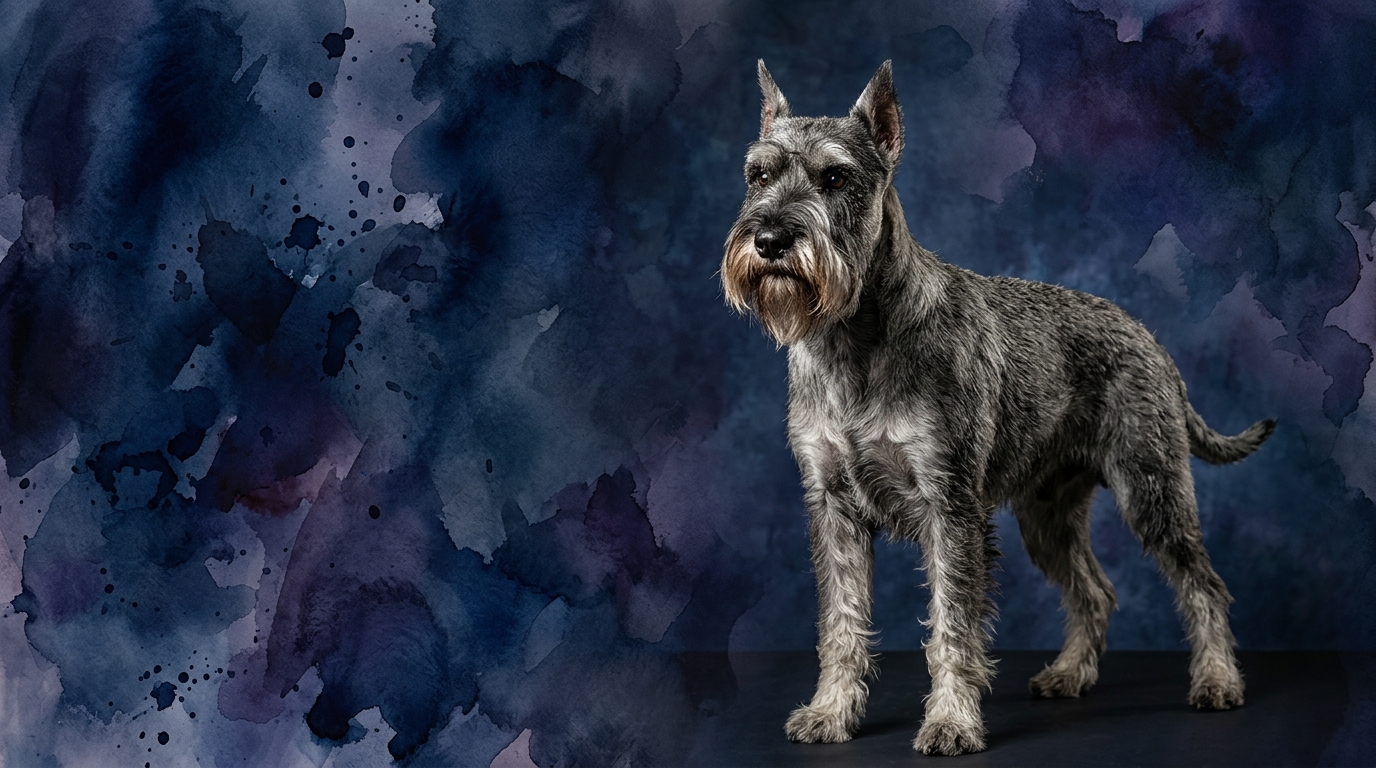
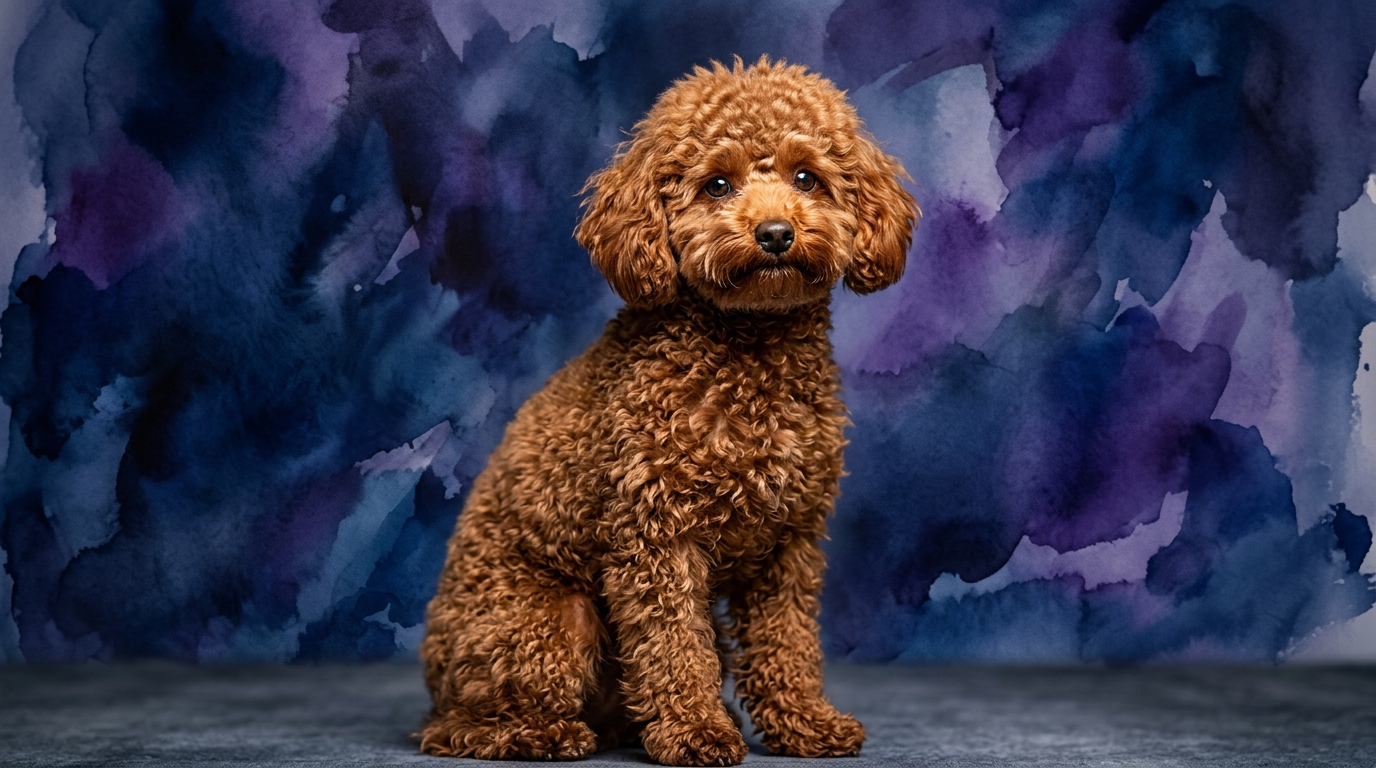
Side-by-Side Cognitive Profile: Standard Schnauzer vs. Toy Poodle
To understand the nuanced intelligence of these two breeds, we delve into five key cognitive dimensions as measured by The Cosmic Pet Pet IQ Lab:
**Standard Schnauzer (Working Group, Coren Rank #22)**
**Problem Solving (4/5):** This breed exhibits a robust capacity for practical problem-solving. They approach challenges with a determined, analytical mindset, often preferring to figure out solutions independently rather than waiting for human intervention. This manifests in their ability to navigate complex environments or devise strategies to achieve a desired outcome, like opening a gate or finding a hidden toy.
**Training Speed (4/5):** Standard Schnauzers grasp new commands and concepts with good speed. Their attentiveness allows them to learn quickly, but their independent streak means consistent, engaging training methods are crucial to maintain focus and compliance. They understand what is expected but may require motivation to perform consistently.
**Social Intelligence (3/5):** Schnauzers are discerning in their social interactions. They form deep, loyal bonds with their immediate family members, often displaying a protective demeanor. With strangers, they tend to be reserved and watchful, evaluating new individuals or situations before extending trust, making them excellent guardians.
**Instinctive Drive (3/5):** Rooted in their working heritage, Standard Schnauzers possess a moderate instinctive drive, particularly evident in their guarding instincts, alertness, and a tendency to chase small prey. This drive translates into a need for purposeful activity and mental engagement to keep them fulfilled.
**Memory (4/5):** Their memory serves them well in retaining learned behaviors, routines, and past experiences. They recall commands and boundaries with consistency, making them reliable companions once training is established. They remember who they’ve met and how those interactions went.
**Toy Poodle (Toy Group, Coren Rank #2)**
**Problem Solving (5/5):** Toy Poodles stand out with an exceptional ability to solve complex problems. They demonstrate a quick wit and remarkable adaptability, often strategizing novel solutions to new challenges. This breed can excel at intricate puzzle toys, learning sequences, and understanding abstract concepts with impressive speed.
**Training Speed (5/5):** This breed displays an unparalleled aptitude for learning, grasping new commands and tasks with astonishing rapidity. Their eagerness to engage and their focus on their handler make them incredibly receptive to training, often requiring fewer repetitions than many other breeds to master a new skill.
**Social Intelligence (3/5):** Toy Poodles are acutely perceptive of human emotions and social cues, forming strong, empathetic connections with their families. While highly attuned, their sensitivity means they can sometimes be prone to anxiety if not properly socialized or if their environment is inconsistent, yet they thrive on positive interaction.
**Instinctive Drive (3/5):** Despite their refined appearance, Toy Poodles descend from water retrievers and retain a moderate instinctive drive. This often manifests as a love for retrieving games, a keen interest in exploring their surroundings, and an inherent desire for purposeful activity, often expressed through play and interaction.
**Memory (5/5):** Toy Poodles possess an outstanding memory. They recall a vast array of commands, complex routines, and past interactions with remarkable accuracy. This superior retention significantly contributes to their proficiency in advanced obedience, dog sports, and their ability to anticipate daily routines.
Where the Standard Schnauzer Wins Cognitively
The Standard Schnauzer's cognitive profile reveals specific strengths that distinguish it. With a problem-solving score of 4/5, they excel in scenarios demanding independent thought and robust determination. Unlike breeds that might look to their human for every answer, Schnauzers often prefer to analyze a situation and devise their own solution, such as figuring out how to bypass an obstacle in their path or how to alert their owner to an unusual sound. Their discerning social intelligence (3/5), while not outwardly effusive, translates into a keen ability to assess new people and environments, providing a natural, watchful guardianship. This breed's strong memory (4/5) and consistent application of learned boundaries mean that once a rule or routine is established, they reliably adhere to it, making them predictable and steadfast companions in a structured environment.
Where the Toy Poodle Wins Cognitively
The Toy Poodle’s cognitive advantages are pronounced, particularly in areas of rapid acquisition and abstract thinking. Their 5/5 scores in both problem-solving and training speed signify a breed that processes information and learns new behaviors with exceptional efficiency. They demonstrate an advanced capacity for pattern recognition and can quickly generalize learned concepts to novel situations, making them adept at complex sequences in dog sports or intricate puzzle challenges. Their outstanding memory (5/5) allows them to retain a vast repertoire of commands and experiences, contributing to their ability to perform intricate routines flawlessly and adapt to varied learning environments. This combination of swift learning and excellent retention makes the Toy Poodle a standout for owners who enjoy engaging in continuous mental enrichment and advanced training.
Which is Easier to Train, and Why?
When considering ease of training, the Toy Poodle generally presents a more straightforward experience for most owners. Their exceptional training speed (5/5) and superior memory (5/5) mean they grasp new commands and complex sequences with remarkable quickness, often requiring fewer repetitions. They possess an inherent eagerness to please their human companions and thrive on positive reinforcement, making them highly responsive to cues. A Toy Poodle’s focus is typically directed towards their handler, making them biddable and adaptable learners in various settings. In contrast, while the Standard Schnauzer also boasts a respectable training speed (4/5), their independent nature and discerning social intelligence (3/5) can introduce a different dynamic. Schnauzers are capable of learning rapidly, but they may occasionally exhibit a "what's in it for me?" attitude or test boundaries. Their strong will requires a more consistent, firm, and engaging approach to training, where the owner establishes clear leadership and makes learning a rewarding, collaborative effort rather than a simple directive. Therefore, while both breeds are capable learners, the Toy Poodle’s intrinsic biddability and focus on human interaction typically make the training process feel more effortless and immediate.
Suitability for Active vs. Relaxed Owners
For active owners seeking a canine companion, both breeds offer compelling attributes, though their ideal activities diverge slightly. The Standard Schnauzer, with its working breed heritage and instinctive drive (3/5), thrives on purpose-driven activities. Owners who enjoy hiking, earthdog trials, agility, or engaging in protection sports will find a Schnauzer to be an eager and capable partner, requiring consistent physical and mental stimulation to prevent boredom and channel their determination. Their independent problem-solving (4/5) means they appreciate tasks where they can apply their own intellect. The Toy Poodle, despite its smaller stature, also requires significant mental engagement due to its high problem-solving (5/5) and training speed (5/5). They excel in dog sports like agility, obedience, and rally, thriving on challenges that tap into their quick wit and memory. Active owners who enjoy teaching complex tricks, engaging in puzzle games, or participating in competitive obedience will find the Toy Poodle an enthusiastic and brilliant participant. For more relaxed owners, the Toy Poodle often presents a more adaptable option, provided their substantial mental needs are met. Their smaller size makes them suitable for apartment living, and while they enjoy walks, their intellectual stimulation can come from extensive indoor play, puzzle toys, and consistent training sessions. However, a truly "relaxed" owner who isn't prepared to consistently engage their Poodle's mind might inadvertently foster boredom. The Standard Schnauzer is generally less suited for a truly relaxed owner without prior experience with working breeds. Their energy, discernment, and need for a clear purpose demand an owner who is prepared to be an active participant in their dog's mental and physical life, making them better suited for structured, engaging households rather than purely sedentary ones.
The Verdict
Opt for a Standard Schnauzer if you seek a robust, discerning companion valuing independence, and are prepared for consistent, engaging training to channel their strong will and protective instincts within an active, structured household.
Select a Toy Poodle if you delight in a highly adaptable, quick-learning companion, enjoy interactive training and brain games, and desire a responsive, affectionate dog capable of excelling in diverse cognitive challenges within a mentally stimulating home.
🧠 Find Your Pet's IQ Score
Our Pet IQ Lab assessment covers 25+ tests across 5 cognitive dimensions — personalized to your breed.
Take the Full IQ Test →Frequently Asked Questions
Do Toy Poodles bark more than Standard Schnauzers?
Toy Poodles can be prone to alert barking due to their sensitive nature and awareness of their surroundings. Standard Schnauzers also utilize barking as part of their guarding instinct to signal perceived threats, so both can be vocal depending on training and environment.
Are Standard Schnauzers good with children?
Standard Schnauzers, with their 3/5 social intelligence, form strong bonds with their immediate family and can be good with children when properly socialized from a young age. Supervision is always recommended due to their protective instincts and independent nature.
Can a Toy Poodle be a good therapy dog?
Yes, Toy Poodles are often excellent candidates for therapy work, leveraging their high problem-solving (5/5), training speed (5/5), and perceptive social intelligence (3/5) to connect with people. Their ability to learn complex tasks and their empathetic nature make them highly suitable for such roles.