
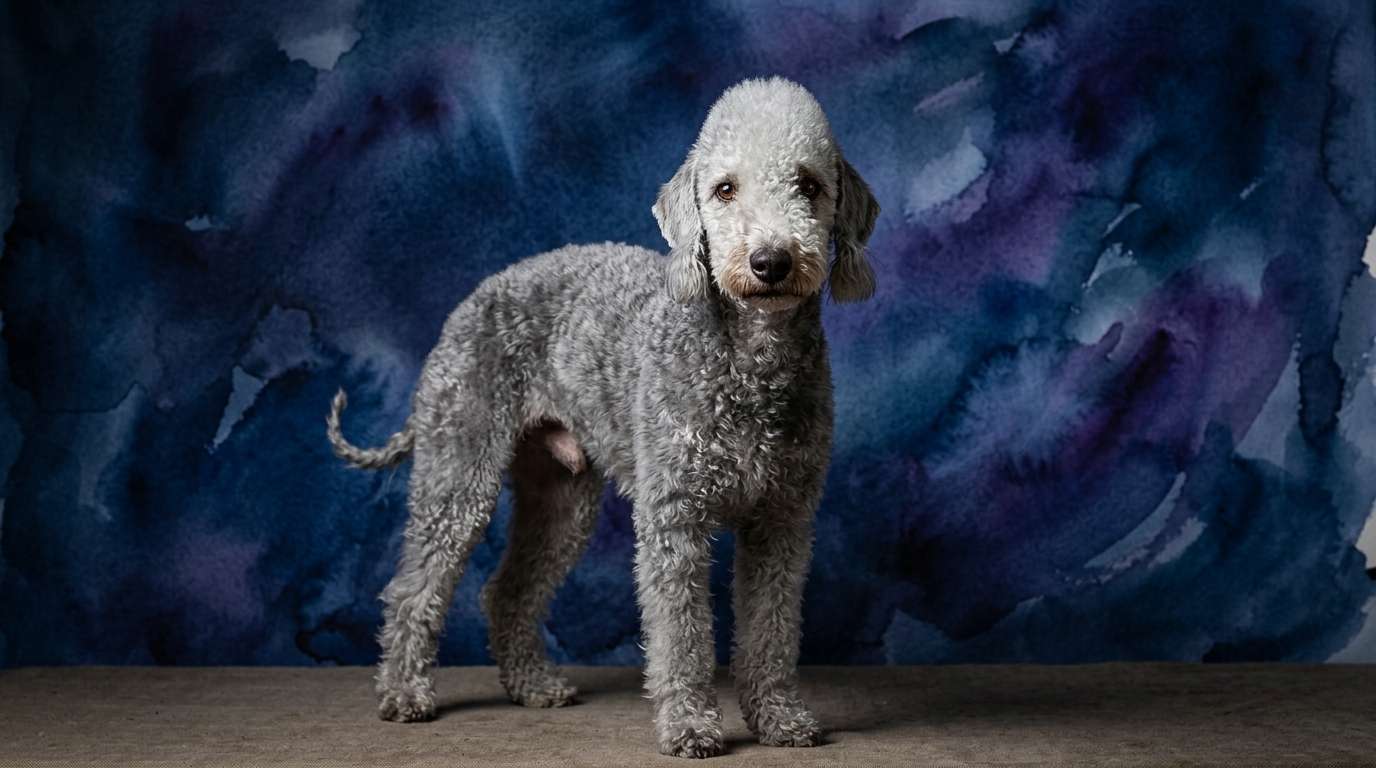
Side-by-Side IQ Profile: Sussex Spaniel vs. Bedlington Terrier
At The Cosmic Pet Pet IQ Lab, we evaluate canine intelligence across five critical dimensions. Both the Sussex Spaniel and the Bedlington Terrier consistently score a 3/5 in Problem Solving, Training Speed, Social Intelligence, Instinctive Drive, and Memory. However, the application and manifestation of these scores differ significantly due to their distinct breed histories and inherent temperaments, offering a fascinating study in cognitive nuance.
**Sussex Spaniel - A Grounded Sporting Intellect:** This breed approaches challenges with a methodical, often scent-driven persistence, characteristic of a gundog. They excel at deciphering environmental cues related to tracking or finding hidden objects, demonstrating a preference for working through a problem patiently rather than improvising rapidly. Their solutions often involve steady, deliberate exploration, leveraging their keen nose and stamina to achieve a goal. Sussex Spaniels demonstrate a steady learning curve, absorbing new commands and routines with consistent repetition and positive reinforcement. While not the fastest to grasp highly complex sequences, their inherent desire to cooperate, once properly motivated, ensures a reliable understanding and retention of learned behaviors over time. They are acutely attuned to their human family's moods and intentions, often forming deep, empathetic bonds and responding sensitively to emotional cues. While generally genial within their trusted circle, their social interactions can be reserved or cautious with unfamiliar individuals, requiring proper introduction and space to build trust and comfort. Their strong sporting instincts manifest as a dedicated drive for scent work and flushing game from dense cover. This isn't a high-speed chase, but rather a deliberate, ground-covering search, driven by an innate desire to follow a trail and indicate findings to their handler. Their focus is often on the process of the hunt rather than the immediate capture. Sussex Spaniels possess a robust memory for routines, learned commands, and the people and places they encounter regularly. They reliably recall past training sessions and can anticipate daily schedules, showing a consistent and dependable retention of information that aids in maintaining learned behaviors.
**Bedlington Terrier - A Tenacious Terrier Mind:** Bedlington Terriers tackle problems with characteristic terrier tenacity and independent thought, often seeking novel ways to achieve their goals. They are adept at figuring out how to access desired areas, overcome minor obstacles, or pursue a perceived target, often employing a clever combination of intelligence and sheer determination to outwit a challenge. While capable of learning new commands at an average pace, the Bedlington Terrier’s independent streak means training success hinges on highly engaging methods and unwavering consistency from the handler. They learn best when tasks are presented as fun, stimulating challenges that appeal to their inherent curiosity and drive, rather than repetitive drills. Highly affectionate and devoted to their immediate family, Bedlington Terriers are sensitive to their owners' emotions and can be quite responsive. However, their social interactions with unfamiliar dogs or people can sometimes be selective, guarded, or even assertive, reflecting their protective nature and a need for clear boundaries and respectful introductions. Their terrier heritage imbues them with a pronounced prey drive, manifesting as a keen interest in digging, chasing small animals, and vigorously investigating intriguing scents. This drive is often expressed with bursts of focused energy and determination, making them persistent in their pursuits once a target is identified. Bedlington Terriers possess a strong memory for training, past experiences, and the people and animals they've interacted with. They can remember specific cues or routines for extended periods and may recall past positive or negative encounters vividly, influencing their future interactions and behaviors.
Where the Sussex Spaniel Wins Cognitively
The Sussex Spaniel's cognitive edge lies in its methodical, patient approach to tasks and its more cooperative working style, a direct legacy of its gundog role. Their Coren ranking at #62, while not among the highest, reflects a solid capacity for consistent obedience and a willingness to work collaboratively with a handler, a key attribute for a flushing spaniel. They demonstrate a superior capacity for sustained, focused scent work, meticulously following trails with a calm persistence that less patient or more excitable breeds might lack. This translates to a natural aptitude for activities requiring steady application, such as advanced scent detection, lengthy tracking exercises, or complex obedience sequences where their balanced instinctive drive is channeled productively and patiently rather than impulsively. Their social intelligence, while equally rated, often leans towards a more placid and less reactive interaction style with familiar individuals and established routines, making them potentially more predictable and comforting in stable family settings.
Where the Bedlington Terrier Wins Cognitively
The Bedlington Terrier shines in its independent problem-solving and reactive agility, hallmarks of its terrier lineage. Their tenacious spirit means they excel at finding creative solutions to obstacles, particularly those involving access, escape, or the pursuit of a perceived "quarry." This translates to a cognitive advantage in situations demanding quick, decisive action and adaptability, such as navigating complex agility courses, outsmarting environmental challenges, or engaging in fast-paced interactive games. Their instinctive drive, while equally rated, manifests as a sharper, more focused burst of energy for chasing and digging, making them particularly adept at tasks requiring rapid target acquisition or sustained, vigorous engagement in activities like earthdog trials. Furthermore, their social intelligence, while selective, allows them to quickly assess and react to novel social situations with a keen awareness, often with a protective alertness that can be a valuable asset in certain contexts.
Which Is Easier to Train and Why?
When comparing trainability, the Sussex Spaniel generally offers a slightly smoother experience due to its inherent desire to please and its less independent nature, characteristic of many sporting breeds. While both breeds score 3/5 in Training Speed, the Sussex Spaniel's gundog background means it is typically more inclined to accept direction and work collaboratively, making it more receptive to traditional command-based training. Their problem-solving often involves working *with* the handler to achieve a goal. In contrast, the Bedlington Terrier's strong independent streak and inherent tenacity, typical of terriers bred for vermin control, can present a greater challenge. They are capable learners but often require more engaging, positive reinforcement techniques that appeal to their problem-solving nature and prevent boredom or stubbornness from taking root. Their problem-solving often involves working *for* themselves. Therefore, while both require consistency, the Sussex Spaniel's disposition often leads to a more straightforward training journey for the average owner.
Which Suits Active Owners vs. Relaxed Owners?
The Sussex Spaniel, with its moderate instinctive drive and historical role as a gundog, suits moderately active owners who enjoy regular, purposeful outdoor activities. They thrive on consistent daily walks, opportunities for scent work in a secure area, and perhaps some light jogging or engaging in canine sports like obedience or tracking. While they appreciate comfortable indoor living, they are not content to be solely couch potatoes; their physical and mental well-being benefits significantly from structured exercise that taps into their natural inclinations. For owners seeking a companion for more relaxed, sporadic activity, the Sussex Spaniel might require careful management to prevent boredom. The Bedlington Terrier, on the other hand, is better suited for active owners who can provide ample opportunities for vigorous exercise and mental stimulation. Their terrier energy and strong prey drive necessitate daily, engaging activities such as long walks, running, secure off-leash play, or participation in dog sports like agility, earthdog trials, or flyball. Their independent problem-solving and tenacious nature mean they need outlets for their energy and curiosity; a bored Bedlington can become a creative, sometimes destructive, problem-solver within the home. While they enjoy cuddling with their family, their need for activity is more pronounced, making them less ideal for owners preferring a largely sedentary lifestyle.
The Verdict
For owners seeking a companion with a steady, cooperative temperament and a methodical approach to learning, who appreciates consistent outdoor activity focused on scent work and companionship, the Sussex Spaniel is an excellent choice.
If you prefer a dog with independent problem-solving skills, tenacious spirit, and the capacity for bursts of athletic activity, and are prepared for a more engaging, consistent training approach, the Bedlington Terrier will thrive.
🧠 Find Your Pet's IQ Score
Our Pet IQ Lab assessment covers 25+ tests across 5 cognitive dimensions — personalized to your breed.
Take the Full IQ Test →Frequently Asked Questions
Are Sussex Spaniels prone to separation anxiety?
Sussex Spaniels form deep bonds with their families and can be prone to separation anxiety if not properly conditioned or left alone for extended periods. Consistent training and enrichment can help them cope with being alone.
How do Bedlington Terriers typically interact with other dogs?
Bedlington Terriers can be selective with other dogs; early and consistent socialization is crucial for positive interactions. Their terrier assertiveness sometimes means they prefer to be the only dog or require careful introductions in multi-dog households.
What kind of grooming do these breeds require?
The Sussex Spaniel requires regular brushing to prevent matting in its long coat, especially around the ears and feathering, along with occasional trimming. The Bedlington Terrier's unique lamb-like coat needs professional grooming every 6-8 weeks to maintain its distinctive shape and prevent matting.