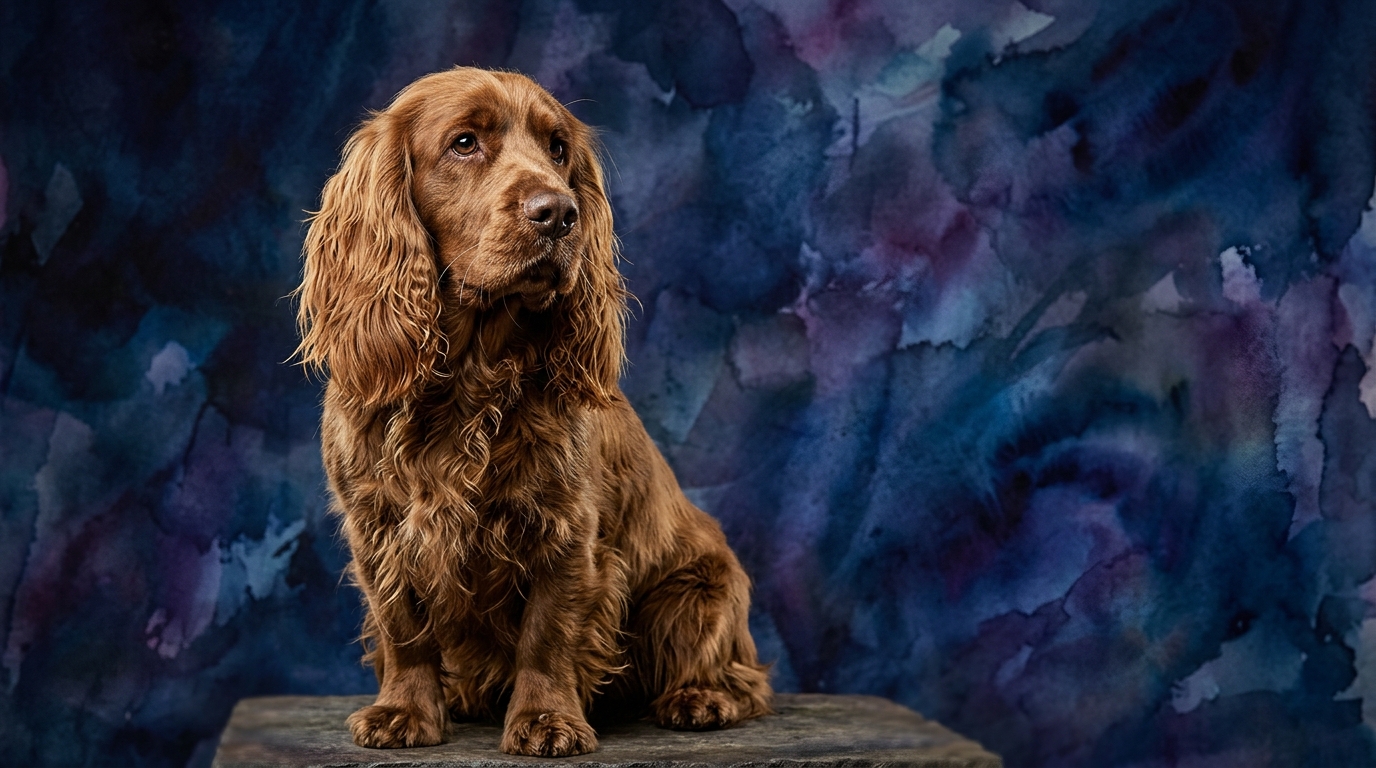
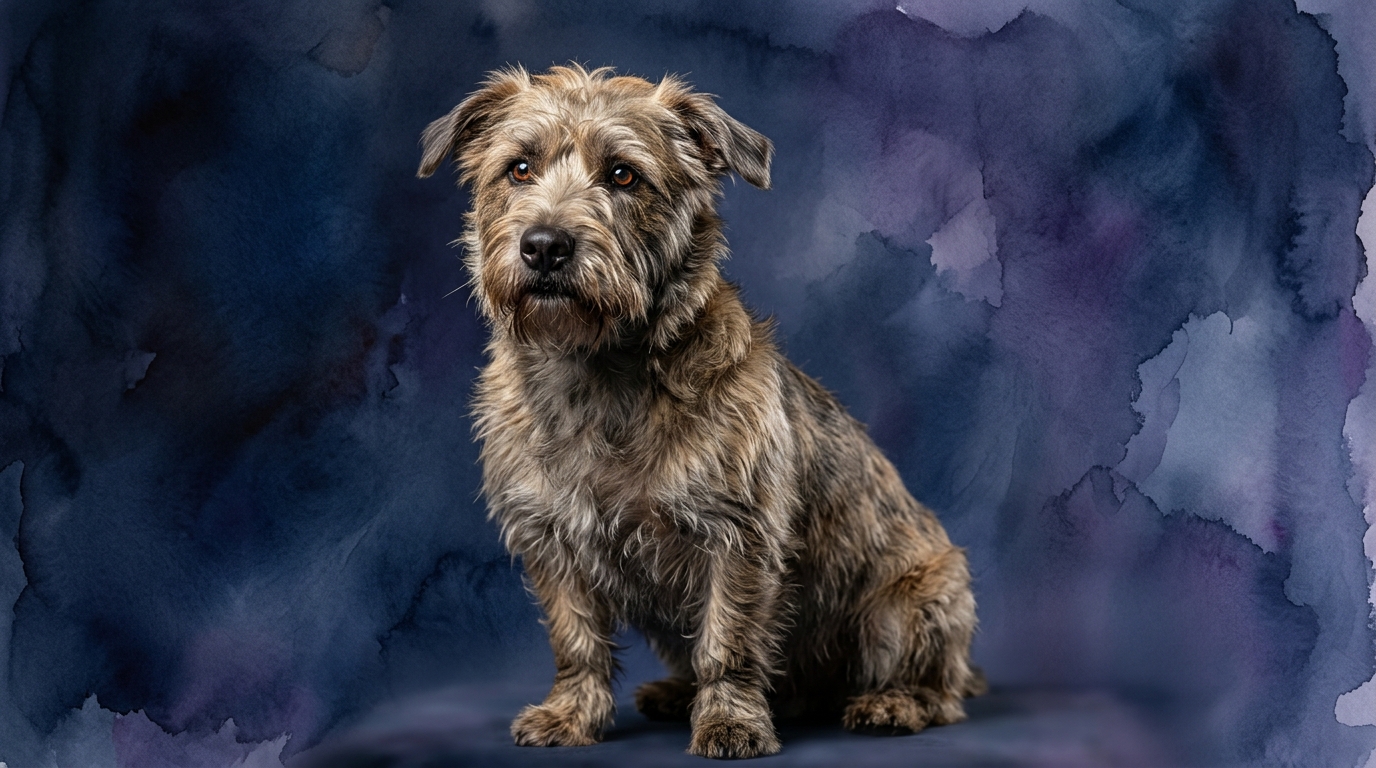
Side-by-Side IQ Profile: Sussex Spaniel vs. Glen of Imaal Terrier
The Cosmic Pet Pet IQ Lab assesses canine intelligence across five key dimensions, and remarkably, both the Sussex Spaniel and the Glen of Imaal Terrier achieve a consistent 3/5 in each category. While the numerical scores align, the manifestation and application of these cognitive traits are distinctly shaped by their breed histories and intended purposes.
For the **Sussex Spaniel**, a dog from the Sporting group, its 3/5 in **Problem Solving** typically manifests as a methodical approach to navigating dense cover and flushing game, often requiring sustained focus to track scents and locate birds. Their **Training Speed** at 3/5 reflects a moderate learning pace, tempered by a generally biddable nature and an eagerness to cooperate with their handler, making them responsive to consistent, positive reinforcement. **Social Intelligence** at 3/5 indicates a good capacity to read human cues and work collaboratively, a trait vital for a gundog expected to operate in partnership with people. Their **Instinctive Drive** of 3/5 is primarily geared towards scent work, flushing, and retrieving, showcasing a persistent but manageable drive to perform their traditional tasks. Finally, their **Memory** at 3/5 allows them to effectively recall commands, learned routes, and the location of game, contributing to their efficiency in the field.
The **Glen of Imaal Terrier**, belonging to the Terrier group, interprets its identical 3/5 scores through a very different lens. Its **Problem Solving** at 3/5 is characterized by a tenacious, independent approach, particularly when "going to ground" to root out vermin; this involves navigating complex, confined spaces and making decisions without direct human instruction. Their **Training Speed** of 3/5 means they learn at a moderate pace, but their inherent terrier stubbornness and independent thinking can make consistent compliance more challenging, requiring patient and engaging training methods. **Social Intelligence** at 3/5 for a Glen often translates to a discerning affection for their immediate family, coupled with a more reserved or independent stance towards strangers, reflecting their history as a working dog not primarily bred for extensive human interaction beyond their immediate circle. Their **Instinctive Drive** at 3/5 is powerful, focusing on prey drive, digging, and a relentless pursuit of quarry, often with a fearless determination. Their **Memory** at 3/5 serves them well in remembering territory boundaries, the location of potential dens, and tasks that align with their independent motivations.
Where the Sussex Spaniel Wins Cognitively
Despite identical numerical scores, the Sussex Spaniel often excels in cognitive areas demanding cooperative effort and sustained, directed attention. Their historical role as a gundog means they developed a particular aptitude for working in tandem with a human handler, interpreting subtle cues and adjusting their behavior accordingly. This manifests as a more fluid and responsive **Social Intelligence** in a working partnership, making them excellent at anticipating a handler's next move during training or field work. Their 3/5 in **Problem Solving** is often applied to tasks that require methodical, sequential steps under direction, such as quartering a field systematically or following complex scent trails over varied terrain, rather than purely independent decision-making in a confined space. Furthermore, their **Instinctive Drive** to flush and retrieve is more readily channeled and controlled, making their drive a tool for cooperative work rather than an independent pursuit. The Sussex Spaniel's cognitive strengths lie in their ability to integrate their natural drives with human guidance, demonstrating a trainable focus that facilitates a more predictable and collaborative working relationship.
Where the Glen of Imaal Terrier Wins Cognitively
Conversely, the Glen of Imaal Terrier’s cognitive strengths shine in areas demanding independent thought, tenacity, and self-reliance. Their 3/5 in **Problem Solving** is geared towards overcoming obstacles autonomously, particularly in tight, challenging environments where their determination to reach a goal is paramount. This breed excels at figuring out how to get to something they want, whether it's a burrowed rodent or a hidden toy, often employing creative and persistent strategies. Their **Instinctive Drive** of 3/5 is a formidable asset in this regard, fueling a relentless pursuit that can push through physical and mental barriers. While their **Training Speed** is rated similarly, the Glen's 3/5 often implies a deeper, more enduring memory for tasks they deem worthwhile or for routines that benefit them directly, making them adept at remembering how to outsmart their environment or human companions. Their **Social Intelligence**, though perhaps less overtly people-pleasing, allows them to accurately assess situations and make independent judgments about perceived threats or opportunities, a crucial trait for a dog expected to work alone underground. The Glen’s cognitive edge lies in its resolute independence and its unwavering focus on achieving its self-appointed objectives.
Which is Easier to Train and Why?
Given their respective histories, the **Sussex Spaniel** is generally considered easier to train for traditional obedience and cooperative tasks. Their background as gundogs means they were selectively bred for biddability and a desire to work alongside humans. A Sussex Spaniel typically responds well to positive reinforcement and clear, consistent commands, valuing the partnership with their handler. While their **Training Speed** is a moderate 3/5, their willingness to please and inherent focus on human direction makes the learning process smoother and often more rewarding for both dog and owner. They are more inclined to see the purpose in performing a requested action because it aligns with their cooperative nature.
The **Glen of Imaal Terrier**, on the other hand, presents a more significant training challenge due to its strong independent streak and determined terrier nature. While their **Training Speed** is also 3/5, their problem-solving skills are often applied to finding ways to accomplish their *own* agenda, rather than simply following human instructions. This means a Glen might understand a command but choose not to execute it if they perceive a more interesting or pressing task, like investigating a scent. Training a Glen requires immense patience, creativity, and a deep understanding of positive reinforcement to motivate them, often by making training feel like a game or an opportunity for them to 'win.' Their stubbornness isn't a lack of intelligence, but rather a manifestation of their independent cognitive processing; they need to be convinced that your request is worth their effort.
Which Suits Active Owners vs. Relaxed Owners?
For owners with an active lifestyle who enjoy structured outdoor activities and a canine companion eager to participate, the **Sussex Spaniel** is often a better fit. While not hyperactive, they possess a robust build and a Sporting group heritage that demands consistent exercise, including long walks, scent games, and opportunities to explore. They thrive on having a 'job,' which can be anything from retrieving toys in the yard to participating in canine scent work or agility. Their cooperative nature means they are often happy to accompany owners on hikes or leisurely jogs, making them ideal for those who enjoy integrating their dog into their active pursuits. They are content to relax indoors after adequate physical and mental stimulation, making them versatile companions for active yet balanced households.
The **Glen of Imaal Terrier**, despite its smaller size, is a robust and resilient working terrier that requires a different kind of 'active' ownership. Their energy isn't necessarily about sustained running; it's about bursts of intense activity, digging, and mental engagement. They are best suited for owners who are active in the sense of being prepared to manage a strong prey drive, provide outlets for digging instincts (perhaps a designated digging pit), and engage in mentally stimulating games that challenge their problem-solving abilities. A relaxed owner who expects a passive lapdog will find a Glen frustrating; they need consistent mental and physical challenges to prevent boredom and destructive behaviors. Their activity needs are more about purposeful engagement and channeling their terrier drives rather than endless cardio, making them suitable for owners who appreciate a dog with a strong, independent spirit and are willing to provide creative outlets for it.
The Verdict
Choose the Sussex Spaniel if you seek a cooperative, biddable companion eager to participate in family activities and structured training, valuing a predictable and responsive partnership.
Opt for the Glen of Imaal Terrier if you appreciate a tenacious, independent spirit, are prepared for creative training, and can provide outlets for a strong terrier drive and autonomous problem-solving.
🧠 Find Your Pet's IQ Score
Our Pet IQ Lab assessment covers 25+ tests across 5 cognitive dimensions — personalized to your breed.
Take the Full IQ Test →Frequently Asked Questions
Do Sussex Spaniels shed a lot?
Yes, Sussex Spaniels have a dense, wavy coat that does shed moderately. Regular brushing, typically 2-3 times a week, is essential to manage loose hair and prevent matting, especially around their feathering.
Are Glen of Imaal Terriers good with children?
Glen of Imaal Terriers can be good with respectful children, especially if raised with them. However, their independent nature and strong prey drive mean they might not tolerate rough play and require supervision, particularly with very young children.
Which breed needs more grooming?
Both breeds require regular grooming. The Sussex Spaniel's long, wavy coat needs frequent brushing to prevent mats, while the Glen of Imaal Terrier's wiry double coat benefits from weekly brushing and occasional hand-stripping to maintain its texture and health.