
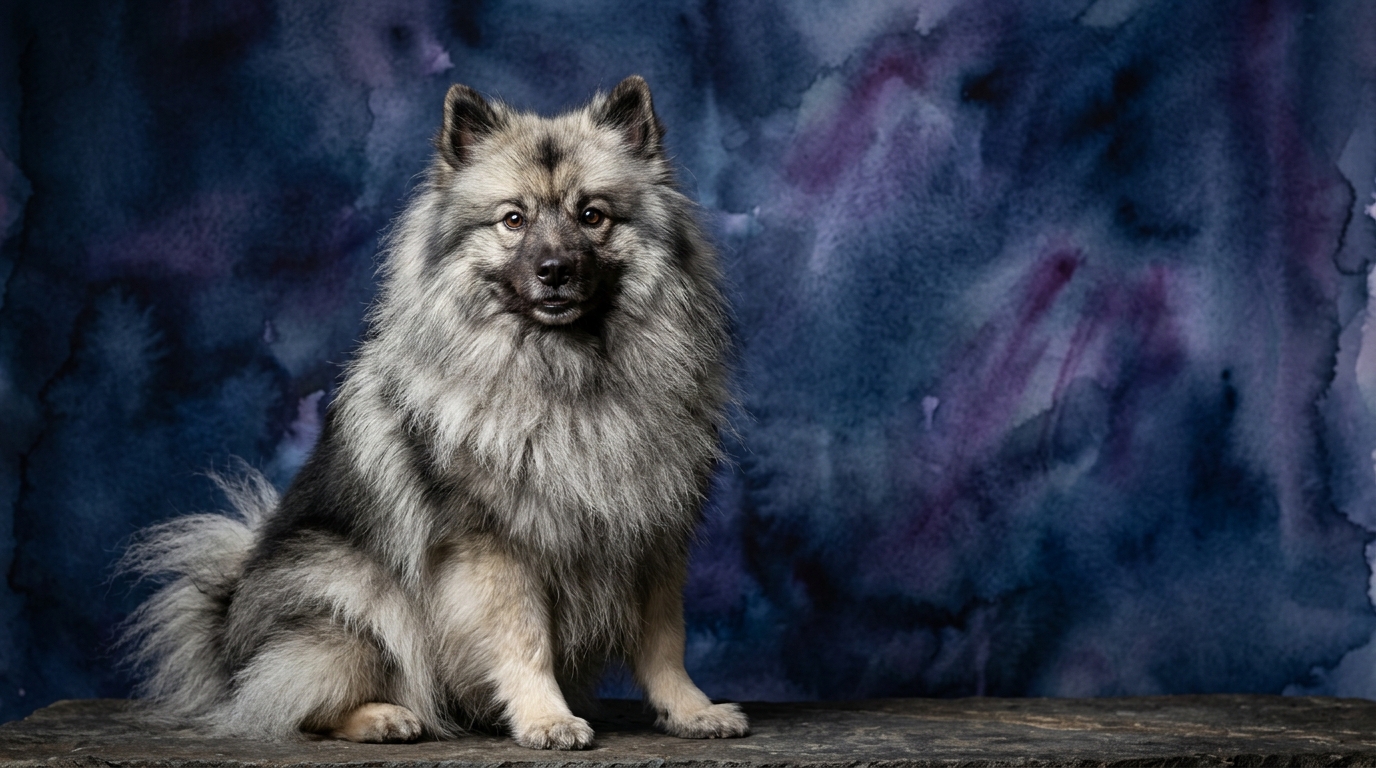
Side-by-Side IQ Profile: Sussex Spaniel vs. Keeshond
The Coren ranking system places the Sussex Spaniel at #62, suggesting a dog that typically requires more repetitions to learn new commands and may respond less reliably to the first command. Their Problem Solving is rated 3/5, indicating an ability to navigate moderately complex challenges, often relying on learned patterns rather than innovative solutions. Training Speed is 3/5, meaning they grasp new behaviors at a moderate pace, requiring consistent reinforcement. Social Intelligence stands at 3/5, showing an average understanding of human cues and social dynamics, allowing for strong bonds. Their Instinctive Drive is 3/5, reflecting a balanced level of inherent urges, such as scenting or flushing, characteristic of their Sporting group heritage. Finally, Memory is 3/5, suggesting an average capacity to retain learned information and routines.
In contrast, the Keeshond holds a significantly higher Coren rank at #16, positioning them among breeds that learn new commands quickly and respond reliably to the first command. Their Problem Solving is a strong 4/5, indicating a natural aptitude for tackling complex puzzles and adapting to novel situations with creative solutions. Training Speed is 4/5, denoting a rapid learner who thrives on mental engagement during training sessions. Like the Sussex, their Social Intelligence is 3/5, enabling them to form deep connections and be attuned to their family's emotions. Instinctive Drive is also 3/5, which for a Non-Sporting breed often translates to a natural watchfulness or a desire for companionship without a strong prey drive. The Keeshond's standout cognitive strength is its Memory, scoring an exceptional 5/5, signifying an outstanding capacity to recall past events, commands, and routines, contributing to their remarkable consistency.
Where the Sussex Spaniel Wins Cognitively
While the Keeshond often demonstrates quicker uptake in formal training, the Sussex Spaniel's cognitive strengths manifest in a different, equally valuable manner, particularly when aligned with their historical purpose. Their 3/5 instinctive drive, combined with a 3/5 problem-solving ability, suggests a methodical and persistent approach to tasks that engage their natural inclinations, such as scent work or tracking. Unlike breeds that might quickly become bored, the Sussex Spaniel often exhibits a focused, enduring determination when engaged in activities that tap into their inherent working instincts. This steadfast application of their moderate cognitive skills can sometimes lead to a thorough, if slower, resolution of challenges, making them particularly effective for owners who appreciate a dog that immerses itself fully in a task without becoming easily distracted by novelty. Their steady learning pace means they internalize lessons deeply once understood, fostering reliable performance in familiar contexts.
Where the Keeshond Wins Cognitively
The Keeshond clearly distinguishes itself with several notable cognitive advantages, particularly evident in its Coren rank of #16. Their problem-solving score of 4/5 indicates a natural curiosity and a facility for navigating intricate situations, often devising novel solutions rather than relying solely on repetition. This translates into a dog that can quickly assess and adapt to new environments or challenges, making them adept at learning complex sequences of behaviors. Furthermore, their training speed of 4/5 means they grasp new commands with remarkable efficiency, often requiring fewer repetitions than many other breeds. The most striking cognitive strength of the Keeshond, however, is their exceptional memory, scoring a perfect 5/5. This superior recall allows them to retain a vast repertoire of commands, social cues, and past experiences over long periods, contributing to their consistent performance and their ability to build upon previous learning with ease. This combination of quick learning, strong problem-solving, and outstanding memory makes the Keeshond a highly adaptable and mentally agile companion.
Which is Easier to Train and Why
When it comes to formal training, the Keeshond generally presents a more straightforward experience for owners. Their 4/5 training speed means they pick up new commands and behaviors with remarkable alacrity, often understanding what's expected after just a few repetitions. This efficiency is significantly bolstered by their outstanding 5/5 memory, allowing them to retain learned lessons over extended periods and apply them consistently. They thrive on mental engagement and positive reinforcement, often eager to please and quick to form associations between actions and rewards. In contrast, the Sussex Spaniel, with a training speed of 3/5 and memory of 3/5, requires a more patient and consistent approach. While certainly capable of learning, they may need more repetitions to solidify new commands and might be less inclined to perform on cue if their attention is elsewhere. Their independent, scent-driven nature, characteristic of a Sporting breed, means training sessions often benefit from being shorter, engaging, and highly rewarding to maintain their focus, as they can sometimes be more interested in exploring their environment than performing a specific task on demand.
Which Suits Active Owners vs. Relaxed Owners
The choice between a Sussex Spaniel and a Keeshond also hinges on an owner's lifestyle and preferred activity level. The Sussex Spaniel, despite its moderate instinctive drive of 3/5, hails from the Sporting group, meaning it possesses an inherent desire for purposeful activity. They often thrive with owners who can provide consistent, engaging outings that tap into their natural inclinations, such as long walks, scent work, or even moderate field activities. While they can be calm companions indoors once their physical and mental needs are met, they are not content to be couch potatoes without regular engagement. Their methodical problem-solving and average memory mean they benefit from consistent routines and activities that allow them to work through challenges at their own pace. The Keeshond, on the other hand, with its 3/5 instinctive drive and Non-Sporting classification, is often more adaptable to varying owner lifestyles. Their higher problem-solving and exceptional memory mean they appreciate mental stimulation through puzzles, training, or interactive games, but their physical demands are generally moderate. They are typically happy to participate in family activities, whether that's a brisk walk or a relaxed evening on the sofa, as long as they are involved and receive ample companionship. This makes the Keeshond a versatile choice for both moderately active individuals and those who prefer a more relaxed pace, provided their sharp minds are kept engaged.
The Verdict
Choose the Sussex Spaniel if you appreciate a dog with a steady, methodical approach to life, valuing persistence in purposeful activities over immediate brilliance, and are prepared to engage patiently with their independent, scent-driven nature.
Opt for the Keeshond if you seek a highly adaptable, quick-witted companion who excels in learning and retention, thrives on mental engagement, and integrates seamlessly into a variety of family dynamics with their exceptional memory.
🧠 Find Your Pet's IQ Score
Our Pet IQ Lab assessment covers 25+ tests across 5 cognitive dimensions — personalized to your breed.
Take the Full IQ Test →Frequently Asked Questions
Do Sussex Spaniels make good family pets?
Yes, Sussex Spaniels can be devoted family pets, known for their affectionate and gentle nature with their own people. They require consistent socialization and patience, especially with children, to ensure their slightly independent temperament blossoms into a well-adjusted companion.
Are Keeshonds prone to barking?
Keeshonds are known for their watchful nature and can be vocal, often using barks to alert their families to new sights or sounds. Their social intelligence means they are communicating, but early training can help manage excessive barking effectively.
Which breed is better for apartment living?
The Keeshond is generally more adaptable to apartment living due to its moderate exercise needs and strong desire for companionship, provided their mental stimulation needs are met. The Sussex Spaniel can adapt, but its need for purposeful outdoor activity means it thrives best with a yard or consistent access to open spaces for exploration.