
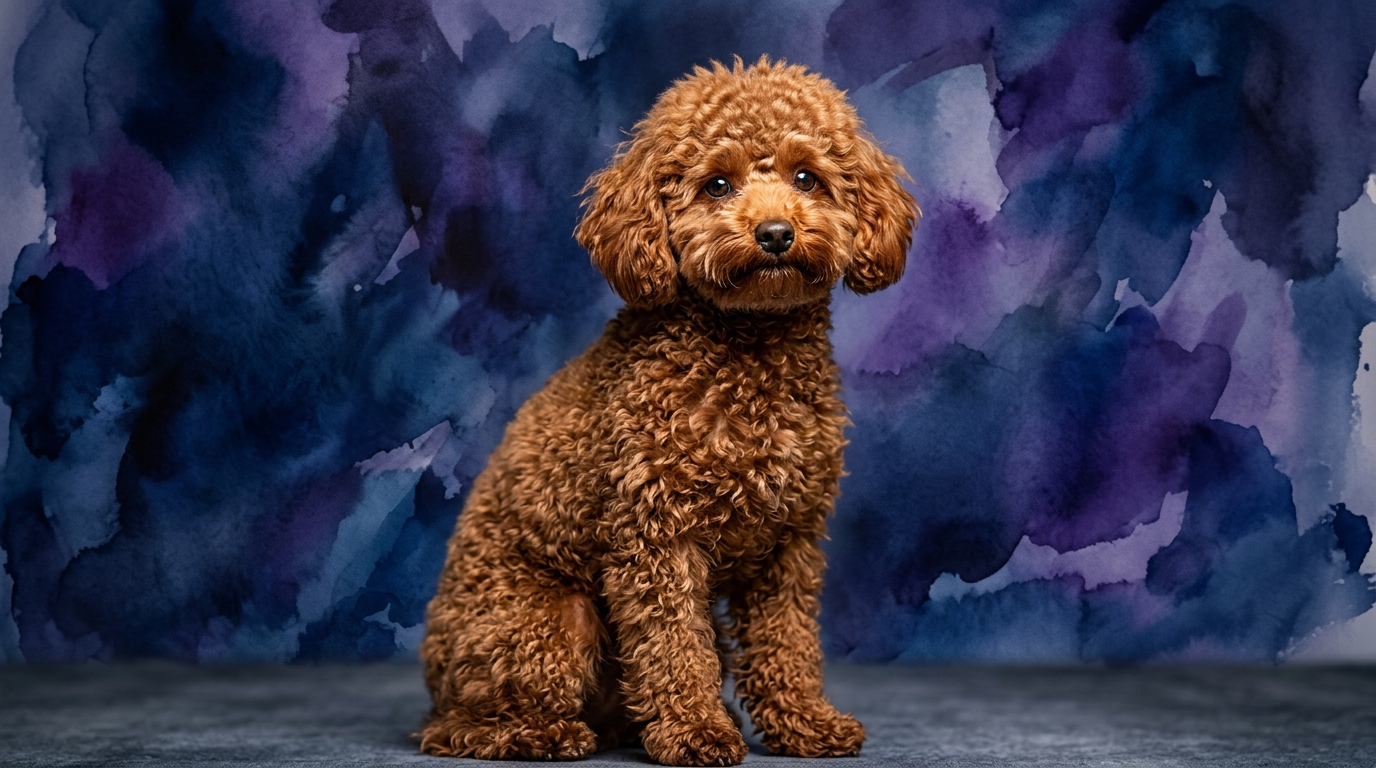
Side-by-Side IQ Profile: Sussex Spaniel vs. Toy Poodle
The Cosmic Pet Pet IQ Lab employs a five-dimensional framework to evaluate canine cognition, providing a nuanced understanding beyond simple ranking. For the Sussex Spaniel and Toy Poodle, these dimensions reveal fascinating differences in how they perceive, learn, and interact with their world.
**Sussex Spaniel (Coren Rank #62)**: These sturdy sporting dogs exhibit a balanced and deliberate cognitive style. Their **Problem Solving (3/5)** often involves a methodical, persistent approach rather than rapid innovation, relying on learned patterns to navigate challenges. **Training Speed (3/5)** is moderate; they absorb commands with consistency but require patient repetition to solidify new behaviors. Their **Social Intelligence (3/5)** indicates a capacity for strong bonds with their family, without necessarily demonstrating a keen sensitivity to subtle human emotional cues. An **Instinctive Drive (3/5)**, typical of a sporting breed, manifests as an interest in scent work and retrieving, yet remains manageable within a home environment. Finally, their **Memory (3/5)** is reliable, allowing them to retain essential commands and routines over time.
**Toy Poodle (Coren Rank #2)**: Despite their diminutive size, Toy Poodles possess a highly active and adaptable mind. Their **Problem Solving (5/5)** is exceptional; they readily analyze new situations and often devise creative solutions to puzzles or environmental obstacles. **Training Speed (5/5)** is equally impressive, as they grasp new commands and complex sequences with remarkable quickness and eagerness. They share a **Social Intelligence (3/5)** rating with the Sussex, forming deep attachments and enjoying companionship, though their primary social motivation is often interaction and inclusion. An **Instinctive Drive (3/5)**, inherited from their larger Poodle ancestors, is present and often channeled into play or structured activities. Their **Memory (5/5)** is a standout trait, allowing them to recall a vast array of commands and experiences with clarity, significantly contributing to their learning prowess.
Where the Sussex Spaniel Wins Cognitively
The Sussex Spaniel’s cognitive strengths lie in their robust, enduring application of their instinctive drive and a steady, grounded approach to tasks. While their problem-solving might not be instantaneous, their 3/5 instinctive drive, when properly channeled, allows them to focus on a scent trail or work through a field with unwavering determination. This isn't about quick adaptation but rather a deep, persistent engagement with a task, making them reliable partners in specific working scenarios that demand sustained attention. Their moderate social intelligence also means they can operate somewhat independently without constant human affirmation, relying on their own senses and learned procedures to complete objectives. For owners who value a dog that can steadily pursue a task, such as tracking or scent games, with a grounded and less excitable temperament, the Sussex Spaniel's cognitive profile offers a distinct advantage. Their thoughtful approach, while slower in initial uptake, can lead to thoroughness in tasks that require sustained focus rather than rapid-fire decisions.
Where the Toy Poodle Wins Cognitively
The Toy Poodle’s cognitive profile shines in areas demanding rapid intellectual processing, swift learning, and excellent retention. Their 5/5 scores in problem-solving, training speed, and memory create a formidable combination for adaptability and skill acquisition. They exhibit a remarkable ability to analyze new situations quickly, often devising creative solutions to environmental puzzles or complex commands. This translates into an exceptional capacity for learning intricate tricks, mastering advanced obedience routines, and excelling in dog sports like agility where quick thinking and execution are paramount. Their superior memory means they not only pick up new concepts rapidly but also retain them with minimal refreshers, building an extensive repertoire of learned behaviors. This makes them highly responsive companions, capable of engaging in a wide variety of mentally stimulating activities and quickly adjusting to new routines or environments. Their cognitive agility allows them to thrive on novelty and intellectual challenge.
Which is Easier to Train and Why
When comparing ease of training, the Toy Poodle unequivocally presents a more straightforward experience due to its superior training speed and memory. With a training speed of 5/5 and memory at 5/5, Toy Poodles process new information rapidly and commit it to long-term memory with remarkable efficiency. This means they often grasp a new command in just a few repetitions and retain it reliably, making the training process feel fluid and rewarding. Their natural eagerness to engage intellectually and their ability to quickly associate actions with consequences contribute significantly to their trainability. For example, teaching a Toy Poodle a multi-step trick like “fetch your leash” or “put toys away” can be achieved in a relatively short timeframe, as they quickly link the verbal cues to the physical actions and remember the sequence.
In contrast, the Sussex Spaniel, with training speed and memory both at 3/5, requires a more patient and consistent approach. They learn, but at a more deliberate pace, necessitating more repetitions and longer periods to solidify new behaviors. Their independent nature, while not stubborn, means they might require more motivation to engage fully in training sessions, preferring to follow their own instincts at times. While they will eventually learn and reliably perform commands, the journey involves greater dedication from the trainer. A Sussex Spaniel might take several sessions to consistently respond to a complex recall in a distracting environment, whereas a Toy Poodle might master it in half the time. This difference isn't about capacity to learn, but rather the speed and effort required from both dog and trainer to achieve mastery.
Which Suits Active Owners vs. Relaxed Owners
The choice between a Sussex Spaniel and a Toy Poodle depends significantly on an owner's definition of “active” and “relaxed,” as both breeds thrive with specific types of engagement.
For owners who define “active” as engaging in consistent, mentally stimulating activities, complex training, or dog sports that require quick thinking, the **Toy Poodle** is an excellent match. Their high problem-solving and training speed mean they relish activities like agility, advanced obedience, trick training, and even canine freestyle. These dogs thrive on intellectual challenges and regular mental workouts, making them ideal for individuals who enjoy teaching new skills and participating in structured activities. A “relaxed” owner for a Toy Poodle might still provide daily walks and cuddle time, but would need to ensure a consistent supply of puzzle toys and short, engaging training sessions to prevent boredom, as their cognitive needs are constant. They can adapt to apartment living but need their minds to be stimulated daily.
The **Sussex Spaniel**, on the other hand, suits owners whose “active” lifestyle might involve more grounded outdoor pursuits and a steady pace. Their sporting background means they appreciate regular walks, scent work, and exploring natural environments. They are less about rapid-fire commands and more about a persistent, enjoyable engagement with their surroundings. An owner who enjoys long hikes, quiet strolls through fields, or casual scent games would find the Sussex Spaniel a willing and sturdy companion. For “relaxed” owners, the Sussex Spaniel offers a calm and devoted presence indoors, provided their moderate exercise needs are met. They are generally less demanding of constant mental gymnastics than the Toy Poodle, content with a comfortable routine and companionship. They are happy to be a steady presence, enjoying quiet time with their family after their outdoor excursions. Their lower social intelligence means they aren't constantly seeking validation or engagement, making them suitable for owners who appreciate a more independent companion.
The Verdict
Opt for a Sussex Spaniel if you appreciate a dog with a steady, thoughtful temperament, a robust physique for outdoor exploration, and an independent spirit that values routine and grounded activities. They are best for owners who enjoy consistent, patient training and appreciate a companion whose cognitive strengths lie in persistent application rather than rapid-fire intellectual feats.
Select a Toy Poodle if you are an owner who delights in a highly responsive, intellectually agile companion eager to learn a wide array of skills and participate in mentally stimulating activities. They are ideal for those seeking a dog that excels in rapid training, complex problem-solving, and thrives on constant mental engagement and companionship.
🧠 Find Your Pet's IQ Score
Our Pet IQ Lab assessment covers 25+ tests across 5 cognitive dimensions — personalized to your breed.
Take the Full IQ Test →Frequently Asked Questions
Do Sussex Spaniels require less mental stimulation than Toy Poodles?
While Toy Poodles certainly thrive on varied and complex mental challenges due to their high problem-solving and memory scores, Sussex Spaniels still require mental stimulation. Their needs lean more towards consistent scent work, exploring new environments, and reinforcing learned routines rather than constant novelty or intricate trick training. Both breeds benefit from engagement, but the type of stimulation differs.
Can a Sussex Spaniel excel in dog sports like agility or obedience?
A Sussex Spaniel can certainly participate and enjoy dog sports, especially those that align with their instinctive drives like scent work or tracking. While they may not achieve the same speed or precision as a Toy Poodle in agility due to their slower training speed and problem-solving, they can still perform well in obedience with consistent, patient training, showcasing their reliability and steady nature.
Are Toy Poodles prone to boredom if not adequately stimulated?
Yes, Toy Poodles, with their exceptional problem-solving and memory, are prone to boredom if their cognitive needs are not met. They thrive on mental engagement, so a lack of puzzle toys, training sessions, or interactive play can lead to undesirable behaviors. Providing regular mental workouts is crucial for their well-being and happiness.