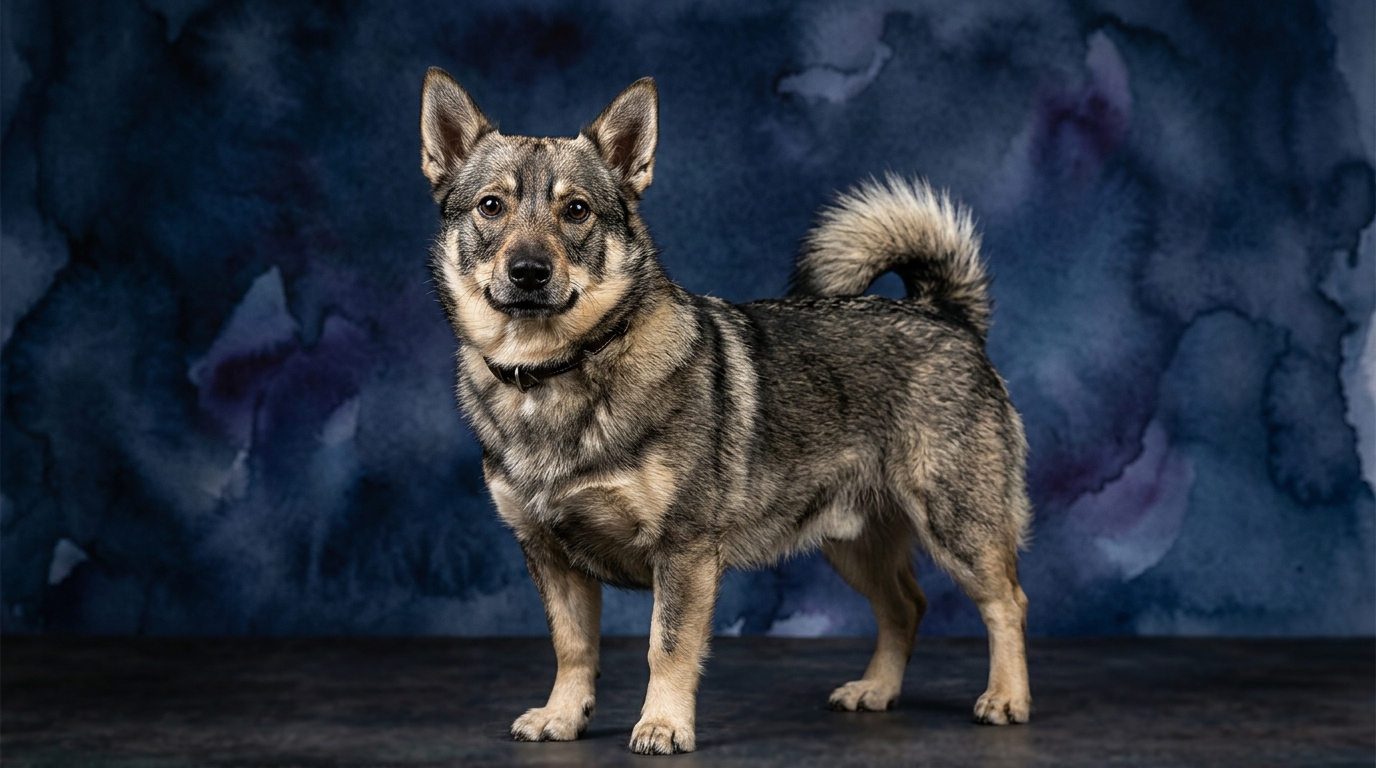
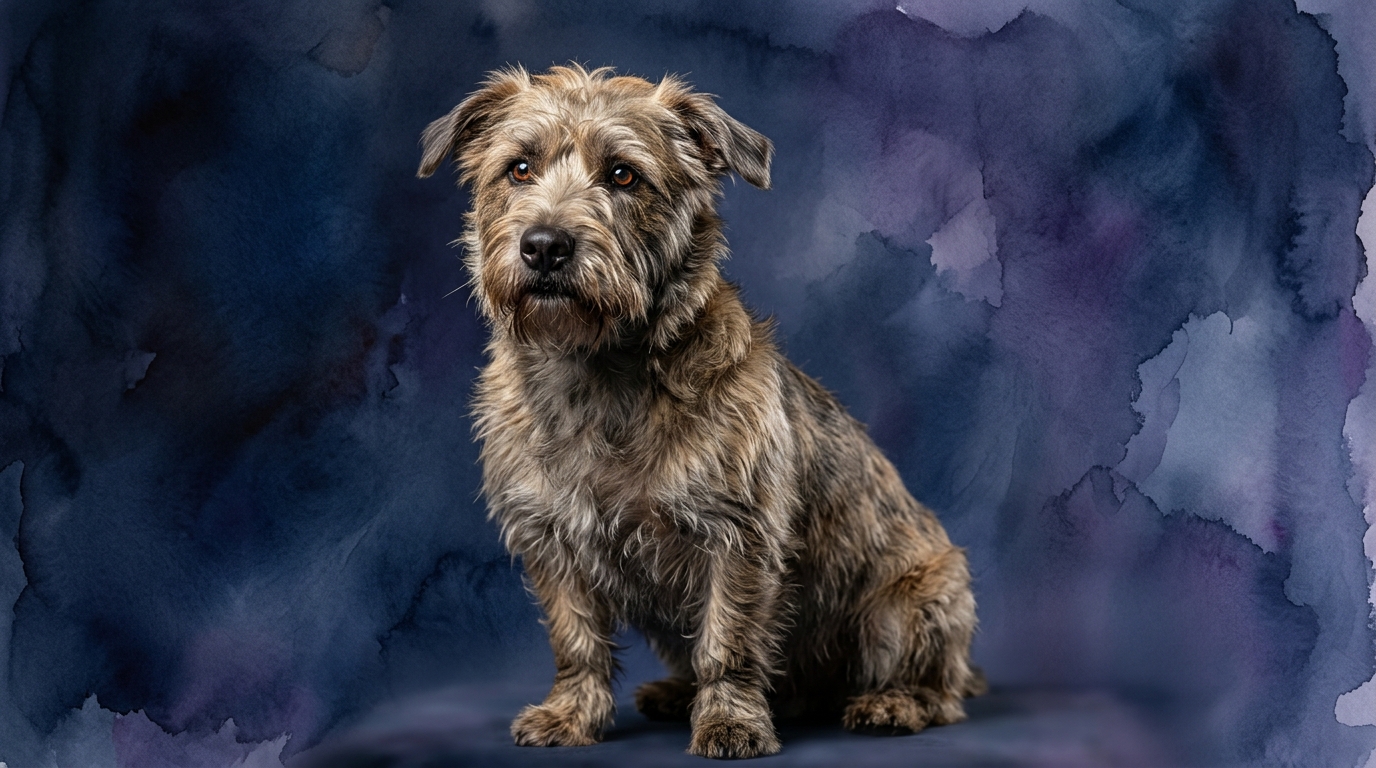
Side-by-Side IQ Profile: Swedish Vallhund vs. Glen of Imaal Terrier
**Swedish Vallhund:** This ancient Nordic breed, often called a 'Viking dog,' carries a strong herding heritage that shapes its cognitive approach. Their **Problem Solving (3/5)** leans towards practical application, excelling at tasks requiring strategic movement and environmental awareness, honed by generations of livestock management. They adeptly figure out how to maneuver objects or navigate complex agility courses, often using keen observation to assess situations. Their **Training Speed (3/5)** is moderate; Vallhunds absorb commands effectively when engaged, yet their independent herding instinct means they sometimes prioritize their own assessment over immediate compliance, necessitating consistent, positive reinforcement. In **Social Intelligence (3/5)**, they exhibit a balanced capacity, reading human cues and forming strong family bonds, while generally being watchful with strangers, using their intelligence to discern intent rather than being immediately effusive. Their **Instinctive Drive (3/5)** is predominantly herding, manifesting as a desire to gather and control, often seen with family members or other pets, fueling their engagement in activities mimicking ancestral duties. Vallhunds possess a good **Memory (3/5)**, recalling complex sequences of commands, routines, and environmental layouts, allowing them to apply learned behaviors to new, similar situations with efficiency.
**Glen of Imaal Terrier:** Hailing from Ireland, the Glen of Imaal Terrier was bred for badger and fox hunting, which deeply influences its cognitive traits. Their **Problem Solving (3/5)** is characterized by tenacity and independence, focused on overcoming obstacles to achieve a goal, typical of a 'go-to-ground' terrier. They are adept at figuring out how to access confined spaces or persistently conquer puzzle toys, driven by inherent curiosity and prey drive. Their **Training Speed (3/5)** is also moderate; Glens grasp concepts readily, yet their strong-willed terrier nature means they might question a command's necessity, requiring patient, engaging, and highly motivating methods. In **Social Intelligence (3/5)**, these terriers show deep intelligence within their immediate family, forming strong, loyal bonds. Outside their inner circle, they tend to be reserved and discerning, assessing new individuals and situations with quiet confidence rather than an eager desire to please. The Glen's **Instinctive Drive (3/5)** is rooted in its terrier heritage—hunting, digging, and pursuing. This manifests as a persistent desire to investigate scents, explore tunnels, and engage in activities that satisfy their prey drive and independent hunting instincts. Glens have a solid **Memory (3/5)** for relevant information, such as interesting smells, past successful hunting strategies, or territory boundaries, though their application of training cues can be selective based on perceived value.
Where the Swedish Vallhund Wins Cognitively
The Swedish Vallhund often exhibits superior cognitive flexibility in collaborative tasks. Their herding background means they are wired to work *with* a human partner, responding to subtle cues and adapting their strategy based on handler feedback. This makes them particularly adept at dynamic activities like agility or competitive obedience, where quick adjustments and a shared focus are paramount. Their spatial reasoning, honed by maneuvering livestock across varied terrain, gives them an edge in navigating complex environments efficiently. They anticipate movement and adjust their body language to influence others, a sophisticated form of non-verbal communication that reflects their cooperative intelligence.
Where the Glen of Imaal Terrier Wins Cognitively
Glens excel in independent problem-solving and tenacity, a direct reflection of their 'go-to-ground' hunting heritage. They possess an exceptional ability to focus intently on a task, often ignoring distractions, until their objective is met—be it extracting a toy from a difficult spot or persistently following a scent trail. Their sensory intelligence, particularly their olfactory acuity and auditory perception, is often more finely tuned for detecting subtle environmental cues relevant to their prey drive. This breed demonstrates a profound capacity for self-directed work, requiring less human intervention once a goal is established, making them formidable in tasks demanding singular focus and resilience.
Which is Easier to Train and Why
The Swedish Vallhund generally presents as the more straightforward training candidate for many owners, largely due to their historical role. As herding dogs, they are predisposed to paying attention to and working in concert with a human handler. While they possess independent thought, their instinct leans towards cooperation and responding to direction, making them receptive to consistent, positive reinforcement. Their desire to keep things 'in order' often translates into an eagerness to learn and perform tasks when they understand the objective, making them generally responsive to guidance.
The Glen of Imaal Terrier, while equally capable of learning, can be more challenging to train for those unfamiliar with terrier traits. Their independent nature and strong prey drive mean they often require more creative and highly motivating training methods. A Glen might understand a command perfectly but choose not to execute it if they perceive a more interesting or urgent task at hand, such as investigating a scent. Training a Glen demands patience, consistency, and a deep understanding of what motivates them, often involving high-value rewards and making training feel like a game rather than a chore. Their 'don't-give-up' attitude can extend to resisting unwanted commands, requiring a firm but fair approach.
Which Suits Active Owners vs. Relaxed Owners
The Swedish Vallhund, despite its compact size, thrives with active owners who can provide consistent mental and physical stimulation. Their herding background means they possess significant stamina and a need for purpose. They excel in dog sports like agility, herding trials, and obedience, and appreciate long walks, hikes, or engaging play sessions that challenge their agile minds and bodies. Owners who enjoy training and want a cooperative partner for various activities will find the Vallhund a rewarding companion. A relaxed owner might find a Vallhund becomes bored and potentially destructive without adequate engagement.
The Glen of Imaal Terrier also requires mental stimulation and regular exercise, but their activity needs might be perceived differently. While they enjoy vigorous play and exploring, they are not typically 'marathon runners' like some herding breeds. They can be content with a good daily walk, puzzle toys, and opportunities for scent work or digging in a designated area. Their independent nature means they can be relaxed indoors, often enjoying quiet time with their family, provided their core needs for mental engagement and a moderate outlet for their terrier drives are met. They suit owners who appreciate a dog with a strong personality, are prepared for their independent streak, and can provide structured activities that tap into their innate drives without requiring constant, high-intensity physical output.
The Verdict
Opt for a Swedish Vallhund if you seek a cooperative, versatile partner for dog sports and activities, thriving on a structured routine and collaborative problem-solving.
Select a Glen of Imaal Terrier if you appreciate a tenacious, independent companion with a quiet confidence, suited for owners who enjoy unique personalities and can channel their strong drives.
🧠 Find Your Pet's IQ Score
Our Pet IQ Lab assessment covers 25+ tests across 5 cognitive dimensions — personalized to your breed.
Take the Full IQ Test →Frequently Asked Questions
Do Swedish Vallhunds bark a lot?
Vallhunds are known for being vocal, often using barks to communicate or alert. Their herding instinct can make them prone to 'woofing' to gather attention or express excitement, so consistent training is key to managing their vocalizations effectively.
Are Glen of Imaal Terriers good with children?
Glens can be wonderful family companions, often forming strong bonds with children when properly socialized and introduced. Their sturdy build and tolerant nature make them suitable, but supervision is always advised to ensure respectful interactions between children and any dog.
What kind of mental exercise do these breeds need?
Both breeds benefit significantly from puzzle toys, regular training sessions, and scent work. Vallhunds enjoy activities that mimic herding or require strategic movement, while Glens thrive on tasks that allow them to 'hunt' or dig safely, satisfying their innate terrier drives in a constructive way.