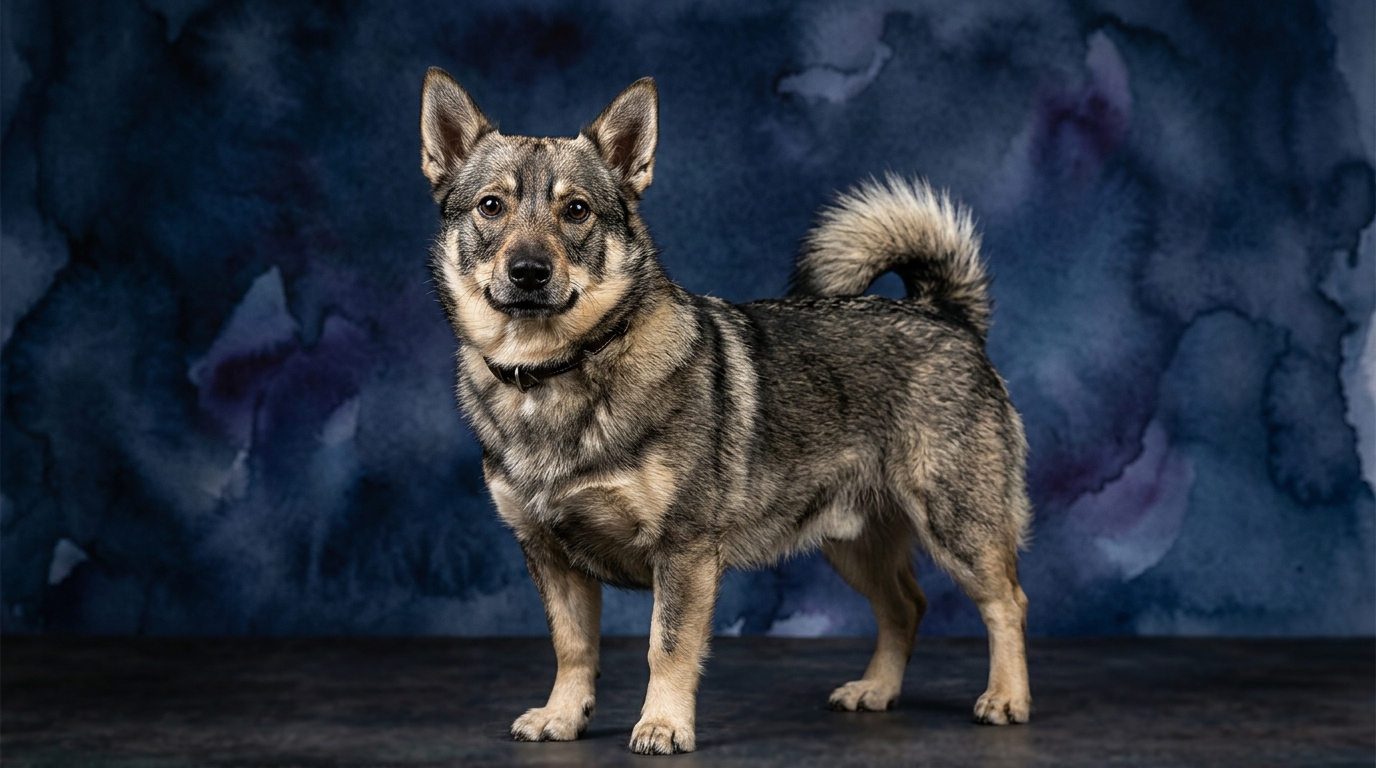
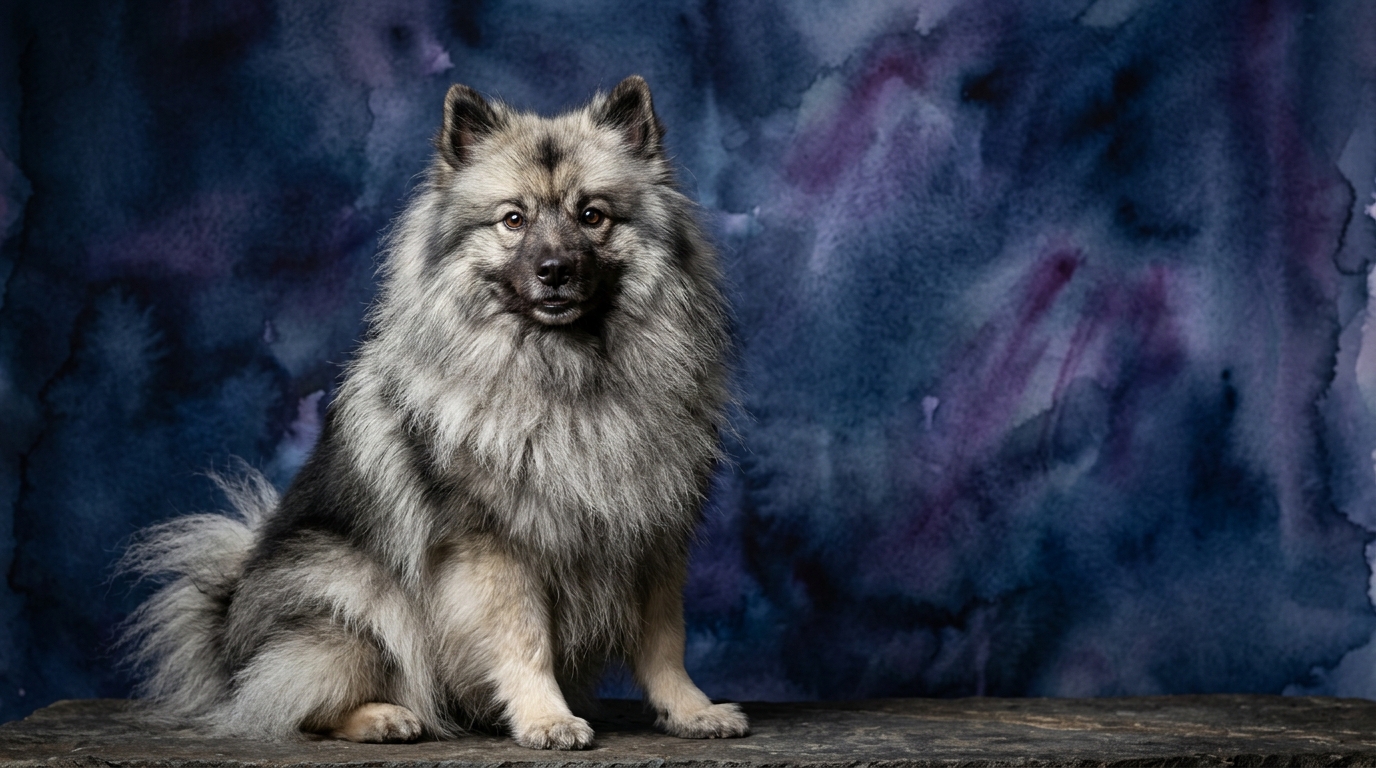
Side-by-Side Cognitive Profiles: Vallhund vs. Keeshond
Delving into the cognitive landscape of the Swedish Vallhund reveals a balanced intellect shaped by centuries of herding work. Their Problem Solving (3/5) is characterized by a practical, ground-level approach, focused on immediate, tangible solutions for managing livestock or navigating their surroundings effectively. Training Speed (3/5) is moderate, meaning they absorb new commands with consistent, positive reinforcement, particularly when the training provides a clear purpose. Social Intelligence (3/5) is solid, allowing them to integrate well into family dynamics and understand human cues, though they retain a hint of independence. Instinctive Drive (3/5) is pronounced with their herding tendencies, manifesting as a desire to oversee their family or territory. Finally, their Memory (3/5) is reliable for retaining learned behaviors and routines, contributing to their consistency.
The Keeshond, conversely, presents a cognitive profile indicating a different emphasis, stemming from its role as an attentive companion and watchdog. Their Problem Solving (4/5) demonstrates a more adaptable and often creative approach, allowing them to devise clever ways to achieve goals within their environment. Training Speed (4/5) is notably quicker; Keeshonds grasp new concepts and commands with relative ease, making training sessions efficient and rewarding. Their Social Intelligence (3/5) is robust, fostering deep bonds with their families and enabling them to read and respond to human emotions and intentions effectively. Instinctive Drive (3/5) is expressed as vigilance and a strong desire for companionship, rather than herding or prey pursuit. The Keeshond's standout cognitive trait is its Memory (5/5), which is exceptional, ensuring that learned information, commands, and experiences are retained with remarkable accuracy over extended periods.
Where the Swedish Vallhund Cognitively Excels
The Swedish Vallhund's cognitive strengths are deeply rooted in its herding heritage, giving it an edge in practical application and sustained focus within a task. While its scores are generally balanced, the Vallhund truly excels in situations demanding consistent, purposeful engagement. Their problem-solving (3/5) is less about abstract thought and more about efficient, physical solutions to immediate environmental challenges, like moving livestock or navigating complex terrain. This translates into a dog that can methodically work through a task, relying on its strong instinctive drive (3/5) to complete a job. Owners often observe their Vallhunds applying learned behaviors with unwavering consistency, a testament to their reliable memory (3/5) and a training speed (3/5) that, while not lightning fast, produces deeply ingrained responses. They are less likely to get sidetracked by novel distractions once focused on a familiar routine or command, making them dependable partners in structured activities.
Where the Keeshond Cognitively Excels
The Keeshond shines with a cognitive profile geared towards sophisticated learning and exceptional recall, largely attributed to its attentive companion and watchdog history. Its most notable cognitive advantage lies in its outstanding memory (5/5), which ensures that once a lesson or experience is processed, it is retained with impressive accuracy over time. This superior recall significantly enhances its training speed (4/5), allowing Keeshonds to grasp new concepts and commands more quickly than the Vallhund. Their problem-solving (4/5) also exhibits a more versatile and adaptable quality; they are often observed devising clever strategies to achieve desired outcomes, be it opening a cabinet or figuring out a puzzle toy. This adaptability, combined with their strong memory, makes them adept at learning complex sequences of behaviors and understanding subtle human cues, making them highly responsive and engaging companions.
Training Ease: Which Breed Offers a Smoother Path?
When comparing ease of training, the Keeshond generally presents a smoother path for most owners due to its quicker training speed (4/5) and exceptional memory (5/5). Keeshonds tend to pick up new commands and routines with fewer repetitions, and once learned, these behaviors are deeply ingrained. Their eagerness to please, coupled with their sharp recall, means they are often highly motivated by positive reinforcement and respond well to consistent, engaging training sessions. A Keeshond is likely to remember a command learned weeks ago and execute it reliably. The Swedish Vallhund, while certainly trainable with a training speed of 3/5 and memory of 3/5, requires more consistent reinforcement and patience. Their herding drive means they can sometimes be more opinionated or focused on their own agenda, which, while not a lack of intelligence, can translate into a slightly slower learning curve for complex tasks. Vallhunds respond best to training that makes sense to their working instincts and provides a clear purpose, whereas Keeshonds often enjoy learning for the sake of interaction itself. For an owner seeking rapid progress and long-term retention of a wide array of commands, the Keeshond typically offers a more straightforward training experience.
Lifestyle Match: Active vs. Relaxed Owners
The choice between a Swedish Vallhund and a Keeshond depends significantly on an owner's lifestyle and their capacity for engagement. The Swedish Vallhund, with its herding background and robust physical build, thrives with active owners who can provide consistent mental and physical stimulation. Their instinctive drive (3/5) and practical problem-solving (3/5) mean they excel in dog sports like agility, herding trials, or even long, exploratory walks where they can 'work' by observing their environment. A Vallhund requires an outlet for its energy and a purpose, making it an ideal companion for individuals or families who enjoy outdoor activities and structured engagement. Without sufficient activity, their clever minds can lead to boredom-related behaviors.
In contrast, the Keeshond, while certainly enjoying walks and playtime, is often a better fit for more relaxed owners. Their historical role as companion watchdogs means they are content with being close to their family and thrive on social interaction (3/5). While they appreciate mental stimulation through puzzle toys or learning new tricks, their exercise requirements are moderate. A Keeshond is generally more adaptable to apartment living or a less intensely active household, provided they receive ample companionship and regular, moderate activity. They are satisfied observing their surroundings and being an integral part of family life, making them excellent companions for those seeking a devoted, less demanding partner in terms of physical output.
The Verdict
Choose the Swedish Vallhund if you are an active owner seeking a diligent, purpose-driven companion for structured activities and outdoor adventures, valuing a dog that applies its cognitive skills to practical tasks.
Opt for the Keeshond if you prioritize a highly trainable, socially engaging companion with exceptional memory for learning complex behaviors, fitting well into a home that values companionship and moderate activity.
🧠 Find Your Pet's IQ Score
Our Pet IQ Lab assessment covers 25+ tests across 5 cognitive dimensions — personalized to your breed.
Take the Full IQ Test →Frequently Asked Questions
Do Swedish Vallhunds have a strong prey drive?
While Vallhunds possess a strong herding instinct (3/5), which involves controlling movement, it's distinct from a high prey drive. They are more inclined to gather and organize rather than chase and capture, though individual variations exist.
Are Keeshonds prone to separation anxiety due to their companion nature?
Keeshonds thrive on companionship and can develop separation anxiety if left alone for extended periods without proper training. Their strong social intelligence (3/5) means they form deep bonds and prefer to be involved in family activities.
Can both breeds excel in dog sports like agility?
Yes, both breeds can excel in dog sports. The Vallhund's agility and working drive make it a natural for activities like agility and herding, while the Keeshond's quick training speed (4/5) and memory (5/5) allow it to master complex routines in various disciplines.