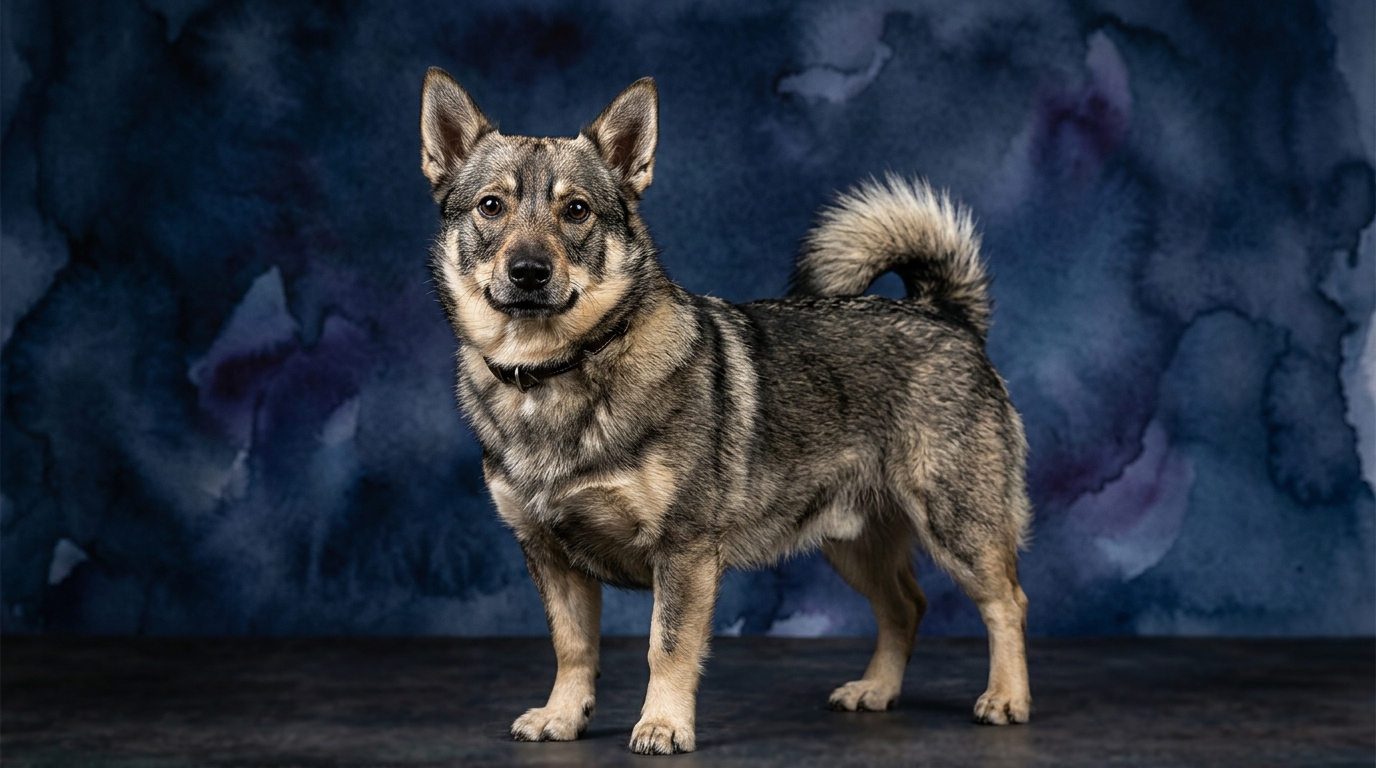
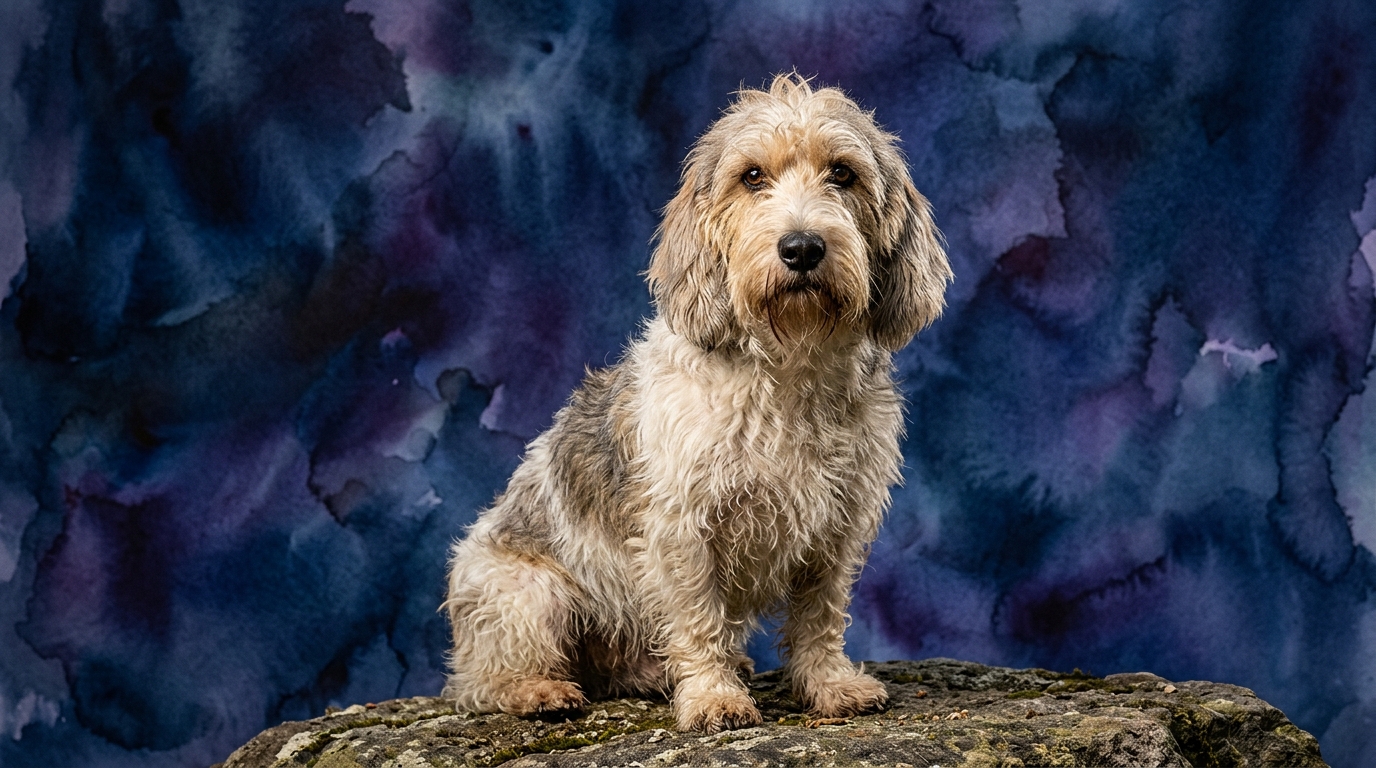
Side-by-Side IQ Profile: Herding Wit vs. Hound Instinct
Both the Swedish Vallhund, a spirited herding dog, and the Petit Basset Griffon Vendéen (PBGV), a tenacious hound, share a consistent 3/5 rating across all five cognitive dimensions in The Cosmic Pet Pet IQ Lab. This indicates a solid, functional intelligence, but its expression is deeply rooted in their ancestral roles. For problem solving (3/5), the Vallhund often demonstrates a capacity to strategize around dynamic elements, such as moving livestock or navigating complex spatial puzzles in a structured environment. The PBGV, in contrast, applies its problem-solving acumen to persistent investigation, unraveling scent trails, or overcoming physical obstacles in pursuit of a sensory goal, often with an independent spirit.
When it comes to training speed (3/5), both breeds possess the capacity to grasp new concepts at a moderate pace. The Vallhund's herding background often predisposes it to a cooperative learning style, eager to engage with a handler's directives. The PBGV, while capable of learning, frequently filters commands through its strong independent drive and olfactory focus, meaning lessons might be understood but compliance can be selective, especially when a compelling scent is present. Social intelligence (3/5) in the Vallhund typically manifests as a keen awareness of group dynamics and human moods, making them adaptable companions. The PBGV's social intelligence often revolves around effective communication within a pack or family unit, expressing needs and desires with characteristic vocalizations and body language. Their instinctive drive (3/5) is perhaps where their differences are most pronounced: the Vallhund's drive is channeled into precise herding behaviors, including nipping and gathering, while the PBGV's is almost entirely dedicated to scent work, tracking, and the thrill of the chase. Finally, memory (3/5) for the Vallhund often encompasses retaining routines, commands, and the layout of familiar territories, whereas the PBGV's memory is profoundly tied to scent recognition, remembering specific trails, and the locations of interesting olfactory discoveries.
Where the Swedish Vallhund Wins Cognitively
The Swedish Vallhund's cognitive strengths truly shine in scenarios demanding cooperative problem-solving and adaptable responsiveness. Their herding lineage has refined their ability to read and react to subtle cues, both from humans and other animals, making them adept at tasks requiring precise timing and spatial awareness. A Vallhund often excels at learning complex sequences of commands, demonstrating a capacity to anticipate next steps in a routine. Their problem-solving, though rated 3/5, is particularly effective in structured environments where they can apply learned patterns to new, but similar, challenges. They are less likely to become frustrated by a novel obstacle if they perceive a clear path to a solution, especially when guided by a handler. This translates to a dog that can quickly understand and execute multi-step tasks, such as agility courses or advanced obedience routines, where consistent performance and handler focus are paramount.
Where the Petit Basset Griffon Vendéen Wins Cognitively
The Petit Basset Griffon Vendéen demonstrates cognitive superiority in domains requiring independent thought, persistent sensory investigation, and autonomous navigation. Their 3/5 problem-solving ability is geared towards overcoming environmental challenges using their primary sense: smell. A PBGV can meticulously work out a complex scent puzzle, following an invisible trail with unwavering focus, often disregarding distractions that would deter other breeds. Their memory, also 3/5, is particularly robust for olfactory information, allowing them to recall specific scents and the paths associated with them over time. This makes them exceptional at tasks like scent work, tracking, and even locating hidden items. Furthermore, their instinctive drive, rated 3/5, fuels a remarkable endurance and determination in their chosen pursuit, allowing them to independently persist at a task long after a herding dog might seek human direction. They possess a unique spatial reasoning tied to their sensory input, allowing them to map out an environment based on scent gradients rather than visual cues.
Which is Easier to Train and Why
Despite identical 3/5 training speed scores, the Swedish Vallhund is generally perceived as easier to train for conventional obedience and structured activities due to its inherent biddability and desire to work in partnership with humans. Their herding background has ingrained a strong inclination to respond to direction and engage in cooperative tasks, making them receptive to positive reinforcement methods. A Vallhund typically enjoys the process of learning and performing commands, often displaying a 'velcro dog' tendency that keeps them attuned to their owner's cues. This doesn't mean they learn faster in an absolute sense, but their motivation to comply and focus on the handler's requests is often higher, leading to more consistent and reliable responses in training settings.
The Petit Basset Griffon Vendéen, while possessing the cognitive capacity for learning (3/5 training speed), presents a different training dynamic. Their strong independent nature and overwhelming scent drive often mean that 'easy' is relative. A PBGV might understand a command quickly but choose to prioritize an intriguing smell or an independent exploration over immediate compliance. Their training often requires more patience, consistency, and creative methods to redirect their attention from the environment back to the handler. They can be trained effectively, but owners must appreciate their hound instincts and work with, rather than against, their natural predispositions. This means that while they *can* learn quickly, their *reliability* in performing those learned behaviors in distracting environments may require more dedicated effort than with a Vallhund.
Which Suits Active Owners vs. Relaxed Owners
The Swedish Vallhund, with its herding heritage and cooperative intelligence, generally suits active owners who are prepared to provide consistent mental and physical engagement. Their need for structured activity, such as obedience, agility, or even herding games, aligns well with owners who enjoy actively training and working with their dog. They thrive on having a 'job' and benefit from owners who can channel their problem-solving and instinctive drives into productive outlets. While they can adapt to a more relaxed home life, prolonged periods of inactivity or lack of mental stimulation can lead to boredom and potentially undesirable behaviors, making them less ideal for truly relaxed, low-engagement owners.
The Petit Basset Griffon Vendéen, with its robust build and independent, scent-driven mind, is also best suited for active owners, though the nature of that activity differs. These dogs require owners who appreciate long walks, hikes, and opportunities for off-leash exploration in safe, contained areas where they can engage their powerful noses. Owners who enjoy scent work, tracking, or simply spending extended time outdoors will find a compatible partner in the PBGV. Their independence means they might be content to explore an interesting scent trail on their own, but they still require substantial physical exercise. They are less suited for owners seeking a purely relaxed companion who prefers lounging, as their innate drive to explore and follow scents will likely lead to restlessness if not adequately fulfilled.
The Verdict
Choose the Swedish Vallhund if you seek a cooperative, responsive companion eager for structured training and mental engagement in activities like agility or obedience.
Opt for the Petit Basset Griffon Vendéen if you appreciate an independent, persistent partner for outdoor adventures, scent work, and are prepared for a charmingly stubborn training journey.
🧠 Find Your Pet's IQ Score
Our Pet IQ Lab assessment covers 25+ tests across 5 cognitive dimensions — personalized to your breed.
Take the Full IQ Test →Frequently Asked Questions
Despite identical IQ scores, how do their cognitive strengths manifest differently?
The Vallhund's strengths lean towards cooperative problem-solving and responsiveness to human cues in structured tasks, while the PBGV excels in independent, persistent sensory investigation and autonomous navigation driven by scent.
Does a 3/5 'training speed' mean they are difficult to train?
A 3/5 training speed indicates they can learn at a moderate pace. The 'difficulty' arises more from their individual motivations; the Vallhund's biddability makes training feel easier, while the PBGV's independence and strong scent drive require more patience and creative engagement to maintain focus.
How do their instinctive drives impact daily life?
The Vallhund's herding drive manifests as a desire to gather, organize, and respond to movement, which can be channeled into games or structured work. The PBGV's strong scent drive means they are constantly seeking and following interesting smells, requiring secure areas and consistent recall training to manage their exploratory impulses.