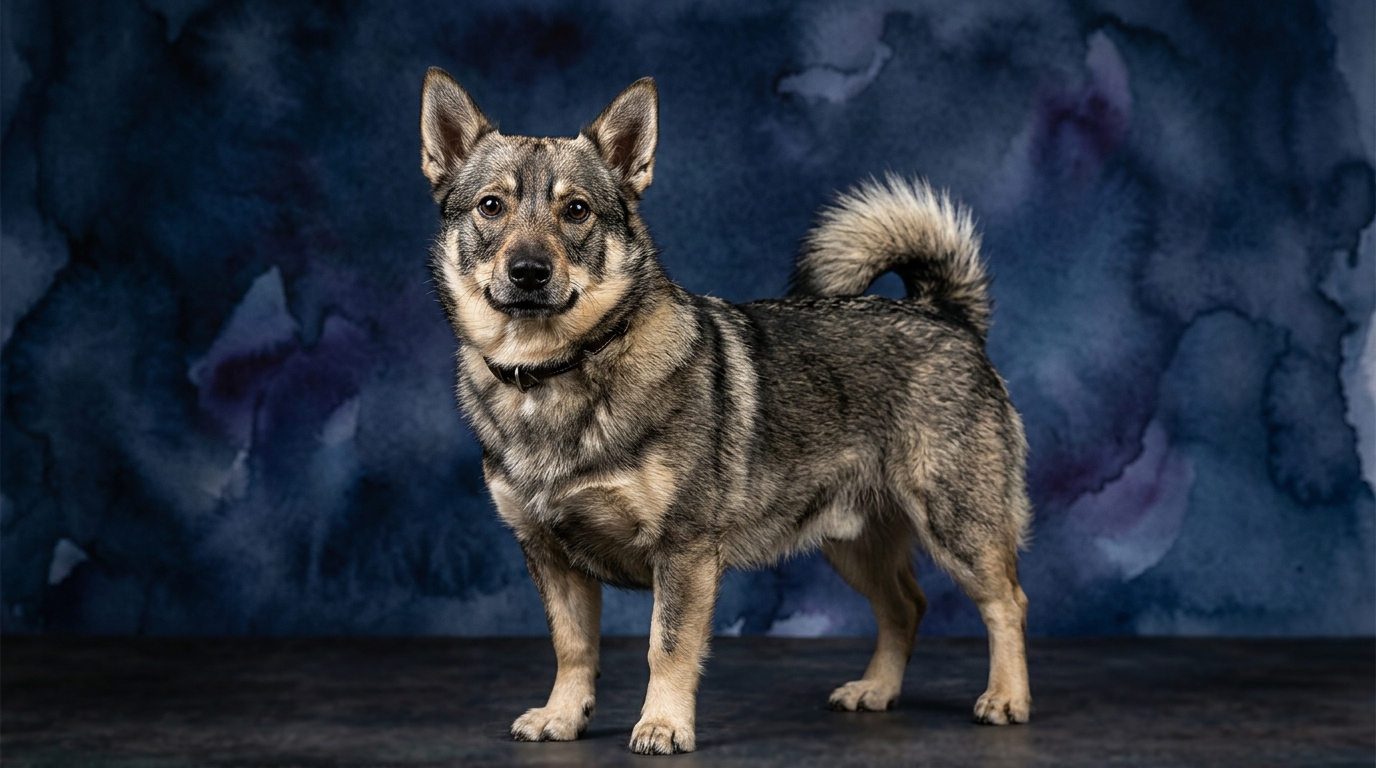
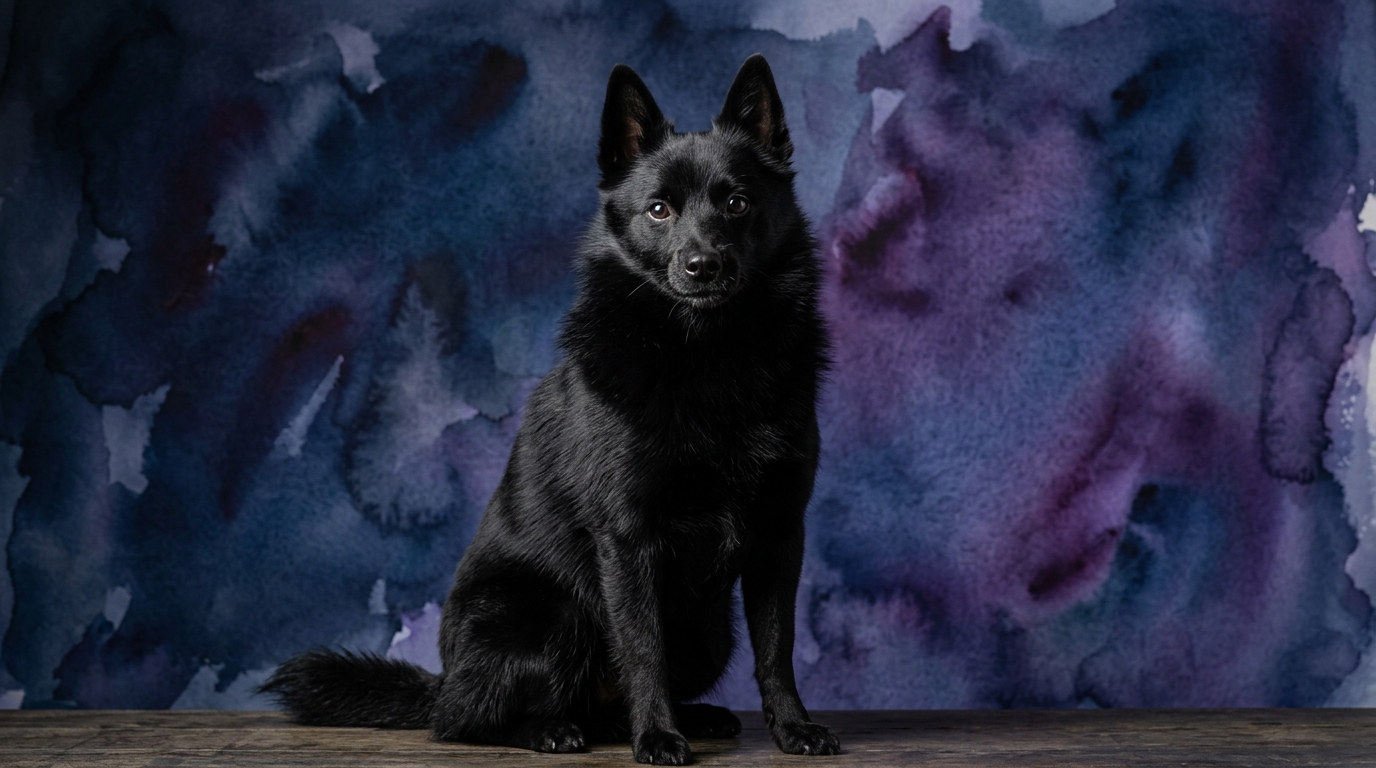
Side-by-Side IQ Profile: Swedish Vallhund vs. Schipperke
To understand these breeds' cognitive strengths, The Cosmic Pet Pet IQ Lab assesses five key dimensions: Problem Solving, Training Speed, Social Intelligence, Instinctive Drive, and Memory. Let's examine how the Swedish Vallhund and Schipperke measure up.
The Swedish Vallhund, a resilient herding dog, displays a practical, moderate aptitude across the board. Their Problem Solving is rated 3/5, indicating a capacity for navigating new challenges that benefits from guidance. Training Speed also sits at 3/5; they are willing learners, but absorb new commands at a steady pace, requiring consistent reinforcement. Social Intelligence is 3/5, reflecting a moderate understanding of human emotional states and cues, enabling strong bonds. Their Instinctive Drive, specifically their herding heritage, is 3/5, present but generally manageable. Finally, Memory is 3/5, showing a moderate retention of learned information and routines, meaning complex tasks might need refreshing.
In contrast, the Schipperke, a vigilant Non-Sporting breed, exhibits a more specialized cognitive profile. Their Problem Solving is exceptional at 5/5, showcasing a remarkable capacity for independent thought and creative solutions to obstacles. This translates directly to an outstanding Training Speed of 5/5, where they grasp new commands with minimal repetition. Social Intelligence for the Schipperke is 3/5, indicating a moderate ability to interpret human cues, though they tend to be self-assured. Their Instinctive Drive, rooted in their watchdog and vermin-hunting roles, is 3/5, manifesting as a persistent desire to patrol and alert. Memory for the Schipperke is also exceptional at 5/5, ensuring once a command or routine is established, it is deeply ingrained and reliably recalled.
Where the Swedish Vallhund Excels Cognitively
While the Schipperke shows higher scores in several cognitive areas, the Swedish Vallhund's balanced cognitive profile offers distinct advantages in specific contexts. Their moderate instinctive drive, rated 3/5, often translates into an adaptable herding instinct that is less intense than some specialized herding breeds. This means a Vallhund might be less prone to compulsively 'herding' children or other pets, making them potentially easier to integrate into a busy household without constant redirection of strong natural urges. This manageable drive allows for a more relaxed home environment where their inherent instincts are present but not overwhelming.
Their social intelligence, also 3/5, combined with this manageable drive, suggests a dog that can read human cues sufficiently to be a cooperative family member, without the independent streak that sometimes accompanies higher problem-solving scores. This cognitive balance can lead to a dog that is less likely to 'outthink' its owner or devise elaborate schemes, preferring a more straightforward interaction and routine. Furthermore, their moderate training speed means while they aren't instant learners, they are consistent and less likely to become bored or resistant to repetitive training, fostering a steady, predictable learning curve. This consistency provides a rewarding experience for owners who appreciate a gradual, reliable progression in training.
Where the Schipperke Demonstrates Superior Cognitive Abilities
The Schipperke's cognitive strengths are particularly evident in its exceptional problem-solving abilities (5/5) and memory (5/5). This breed's capacity to quickly analyze new situations and devise effective solutions is remarkable, allowing them to navigate complex environments or figure out how to access forbidden areas with impressive ingenuity. Their background as versatile barge dogs and vermin hunters honed this ability to independently assess and act on their surroundings, making them highly resourceful.
Their superior memory means that once they learn a task or a rule, it is deeply embedded, contributing to their reliability in established routines and advanced training. This also applies to remembering specific events or people, indicating a vivid recall of their environment. Additionally, their training speed (5/5) means they can pick up complex commands and sequences at an astonishing rate, making them prime candidates for advanced obedience, agility, or other dog sports where rapid learning and retention are paramount. This cognitive agility allows them to thrive in environments that offer consistent mental stimulation and new challenges, making them exceptionally capable partners for complex tasks.
Training Dynamics: Which Breed is Easier and Why?
Based on their cognitive profiles, the Schipperke is generally easier to train in terms of speed and retention. Their 5/5 rating in both training speed and memory indicates they grasp new commands almost immediately and rarely forget them. This makes teaching complex sequences or a wide array of tricks a relatively swift process. For example, a Schipperke might learn a multi-step agility course with just a few repetitions, remembering the sequence accurately days later. However, their high problem-solving (5/5) and moderate social intelligence (3/5) can sometimes lead to a dog that's too clever for its own good, potentially using its intellect to find loopholes or test boundaries if training isn't consistent and engaging. Their independent nature means they excel when challenged, but may become bored or mischievous if not adequately stimulated.
The Swedish Vallhund, with its 3/5 ratings across training speed and memory, requires a more patient and consistent approach. They will learn, but at a steadier pace, needing more repetitions to solidify new commands. For instance, teaching a Vallhund a new trick might take several short sessions over days, rather than an hour. However, their moderate social intelligence (3/5) combined with their slightly less intense problem-solving (3/5) can mean they are often more willing to follow established routines without constantly questioning or trying to outsmart their handler. While the Schipperke is faster, the Vallhund can be a steadfast learner for those who appreciate a predictable training journey and a dog that is generally eager to cooperate within established boundaries.
Matching Breeds to Owner Lifestyles: Active vs. Relaxed
The Schipperke, with its exceptional problem-solving and memory, coupled with a moderate instinctive drive, is better suited for active owners who can provide consistent mental stimulation and structured activities. These dogs thrive on learning new things and engaging in tasks that challenge their quick minds, such as advanced obedience, agility, or puzzle toys that require genuine thought. An owner who enjoys teaching complex tricks or participating in dog sports will find a Schipperke an eager and capable partner. Their vigilance and moderate drive also mean they enjoy patrolling and observing, making them an excellent companion for owners who lead an active, engaged lifestyle but might not necessarily be extreme athletes; they need mental engagement as much as, if not more than, physical exertion.
Conversely, the Swedish Vallhund, with its more balanced and moderate cognitive profile, is a good fit for owners who are active but also appreciate a dog that is content with more predictable routines. While they possess a moderate instinctive drive that benefits from regular exercise and engagement, their problem-solving and training speed ratings suggest they are less likely to become frustrated or destructive if their daily mental challenges are consistent rather than constantly novel. A Vallhund would appreciate regular walks, perhaps some light herding games, and consistent training, but might be less demanding for constant, intricate mental puzzles. They suit owners who want an engaged companion without the constant need to outwit a highly ingenious canine, offering a more predictable and generally less intense cognitive partnership.
The Verdict
Choose a Swedish Vallhund if you appreciate a steady, cooperative learner who thrives on predictable routines and a balanced level of physical and mental engagement. They offer rewarding companionship for owners who value consistency and a more straightforward cognitive partnership.
Opt for a Schipperke if you are an owner eager to engage a highly perceptive and quick-witted canine in advanced training, complex problem-solving, and a dynamic daily life. They are best for those who can provide constant mental challenges to match their exceptional cognitive abilities.
🧠 Find Your Pet's IQ Score
Our Pet IQ Lab assessment covers 25+ tests across 5 cognitive dimensions — personalized to your breed.
Take the Full IQ Test →Frequently Asked Questions
Is a Swedish Vallhund difficult to train?
No, a Swedish Vallhund is not difficult to train, but they learn at a moderate pace (3/5 training speed). They benefit from consistent, positive reinforcement and may require more repetitions than some other breeds to solidify new commands. Their cooperative nature makes them willing students.
Do Schipperkes need a lot of mental stimulation?
Yes, Schipperkes require significant mental stimulation due to their exceptional problem-solving (5/5) and memory (5/5) abilities. Without engaging tasks, they can become bored and potentially channel their ingenuity into independent, sometimes mischievous, activities.
Which breed is better for a first-time dog owner?
For a first-time dog owner, the Swedish Vallhund might be a slightly more manageable choice. Their balanced temperament and moderate cognitive demands can be easier to navigate than the Schipperke's intense mental agility, which requires an owner prepared for consistent, advanced engagement.