Side-by-Side Cognitive Profiles
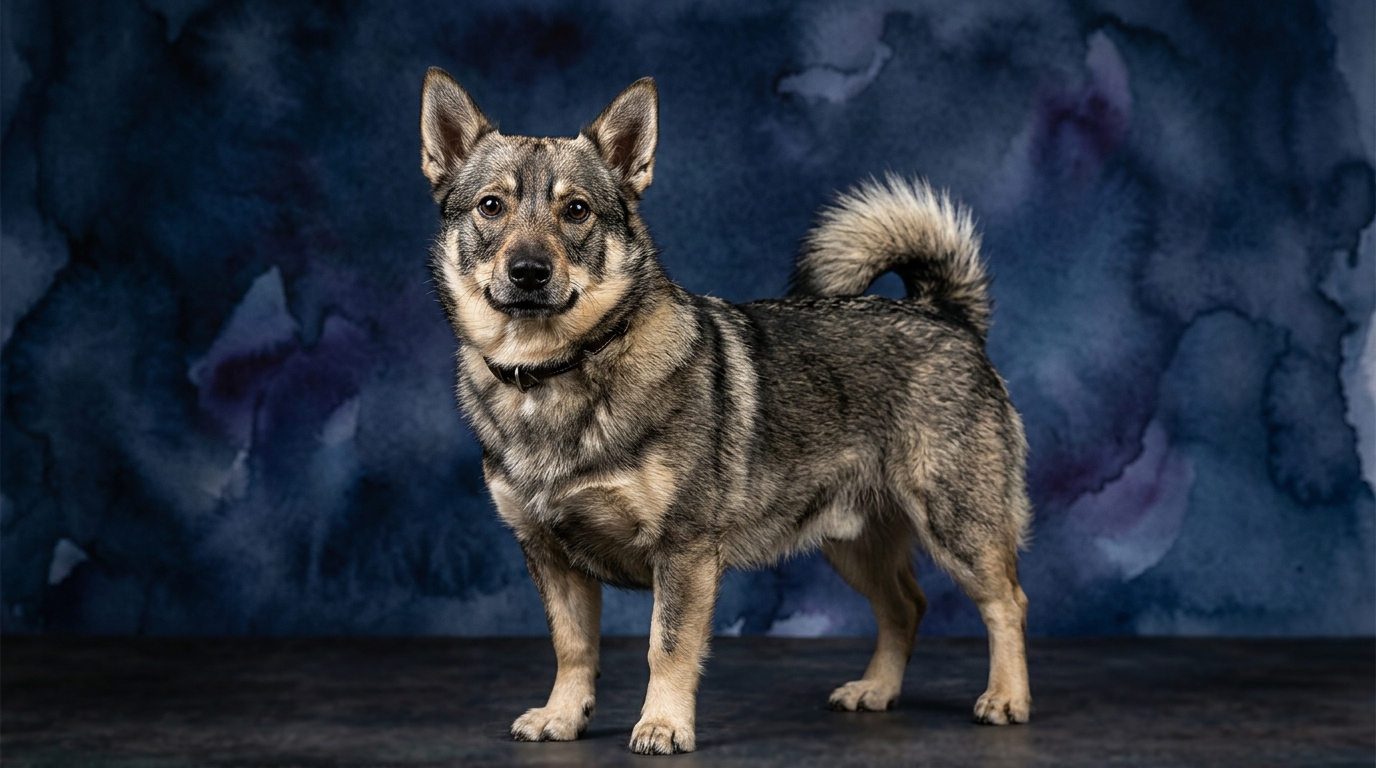
The Cosmic Pet Pet IQ Lab assesses canine intelligence across five key dimensions, offering a nuanced view beyond simple rankings. For the Swedish Vallhund, a resilient herding dog, we observe a balanced cognitive profile reflecting its working heritage. Its Problem Solving is rated 3/5, indicating an ability to navigate moderately complex situations and learn through experience, though it may not spontaneously devise intricate solutions. Training Speed also stands at 3/5; Vallhunds are receptive learners but benefit from consistent repetition and clear, structured guidance to master new commands. Their Social Intelligence, at 3/5, speaks to a capacity for understanding human cues and group dynamics, essential for a dog that historically managed livestock and worked alongside people. Instictive Drive is 3/5, reflecting a purposeful, inherent motivation for tasks, particularly those involving movement and control, without being overwhelming. Finally, Memory is 3/5, suggesting they retain learned behaviors and routines effectively over time, though perhaps not vast, complex sequences without reinforcement.
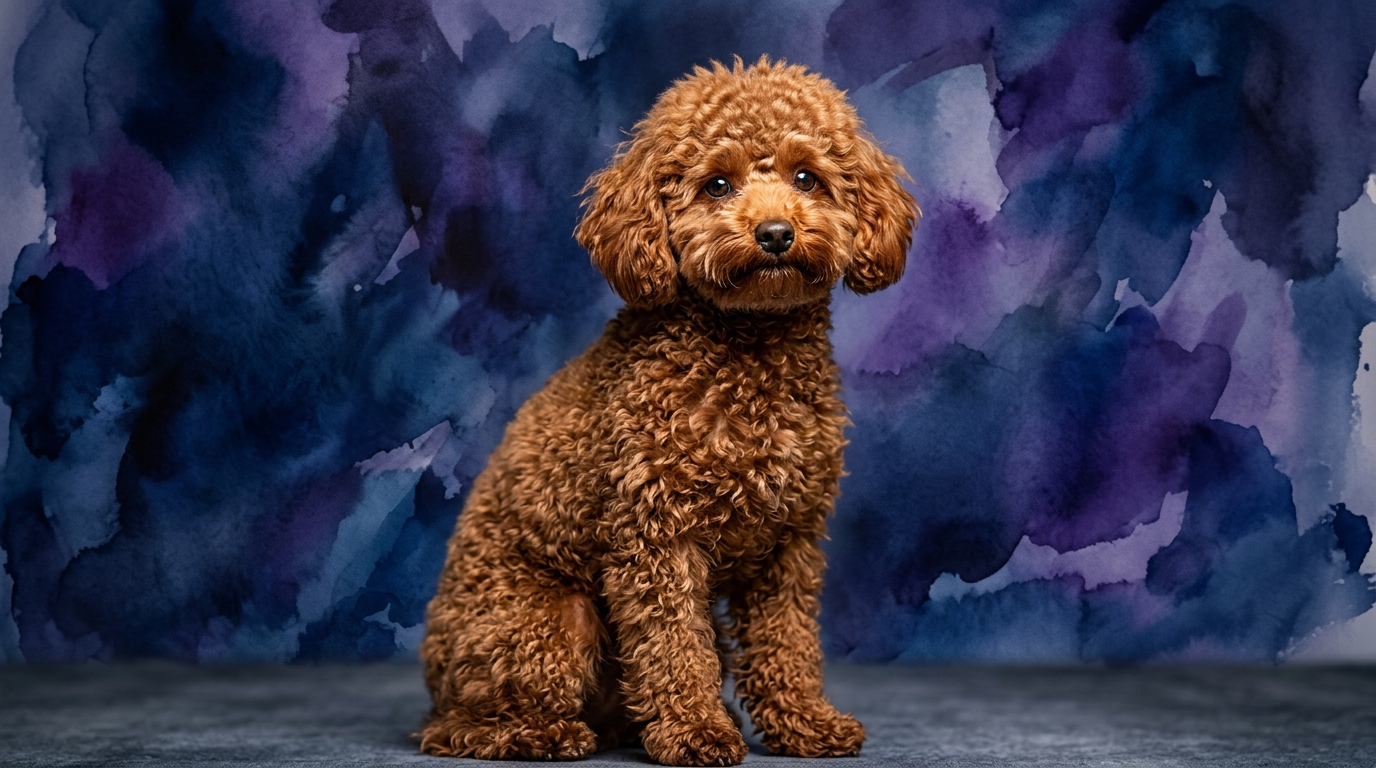
In stark contrast, the Toy Poodle, despite its smaller stature, presents a formidable cognitive profile, reflected in its Coren rank of #2, indicating exceptional working and obedience intelligence. Its Problem Solving capability is rated 5/5, meaning Toy Poodles are adept at deciphering intricate challenges, often strategizing and adapting their approach to achieve desired outcomes. Training Speed is also 5/5; these dogs grasp new commands with remarkable rapidity, frequently requiring only a few repetitions to solidify a new behavior. Their Social Intelligence aligns with the Vallhund at 3/5, demonstrating a keen awareness of their human companions' emotional states and social signals. Instictive Drive is 3/5, reflecting a desire for engagement and activity, often channeled into play or learning, rather than a strong, specific working drive like herding. Critically, the Toy Poodle's Memory is 5/5, enabling them to retain an extensive repertoire of commands, tricks, and routines over long periods, making complex training endeavors particularly fruitful.
Where the Swedish Vallhund Cognitively Shines
While the Toy Poodle boasts higher scores in several dimensions, the Swedish Vallhund's unique cognitive blend allows it to excel in specific, practical ways, particularly those tied to its herding legacy. Its 3/5 Problem Solving, combined with 3/5 Social Intelligence and Instictive Drive, means the Vallhund possesses a pragmatic cleverness geared towards environmental awareness and subtle control. A Vallhund might not solve a complex puzzle box as quickly as a Poodle, but it excels at reading the shifting dynamics of a group, whether livestock or family members, and making independent decisions based on observation. This isn't about abstract logic but about applied, real-world judgment – knowing when to nudge, when to gather, and when to maintain a watchful distance. Their cognitive strengths are manifested in their ability to anticipate movement, manage spatial relationships, and react with quick, appropriate actions in a fluid environment, skills less about raw intellectual processing speed and more about keen perception and context-specific application.
Furthermore, the Vallhund's moderate scores across the board contribute to a robust, balanced dog that can sustain focus on a task for extended periods, even if it requires more repetition to learn initially. Their memory, while not 5/5, is perfectly adequate for retaining practical skills crucial for their work. For instance, remembering the boundaries of a field, the scent of specific animals, or the routine of a farm, even after a break, highlights a functional, persistent memory. Their social intelligence, combined with their drive, makes them excellent at working in partnership with a handler, understanding subtle cues and communicating their own intentions through body language, a nuanced exchange vital for effective herding.
Where the Toy Poodle Cognitively Dominates
The Toy Poodle's cognitive superiority is evident in its remarkable capacity for rapid learning, complex problem-solving, and exceptional memory. With a 5/5 in both Problem Solving and Training Speed, the Toy Poodle can quickly analyze novel situations, formulate strategies, and execute solutions. This manifests in their ability to master intricate trick sequences, excel in advanced obedience, and navigate complex agility courses with minimal instruction. They don't just learn; they generalize. A Poodle taught to 'fetch' a specific toy will often quickly understand the concept of fetching other objects, demonstrating a powerful ability to apply learned principles to new contexts. This abstract understanding and adaptability are hallmarks of their cognitive prowess, allowing them to thrive in environments that demand intellectual engagement.
Their 5/5 Memory further amplifies these strengths. A Toy Poodle can recall an extensive vocabulary of commands and behaviors, even after long periods without practice. This exceptional retention makes them ideal candidates for specialized roles, such as therapy work or competitive dog sports, where a vast repertoire of reliably performed actions is crucial. Unlike breeds that might need constant refreshing, the Poodle's memory allows them to build upon previous learning, constantly expanding their skill set. Their social intelligence, while rated 3/5, combined with their eagerness to engage and train, means they are highly attuned to their human companions' desires, often working diligently to understand and please, which further enhances their trainability and problem-solving efforts within a human-centric framework.
Training: Ease and Behavioral Nuances
When it comes to ease of training, the Toy Poodle holds a distinct advantage due to its 5/5 Training Speed and 5/5 Memory. They exhibit a profound eagerness to learn and retain information, often picking up new commands in just a few repetitions. Their focus on their handler and desire to engage in mental challenges make them highly responsive to positive reinforcement methods. Behavioral differences often include a lower threshold for frustration during training for the Poodle, as they typically grasp concepts so quickly they might become impatient with slow progress or repetitive drills. Their trainability makes them exceptional candidates for complex obedience, trick training, and dog sports where precision and speed are valued.
The Swedish Vallhund, with its 3/5 Training Speed and Memory, requires a more patient and consistent approach. While capable of learning a wide array of commands, they may need more repetitions and a clearer structure to solidify new behaviors. Their herding background means they can sometimes be more independent thinkers, occasionally prioritizing environmental stimuli over handler cues, especially if their instinctive drive is not adequately channeled. This isn't a lack of capacity but a different cognitive wiring; their problem-solving might be directed towards managing movement rather than deciphering abstract commands. Owners will find success with Vallhunds through engaging, varied training sessions that respect their working heritage, using their drive to their advantage rather than fighting it, and maintaining a firm yet fair consistency.
Matching Breeds to Lifestyles: Active vs. Relaxed Owners
For active owners, both breeds offer rewarding companionship, but their activity needs differ in nuance. The Swedish Vallhund thrives with owners who can provide purposeful activity. Their 3/5 Instinctive Drive means they need outlets for their herding tendencies, whether through structured dog sports like agility, herding trials, or even long, engaging walks where they can 'work' by staying attentive and responsive. They are robust companions for hiking and outdoor adventures, preferring activities that involve movement and a sense of purpose. A Vallhund would not be content with merely being a jogging partner; they need mental engagement tied to their physical exertion. Owners who enjoy teaching new skills and providing a 'job' will find a Vallhund a willing and capable partner.
The Toy Poodle, despite its size, is also not a truly 'relaxed' companion in the traditional sense. While they don't require miles of running, their 5/5 Problem Solving and Memory mean they crave significant mental stimulation. Active owners for a Toy Poodle might be those who enjoy frequent training sessions, learning new tricks, participating in dog sports like rally obedience or scent work, or engaging in complex puzzle toys daily. Their activity is often more about mental exertion than purely physical. For owners seeking a truly relaxed companion who needs minimal engagement, neither breed is an ideal fit. However, for owners who define 'relaxed' as less intense physical demands but are eager to provide consistent mental enrichment indoors, the Toy Poodle's adaptability makes it a strong contender. They are content with indoor games and training if their minds are sufficiently challenged.
The Verdict
Choose the Swedish Vallhund if you appreciate a dog with practical, balanced intelligence, eager to engage in purposeful activities, and you're prepared for consistent, patient training that respects their independent, herding spirit.
Opt for the Toy Poodle if you seek a canine companion with exceptional cognitive agility, rapid learning capabilities, and a desire for continuous mental challenges, thriving on complex training and intellectual engagement.
🧠 Find Your Pet's IQ Score
Our Pet IQ Lab assessment covers 25+ tests across 5 cognitive dimensions — personalized to your breed.
Take the Full IQ Test →Frequently Asked Questions
Are Swedish Vallhunds difficult to train?
Swedish Vallhunds are not inherently difficult to train, but their 3/5 training speed means they require more consistency and patience than some other breeds. Their herding drive can lead to independent thinking, so engaging, positive reinforcement methods are most effective.
Do Toy Poodles need a lot of exercise?
Toy Poodles, despite their small size, need significant mental stimulation and regular physical activity. Their high problem-solving and memory scores mean they thrive on learning new tricks, puzzle toys, and consistent training sessions, alongside daily walks and playtime.
Which breed is better for first-time dog owners?
For first-time dog owners, the Toy Poodle might be slightly easier due to its rapid training speed and eagerness to please, which can build confidence quickly. However, both breeds require dedicated owners willing to invest in consistent training and mental enrichment to thrive.