Side-by-Side IQ Profile: Guardians vs. Game-Finders
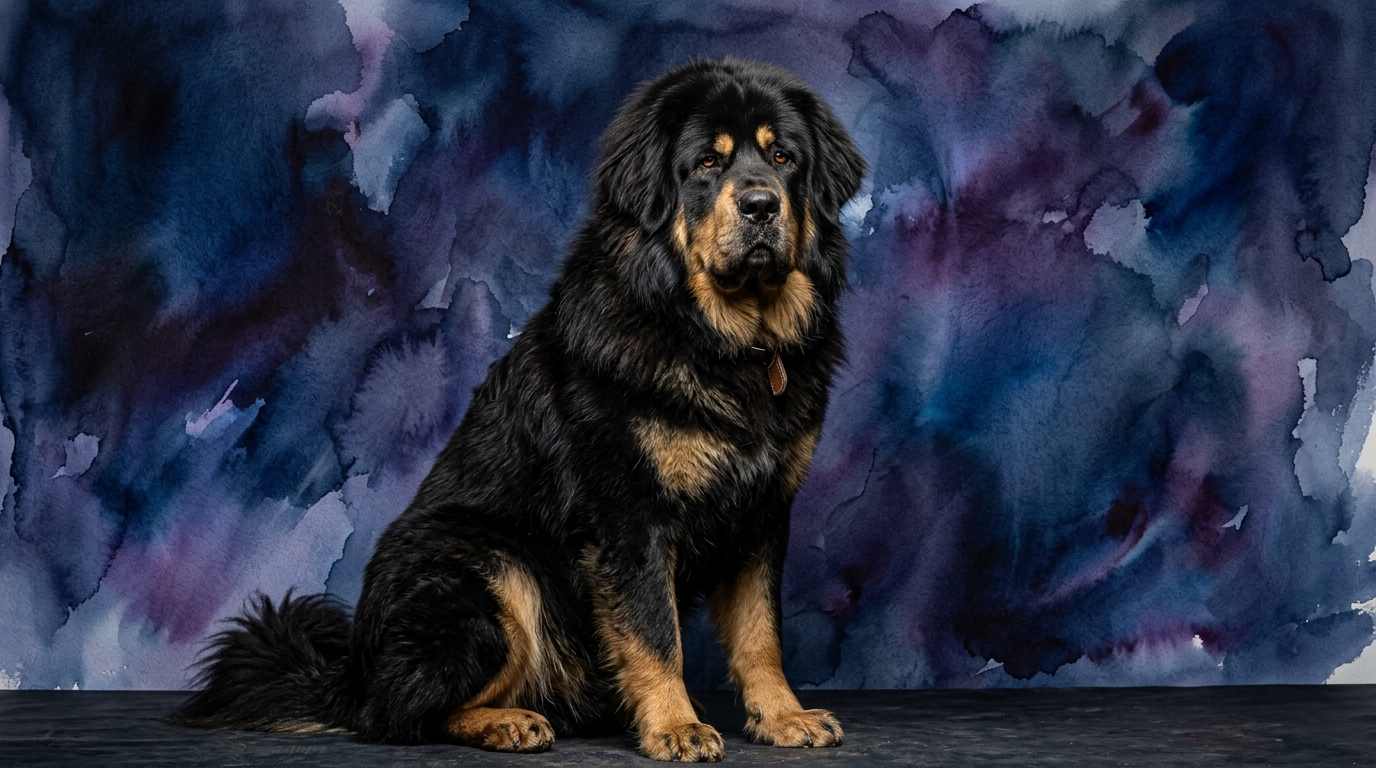
The Cosmic Pet Pet IQ Lab assesses canine cognition across five vital dimensions, providing a nuanced look at what makes each breed unique. The Tibetan Mastiff, a formidable guardian, holds a Problem Solving score of 3/5, indicating a capacity for independent thought in complex situations. Its Training Speed is also 3/5, reflecting a deliberate learning pace, while Social Intelligence and Instinctive Drive each score 3/5, highlighting its reserved nature and strong protective instincts. Memory is rated at 3/5, suggesting a solid retention of crucial information relevant to its duties. This breed is not evaluated on the Coren ranking scale, emphasizing its distinct, ancient lineage.
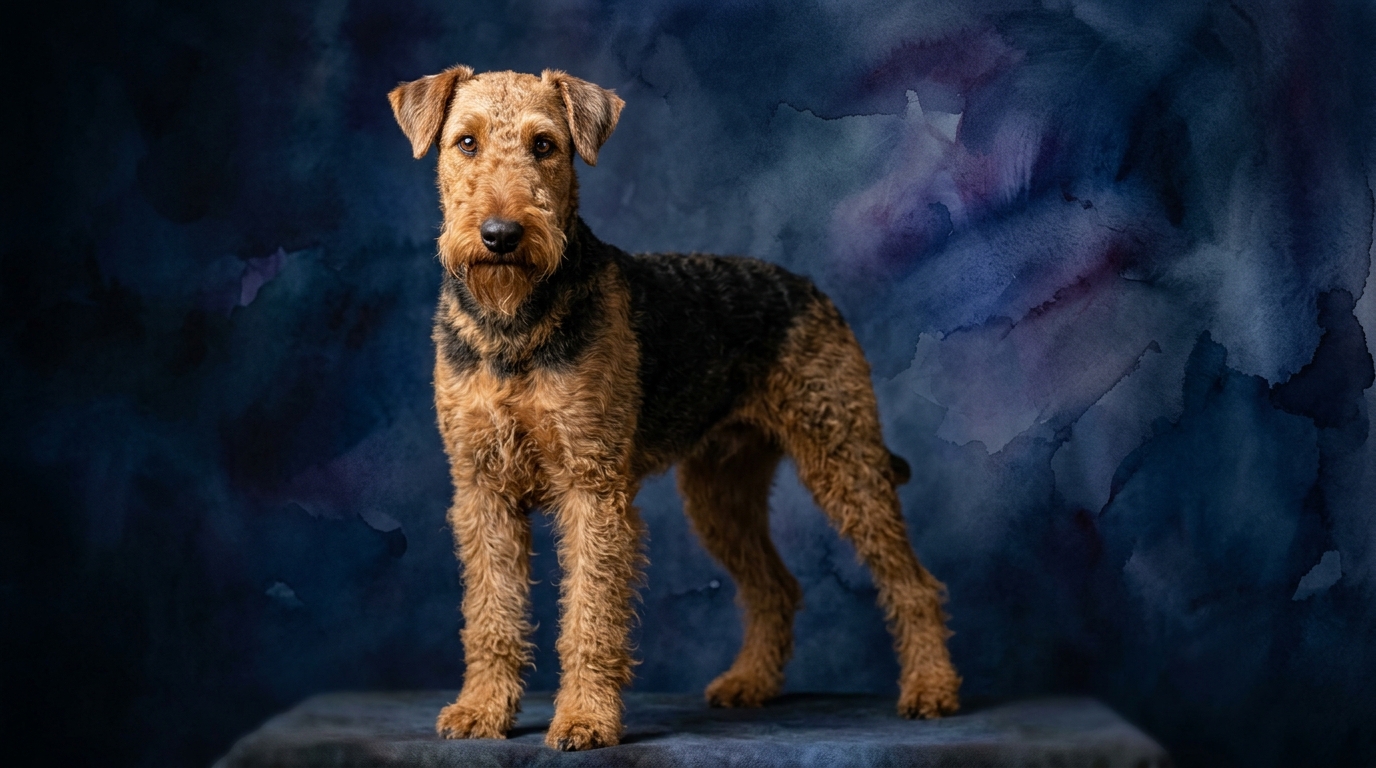
In contrast, the Airedale Terrier, a versatile and energetic member of the Terrier group, demonstrates a more agile cognitive profile. It excels in Problem Solving with a score of 4/5, showcasing its knack for figuring things out, often independently. Its Training Speed is also 4/5, pointing to a quicker grasp of new commands and concepts, complemented by a Memory score of 4/5 for excellent recall and retention. Social Intelligence registers at 3/5, indicating a generally agreeable disposition, and its Instinctive Drive is 3/5, reflecting its inherent drive for hunting and engagement. The Airedale Terrier is recognized on the Coren ranking, holding a respectable position at #29, underscoring its general aptitude for obedience and adaptability.
Where the Tibetan Mastiff Wins Cognitively
While its scores may appear moderate, the Tibetan Mastiff's cognitive strengths lie in its profound independence and highly specialized problem-solving geared toward its role as a sentinel. Its 3/5 Problem Solving isn't about rapid obedience to complex commands, but rather a sophisticated ability to assess environmental threats and make autonomous decisions to protect its territory and family. This breed excels at discerning friend from foe, identifying subtle changes in its surroundings, and acting with deliberate, calculated judgment without constant human direction. Their 3/5 Social Intelligence is not a deficit but a reflection of a discerning nature; they form deep, loyal bonds with their inner circle and possess a nuanced understanding of social dynamics within that trusted group, rather than seeking broad social approval.
The Tibetan Mastiff's 3/5 Instinctive Drive is powerfully channeled into guardianship, manifesting as unwavering vigilance and a deep-seated commitment to its duties. This isn't a drive for retrieving or agility, but for silent observation and strategic intervention. Their 3/5 Memory serves them well in remembering boundaries, routines, and the individuals they are tasked to protect, creating a reliable mental map of their world. This breed's cognitive architecture is designed for unwavering, self-reliant protection, making it exceptionally effective in its traditional role.
Where the Airedale Terrier Wins Cognitively
The Airedale Terrier's cognitive advantages are evident in its higher scores across several key dimensions, reflecting its versatility and eagerness for engagement. Its 4/5 Problem Solving score highlights a keen intellect and a natural inclination to devise solutions, whether it's figuring out how to open a gate or solving a puzzle toy. This breed approaches new challenges with enthusiasm and a clever, often self-directed, approach. Coupled with a 4/5 Training Speed, the Airedale demonstrates a notable capacity for quickly grasping and executing new commands, making it a responsive and capable student in various disciplines.
Furthermore, the Airedale's 4/5 Memory score means it retains information efficiently, making training efforts more enduring and building a robust repertoire of learned behaviors. This strong memory supports its ability to learn complex sequences and adapt to different environments with ease. While its Social Intelligence and Instinctive Drive are 3/5, these scores signify a balanced temperament that allows for strong bonds with its family and a manageable level of its inherent terrier drive, making it adaptable to various family settings and activities, from companionship to dog sports.
Which Is Easier to Train and Why?
Comparing training ease, the Airedale Terrier generally presents a more straightforward experience than the Tibetan Mastiff. The Airedale’s Training Speed of 4/5 and Memory of 4/5 mean it picks up new commands and concepts relatively quickly and retains them well. They often possess a strong desire to engage with their handlers, a trait that makes them receptive to positive reinforcement methods and eager to participate in learning sessions. Their problem-solving abilities also translate into a capacity to understand and apply rules consistently.
The Tibetan Mastiff, with a Training Speed of 3/5 and Memory of 3/5, requires a different approach. Their independent problem-solving and guardian instincts mean they are not inherently driven to perform for human approval in the same way many working breeds are. Training a Tibetan Mastiff often involves patience, consistency, and understanding its inherent self-reliance. While capable of learning, they process information at a more deliberate pace and may question commands if they don't perceive a clear purpose, making training more about building a respectful partnership than eliciting eager compliance. Their training is effective when rooted in trust and clear, consistent boundaries rather than high-frequency repetition.
Which Suits Active Owners vs. Relaxed Owners?
The Airedale Terrier is generally better suited for active owners. Its 3/5 Instinctive Drive, coupled with its problem-solving and training speed, means it thrives on mental and physical stimulation. Owners who enjoy activities like long hikes, jogging, agility, or engaging in regular training sessions will find the Airedale a willing and energetic companion. Their cognitive agility requires consistent engagement to prevent boredom, which can manifest as undesirable behaviors. An active owner provides the necessary outlets for their intelligence and energy.
The Tibetan Mastiff, while appearing more 'relaxed' in terms of high-intensity physical demands, is not for a truly passive owner. Its 3/5 Instinctive Drive is channeled into vigilant guardianship, requiring a dedicated owner who understands and manages this powerful instinct. While it doesn't demand hours of strenuous exercise daily, it needs consistent boundaries, early and ongoing socialization, and an owner capable of handling a large, independent-minded dog. Its 'relaxed' demeanor often masks a deep watchfulness; therefore, owners must be prepared to provide a secure environment and engage its protective intelligence responsibly, rather than expecting a low-maintenance companion.
The Verdict: When to Choose Each Breed
The Verdict
Choose a Tibetan Mastiff if you seek an independent, majestic guardian requiring a patient, consistent owner who respects its reserved nature and specialized protective intelligence, valuing loyalty over eager obedience.
Opt for an Airedale Terrier if you desire an energetic, clever companion who thrives on active engagement, enjoys learning new things, and can integrate well into a family willing to provide consistent mental and physical stimulation.
🧠 Find Your Pet's IQ Score
Our Pet IQ Lab assessment covers 25+ tests across 5 cognitive dimensions — personalized to your breed.
Take the Full IQ Test →Frequently Asked Questions
Do Tibetan Mastiffs learn commands as quickly as Airedale Terriers?
No, the Tibetan Mastiff has a Training Speed of 3/5 compared to the Airedale Terrier's 4/5. Tibetan Mastiffs learn at a more deliberate pace, often requiring more patience and consistency due to their independent nature, while Airedales generally grasp commands more swiftly.
Which breed is better at independent problem-solving?
Both breeds possess problem-solving abilities, but in different contexts. The Airedale Terrier scores 4/5 and excels at figuring out puzzles and new situations readily. The Tibetan Mastiff, with a 3/5, applies its problem-solving specifically to guardian duties, making autonomous decisions to protect its territory rather than seeking novel challenges for entertainment.
How do their social intelligence scores impact their interactions?
Both breeds have a Social Intelligence score of 3/5, but this manifests differently. The Airedale Terrier tends to be generally agreeable and forms strong family bonds. The Tibetan Mastiff is more reserved and discerning, forming deep connections with its immediate family while being more aloof or watchful with strangers, reflecting its guardian role.