Side-by-Side Cognitive Profiles
Despite both breeds scoring 3/5 across all five dimensions of our Pet IQ Lab assessment, the application and manifestation of these cognitive capabilities differ significantly, rooted in their distinct breed groups and historical purposes. A 3/5 score indicates a solid, functional level of intelligence, but its expression is what truly defines each breed.
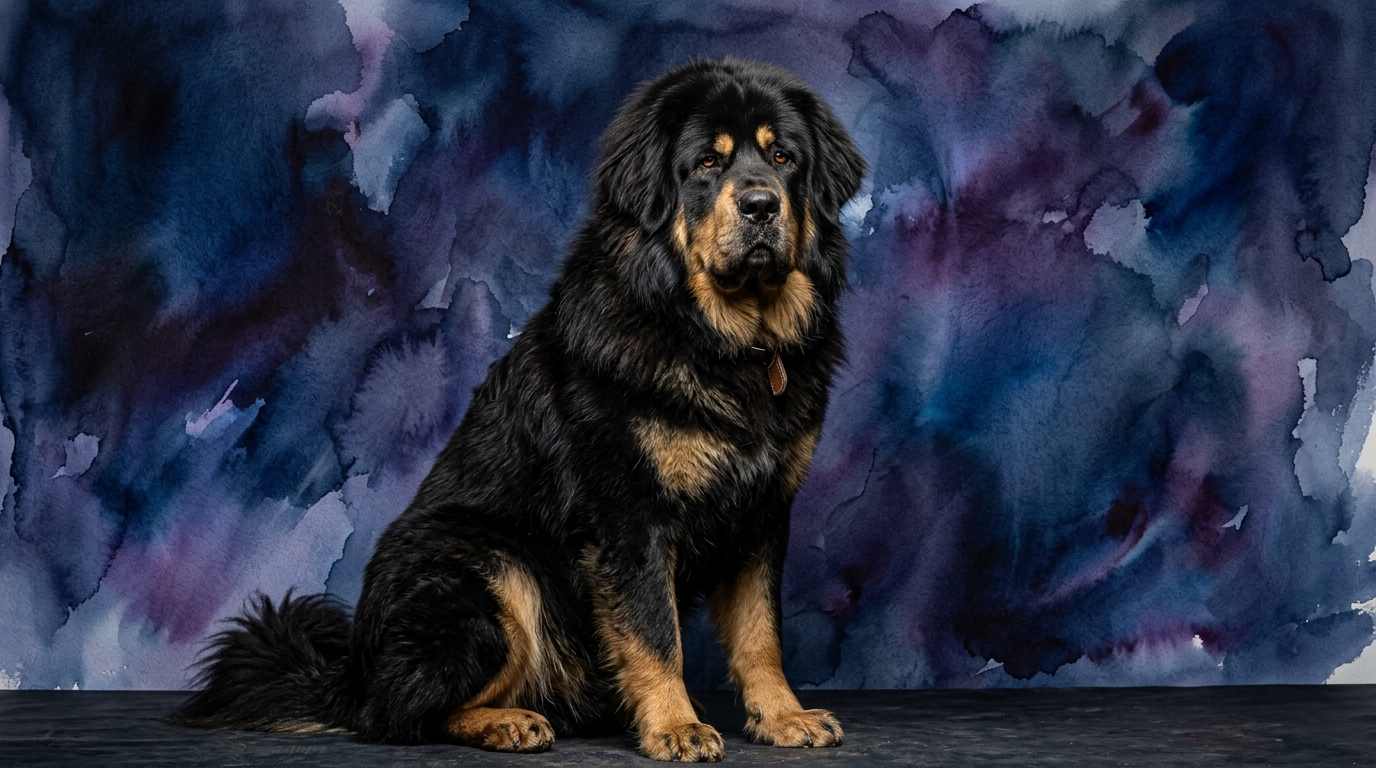
For the **Tibetan Mastiff (Working group)**:
Problem Solving (3/5): This score reflects a robust capacity for independent thought, fundamental to their ancient role as livestock guardians. Their problem-solving isn't about intricate puzzles, but rather assessing dynamic situations, identifying potential threats, and determining appropriate, often autonomous, responses without direct human instruction.
Training Speed (3/5): While capable of learning, their inherent independence means their training speed is moderate. They process information and decide on compliance based on their internal assessment of relevance, rather than an eager-to-please mentality. Consistent, patient, and reward-based training is essential.
Social Intelligence (3/5): Their social understanding is finely tuned for discerning members of their trusted family unit from strangers. They are deeply devoted to their immediate human 'pack,' understanding individual temperaments and complex family dynamics, which manifests as profound loyalty and protective instincts.
Instinctive Drive (3/5): Their predominant drive is guardianship and territorial protection, a moderate but unwavering impulse. This manifests as constant vigilance, patrolling boundaries, and a strong sense of responsibility for their home and family. Prey drive is secondary to protective duties.
Memory (3/5): Tibetan Mastiffs possess a strong memory for routines, established boundaries, and the individuals they encounter. They meticulously recall past interactions, positive or negative, which profoundly influences their future behavior and trust levels, crucial for their guarding effectiveness.
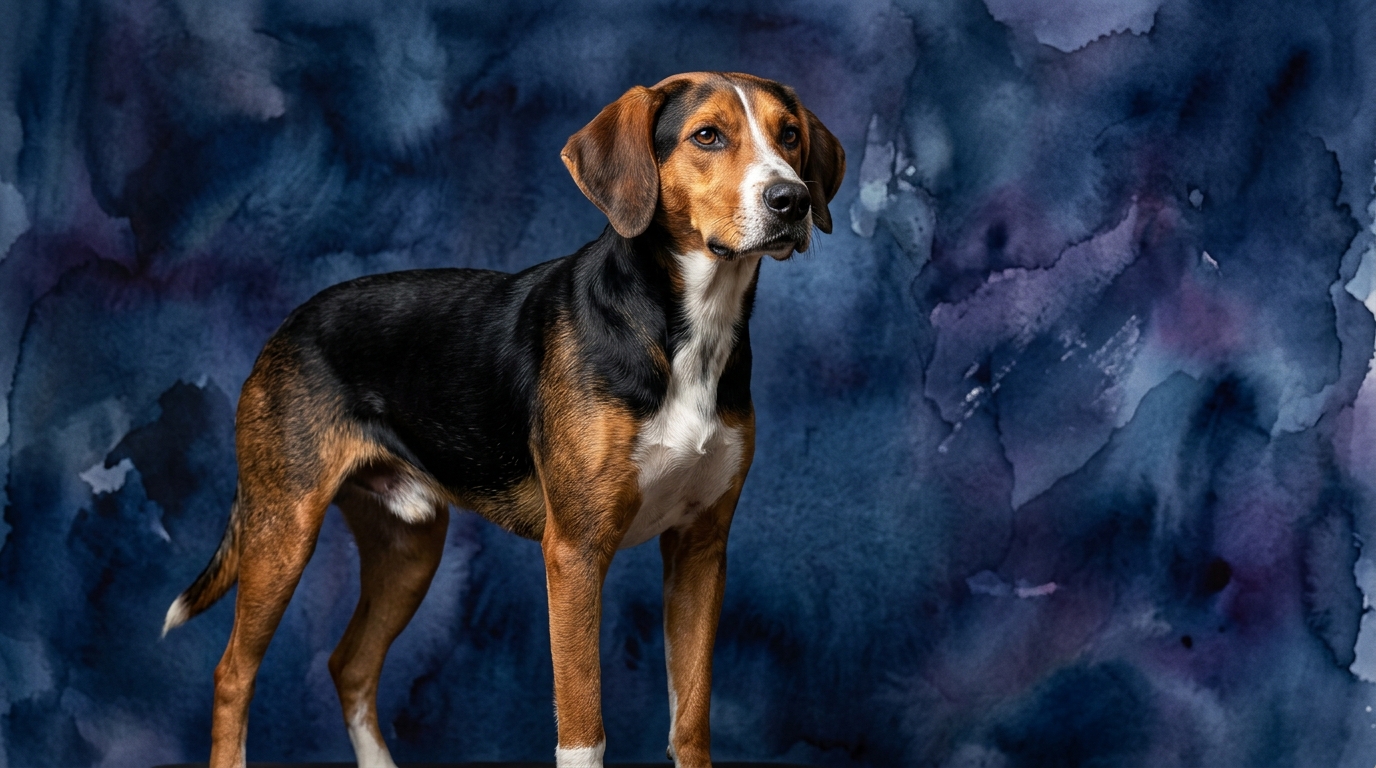
For the **American Foxhound (Hound group)**:
Problem Solving (3/5): This score reflects a specialized intelligence for navigating complex sensory environments. Their problem-solving prowess is deeply ingrained in their hunting heritage, excelling at deciphering intricate scent trails, strategizing movement across varied terrain, and collaborating within a pack to locate quarry.
Training Speed (3/5): Foxhounds can learn new commands at a moderate pace, particularly when training engages their natural drives. However, their independent, scent-driven nature means they are highly susceptible to environmental distractions. Effective training demands high-value rewards and engaging methods.
Social Intelligence (3/5): As historical pack animals, their social understanding is optimized for cooperative living and hunting within a group. They adeptly understand pack dynamics, communicate effectively with other dogs, and form strong, often boisterous, bonds with their human 'pack.'
Instinctive Drive (3/5): Their defining drive is an incredibly powerful and persistent scent-tracking and pursuit instinct. Once engaged on a trail, their focus is unwavering, often overriding other learned behaviors. This deeply ingrained drive makes them relentless in their pursuit of quarry.
Memory (3/5): American Foxhounds exhibit excellent memory for scent profiles, specific trails, and the complexities of terrain. They can recall where they last encountered a scent and remember hunting patterns. While they remember human companions, this recall can be profoundly challenged by an irresistible olfactory stimulus.
Where the Tibetan Mastiff Excels Cognitively
The Tibetan Mastiff's cognitive strengths lie in their capacity for independent decision-making for protection. Their 3/5 problem-solving and social intelligence are uniquely specialized for autonomous guardianship. Unlike the Foxhound's focus on scent trails, the Mastiff applies its cognitive capacity to independently assess environmental threats, interpret intentions, and make protective judgments without constant human intervention. This makes them inherently more effective for roles demanding sentinel-like vigilance and self-directed defense of territory or flock, where decisive action is paramount.
Furthermore, their environmental awareness and boundary management are particularly strong. The combination of their 3/5 memory and instinctive drive creates a profound, innate understanding of their designated territory. They meticulously 'remember' the layout, potential vulnerabilities, and perceived threats within their domain, allowing them to effectively establish and enforce invisible boundaries through their vigilant presence and deep territorial awareness. This cognitive application is distinct from the Foxhound's specialized trail memory, focusing instead on spatial and protective recall.
Where the American Foxhound Excels Cognitively
The American Foxhound's cognitive advantages are squarely in scent-driven problem-solving and tracking persistence. Their 3/5 problem-solving and instinctive drive are masterfully integrated for olfactory challenges. Their unparalleled ability to analyze complex scent information, differentiate subtle trails, and maintain relentless focus on a quarry over extensive distances and diverse terrains is a hallmark of their breed. This highly specialized cognitive application distinguishes them from the Mastiff's more generalized protective problem-solving, showcasing a unique form of practical intelligence.
Moreover, their cooperative hunting and pack communication skills are exceptionally developed. Their social intelligence (3/5) is exquisitely tuned for working within a group dynamic, employing a rich repertoire of vocalizations and body language to coordinate during a hunt. While a Mastiff's social intelligence supports family hierarchy, the Foxhound's is optimized for dynamic, collaborative efforts in the field, making them exceptionally adept at understanding and responding to other dogs' cues and contributing to a collective goal.
Trainability: A Tale of Two Independent Spirits
Neither breed is 'easy' to train in the conventional sense, but the nature of their training challenges differs significantly. The Tibetan Mastiff's 3/5 training speed is coupled with a strong sense of self-preservation and a low intrinsic desire to please. They learn, but often require convincing that a command is worth obeying or aligns with their protective duties. Their independence means they can be selective listeners. Training requires building deep trust and demonstrating consistent leadership, often taking more repetitions and requiring more patience to achieve reliable obedience, especially off-leash outside their perceived territory. Early, extensive socialization is critical to manage their guarding instincts.
The American Foxhound's 3/5 training speed is heavily influenced by their powerful instinctive drive. They learn quickly when tasks involve scent work or satisfy their innate urges, but can be profoundly difficult to train for commands that conflict with a compelling scent. Their recall, for instance, is often unreliable if a fresh trail is encountered, as their single-minded focus on scent can override learned commands. Training must be highly engaging, high-reward, and ideally incorporate their natural tracking abilities to maintain focus and motivation against powerful distractions. Managing their prey drive in diverse environments requires significant effort.
Matching Breeds to Lifestyles: Active vs. Relaxed Owners
The American Foxhound is unequivocally suited for active owners. Their 3/5 instinctive drive translates into an immense need for physical exercise and mental stimulation centered around their natural abilities. Owners must be prepared for long daily runs, hikes, or dedicated scent work to satisfy their boundless energy and tracking instincts. A 'relaxed' owner would likely find a Foxhound's energy levels and potential for destructive behaviors (if bored) overwhelming. Their need for consistent engagement in activities that fulfill their hound nature is non-negotiable for their well-being.
A 'relaxed' owner might find the Tibetan Mastiff a more suitable, though still demanding, companion. While they aren't hyperactive, their 3/5 instinctive drive for guarding means they require a specific type of engagement: patrolling, monitoring their territory, and feeling responsible. Their physical needs are moderate, but their mental needs involve vigilance and a sense of purpose. A truly 'relaxed' owner who wants a completely hands-off dog would struggle with a Mastiff's independent nature and need for a clear role. They suit owners who appreciate a dog with a strong, independent presence and are prepared to manage their territorial instincts.
The Verdict
Choose the Tibetan Mastiff when you seek a majestic, independent guardian with a calm, watchful presence, capable of making autonomous decisions regarding protection, and are prepared to manage a strong territorial instinct with consistent leadership and early socialization.
Choose the American Foxhound when you desire an energetic, devoted companion for outdoor adventures, particularly those involving scent work or endurance activities, and are committed to channeling their powerful tracking drive through consistent, engaging training and ample exercise.
🧠 Find Your Pet's IQ Score
Our Pet IQ Lab assessment covers 25+ tests across 5 cognitive dimensions — personalized to your breed.
Take the Full IQ Test →Frequently Asked Questions
Are Tibetan Mastiffs good family dogs?
Tibetan Mastiffs can be wonderful family dogs, deeply devoted and protective of their inner circle. However, their strong guarding instincts and reserved nature with strangers mean they require extensive early socialization and consistent guidance to ensure they are well-adjusted and safe around various people and situations.
Can American Foxhounds live in apartments?
Generally, American Foxhounds are not well-suited for apartment living. Their high energy levels and powerful instinctive drive demand ample space to run and explore, preferably with a securely fenced yard. Confined spaces can lead to boredom, destructive behaviors, and excessive vocalizations from their characteristic baying.
Do these breeds get along with other pets?
Tibetan Mastiffs can get along well with other pets, especially if raised with them, often accepting them as part of their 'flock.' American Foxhounds are typically good with other dogs due to their pack nature, but their strong prey drive means they may not be suitable companions for smaller, non-canine pets like cats or rabbits without very careful introduction and supervision.